The first thing I remember is the sound of my breath—ragged, uneven, as if it belonged to someone else. My cheeks were wet. I wasn’t sure when it started, only that I couldn’t stop. Every time I tried to steady myself, another wave came. Tears streaming, chest trembling, body heaving with something I couldn’t name. Somewhere in the background, my sitter’s voice was soft and steady: “You’re okay. Just let it move.” But I wasn’t sure if I was healing or falling apart.
The mushrooms had taken hold hours ago, and everything familiar—language, logic, control—had slipped out of reach. There was only sensation: light flickering behind closed eyes, the heartbeat of the earth pulsing through the floor, the unbearable weight of emotion pressing up from somewhere deep. I kept trying to find the reason for it all. Was this grief? Relief? Fear? Nothing made sense, and yet every tear felt ancient, as if it had waited a lifetime to be released.
At some point, I stopped trying to understand. I just let the body cry for both of us. There was no story, no insight, no breakthrough—only a kind of surrender I’d never known before. And when the tears finally slowed, I didn’t feel triumphant. I felt empty, quiet, and strangely new. That’s when I started to wonder: what had actually happened in those hours of crying? Was it healing—or had I simply overwhelmed my system?
That question stayed with me for weeks. I could not find an answer to it. At all. I did everything I could do. I journaled, talked it through with my integration coach, even Googled “Do mushrooms make you cry?” more times than I care to admit. What I learned was both simple and profound: the body knows how to heal, but sometimes it moves faster than the mind can follow. And that’s where the line between transformation and overload gets blurry.
🍄Discover why healing often begins in the body and how your mind follows in my guide
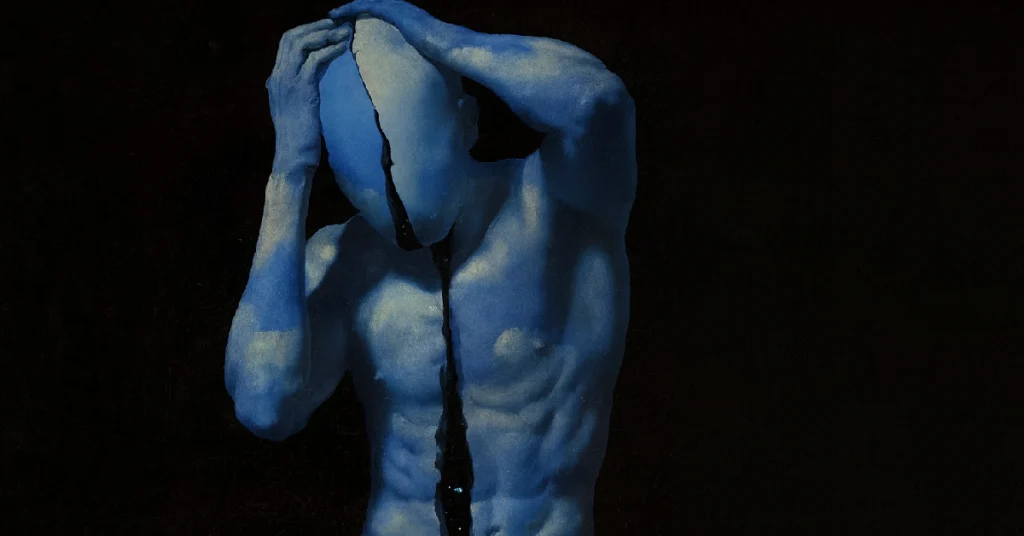
So, Why Do We Cry So Much on Shrooms Anyway? Let’s Talk About What’s Really Going On Here
If you’ve ever cried your way through a smooth Golden Teacher trip, you’ve probably asked yourself the same thing. Was that release meaningful, or was I just emotionally flooded? Did I touch something real, or did I go too far, too fast? It’s a question that echoes through every integration circle, every psilocybin retreat, every post-trip debrief with a friend over coffee in Toronto or Vancouver.
In the world of psychedelic healing, crying has become a kind of badge of honour—proof that something profound happened. Scroll through social media and you’ll see the stories: “I cried for six hours straight, and it changed my life.” Or “The mushrooms cracked me open, and I released generations of pain.” There’s truth in those stories, but it’s not the whole truth. Tears can mean a thousand things: grief finally finding air, joy too big to contain, awe at the mystery of being alive—or, sometimes, simple emotional overload.
When we’re deep in a psilocybin Toronto session or a guided journey, our minds loosen their grip. The part of us that usually suppresses emotion—the Default Mode Network—goes quiet. That’s what psilocybin does. It opens the gates. The emotions that have been neatly folded and tucked away for years suddenly have room to breathe. And when they do, the release can feel massive, uncontrollable, even sacred. But here’s the catch: not all release equals healing.
I used to think the “big cry” was the goal. That if I wasn’t sobbing uncontrollably, I wasn’t doing the work. But over time, I realized that some of those crying fits were more about overwhelm than liberation. The medicine wasn’t failing me—I was just meeting the edge of what my body could handle in that moment. Tears don’t always mean breakthrough. Sometimes they mean, “This is too much, too fast.”
That’s why it’s important to ask, gently: am I crying because something is moving through me, or because something is flooding me? The answer changes how we hold ourselves in those moments—and how we integrate afterward.
Check out this magic mushroom!!

A.P.E Psilocybin Chocolate Bar
$60.00Dried Penis Envy Magic Mushrooms
Price range: $60.00 through $240.00Golden Teacher Gummies for Microdosing
$25.00


The Science Behind Those Tears (Without Killing the Mystery of It All)
You don’t need a neuroscience degree to understand what’s happening when the tears start flowing under psilocybin, but a little context helps. Researchers studying psilocybin in Canada—particularly those exploring psilocybin Ottawa therapy trials—have found that the compound quiets the brain’s Default Mode Network. This network is responsible for self-referential thinking—the “me” voice that narrates our lives. When it relaxes, emotions that were previously locked away can finally surface.
In simple terms: the mind stops policing the heart.
That’s why the floodgates open. Tears become the body’s language when the mind runs out of words. From a physiological perspective, crying during a trip can actually signal the activation of the parasympathetic nervous system—the “rest and digest” state that allows the body to release stress and tension. It’s not just emotional—it’s biological.
But here’s the important nuance: while psilocybin can help us access deep emotional states, it also increases sensitivity. When the experience moves too fast or feels too intense, the nervous system can become flooded—what therapists call “emotional overwhelm.” In those cases, crying isn’t release; it’s a signal that your system is maxed out.
As Vancouver-based trauma-informed therapist Rhiannon Clarke explains, “Crying isn’t inherently good or bad. It’s feedback from the nervous system. The difference between healing and overwhelm is your ability to stay connected while it happens.”
That sentence hit me like a bell. Stay connected while it happens. Because that’s the real work, isn’t it? Whether the tears come in waves or not at all, integration means being present enough to witness what’s unfolding without losing yourself in it.
When the Crying Brings Relief — The Quiet Power of the Healing Cry
There’s a particular kind of crying that feels like exhaling after years of holding your breath. It’s not dramatic or messy, just soft and steady. The body shakes, then stills. The tears come, but they don’t consume you—they carry you. That’s what I call the healing cry.
During one Trinity ceremony I attended in Ottawa, I felt a deep grief rise up out of nowhere. I didn’t even know what it was attached to. It wasn’t a specific memory or trauma—just this ache that had been living in my chest for as long as I could remember. I cried for what felt like hours, but instead of spiralling, I felt strangely anchored. Every sob seemed to make more space inside me. When it ended, I didn’t feel drained—I felt lighter.
That’s the hallmark of the healing cry. The body releases, then relaxes. There’s often a quiet clarity afterward—a soft “click” of understanding, even if the insight isn’t intellectual. You might not know why you were crying, but something inside knows it was necessary.
It’s also important to note that for many of us, crying itself is revolutionary. We’ve been taught to hold it in, to apologize for it, to treat it as weakness. Psilocybin, in its strange wisdom, can gently undo that programming. It teaches us that emotion isn’t the enemy—it’s information. “The mushrooms didn’t teach me how to stop crying,” a facilitator in Toronto once told me. “They taught me it was safe to.”
That safety—the ability to let emotion move without fear—is what healing really feels like.
🍄Discover why feelings are meant to move through us and what happens when we block them in the guide I wrote

When the Crying Turns Chaotic — How to Recognize Overwhelm in the Middle of the Storm
Not all crying feels like relief. Sometimes it feels like drowning. The body heaves, the breath shortens, and you can’t tell if you’re releasing or unraveling. This is what we might call the overwhelm cry. It’s not bad or wrong—it’s just a sign that your nervous system has reached capacity.
During one high-dose session a few years ago, I found myself spiralling. The tears came so fast I couldn’t breathe. My mind was racing, grasping for something to hold on to. I tried to ground myself—pressing my hand to my chest, taking slow breaths—but I couldn’t find the edge. Everything felt too much. My sitter placed a gentle hand on my shoulder and whispered, “You don’t have to go further.” That one line pulled me back. Sometimes, the most healing thing you can do is stop trying to heal.
When you’re flooded, the tears feel endless and disorienting. You might feel lost, disconnected, or even panicky. The key difference between healing and overwhelm isn’t the presence of tears—it’s your ability to stay connected while they happen. Can you feel your body? Can you remember that you’re safe?
If not, it’s okay to slow down. Drink some water. Touch something solid. Breathe. Reach out for a hand. Healing doesn’t mean pushing through every storm; it means learning when to anchor yourself in the middle of one. Integration—whether it’s through journaling, therapy, or simply reflecting after the trip—can help transform even overwhelming moments into wisdom later on.
Because sometimes, what looks like breakdown in the moment turns out to be breakthrough in hindsight.
Maybe It’s Not About How Much You Cry, But How Real You Let Yourself Be
Crying has become so mythologized in psychedelic culture that we forget: it’s not the amount of tears that counts—it’s the honesty behind them. Some of the most profound trips I’ve had involved no crying at all, just a deep, quiet recognition that I didn’t need to perform healing anymore.
We live in a world that loves dramatic transformation—the big release, the purge, the cinematic moment of catharsis. But real healing is subtler than that. It’s permission, not performance. Sometimes that means sobbing for hours; other times it means sitting still and letting your body rest. Neither is better. Both are real.
In one of my more recent journeys, I barely cried. It was surprising. Shocking, if I really look back and think about it. I thought maybe I was “doing it wrong.” I was wrong. Very wrong. Later, as I watched the sunrise in silence, I realized the absence of tears didn’t mean I hadn’t healed—it meant I didn’t need to. The grief that once demanded sobbing had finally settled into understanding.
“For a few hours,” I wrote in my integration journal, “the body cried for everything I’d refused to mourn. And when it was done, there was finally room to breathe.” That’s the middle ground—the space where crying is neither sacred nor shameful. It’s just part of being alive.
Within the Magic Mush community, we remind each other that tears are neither trophies nor failures—just weather passing through the nervous system. Whether you’re microdosing Canada style for emotional balance or journeying deeper with magic mushrooms in Vancouver, the invitation is always the same: stay gentle with what wants to move.
🍄Discover how to find direction when you feel completely lost in the guide I wrote
This Is Where Magic Mush Canada Comes In — Because Healing Should Feel Safe, Supported, and Real
At this point, you’ve probably realized that crying during a trip isn’t something to be judged—it’s something to be understood. Sometimes it’s a deep emotional reset, sometimes it’s overwhelm, and sometimes it’s simply your nervous system saying, “Finally.” The tears aren’t the healing. The healing is what happens after—the integration, the reflection, the slow return to yourself.
And that’s where we at Magic Mush Canada come in. We’re more than just a trusted source for premium dried magic mushrooms; we’re a community built around education, safety, and self-discovery. We believe that exploring psilocybin Toronto or psilocybin Ottawa experiences shouldn’t feel isolating—it should feel supported, grounded, and informed. Whether you’re curious about microdosing for mental health or exploring mushroom chocolate for a gentle entry into the world of psychedelics, we’re here to help you do it safely and meaningfully.
At Magic Mush Canada, we provide more than products—we provide perspective. Our mission is to destigmatize these experiences, to create space where healing isn’t rushed or romanticized, and where emotional honesty is celebrated. We’re here to walk with you through every stage of the journey—the curiosity, the trip, the tears, and the calm that follows.
Because ultimately, that’s what this whole journey is about: staying open, staying curious, and staying connected—to yourself and to community.