
I’ll never forget one morning when I woke up and had no idea what day it was. My phone alarm had gone off, but I’d hit snooze too many times, and when I finally rolled out of bed, the sunlight was already pouring in too brightly. My body felt heavy, like I’d been carrying something invisible through my dreams, and I reached for my phone with numb fingers. I started scrolling through emails, social feeds, random headlines — none of it landing, all of it blurring together. It was like I was half underwater.
That’s when it hit me: I had no idea what I was doing anymore. Not just in that moment, but in life. I didn’t know what I wanted, who I was becoming, or where I was heading. Everyone else seemed to be sprinting ahead, building careers, planning families, checking boxes on some invisible life scorecard — and there I was, frozen in the middle of the track, not even sure which way was forward. The panic set in fast, and with it came shame. How had I let myself get here? Why couldn’t I just “figure it out” like everyone else?
But what if being lost isn’t a flaw at all? What if it’s not the opposite of being on your path — but actually the messy, sacred beginning of finding your real one?
🍄Check out my guide on moving from survival to thriving and learn how to navigate the journey of healing from complex trauma

My Season Of Being Lost: When Everything Familiar Fell Away
For me, the season of being lost started when all the scaffolding I had leaned on for years began to collapse. The career I thought I wanted no longer gave me life. The roles I’d played — achiever, caretaker, strong one — suddenly felt too heavy. Even some relationships I had built my identity around began to shift and fade. It was like I was standing in the middle of a room stripped bare of all its furniture, and there was nothing left to hold onto.
My first instinct was to fix it, to rush into control mode. I bought new planners and made vision boards. I stayed up late journaling elaborate five-year plans, thinking maybe if I mapped it all out I would feel secure again. But every single plan collapsed before it even began. My energy was gone. My ideas didn’t stick. No matter how hard I thought my way through it, nothing rooted.
There was grief in that, too. Grief for the version of me who had always been so certain, so productive, so reliable. Grief for the illusion that I had it all together.
The turning point wasn’t dramatic. It wasn’t some lightning bolt of clarity. It was much quieter than that. I remember walking outside one evening, still feeling like a hollow shell, and the sky was painted with this ridiculous pink and orange sunset. For a second, my mind stopped spinning. I just breathed. I felt my chest rise and fall, and for the first time in weeks, I noticed something alive in me stir. Not a plan, not a clear direction — just a thread of beauty, a tiny spark of curiosity that whispered, what if it’s okay not to know yet? That moment of aliveness didn’t fix everything, but it gave me something I hadn’t had in months: a beginning.
Why We Freak Out When We Don’t Know Where We’re Going
Culturally, we’re obsessed with direction. We’re told to know our goals, to have a five-year plan, to keep hustling forward on some straight, upward path. Certainty is praised. Achievement is rewarded. We’re taught that not knowing is dangerous, lazy, or shameful.
So when we find ourselves lost — when the path ahead goes blurry — it’s no wonder our nervous system freaks out. Not having orientation triggers the deepest survival instincts in us. The body interprets disorientation as a threat. Heart rate climbs. Muscles tense. The brain starts spinning in circles, trying to grasp for answers.
But here’s the thing: you’re not broken when you’re lost. You’re not behind, you’re not failing. You’re just holding a map that no longer matches the territory of your life. And maybe that’s a good thing. Because if your map is outdated, maybe it means you’re finally ready to discover a new one.
🍄Explore my guide on the power of morning rituals and learn how starting your day with intention can transform your life

Sitting In The In-Between Without Forcing A Fast Exit
There’s a word for this space between old and new: liminal. It means threshold. It’s that in-between place where what you used to be has dissolved, but what you’re becoming hasn’t fully formed yet.
Liminal space is terrifying. It feels like floating in fog, with no horizon line. But it’s also profoundly fertile. It’s winter before spring, the cocoon before the butterfly. Nothing seems to be happening on the surface, but underneath, the ground is softening. Roots are shifting. A new life is preparing to break through.
Learning to be in liminal space without rushing for answers might be one of the hardest, and most important, skills of all. Because if you run too quickly, you end up recreating old versions of yourself instead of allowing the new one to be born.
Why Your Brain Can’t “Think” You Out Of Being Lost
If you’re anything like me, your first reaction to lostness is to think harder. To analyze. To Google your way out. To strategize every possible path until you’re exhausted. But the rational mind isn’t designed to solve this kind of mystery.
Lostness isn’t a puzzle to be solved — it’s a season to be lived. Meaning doesn’t come from sitting at a desk with spreadsheets. It comes from experimentation. From trying. From feeling. When I tried to “solve” my lostness with plans, I only sank deeper into the spiral. It was only when I paused, when I allowed myself to feel the fog instead of resist it, that something new began to move.
How Psychedelics Can Show Us The Beauty Of Getting Lost
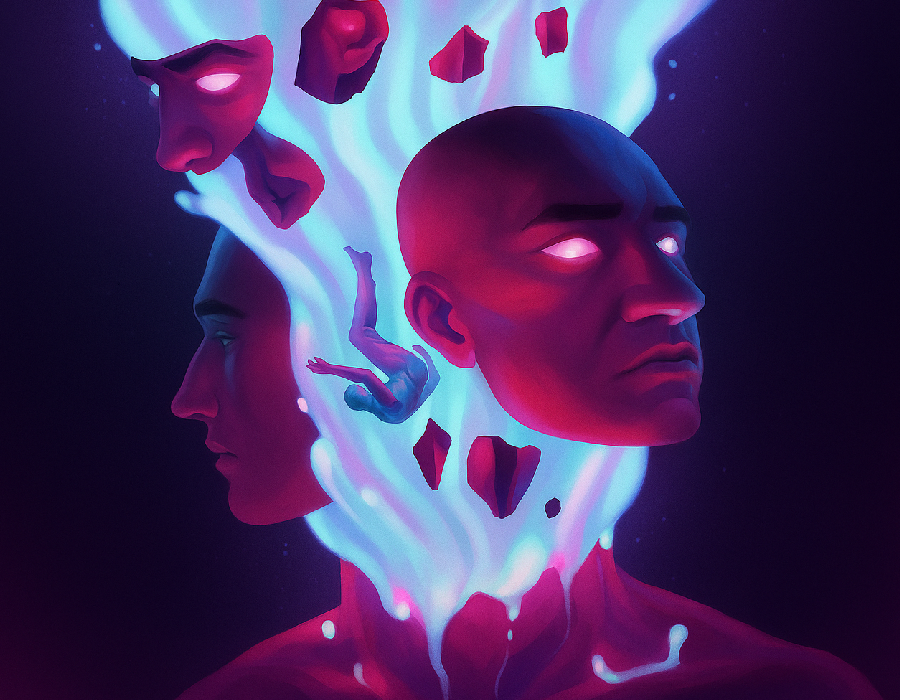
If you’ve ever taken a high-dose psychedelic journey, you know how quickly they can dismantle your sense of self. One minute you’re you — with your name, your story, your roles — and the next you’re in an identity free fall, not sure what’s real. It can be terrifying. But it’s also one of the cleanest slates you’ll ever get. More often than not, psychedelics ultimately help me remember myself.
This is what people mean by “ego death.” Psychedelics can strip away the scaffolding so fast that you’re left hovering in that same liminal space: no old story to cling to, no new one formed yet. And just like in real life, it’s both disorienting and liberating.
What I’ve noticed is that while the big journeys give you the dramatic dissolving, microdosing can give you something softer: a gentle way to navigate the fog. Microdosing doesn’t obliterate your identity — it helps you notice the subtle sparks of aliveness. It stabilizes mood, helps regulate the nervous system, and gives you tiny nudges toward what feels honest and real.
Check out this magic mushroom!!

A.P.E Psilocybin Chocolate Bar
$60.00Dried Penis Envy Magic Mushrooms
Price range: $60.00 through $240.00Golden Teacher Gummies for Microdosing
$25.00


Rethinking Purpose As Something You Create, Not Something You Find
One of the biggest shifts for me was realizing that purpose isn’t a destination waiting to be discovered. It’s something you build, brick by brick, through the choices you make every day. When you’re lost, it’s tempting to want the full map all at once. But the truth is, maps get drawn as you walk.
Instead of asking, “What’s my ultimate purpose?” I started asking, “What feels alive right now?” And following that thread — even when it seemed small or silly — ended up leading me into a life that feels more authentic than any five-year plan I ever made.
Key Truths I’ve Learned Along The Way
What finally helped me breathe again in my lost season were a few simple truths. First, pausing before plotting matters. I stopped trying to force clarity before it was ready and let myself rest in the fog. Second, regulating my body came before making big life decisions. Walks outside, simple meals, deep breaths — these grounded me enough to even think about the future. Third, I learned to follow what felt alive, not what seemed “right” on paper. Fourth, I started to accept disorientation instead of fighting it, trusting that clarity grows slowly, like dawn. And finally, I learned that purpose isn’t “out there” — it’s something I create as I walk, through experiments, mistakes, and small steps forward.
Psychedelics, Microdosing, And Learning To Trust The Lost Phase
For anyone who’s curious, psychedelics have a way of amplifying this lostness, and microdosing has a way of soothing it. After a big psychedelic journey, you might feel stripped bare — like all your old stories got burned down and nothing new has risen yet. That can feel terrifying, but it’s also the perfect chance to rebuild from a place of truth.
Microdosing, on the other hand, can help during this phase by giving you enough stability to function while still staying open. It helps you notice subtle nudges of curiosity, helps you reconnect to intuition, and keeps your nervous system steady enough to explore. Integration rituals like journaling, morning grounding, breathwork, and community support help anchor you when direction hasn’t fully appeared yet.
Learning To Breathe Even When You’re Still Lost
Here’s the thing: I’m still sometimes lost. And maybe I always will be, in some ways. But that’s the magic of being conscious. Because now I see being lost not as failure, but as the sacred pause before rebirth. It’s not the end of the story — it’s the clearing where the new story will begin.
So if you’re in the fog right now, take heart. You don’t need to see the whole map yet. You don’t need to know your five-year plan. Just breathe. Just notice one thing today that makes you feel even a little bit alive. That’s your compass, for now.
And remember: direction doesn’t come from forcing clarity. It grows slowly, quietly, from meditation and stillness.
🍄Discover my guide on how psychedelics can deepen intimacy, heal emotional distance, and help you reconnect with yourself and those you love
Find Your Next Step With “Magic Mush Canada”
We’ve explored what it really feels like to be lost, how disorientation can open doors to transformation, and why moments of uncertainty often carry the seeds of new beginnings. From cultural pressures around certainty to the sacredness of liminal space, the journey shows us that being lost isn’t a flaw—it’s part of the human path. And with practices like nervous system regulation, following what feels alive, and even exploring psychedelics in a safe way, direction slowly begins to take shape.
At the heart of it, this is about learning to sit with the unknown and trust that clarity grows with time. Being lost doesn’t mean failure—it means you’re in the pause before the next chapter. That pause can be tender, frustrating, and full of growth. It’s about finding small sparks of aliveness and letting them guide you, rather than forcing a plan that doesn’t yet have roots.
And this is where we at Magic Mush Canada step in. We’re not here to preach or complicate things—we’re part of this journey too, and we get how overwhelming it can feel. That’s why we’ve built a space where mushrooms aren’t just about products, but about connection, support, and safe exploration. We want you to feel like you’ve got a friend walking alongside you.
At Magic Mush Canada, everything we offer is held to the highest standards—from quality products to careful testing—because we know trust matters. But beyond that, we’re about creating conversations that destigmatize magic mushrooms in Toronto, offering resources that make the path feel less intimidating, and building a community that has your back.
So if you’re ready to explore what’s possible, we invite you to check out what we’ve created at Magic Mush Canada. You’ll find a welcoming space, seamless shopping, and a community that’s growing every day. We’re here to make sure your journey is supported, private, and filled with opportunities to grow. Think of us as the buddy who says, “Hey, you don’t have to figure this out alone.”
And as you move forward, remember that your path doesn’t have to look like anyone else’s. Each step matters, each pause matters, and each spark of curiosity is pointing you toward something meaningful. At Magic Mush Canada, we’re excited to walk that road with you—sharing tools, knowledge, and encouragement every step of the way. Together, we can keep breaking stigma, opening doors, and reminding one another that being lost is just the beginning of something new.

