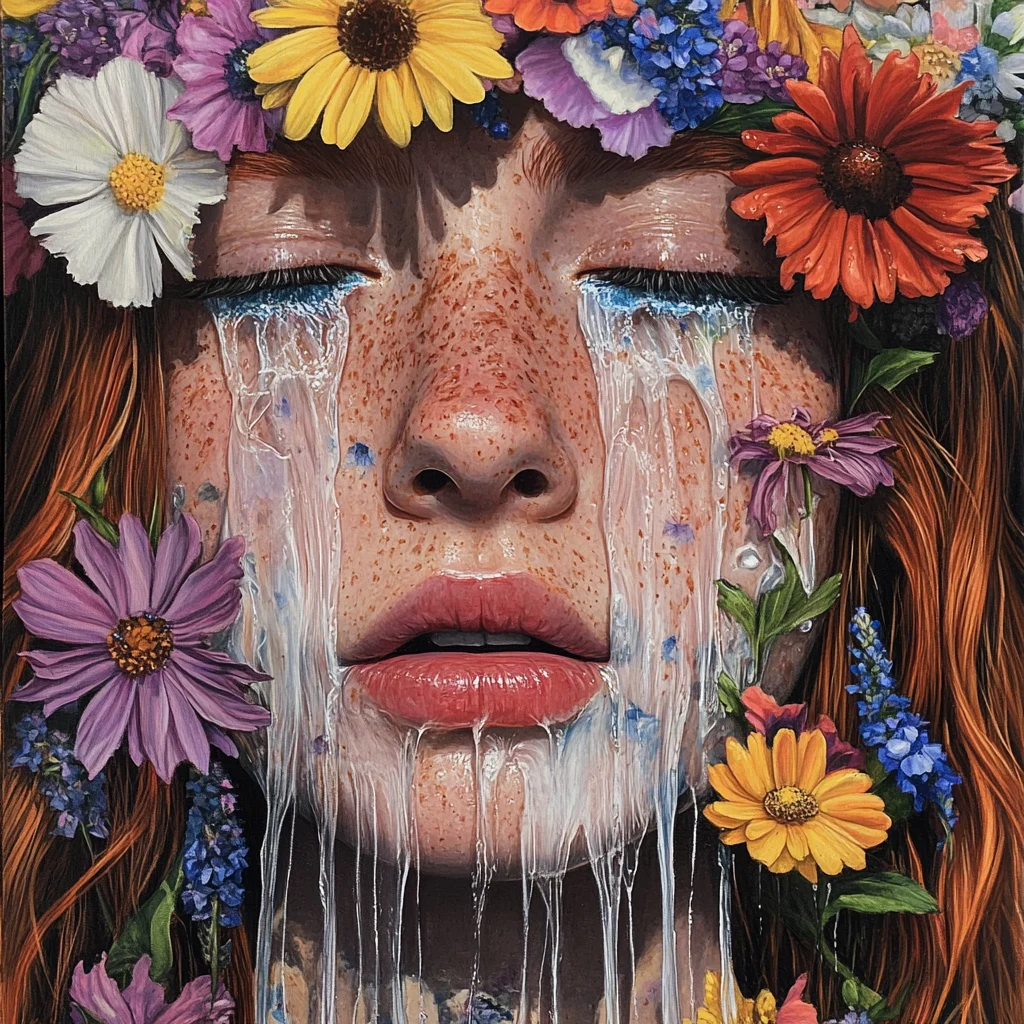
Why Do Magic Mushrooms Make You Cry? What the Research Shows
By Lily Pelenis / July 11, 2024 / 12 min read
Magic mushrooms make many people cry because psilocybin changes how the brain responds to emotion, and feelings that normally stay in the background come up at full strength. Research on psychedelic experiences has a name for one version of this, “emotional breakthrough”, and a validated questionnaire to measure it: it covers facing difficult feelings you usually push aside and an emotional release followed by relief (Roseman et al., 2019).
Crying on shrooms can be sad, happy, or both at once, and it is not on its own a sign that something went wrong. Below is what the studies measured, how dose and setting change the picture, what helps while it is happening, and when a hard trip is a reason to reach out for support.
TLDR
Psilocybin acts on serotonin 2A receptors, and blocking those receptors blocked its effects on mood and on how people read emotional faces (Kometer et al., 2012). Brain imaging links it to the amygdala, a key emotion centre: in 19 people with treatment-resistant depression, amygdala responses to emotional faces went up the day after psilocybin, which the researchers read as people reconnecting with emotions rather than muting them (Roseman et al., 2018). In a survey of 379 people, emotional breakthrough scores rose with dose and were higher when people took a psychedelic with a therapeutic plan and intent (Roseman et al., 2019).
Grief is one of seven measured parts of a challenging trip (Barrett et al., 2016). In a survey of 1,993 people about their worst mushroom trip, 84 percent still said they benefited from it, but 7.6 percent of those whose trip was more than a year earlier had sought treatment for lasting psychological symptoms (Carbonaro et al., 2016). A sober sitter, a comfortable setting and a measured dose from our dosing guide make tears easier to move through. If distress lasts after the trip, the 9-8-8 Suicide Crisis Helpline is open 24 hours a day by call or text (988.ca).
Who this article is for
- People who cried on shrooms and want to understand why it happened
- Anyone planning a trip who wants to know whether tears are likely and how to prepare for them
- Trip sitters who want to know how to support someone who starts crying
- Readers who still feel shaken days after an emotional trip and want to know when to get help
Lily Pelenis
Author’s note
“Why did I cry so much?” is one of the questions people ask us most after a trip, often a little embarrassed, as if crying meant they did it wrong. I do not think it does. Tears are one of the most common things people describe, and the research on psilocybin and emotion gives a clearer answer than the mystical explanations you usually find online.
I also want to be careful. Crying can be a release, and it can also be part of a trip that was more than someone could handle. Nothing below is a promise that tears will heal anything. It is what studies measured and what people report, with every claim linked to its source, plus the safety points I would want a friend to know first.
Why do magic mushrooms make you cry?
Magic mushrooms make you cry because psilocybin changes how the brain processes emotion, so feelings arrive bigger and with less of the usual filter. Our own dosing guide puts it plainly for a light 1 to 2 g dose: “Emotions come up bigger.” Research points to three overlapping reasons.
Psilocybin changes how the amygdala responds
The amygdala is a key part of the brain’s emotion circuits. In a placebo-controlled brain imaging study of 25 healthy volunteers, psilocybin lowered amygdala reactivity to negative images, and the drop tracked with a rise in positive mood (Kraehenmann et al., 2015). In people with treatment-resistant depression, the picture was different the day after a second dose: responses in the right amygdala to fearful and happy faces went up, the opposite of what antidepressants usually do. The researchers proposed that SSRIs mute negative emotions while psilocybin lets people “confront and work through them” (Roseman et al., 2018). A follow-up analysis of the same group described psilocybin as reviving emotional responsiveness (Mertens et al., 2020).
These are small studies, and they measured different people at different times, so they do not explain any single trip. What they agree on is that psilocybin changes emotional processing in measurable ways, which fits with how often people describe tears.
Feelings you usually push aside come up
Many people say a trip brought back grief, old memories or conflicts they had not thought about in years. Researchers built this into the Emotional Breakthrough Inventory: its first item is facing emotionally difficult feelings that are usually pushed aside (Usona Institute trial protocol). When those feelings come up without the usual distractions, crying is a common response.
Not all tears on shrooms are sad
Emotional tears come from strong feelings of any kind, including sadness, joy and grief (Cleveland Clinic). People describe crying on shrooms from awe, from love for someone, from music, or from relief. In healthy volunteers, psilocybin tilted mood and attention toward positive emotions and away from negative ones (Kometer et al., 2012), so happy tears are just as plausible as sad ones.
What is an emotional breakthrough on shrooms?
An emotional breakthrough is the research term for a part of a psychedelic experience where people face difficult emotions and come out with a sense of release or closure. Imperial College London researchers validated a six-item questionnaire to measure it, the Emotional Breakthrough Inventory, using online surveys from 379 people before and after a planned psychedelic experience (Roseman et al., 2019).
What the six questions ask
Each item is rated on a line from “not at all” to “very much so”, after the effects have worn off (Usona Institute trial protocol):
- Facing emotionally difficult feelings that are usually pushed aside
- Experiencing a resolution of a personal conflict or trauma
- Being able to explore challenging emotions and memories
- Having an emotional breakthrough
- Getting a sense of closure on an emotional problem
- Achieving an emotional release followed by a sense of relief
Crying is not one of the questions, but it is easy to see why so many people cry during the kind of experience the scale describes.
What the studies found
| Study | Who was studied | What it found |
|---|---|---|
| Roseman et al., 2019 | 379 people surveyed before and after a planned psychedelic experience | Emotional breakthrough scores rose with dose and were higher with therapeutic intent. In 75 people with low baseline well-being, breakthrough scores predicted increases in well-being, and challenging experience scores predicted smaller increases. |
| Kraehenmann et al., 2015 | 25 healthy volunteers, psilocybin and placebo | Lower amygdala reactivity to negative images on psilocybin, linked to a rise in positive mood |
| Roseman et al., 2018 | 19 people with treatment-resistant depression, scanned before and after | Higher right amygdala responses to fearful and happy faces the day after the second dose |
| Barrett et al., 2020 | 12 healthy volunteers, one high dose | One week later, lower negative mood and amygdala response to faces; one month later, positive mood was still higher while amygdala response was back to baseline |
| Carbonaro et al., 2016 | 1,993 people describing their worst mushroom trip | 39 percent ranked it among the five most challenging experiences of their life; 84 percent said they benefited from it |
| McGowan et al., 2025 | 22 adults with PTSD in a clinical trial, one 25 mg dose with psychological support | Crying was one of the most common side effects, recorded in 6 of 22 people (27.3 percent); no serious side effects were reported |
Two cautions. Most of these studies used measured doses of pure psilocybin with screening and trained support, which is not the same as a trip at home. And a questionnaire score is not a cure for anything; it measures what people reported about their experience.
Is crying on shrooms a sign of a bad trip?
Crying on its own is not a sign of a bad trip, but it can be part of one. Johns Hopkins researchers who built the Challenging Experience Questionnaire found seven parts to a difficult psilocybin trip: grief, fear, death, insanity, isolation, physical distress and paranoia (Barrett et al., 2016). Grief often shows up as tears, but tears can also come with fear or panic, and that is a different situation.
Difficult does not always mean harmful
In the large survey of worst trips, how difficult the experience was went along with greater lasting increases in well-being, while longer difficult trips went along with smaller increases (Carbonaro et al., 2016). The same survey found real harm: 11 percent put themselves or others at risk of physical harm, 2.7 percent received medical help, and the risk was higher with bigger doses and without physical comfort and social support.
How to tell the difference in the moment
People often describe release tears as coming in waves, with a sense of relief afterwards, while overwhelm feels like being trapped in fear or confusion that does not ease. If you want a deeper look at that difference from someone who lived it, our post Tears, Shrooms and Self-Discovery covers it in a personal way. Either way, in a pooled analysis of 110 lab volunteers, strong anxiety or distress happened only at the two highest doses, and every case was managed with interpersonal support alone (Studerus et al., 2011). A calm, sober person nearby matters.
Does the dose change how much you cry?
Yes, bigger doses tend to bring bigger emotions. Emotional breakthrough scores rose with dose in the Imperial College survey (Roseman et al., 2019), and so did the difficulty of challenging trips (Carbonaro et al., 2016). Our dosing guide describes the emotional side of each level like this:
| Dose level | Dried mushroom | What our dosing guide says about emotions and setting |
|---|---|---|
| Microdose | 0.1 to 0.25 g | Sub-perceptual; “You will barely feel it.” |
| Light | 1 to 2 g | “Emotions come up bigger. Introspection deepens. Still fully in control.” |
| Moderate | 2 to 3.5 g | “Deep introspection, big emotional experiences.” Comfortable setting, sober trip sitter nearby, no other plans. |
| Strong | 3.5 to 5 g | “Big insights are on the table, but so is an overwhelming emotional wave.” Experienced only, sitter required. |
| Heroic | 5 g and up | Ceremonial, advanced only. |
Strength varies between strains and even between mushrooms, so the same gram weight can feel different. If you are worried about crying hard, the light range is the place to learn how you respond.
What should you do if you start crying on shrooms?
If you start crying on shrooms, the usual advice is to let it happen rather than fight it, stay somewhere safe and comfortable, and keep a trusted sober person close. Research safety guidelines centre on the same things: trust between the person and their sitter before the session, careful preparation, a safe physical space and interpersonal support during it (Johnson et al., 2008).
If you are the one crying
- Remind yourself that the effects are temporary; Health Canada lists the usual duration as about four to six hours (Health Canada).
- Get physically comfortable: a blanket, water, a place to lie down. Lack of physical comfort was linked to riskier trips (Carbonaro et al., 2016).
- Tell your sitter what you need, even if it is just “stay with me”.
- Do not take more mushrooms to “push through” it.
If you are the sitter
Stay calm, stay close and do not try to fix or explain the feeling. Researchers who study crying describe it as a signal that draws empathy and support, and propose that crying can also soothe the person doing it (Gračanin et al., 2014). The same review notes that mood after crying varies a lot from person to person, so watch for signs that the person is getting more frightened rather than calmer, and get medical help if their safety is at risk.
Medications that change the picture
Some medications change how psilocybin feels. SSRIs and SNRIs were often reported to weaken mushroom effects, sometimes for up to three months after stopping (Gukasyan et al., 2023), which is one reason a trip can feel flat (see why your mushroom trip didn’t work). Lithium with psychedelics was linked to seizures in 47 percent of 62 reports (Nayak et al., 2021), and a systematic review found that combining psychedelics with other drugs, including antidepressants such as MAOIs, can weaken or strengthen effects (Halman et al., 2024). Talk to your prescriber, and never stop a medication on your own.
How do you make sense of a crying trip afterwards?
Most people make sense of an emotional trip in the days and weeks after it, a process the psychedelic field calls integration. A 2022 review of the concept describes integration as something done with therapists, coaches or other practitioners, or on your own, and lists a wide range of practices (Bathje et al., 2022). Common ones include writing down what came up, talking it through with someone you trust, and noticing what you want to do differently.
Emotional changes can outlast the trip itself. In a small Johns Hopkins study, positive mood was still higher one month after a single high dose (Barrett et al., 2020). In a depression trial, the quality of the experience, not just the visuals, predicted how people were doing five weeks later (Roseman et al., 2018). That is why people often say the crying mattered less than what they did with it. For the harder side of that question, see how to tell integration from avoidance.
When should you get help after an emotional trip?
Get help if distress does not settle after the trip, if it gets in the way of sleep, work or relationships, or if you have any thoughts of harming yourself. Lasting problems are uncommon but real: in a study of 608 people who reported extended difficulties after psychedelics, the most common were anxiety and fear, existential struggle, feeling disconnected from others, and feeling unreal or detached. For about a third the problems lasted more than a year (Evans et al., 2023).
- 9-8-8 Suicide Crisis Helpline: call or text 9-8-8, 24 hours a day, every day of the year. If your safety is at immediate risk, call 9-1-1 (988.ca).
- Hope for Wellness Help Line: 1-855-242-3310 or online chat, available 24/7 to all Indigenous people across Canada (Hope for Wellness).
- Your doctor: especially if you take medication, have a personal or family history of psychosis or bipolar disorder, or symptoms are not easing.
Research screening exists for a reason: lab studies exclude people with a personal or family history of psychotic disorders or other severe psychiatric disorders (Johnson et al., 2008). Psilocybin is also illegal in Canada unless authorized by Health Canada (Health Canada).
Plan the trip around the feelings
If tears are part of why you are curious, plan for them: a light dose to start, a quiet place, water and a blanket, and a sober person you trust. Our dosing guide sets out every level in grams and in each format we carry, and dried Golden Teacher, which sits in the middle of our potency scale, is a steady place to learn how you respond.
FAQ
Is it normal to cry on shrooms?
Yes, it is common. Crying was one of the most frequent side effects in a psilocybin trial for PTSD, recorded in 6 of 22 participants (McGowan et al., 2025), and “big emotional experiences” are what our dosing guide expects at a moderate dose.
Why do I cry on shrooms when I’m not sad?
Emotional tears come from strong feelings of any kind, including joy (Cleveland Clinic). Many people describe crying on shrooms from awe, love, music or relief rather than sadness.
Is crying on mushrooms good for you?
There is no proof that crying itself is the active ingredient. Emotional breakthrough scores predicted increases in well-being in one survey (Roseman et al., 2019), but that is a correlation in self-reports, not a promise.
Can you stop crying during a trip?
Usually it passes on its own. A change of position, a blanket, water and a calm sober person nearby help more than trying to hold the tears in, and lab volunteers’ distress was managed with support alone (Studerus et al., 2011).
Why didn’t I cry on shrooms?
Not everyone cries, and it does not mean the trip failed. Dose, setting and medication all change how emotional a trip is; SSRIs and SNRIs, for example, often weaken the effects (Gukasyan et al., 2023).
Is it normal to feel emotional for days after shrooms?
Mood changes can last; one small study found changes in mood at one week and one month (Barrett et al., 2020). If what you feel is distressing or getting worse, talk to a doctor, or call or text 9-8-8 in Canada.
Which mushroom strain is best for an emotional trip?
No strain is proven to be more emotional than another; dose and setting matter more. Golden Teacher is known for a trip that turns inward, and we think it is a good strain to learn your own dose on.
Find your strain, then your dose
Every product on the shelf shows its potency rating and the effects people report. The dosing guide walks through amounts before you order, and a real person answers if you write to us.
About the author
Lily Pelenis
I'm a Toronto-based lifestyle coach, psilocybin enthusiast and certified yoga instructor. I guide people toward mindful, balanced living, and my coaching blends modern wellness practices with ancient wisdom to help clients find deeper self-awareness, resilience and joy.
I've been experimenting with shrooms for over a decade, and I write about my own experience. I love nature, psychology and humans. That is why my articles tend to follow a trip past its peak and into the weeks after it.
Some pieces start with a strain I have tried myself, such as Golden Teacher or Albino Roller Coaster. Others are the practical ones, like how much to take the first time or how to brew a tea that sits easier on the stomach. Over the years I've learned that intention is everything, so I write about why you are taking it before I get to how.
Related articles
50% off your first order
New strains, restocks, sales and new writing from the Notebook, by email. No spam, unsubscribe any time.