
I’ll be honest: the first time I read a participant in a psilocybin study describe a “God encounter,” I paused for a while and re-read the sentence. They were talking about feeling a presence that was loving, intelligent, and vast—a moment where the ordinary boundaries of self seemed to dissolve. At first, I didn’t know whether to be skeptical, fascinated, or just sit quietly with the sheer weight of the words. How do you even begin to capture something so deeply personal, so ineffable, in a clinical research setting? And if researchers can capture it in some form, what does that even mean? Is this proof of something beyond the physical, or just the brain’s response to a potent compound? The ambiguity is both frustrating and compelling, and it’s exactly the tension this article is meant to explore—especially when you start thinking about why true spirituality must include hard emotions rather than only blissful or comforting ones.
Over the years, I’ve found myself circling back to this topic again and again. I’ve listened to podcast interviews with participants who tear up describing the sense of being “seen” or “held” by something greater than themselves. I’ve read articles where researchers painstakingly try to quantify what participants call “God” in surveys and scales, often settling on terms like “mystical-type experience” to translate subjective awe into measurable variables. And I’ve scrolled through forums and social media threads where everyday people try to make sense of experiences they can barely put into words. Each time, I’m struck by the sheer human weight of these reports: they’re deeply meaningful to participants, yet almost impossible to pin down scientifically.
What fascinates me most is the way researchers navigate this space without collapsing into cynicism or unwarranted hype. They can’t say, “this is literally God,” and they don’t dismiss the experience as a hallucination either. Instead, they focus on patterns: the ways participants describe unity, transcendence of time and space, deep positive mood, and ineffable meaning. They ask questions like: how often do participants report this? Are these experiences associated with psychological changes or shifts in perspective? Can they be safely supported in a clinical context? The answers are necessarily cautious and carefully qualified, and that caution can feel slow or even frustrating to someone who’s curious about these phenomena.
✨ Check out this article on using vision boards to shape your year ahead. It breaks down how to turn ideas into focused intentions
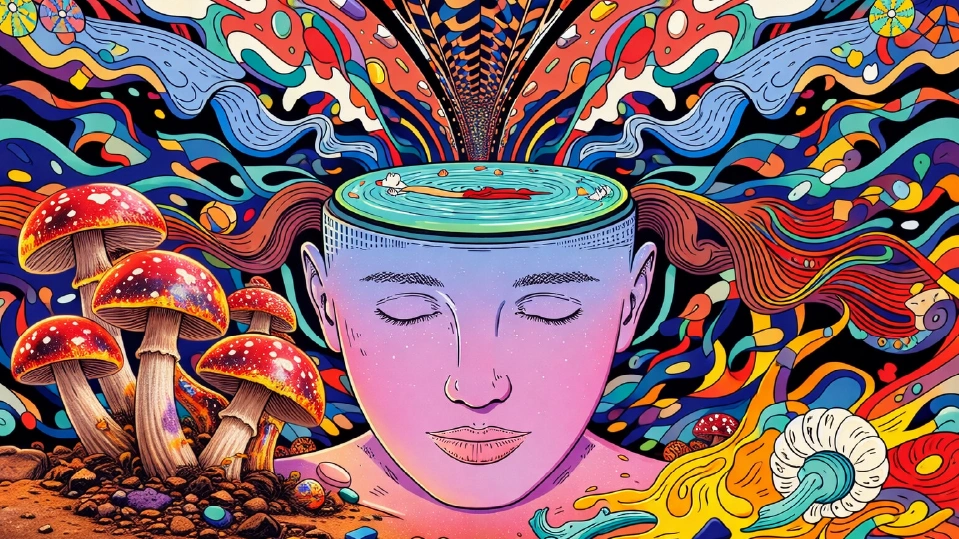
For me personally, encountering this research has been a lesson in balancing wonder with critical thinking. On one hand, it’s easy to be swept up in the poetic descriptions and the emotional resonance of someone feeling enveloped by love or understanding. On the other hand, the science reminds us that experience is not the same as universal truth, and subjective perception—while powerful—is shaped by context, expectation, culture, and even the language available to describe it. I’ve realized that part of the intrigue of “God encounters” is that they sit at the intersection of human psychology, neurobiology, and personal meaning-making, much like searching for spiritual lessons in ayahuasca often blends lived experience with interpretation. They’re both deeply real and deeply interpretive at the same time, and that duality is exactly why researchers take them seriously without claiming metaphysical authority.
In writing this article, my goal is to help you sit with that tension too: to explore what participants report, how researchers measure it, and what patterns emerge, all while keeping a grounded, human perspective. We’re not here to promise that you will experience anything yourself, nor to claim we can explain ultimate reality. Instead, we’re here to translate complex, subjective phenomena into accessible language, highlight the patterns researchers can actually measure, and show how the science respects the depth of human experience. I want readers to feel both informed and curious—to appreciate the awe participants describe without losing sight of the caution and nuance that clinical research requires.
Ultimately, these reports of “God encounters” aren’t just about psychedelics. They’re about how humans seek meaning, grapple with mystery, and experience moments that feel larger than life. They’re about the interplay between mind, emotion, and interpretation. And they’re about how science tries, carefully and respectfully, to map something that might otherwise seem completely beyond the reach of measurement. As we move through the article, we’ll unpack exactly what researchers can say, what they can’t, and how these findings help us understand—not dictate—the contours of experiences that are, in a very real way, profoundly human.
🧠 Interested in how modern mysticism is showing up in today’s culture? Learn more in this article

Personal Reflections On Encountering These Stories And Wondering How Science Keeps Up
I first started noticing the “God encounter” language in articles, podcasts, and interviews from psilocybin trials a few years ago. I remember reading a participant’s description that felt almost impossibly tender: a quiet awareness of being “held and forgiven by something larger than themselves.” My initial reaction was a mix of fascination and skepticism. How do researchers even begin to measure something so personal? And how can they write about it in a way that respects the participant’s sense of awe without implying that it’s objectively real in a metaphysical sense? Over time, I realized that this question isn’t just about science—it’s about language, culture, and human experience. It’s the same curiosity that leads people to ask, can mushrooms teach us anything sacred?, and to wonder whether these moments point to something beyond chemistry or simply reflect the deepest layers of the human mind. This article grew from sitting with that question: what is actually happening in these studies, and how do scientists translate reports of “meeting God” into something research-literate while keeping the human story intact?
Defining a “God Encounter” Without Saying What It Really Is
One of the first things to clarify is that a “God encounter” isn’t a universally agreed-upon experience, and researchers generally avoid treating it as proof of anything supernatural. In plain language, it’s often a participant’s way of describing feelings of intense presence, unity, love, intelligence, or sacredness. People label these experiences in different ways: some call it God, others speak of the universe, a source, ancestors, or simply oneness. Psychologically, these moments can be understood as intense awe, emotional openness, or shifts in self-referential processing. Neuroscientifically, studies examine altered self-boundaries, emotional salience, and patterns of brain activity associated with profound meaning. Clinical research usually prefers the term “mystical-type experience” because it captures the essence without assuming a specific spiritual interpretation.
Why Researchers Care About These Experiences, Even If They Don’t Claim Divine Truth
Researchers study these reports for several practical reasons. For one, participants consistently describe experiences of profound meaning, so they are clearly a recurring phenomenon worth understanding. Studies have found correlations—though not causation—between these experiences and changes in perspective, mood, or well-being, making them relevant to mental health outcomes. Researchers are careful to note that mystical-type experiences can be supportive or destabilizing depending on context, mindset, and integration. Crucially, science isn’t trying to answer theological questions; it’s documenting patterns, associations, and measurable shifts that can inform clinical understanding and safety practices.
Check out this magic mushroom!!

A.P.E Psilocybin Chocolate Bar
$60.00Dried Penis Envy Magic Mushrooms
Price range: $60.00 through $240.00Golden Teacher Gummies for Microdosing
$25.00


How Clinical Studies Try To Measure Something That Feels Totally Ineffable
Capturing a “God encounter” in research requires operationalizing subjective experience in a structured way. Commonly measured dimensions include a sense of unity or oneness, feelings of sacredness or reverence, the “noetic” quality (the feeling that the insights are deeply true), transcendence of time and space, profound positive mood states like awe or love, and ineffability—how hard it is for participants to put words to the experience. Limitations are important to acknowledge: surveys and scales can never capture the full texture of what someone feels. Reporting is shaped by language, culture, and personal expectations, which is also why narratives from sacred mushroom journeys can vary so widely even when the underlying experiences share similar features. Correlation does not equal causation, and these metrics do not provide proof of God, objective spiritual truth, or a universal meaning applicable to everyone.
The Accessible Science Behind Why These Experiences Might Happen
Psychologists and neuroscientists studying mystical-type experiences often look at shifts in self-referential processing—why people describe “ego dissolution.” Emotional openness and flexibility tend to increase, while certain aspects of salience processing make ordinary events feel profoundly meaningful. Reappraisal and memory updating may occur, allowing participants to reinterpret personal narratives. Awe is both a subjective state and a measurable effect with emotional and cognitive dimensions. Expectation and context strongly influence interpretation, which is why research carefully structures dosing sessions, support, and guidance. None of this proves a metaphysical claim; it simply helps explain why people might experience something that feels beyond the ordinary.
Why Researchers Urge Caution: Risks, Limitations, And Who Might Need Extra Care
These experiences are powerful, and that power means they can be destabilizing. Researchers warn against spiritual bypassing—using intense experiences as a substitute for meaningful emotional work. Meaning inflation can happen when participants start seeing everything as a sign or message. Identity disruption or existential confusion may occur, and individuals with prior religious trauma may find such experiences triggering. It’s important to distinguish between a single powerful experience and lasting, integrated life change. Safety, support, and intentional reflection are key components in clinical settings.
🌙 Want to understand what it feels like to truly let go during a spiritual experience? Discover what this article shares
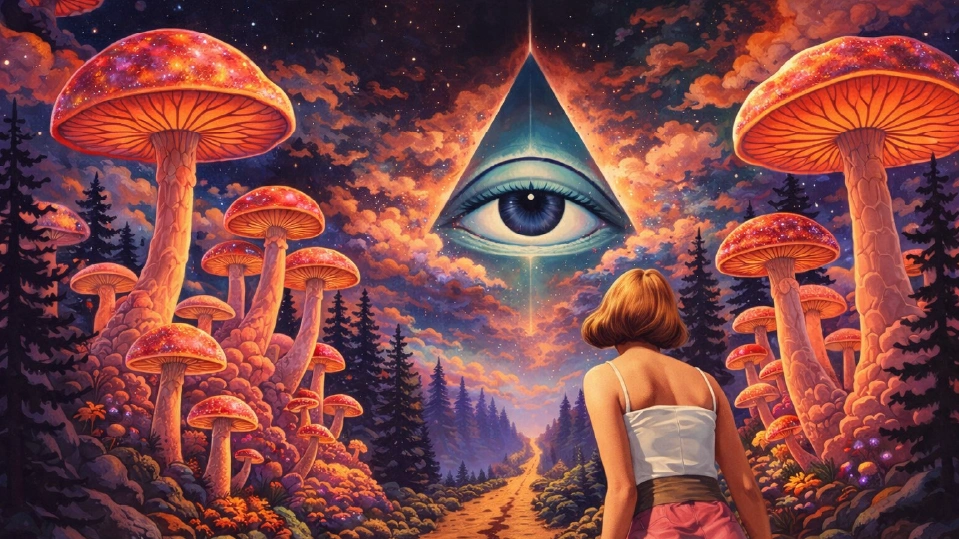
Making Sense Without Making Truth Claims: How Research Supports Reflection, Not Dogma
One of the most useful ways to approach a “God encounter” in research is to treat it as a tool for meaning-making rather than a verdict on reality. Participants can reflect on how these experiences shift their relationship to themselves, the values they notice, and the choices they want to make moving forward. Integration over time—rather than instant interpretation—is central. Reflection prompts can help readers and participants alike, such as: What did this experience shift in how I relate to myself? What values felt undeniable? What might change if I treat it as information rather than instruction? What support would help me stay grounded? These questions encourage curiosity and humility without turning the experience into a hierarchy, checklist, or spiritual obligation.
Why Paying Attention to Mystical-Type Experiences Can Be Valuable, Even If You Don’t Believe in God
At the end of the day, the research shows that what matters isn’t whether the experience confirms or disproves any particular religious claim. It’s that these encounters consistently produce measurable psychological effects—feelings of awe, interconnectedness, and perspective shifts. They are human experiences that can be described, studied, and understood within clinical research, while still leaving room for personal interpretation. By approaching them thoughtfully, we can respect both the participant’s sense of wonder and the scientific framework that aims to make these experiences safer and more comprehensible.
Holding Awe, Curiosity, And Respect Together Without Claiming The Ultimate Answer
“God encounters” are a name for moments of profound awe, unity, and meaning. Research helps us map their contours—what participants feel, how they describe it, and how it correlates with psychological shifts—without claiming what the source of the experience actually is. These experiences can be powerful, destabilizing, humbling, or transformative, but they are never universal prescriptions for insight or spiritual truth. Approaching them with curiosity, humility, and careful reflection allows us to appreciate their significance without overstepping into dogma. For those interested in learning more, Magic Mush Canada offers thoughtfully curated content on mystical-type experiences, meaning-making, and how research measures subjective states—resources designed to inform, not instruct, and to support understanding without overselling.
🌍 Wondering how public systems are approaching shaman-led experiences and psychedelic practices? Check out this article for an overview of what institutionalized psychedelia can look like

Wrapping Up The Conversation On “God Encounters” And Why You Can Trust Magic Mush Canada To Guide You Through Understanding These Experiences
After diving into what clinical research actually observes when participants report a “God encounter,” it’s clear that these experiences are as complex and varied as the people who describe them. They’re often marked by awe, interconnectedness, emotional intensity, and a sense of something greater than the self—but research stops short of claiming metaphysical truth. What studies can do is translate subjective experiences into patterns that help us understand psychological shifts, how meaning is constructed, and the contexts that support safe, reflective exploration. Participants might describe moments of forgiveness, unity, or transcendent love; researchers measure these experiences carefully, noting correlations with positive outcomes while respecting that each encounter is deeply personal and culturally framed.
At Magic Mush Canada, we see the value in this approach: honoring the richness of human experience while remaining grounded in evidence and safety. Our role is to provide high-quality magic mushrooms like shroom edibles, educational resources, and a supportive environment for those curious about mystical-type experiences and their potential psychological impact. We aim to demystify these experiences, help you understand what research says, and empower you to approach them responsibly. Whether you’re exploring for personal reflection, learning more about how these experiences intersect with mental health, or simply curious about the science behind awe and meaning-making, we are here to guide you with accurate information, safe practices, and expert support.
By keeping curiosity and care at the center, you can approach these experiences thoughtfully—without needing to adopt any spiritual belief, chase a particular outcome, or feel pressured to interpret the experience in a certain way. At Magic Mush Canada, we believe that understanding mystical-type experiences, engaging with research responsibly, and reflecting on your own insights are all part of a conscious, informed approach. Our commitment is to help you navigate these questions safely, with high-quality products, clear guidance, and a community that values learning, curiosity, and well-being.
If you’re interested in learning more about mystical-type experiences, psilocybin studies, or the careful science behind these encounters, our blog, dosing guides, and educational materials are designed to inform—not instruct—and to provide a safe, trustworthy space to explore the fascinating intersection of psychedelics, awe, and meaning-making. With Magic Mush Canada, you have a partner who respects both the power of these experiences and the need for evidence-based understanding, helping you stay grounded while exploring the edges of human consciousness.

