In the evolving world of psychedelic ceremony, new tools and techniques emerge every year — but some changes arrive not with fanfare, but with felt resonance. Trinity mushrooms are one of those changes. In the past few years, a growing number of facilitators have begun turning toward this strain as a ceremonial ally. Not because it’s trendy. But because it works.
Trinity is not a beginner’s mushroom — not in strength, not in subtlety. But in the hands of skilled guides, it becomes something rare: a medicine that holds complexity without losing clarity. A psychedelic that engages body, mind, and spirit in real time — and does so with enough coherence to keep the container intact. This is not just a strong strain. It’s a ceremonial strain.
READ: Trinity Dried Magic Mushrooms: The Triple Threat of Psychedelic Exploration

Facilitator Insight: Intelligence in the Medicine
I remember the first time I used Trinity in a ceremonial setting. It was a small group—six people—each each with different backgrounds, different intentions. I’d worked with other strains before, many times. I knew the usual rhythms. But Trinity was different. The shift in the room was palpable: not explosive, but undeniably expansive. Everyone dropped in fast. Not in a scattered way, but as if the medicine had called them in.
There was a kind of shared coherence that I hadn’t experienced with other strains. One participant curled up and sobbed gently. Another began moving their hands through the air, eyes closed, following some unseen current. What struck me was how present everyone remained — with themselves, with each other, with the process. I didn’t need to intervene, just hold the space as it held them.
Afterward, several participants described the journey as “layered,” “beautifully intense,” or “exactly what I didn’t know I needed.” It was then I realized: Trinity doesn’t explode. It envelops. And for a facilitator, that kind of intelligence in the medicine is a gift.
What Makes Trinity Ceremony-Friendly?
Trinity has emerged as a favorite among facilitators not because it delivers spectacle, but because it delivers integration. This is a strain that speaks to the whole human being. It doesn’t isolate visuals from emotion, or cognitive insight from bodily release. It braids them together — weaving a thread through the heart, the mind, the soma, and the subtle body.
Part of what makes Trinity so effective in ceremonial settings is the clarity of its arc. The come-up is fast but manageable, often arriving within 40–60 minutes. The peak is strong, layered, and immersive — but doesn’t fragment the participant. Visuals, sensations, and emotional content often arrive together, not in competition but in collaboration. This helps participants stay engaged, grounded, and open.
Facilitators also note that Trinity tends to create a shared field — an energetic coherence where each person remains inwardly focused, yet subtly attuned to the group. Unlike some strains that can scatter attention or heighten reactivity, Trinity supports containment. It amplifies the individual’s process within the collective container — not outside of it.
This balance is what makes it ceremonial. It’s not just about potency. It’s about presence. And Trinity shows up fully.
Check out this magic mushroom!!

A.P.E Psilocybin Chocolate Bar
$60.00Trinity – Dried Magic Mushroom
Price range: $60.00 through $195.00True Albino Teachers – Dried Magic Mushroom
Price range: $65.00 through $215.00


The Ideal Setting for Trinity (According to Facilitators)
Trinity thrives in containers designed for depth. While it can be powerful in one-on-one work, many facilitators are now using it in small to mid-size group settings — 4 to 10 people — where energetic dynamics can be monitored and supported without overwhelming the guide. The medicine itself does a lot, but the container is what makes the journey sustainable.
Successful Trinity ceremonies often follow a structured arc. Morning rituals at the beginning helps orient the participant. Simple somatic grounding — breathwork, body scan, or gentle movement — helps ease the transition as the medicine takes hold. Curated music is essential: not just a playlist, but a soundscape that guides without over-directing. And post-trip sharing allows the group to metabolize the experience communally, without analysis.
Facilitators also report that Trinity pairs well with embodied practices. Breathwork during the peak, light movement before or after, even humming or gentle vocalization — these tools help participants integrate bodily sensations into awareness, especially when emotions surge. One somatic therapist shared, “With Trinity, the body becomes a source of information, not just reaction. It’s one of the few strains where the physical and the emotional feel like they’re in dialogue.”
Most importantly, Trinity invites honesty. It doesn’t demand performance. In ceremony, this means participants are often able to share or reflect without dramatizing. They’re not “having a trip.” They’re having an experience — one they can carry back into their lives.
Challenges and Considerations
No medicine is perfect. And no strain — no matter how ceremonial — is without its complexities. Trinity’s power comes from its full-spectrum activation, but that same strength can challenge those who are unprepared.
Facilitators emphasize that Trinity may not be suitable for those new to psychedelics, or for individuals with unprocessed trauma who haven’t established somatic or emotional coping tools. The medicine doesn’t overwhelm for no reason — but it can bring up a lot, quickly. And that’s not something to underestimate.
Unlike milder strains that allow for “light ceremony,” Trinity tends to work in deep water. That means the journey window may be longer — 5 to 6 hours of active experience, sometimes more — and the integration period may stretch over days. This requires both the facilitator and the participant to build in time, not just space. It’s not a drop-in, drop-out situation.
Integration planning is essential. Trinity opens multiple channels — physical, emotional, spiritual — and all of them require follow-through. This might include somatic journaling, art-making, community check-ins, or even a second session focused entirely on post-trip processing. Without this container, the insights of Trinity can feel overwhelming or disjointed. With it, they become part of a transformation.
The point is not to avoid the challenges. It’s to meet them with intention — and build the structure that can hold their gifts.
READ: Beyond Belief: Can Mushrooms Teach Us Anything Sacred?
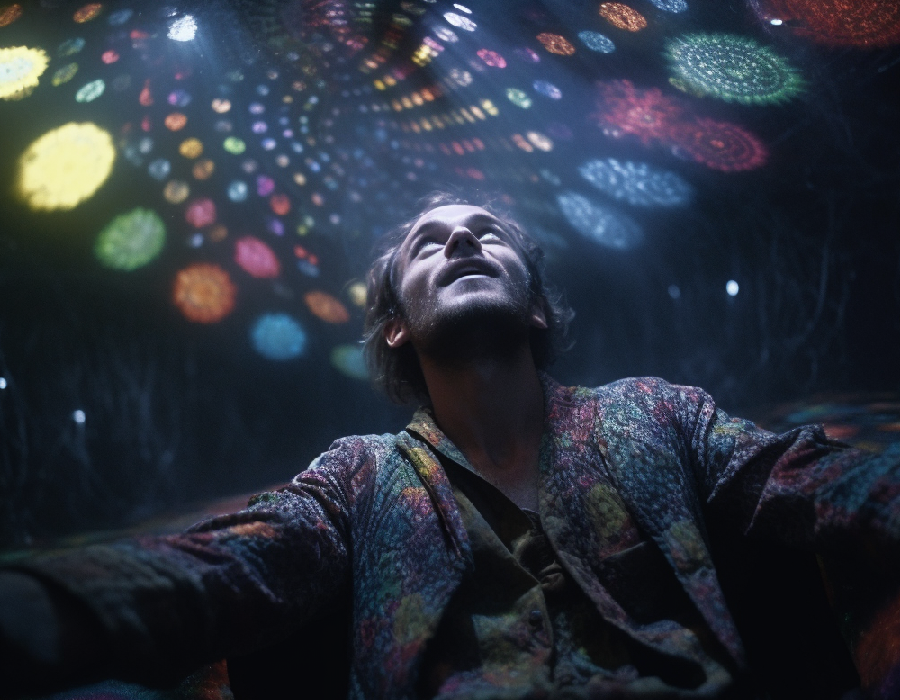
Facilitator Voices — What They’re Saying About Trinity
In the evolving landscape of psychedelic facilitation, Trinity mushrooms have garnered attention for their unique ability to engage participants on multiple levels. Facilitators across different modalities have observed and shared their experiences with this strain, highlighting its distinctive qualities.
Trinity Faith, a seasoned guide from Brown Girl Almighty, offers one-on-one mushroom ceremonies that incorporate intuitive channeling, meditation, and sound healing. She notes that Trinity mushrooms facilitate profound personal insights and healing, allowing participants to connect deeply with themselves in a supportive environment.
Cate Ritter, a licensed psilocybin facilitator and wellness advocate, emphasizes the importance of meticulous preparation for psilocybin sessions. She discusses how Trinity mushrooms can illuminate unconscious parts of oneself, aiding in mental toughness and personal growth. Cate’s approach includes crafting personalized playlists and incorporating comfort items to enhance the journey.
Hugh T. Alkemi, founder of MushroomShaman.com, brings a shamanic perspective to Trinity mushroom ceremonies. He underscores the ancient wisdom and traditions associated with these experiences, guiding participants through transformative journeys that connect them with the conscious universal mind.
These facilitators, among others, have observed that Trinity mushrooms offer a balanced and comprehensive experience, engaging the body, mind, and spirit. The strain’s ability to foster clarity, emotional depth, and spiritual elevation makes it a valuable ally in ceremonial settings. Facilitators appreciate Trinity’s capacity to support participants through intense yet navigable experiences, often leading to lasting personal transformation.
READ: Modern Mysticism: How Psychedelics Are Reawakening Spiritual Curiosity

Post-Ceremony Integration and Support
Because Trinity touches so many aspects of self, post-ceremony integration needs to reflect that complexity. It’s not just about talking — it’s about feeling, moving, resting, and remembering. Facilitators are designing integration around multimodal practices that give participants space to digest what happened without rushing to closure.
Slow walks, breath journaling, painting or drawing, and nonverbal expression like sound or movement can help the experience settle. Some guides hold integration circles 24–72 hours after the ceremony — enough time for the system to settle, but soon enough that memory is still vivid.
Suggested reflection questions can help bridge the experience:
Body:
What did my body want to teach me?
Were there movements I resisted — and why?
What sensations felt like truth?
Mind:
What narratives softened or fell away?
Was there a moment where I saw something clearly, without trying?
How do I want to relate to thought moving forward?
Spirit / Emotional Core:
Did something beyond language speak to me?
What part of me felt fully witnessed?
Is there something I met that I don’t need to explain — only honor?
The goal of integration is not explanation. It’s continuation. It’s learning to live with the truth that Trinity revealed, and letting that truth shape you — not all at once, but slowly.
READ: Set Your Sights: The Role of Visuals in Psychedelic Healing

A Medicine for the Whole Human
Trinity isn’t a strain for shallow ceremony. It’s for facilitators who trust the process — and trust their participants. It doesn’t ask for performance. It asks for presence. And in the right container, it delivers one of the most complete, embodied journeys available in the current psychedelic landscape.
It’s a medicine that listens. That leads gently, even when the work is deep. That doesn’t fracture the self into pieces, but gathers it back together. And for facilitators committed to whole-person healing — to ceremonies that don’t just impress but transform — Trinity is an ally worth knowing.
If you’re called to bring Trinity into your ceremonial practice, sourcing matters. That’s why Magic Mush has become a trusted presence in the facilitator community — especially in Toronto and Ottawa.
Magic Mush offers Trinity mushroom bundles specifically curated for intentional use, as well as shroom gummies and shroom chocolates designed for pre- and post-journey integration. Every product is grown, handled, and distributed with reverence.
When you work with Magic Mush, you’re not just purchasing medicine. You’re stepping into a relationship — with the fungi, the land, and the people who care for both. Trinity is a whole-human psychedelic. Magic Mush is a whole-practice provider.