They don’t always start with fireworks. Sometimes, the first visuals come as softly as a memory — a flicker of light behind closed eyes, a shape shifting gently at the edge of awareness. For many who’ve experienced psilocybin, the visual component of the trip is not just a curious side effect; it’s a doorway. A bridge between mind and body. A strange and beautiful language that bypasses logic and speaks directly to the soul.
I remember my first real journey with psilocybin. I had done the reading, prepared my space, meditated, journaled, and gone in with intention. I wasn’t hoping to “see” anything specific — if anything, I was skeptical of all the swirling visuals people described. I was there to feel, not to look. But then, as the medicine took hold, I closed my eyes and was greeted by something unexpected: a slow bloom of color, moving in sync with my breath. Not dramatic, not cartoonish, but undeniably alive. It felt like the colors were breathing with me. Then the colors became textures — velvet purples and golden threads that wrapped around images I didn’t recognize at first. A staircase. A door. A garden full of vines curling into infinity. These weren’t images I consciously remembered, yet they felt like home.
As I followed these visuals deeper, emotions came in waves — not in response to what I saw, but in harmony with it. A tangle of ivy turned into a childhood friend’s laughter. A burst of yellow light cracked open a long-held grief I hadn’t known I was still carrying. The visuals weren’t random; they were emotionally coded. The mushrooms didn’t show me something new — they showed me what was already there, buried under years of distraction and defense.
READ: Trip Reports: What People See (and Feel) with the Visual Bundle

This is what many don’t understand about psychedelic visuals. They aren’t just trippy screensavers for the mind. They are mirrors, metaphors, messengers. They reveal things we’ve forgotten how to say. They allow us to feel things too complex for language. And often, they come when words fail — when the healing needed isn’t verbal, but visual. The vines, the spirals, the sacred geometry — these are the nervous system’s hieroglyphs. They speak in a dialect of sensation, color, and movement that our conscious minds can’t always translate but instinctively understand.
In the growing field of psychedelic-assisted therapy, visual experiences are gaining recognition not just for their beauty, but for their utility. Therapists and researchers are learning to honor these visuals as part of the healing journey — not as distractions or hallucinations, but as essential expressions of the inner self. Whether it’s a person confronting trauma through abstract symbolic images, or someone reconnecting with joy through radiant light patterns, visuals often become emotional landmarks. They’re the parts of the trip we carry with us — not just as memories, but as guides.
In this article, we’ll explore what makes psychedelic visuals so powerful. Why do they matter? What purpose do they serve in therapeutic settings? And how can we learn to navigate them — especially when they’re overwhelming or confusing? We’ll dive into the science, the symbolism, and the deeply human stories that show us how seeing can become healing.
Because when the inner world finally becomes visible — when pain, love, memory, and release take shape in color and movement — something inside us shifts. We soften. We open. We see, not just with our eyes, but with our hearts. And in that space, healing truly begins.
READ: From Art to Insight: How Visual Psychedelic Experiences Reshape Perception

Why Do Psychedelic Visuals Matter?
Psychedelic visuals are often the first thing people think of when they hear about substances like psilocybin. The swirling colors, the fractal patterns, the sense that reality itself is bending — these images have become part of popular culture’s portrayal of the psychedelic experience. But beyond the surface-level fascination, visuals serve a much deeper purpose. They’re not just spectacle. They’re a language — one that reveals, reflects, and heals.
At the most basic level, these visuals begin in the brain. Psilocybin, the active compound in many psychedelic mushrooms, interacts primarily with serotonin receptors — specifically the 5-HT2A receptors — and this interaction leads to increased activity and connectivity in various regions of the brain. One of the most affected areas is the visual cortex, the part of the brain responsible for interpreting visual information. But what’s fascinating is that these visuals don’t only occur when your eyes are open. Many people report intense visuals with their eyes closed, suggesting that what we “see” on psychedelics isn’t just what’s in front of us — it’s what’s inside of us, too. The brain begins to create and interpret imagery in new ways, often pulling from emotional memory, stored imagery, and symbolic language.
Certain patterns — especially geometric or organic ones — are reported almost universally across cultures and personal backgrounds. Spirals, mandalas, lattice grids, and wave-like motions show up again and again, echoing art from ancient civilizations to modern-day visionary painters. These recurring motifs suggest something deeply human, even archetypal, about how we process meaning through shape and form. There’s a kind of visual DNA at work — shared symbols that speak to something primal within us. Some researchers believe these visuals may be the mind’s way of trying to communicate internal states using the symbolic tools it has at hand: texture, color, rhythm.
But visuals on psychedelics aren’t just interesting neurological phenomena — they’re emotionally significant. When you’re in a psychedelic state, the boundary between feeling and perception blurs. Seeing becomes feeling, and feeling becomes insight. A slowly pulsing light might evoke an intense sense of peace. A shifting pattern might unlock a long-buried emotion. In therapeutic settings, this fusion of the sensory and emotional can be incredibly powerful. You’re not just looking at something — you’re in it. You’re immersed in a living metaphor.
This is especially important when we talk about subconscious healing. In daily life, we rely heavily on language to make sense of our experience. But language is limited — it often can’t capture the full nuance of grief, shame, trauma, or longing. Psychedelic visuals bypass this limitation. They allow the subconscious to express itself in its own symbolic syntax. You might see an image of a childhood bedroom, not because you were consciously thinking about it, but because your psyche is guiding you there. You might see a garden filled with animals you’ve never seen before, yet each one feels emotionally charged — as if they each carry a message only your deeper self understands.
This inner symbolism is what makes psychedelic visuals matter so much in healing work. They’re not just beautiful or weird or fascinating — they’re meaningful. They represent the emotional undercurrents of your inner world, translated into form and color. They reveal wounds, offer metaphors for growth, and sometimes provide comfort without explanation. And in a world that often encourages us to intellectualize our pain, visuals remind us that healing is also deeply felt — and sometimes, simply seen.
Check out this magic mushroom!!

A.P.E Psilocybin Chocolate Bar
$60.00Dried Penis Envy Magic Mushrooms
Price range: $60.00 through $240.00Golden Teacher Gummies for Microdosing
$25.00


Visuals as a Tool — When They Calm, When They Open
For many, psychedelic visuals serve as more than just an aesthetic feature. They’re tools. They can soften the mind’s usual defenses, gently guiding someone into emotions they’ve avoided or forgotten. A slowly undulating blue light can calm a racing heart. A shifting pattern can act like a visual lullaby, inviting safety where there was once anxiety.
In therapeutic settings, visuals can take on a guiding role. Some people describe feeling like they were being shown something — not in a directive or controlling way, but as though the imagery had its own gentle intelligence. A former client once described seeing an image of her childhood bedroom, perfectly intact, despite having not thought of it in decades. In that space, she felt her younger self and offered her comfort. That simple visual opened the door to years of unresolved grief, which she was finally able to hold with compassion.
Visuals also help people process trauma in ways that words cannot. Abstract images — like a broken chain knitting itself back together or a dark shape dissolving into light — can represent complex emotional movements. Forgiveness. Release. Reconnection. These symbols don’t need translation because the body understands them immediately. They bypass logic and go straight to the emotional core. And in that core, people often find clarity they didn’t know they were seeking.
When Visuals Become Too Much — And How to Stay Grounded
It’s important to acknowledge that not all visuals feel calming or clear. Sometimes, the imagery that surfaces can be intense, unfamiliar, or even scary. But that doesn’t mean it’s harmful. In fact, one of the key insights of psychedelic healing is learning how to meet intensity with presence rather than panic.
Fast-moving patterns, unfamiliar faces, or surreal scenes can feel disorienting — especially if you’re already feeling anxious or unsure. The trick is not to resist them, but to anchor yourself in something stable. Grounding techniques like focusing on the texture of a blanket, listening to a steady rhythm, or placing a hand on your chest can help bring you back into the body. Remembering to breathe, slowly and deeply, can slow down the racing sensation that sometimes comes with overwhelming visuals.
It’s also useful to remember the difference between “scary” and “intense.” Sometimes a visual is emotionally charged, but not dangerous. A face from your past might appear and bring up complicated feelings. A shape might pulse with energy that you can’t quite name. These experiences are invitations — not threats. And they always pass. What matters most is how you relate to them in the moment. With kindness. With curiosity. With the understanding that the integration, the meaning-making, often comes later.
READ: Using Art As A Tool For Processing Psychedelic Insights

After the Vision — How Visuals Stay With Us
One of the most beautiful aspects of psychedelic visuals is how they linger. Not in the form of hallucinations, but in memory, in mood, in the way you notice the world afterward. A specific color palette might start showing up in your dreams. The outline of a shape you saw might comfort you in daily life, like an emotional talisman you didn’t know you needed.
Many people find it helpful to revisit visuals through creative practices. Drawing, journaling, or even dancing can help bring the imagery into the body’s memory. I’ve seen people turn a single visual from their journey — a glowing sphere, a broken staircase, a bird with human eyes — into a recurring motif in their healing work. These aren’t just images. They’re symbols of transformation.
Over time, these images can become anchors. When life gets chaotic or stress returns, recalling that one moment — the golden spiral, the soft blue light, the blooming field — can offer calm and perspective. It’s not just about remembering what you saw. It’s about remembering how it made you feel. Psychedelic visuals, in this sense, are more than ephemeral phenomena. They’re emotional markers. And often, the deeper healing happens not during the experience, but in the quiet moments that follow.
Suggested Resources for Further Exploration
If you find yourself intrigued by the way visuals function in psychedelic healing, you’re not alone. Many researchers and writers have explored this fascinating intersection between art, emotion, and consciousness. For a deeper dive, the article “Psychedelic Imagery as Internal Language” from DoubleBlind offers insightful takes on how visuals can act as personal metaphors. It walks through real experiences and unpacks the psychological meaning behind common patterns and symbols.
A classic piece that still holds weight is Aldous Huxley’s The Doors of Perception. In it, Huxley explores how psychedelics alter our perceptual filters, offering profound insights into how we see — and how we interpret what we see. One quote that particularly stands out is: “What comes through the door is the infinitely significant and beautiful; what comes through is not a conditioned response, but the world as it is.” It’s a reminder that psychedelic visuals aren’t about illusion. They’re about perception — expanded, unfiltered, and deeply felt.
For those interested in integrating their own experiences, creative practices like expressive art, movement, and even voice journaling can serve as bridges between the visual and emotional worlds. Whether you’re working with a guide or exploring in a personal, intentional setting, these visuals are more than a trip — they’re a language. One you can learn to listen to, honor, and carry forward.
READ: A Handy Guide on How to Stop A Shroom Trip
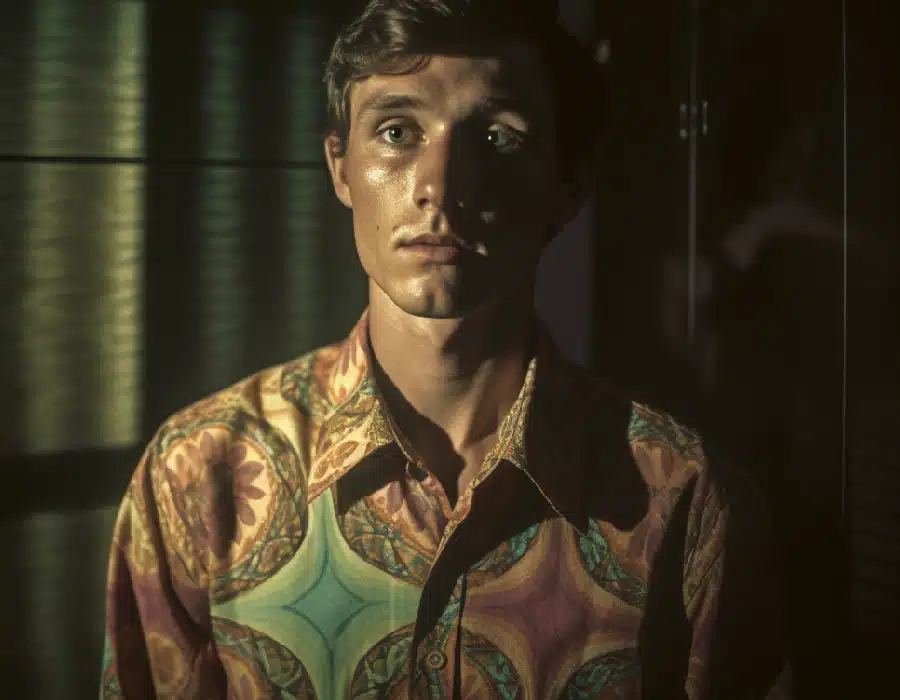
Let Magic Mush Guide Your Visual Healing Journey
If you’re curious about exploring the world of psychedelic visuals and healing in a safe, supported, and deeply intentional way, Magic Mush is here to walk beside you. We’re more than a trusted source for premium psilocybin products in Canada — we’re a growing community that believes in the transformative power of psychedelics when approached with respect, care, and curiosity. Whether you’re just starting to explore or have walked this path before, we offer resources, education, and compassion every step of the way.
At Magic Mush, we don’t just provide top-tier products like dried magic mushrooms and chocolate shrooms. We also foster understanding. Our team is committed to making psychedelics accessible and safe, removing the stigma around these sacred tools through thoughtful guidance and rigorous testing. With us, you’re not just getting a product; you’re entering a space where healing is possible, beauty is honored, and growth is supported.
From seamless online shopping to transparent customer service and community education, Magic Mush is your partner in psychedelics. We’re here to ensure your experience is grounded, informed, and personal. Whether you’re drawn to psilocybin for its visual language or emotional depth, know that you don’t have to navigate it alone. With Magic Mush, you’re never just a customer — you’re part of a movement. One that sees healing not as a destination, but as an unfolding vision.