
A lot of people go into a mushroom experience expecting something vast. Not just interesting or emotional, but cosmically vast. Galaxies. Fractals. A sense of touching the infinite. We carry stories of other people’s trips in our heads—the ones that sound like journeys to other dimensions, encounters with entities, or downloads of universal truth. And then, instead of being launched into the universe, we find ourselves sitting face-to-face with our own patterns. Our relationships. Our grief. Our anxiety. Our tenderness. Sometimes even very ordinary thoughts we were hoping to escape. That mismatch can land with a dull thud, leaving a quiet sense of disappointment, as if we somehow missed the memo. There’s often a brief, unspoken question that follows: did I do it wrong?
I’ve been there myself. Early on, I remember coming down from a trip feeling almost embarrassed by how mundane—or painfully personal—my journey had been. While friends described cosmic oneness or encounters that sounded like plotlines from another world, I was sitting with memories, regrets, and tender little corners of myself I usually avoided. For a moment, it felt like I had failed some unspoken test, or that my experience was too small to matter. But over time, I realized that sitting with those “ordinary” insights—the grief, the tenderness, the things I couldn’t fix immediately—was where the real depth had quietly been hiding all along.
This article starts from a gentle but important reframe. When mushrooms don’t show you the universe, it doesn’t mean the experience failed. For many people, especially those seeking healing, clarity, or a better relationship with themselves, being shown yourself is not a lesser outcome. It’s often the point. The challenge—and the gift—is learning to meet that reflection with patience, curiosity, and a willingness to sit with what’s true, even when it’s quiet, messy, or deeply human.
🧘♂️ Meditation has been practiced for centuries as a way to calm the mind and reduce stress. Read this article to understand how meditation actually works and why it’s effective

Why I Started Paying Attention to This Mismatch Between Expectation and Experience
I’ve noticed over the years how psychedelic storytelling tends to skew toward the spectacular. We share the wild visuals, the cosmic downloads, the moments that sound impressive even to people who’ve never touched psychedelics. Those stories are real, and they matter. But they quietly set a cultural expectation that something is missing if your experience doesn’t look like that. I’ve heard people describe deeply emotional, self-facing journeys and then immediately minimize them. “It was just my stuff,” they’ll say, almost apologetically.
That framing stuck with me. What if encountering yourself isn’t a consolation prize? What if the most profound thing mushrooms can do, at least sometimes, is strip away the spectacle and show you the parts of your life you’ve been skimming past? Not in a dramatic, cinematic way, but in a way that actually changes how you live.
The Cultural Script That Says Mushrooms Are Supposed to Show You the Universe
There’s a very recognizable script floating around psychedelic culture. Mushrooms show you fractals, entities, cosmic oneness, the secret architecture of reality. You receive downloads. You come back with metaphysical certainty and a story that sounds bigger than your ordinary life. Social media amplifies this through a kind of highlight reel effect, where the most visually striking and philosophically grand experiences rise to the top.
Underneath that expectation, though, there’s usually something very human. A longing for meaning. A desire for relief from confusion or pain. Curiosity about consciousness. The hope that there’s a clean answer out there somewhere, waiting to be revealed. Sometimes that hope quietly includes facing your inner demons, even if the language we use makes it sound more mystical than psychological. None of that is naive or wrong. It’s just worth noticing that the script itself can quietly shape how we judge our own experiences.
What Happens Instead for Many People When Mushrooms Turn the Lens Inward
For a lot of people, mushrooms don’t immediately open onto the cosmos. They open onto the self. Relationships come into sharp focus, especially attachment patterns that have been quietly running the show. Grief can surface, sometimes old grief that never really had a place to land. Shame and self-judgment might show up, not as abstract concepts but as felt experiences in the body.
There are often childhood themes, identity stories, and long-held beliefs about who you are and what you’re allowed to want. Body sensations become loud, revealing stored stress or emotional holding that words never quite touched. You might notice how much effort goes into performing, hiding, or controlling how you’re seen. None of this looks cosmic from the outside, but it can be deeply intimate. Intimacy, it turns out, is a form of depth that doesn’t always sparkle.
🌿 Enigma mushrooms are wrapped in stories and speculation about their effects. Discover this article to see what’s actually known and discussed

Why the Self Can Feel Bigger Than the Cosmos in These Moments
It can be surprising how overwhelming personal material feels compared to abstract ideas about the universe. One reason is that the psyche tends to prioritize what’s unresolved. What hurts, what’s unfinished, what’s been avoided tends to rise to the surface first. Emotion drives salience, so what carries emotional charge becomes the main event—and this is often the point where people start quietly wondering what to do when a trip turns dark.
There’s also something about vulnerability that strips away abstraction. When defenses soften, it’s harder to hide behind big ideas. Meaning often shows up relationally before it shows up metaphysically, through forgiveness, grief, or self-compassion rather than through visions of infinity. Awe doesn’t always arrive as light beams and stars. Sometimes it arrives as a moment of gentleness toward yourself that you’ve never allowed before.
The Disappointment That Can Follow When It Doesn’t Feel “Spiritual Enough”
It’s very common to feel disappointed after a self-facing experience, even if it was intense. People think, “I didn’t get the real experience,” or “It was just my stuff,” or “I wanted answers, not feelings.” That disappointment deserves to be named without being shamed. It makes sense to feel let down when expectations and reality don’t line up.
The quiet reframe here is that “just your stuff” is actually your life. Feelings aren’t noise in the system; they’re data. They point to where change is possible. The personal is often where integration can actually happen, because it connects directly to how you treat yourself, how you relate to others, and how you move through the world once the experience is over.
Check out this magic mushroom!!

A.P.E Psilocybin Chocolate Bar
$60.00Dried Penis Envy Magic Mushrooms
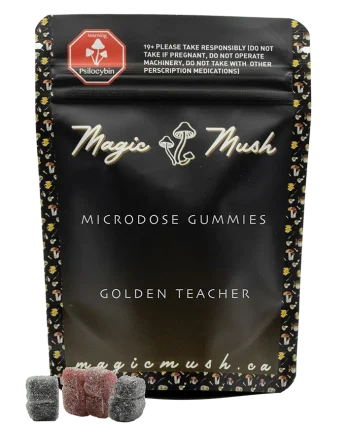
Price range: $60.00 through $240.00Golden Teacher Gummies for Microdosing
$25.00


A Light, Research-Literate Way to Understand Why This Happens
Without overclaiming or turning to jargon, there are some grounded reasons mushrooms often amplify internal material. Emotion and memory can become more vivid, making personal experiences feel immersive and immediate. The boundaries that usually keep thoughts at arm’s length can soften, so inner content feels closer, sometimes even unavoidable—especially material that the mind has been holding at a distance as a way of protecting you from trauma.
Attention tends to narrow and deepen, which means whatever shows up gets a lot of focus. Pattern recognition increases, for better and worse, so connections between past and present become more obvious. Expectations also shape interpretation. If you go in hoping for answers, you may notice unanswered questions more acutely. Research can describe tendencies like these, but it can’t predict any individual journey, and it doesn’t need to explain away the mystery to be useful.
The Integration Question That Comes After Being Shown Yourself
Once the experience ends, a different question emerges. What do you do with what you saw? When mushrooms show you yourself, they’re rarely handing you a finished conclusion. They’re extending an invitation. Maybe to repair something that’s been neglected. Maybe to finally feel something you’ve been avoiding. Maybe to tell the truth about a pattern that keeps repeating. Maybe to set a boundary or choose a little more gentleness.
Integration is slow by nature. Big meaning doesn’t require a cosmic storyline to be valid. Often the goal isn’t transformation that looks impressive from the outside, but a steadier, more honest life. One where insights translate into small, consistent changes rather than dramatic declarations.
🔍 Geometry in visions can feel mysterious and striking to observers. Discover what this article explains about how and why it occurs

Common Traps That Can Pull People Away From the Point Even When the Experience Was Actually Trying to Help
One of the most common traps is chasing spectacle after a self-facing experience. When mushrooms turn the lens inward and show you your own patterns, emotions, or unfinished business, it can feel underwhelming compared to the cosmic stories you’ve heard. Instead of sitting with what showed up, some people immediately start planning the next journey, assuming they just didn’t go “far enough.” The trap here isn’t curiosity; it’s avoidance. Spectacle can become a way to outrun intimacy, to keep reaching for something bigger so you don’t have to stay with what’s already asking for your attention especially when the medicine does not erase the pain, but reveals it more clearly.
Another subtle trap is turning insight into identity. After a meaningful experience, especially one that feels emotionally clarifying, it can be tempting to wrap your sense of self around it. Suddenly you’re the person who’s “seen it,” who’s “done the work,” who’s “awake now.” What started as an honest encounter with yourself hardens into a role you feel pressure to maintain. This can quietly shut down growth, because once insight becomes identity, questioning it starts to feel like a threat rather than an invitation.
Some people fall into the trap of forcing a cosmic narrative onto a deeply personal message. If what arose was about grief, boundaries, or unmet needs, it can feel too ordinary to trust. So it gets reframed as destiny, past lives, or universal truth. This doesn’t mean those interpretations are wrong, but they can become a way to distance yourself from the practical implications. A personal insight asks something of you in daily life. A cosmic story can stay safely abstract.
There’s also the tendency to make big life decisions too quickly. Mushrooms can bring clarity, but they also bring intensity, and intensity can masquerade as certainty. Quitting a job, ending a relationship, or radically changing direction immediately after an experience can feel aligned in the moment, but alignment deepens when it’s tested over time. The trap isn’t change itself; it’s skipping the integration phase where insight gets translated into sustainable action.
Comparison is another quiet thief of meaning. When people measure their experiences against online trip reports or community lore, it’s easy to conclude that you’re behind, broken, or missing something essential. Someone else’s fractals can start to feel more legitimate than your tears. This comparison flattens the deeply individual nature of psychedelic experiences and can make people dismiss the very material that has the most potential to change their lives.
🧠 Many people talk about visuals as part of the therapeutic aspects of altered states. Check out this article for insights into why visuals matter in healing

Another trap is treating pain as proof of depth. There’s a cultural undertone in some psychedelic spaces that equates suffering with authenticity. If it hurt, it must have been real. If it was gentle or ordinary, maybe it didn’t count. This mindset can lead people to seek out difficulty unnecessarily or to distrust moments of ease, forgiveness, or calm. Depth doesn’t always announce itself through anguish. Sometimes it arrives quietly, without drama.
Confusing intensity with truth is closely related. Just because something felt overwhelming doesn’t mean it was accurate, complete, or ready to be acted on. Psychedelic states amplify experience, and amplification can make partial insights feel total. Holding intensity lightly allows meaning to mature instead of freezing it at its loudest moment.
There’s also a tendency to treat insight as an endpoint rather than a beginning. Once something has been seen, people sometimes assume the work is done. But insight without follow-through can become another form of avoidance, a story you tell yourself instead of a relationship you continue to tend. The point isn’t to accumulate realizations; it’s to live differently, often in very small, unglamorous ways.
Finally, one of the most overlooked traps is dismissing ordinary integration because it doesn’t feel spiritual enough. Journaling, conversations, therapy, boundary-setting, rest, and consistency can feel painfully mundane after a psychedelic experience. But this is often where insight actually takes root. When people skip these steps, chasing the next experience instead, they miss the quiet transformation that happens when meaning is allowed to settle into daily life.
None of these traps mean someone has failed or misunderstood their experience. They’re natural responses to powerful states of consciousness in a culture that prizes spectacle and certainty. Noticing them isn’t about self-criticism. It’s about staying close to the original invitation, which, more often than not, was asking for honesty, patience, and care rather than another dramatic story.
When the Universe Isn’t the Lesson and You Quietly Are Instead
Sometimes mushrooms don’t show you the universe because the universe isn’t what needs your attention. Sometimes they show you your patterns, your grief, your tenderness, your self-deception, and your capacity for honesty. Those revelations may feel less glamorous, but they’re often more consequential. They’re the ones that touch daily life, relationships, and long-term wellbeing.
We should see this as a healthy, human side of psychedelic experience rather than a disappointment. Meaning-making doesn’t always arrive as cosmic truth. Often it arrives as self-reflection, compassion, and the courage to face what’s actually there. If this resonates, we invite you to explore more of our writing on psychedelic integration, difficult experiences, and self-compassion. The universe is vast, but your life is where insight becomes real.
🔄 Sometimes microdosing doesn’t give the results people expect. Read this article to learn what you can do when it doesn’t work like you hoped

When Mushrooms Don’t Show You the Universe but Gently Turn You Back Toward Yourself, and How We at Magic Mush Canada Support That Kind of Honest, Human Journey
This article has been about reframing a quiet but common experience in psychedelic culture: going in expecting the universe and coming out face-to-face with yourself instead. We explored how cultural narratives often emphasize cosmic spectacle, why that expectation makes sense, and why it can lead to disappointment when the experience turns inward instead. We talked about how mushrooms often amplify personal material like relationships, grief, shame, tenderness, and long-held patterns, and why that intimacy can feel less “spiritual” even though it’s often more impactful. We also looked at the role of emotion, attention, and expectation, and why integration matters far more than whether an experience looks impressive from the outside.
At Magic Mush Canada, we see this self-facing side of psychedelic experience not as a letdown, but as one of the most meaningful ways mushrooms can meet people where they are. Our approach has always been grounded in the understanding that mushrooms don’t exist to deliver instant cosmic answers or dramatic transformations. They’re tools for exploration, reflection, and insight, and those insights often point back to your real life: your habits, your relationships, your boundaries, and your capacity for honesty and self-compassion. That’s why education, safe usage, and thoughtful integration are central to everything we do.
We’re committed to destigmatizing magic mushrooms in Ottawa while also encouraging a mature, discerning relationship with them. From our carefully sourced, rigorously tested products to our blog, dosing guides, and educational resources, our goal is to support experiences that are grounded, informed, and respectful of both the mystery and the responsibility that comes with it. We believe meaningful psychedelic experiences don’t need to be flashy to be transformative, and that personal insight, when held gently and integrated over time, can lead to real, lasting change.
If this article resonated with you, we invite you to explore more of our resources or connect with our community. Whether you’re seeking high-quality products, clear information, or a supportive space that values curiosity over certainty, “Magic Mush Canada” is here as a trusted partner on your journey. Sometimes the most profound revelation isn’t the universe at all, but the quiet recognition of yourself, and we’re honoured to help support that kind of exploration.

