
I was alone in my room, curled up in the corner, sure I was dying. Every breath felt like a decision, and I remember thinking that maybe this was it, maybe I had gone too far. My heart was racing, my skin felt like it was buzzing with electricity, and I couldn’t trust a single thought that came into my head. Time stretched into something unrecognizable, and fear became the only thing I could feel. That night taught me more about fear—and healing—than any therapy session ever could. It stripped me down in ways I didn’t think were possible, but in the end, it also gave me something unexpected: perspective. I didn’t come out of it feeling defeated. I came out of it realizing that sometimes the scariest moments in life are actually the ones that can set you free, if you’re willing to look at them differently.
The truth is, not every psychedelic journey is filled with laughter, beauty, and revelations that feel like they belong on a poster. Sometimes they get messy, raw, and overwhelming. And when that happens, you may find yourself wondering why you ever thought this was a good idea in the first place. That’s what people usually mean when they talk about a “bad trip,” but here’s the thing—it’s not necessarily bad. It’s just dark. It’s heavy. It’s a part of you that maybe you weren’t ready to meet, but it showed up anyway. And as much as it might terrify you in the moment, there’s a good chance it has something meaningful to teach you once the storm passes.
I want you to know that if you’ve ever felt this way—or if you’re scared you might—you’re not alone. Every seasoned psychonaut I know has been through something similar. This survival guide isn’t about pretending bad trips don’t happen, and it’s not about sugarcoating the experience. It’s about talking honestly about what happens when things get dark, and how you can make it through without letting fear swallow you whole. Because with the right mindset and a few simple tools, even the toughest trip can turn into something valuable.
🍄Learn how to navigate a bad trip on magic mushrooms with my guide full of practical coping strategies and calming tips
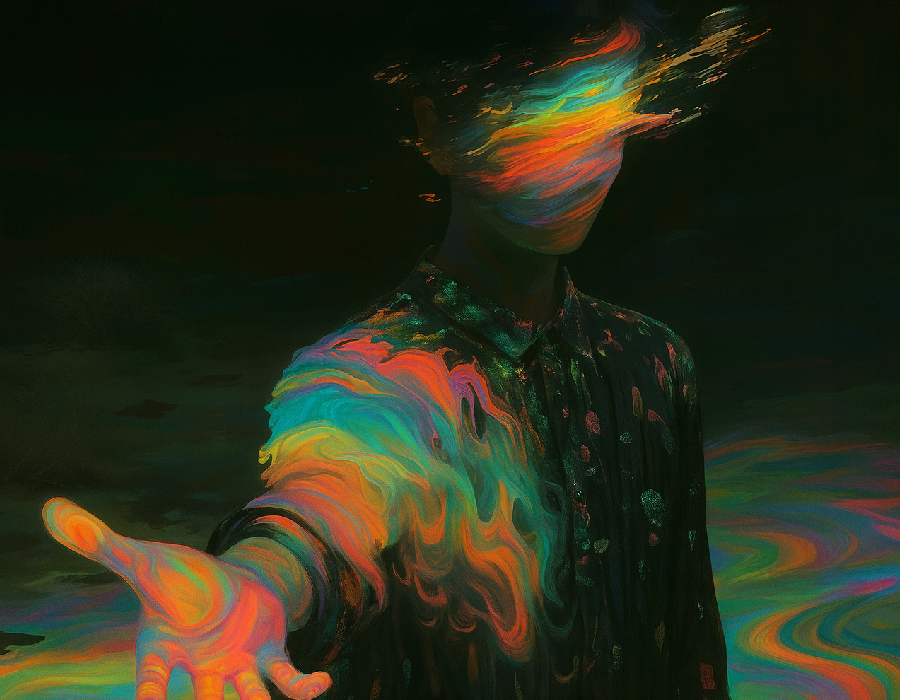
First Things First, Let’s Get Real About What a Dark Trip Actually Is and Why It Doesn’t Always Mean Something Went Wrong
When we talk about a “dark trip,” we’re really describing an experience where everything feels overwhelming. It could be fear, confusion, sadness, paranoia, or even a deep sense of losing control. Some people describe it as staring down their worst nightmares, while others feel trapped in loops of thought that seem impossible to escape. But here’s the twist: dark doesn’t always equal bad. A difficult trip often means your mind is pushing through something unprocessed, unexpected, or simply coming at you too fast. It’s like trying to drink from a firehose—you get blasted with more than you were ready for, and it’s no wonder your system freaks out.
There are a lot of reasons why trips can take this turn. Sometimes it’s as simple as the wrong set and setting. Maybe the music feels too harsh, maybe you’re around people who don’t make you feel safe, or maybe the space just doesn’t feel comfortable. Other times, it’s a matter of dose. Taking more than you’re prepared for can catapult you into territory your mind wasn’t ready to navigate. And then there’s the deeper stuff, like unacknowledged trauma or emotional baggage that the psychedelics decide it’s time to unpack. Even something as basic as physical discomfort—like being too cold, too hot, or even too hungry—can amplify into something overwhelming during a trip. And one of the biggest factors? Resistance. When you fight the current instead of surrendering to it, that resistance can become its own monster.
On a brain level, what’s happening is actually fascinating, even if it doesn’t feel that way in the moment. Psychedelics disrupt the brain’s default mode network, which is usually responsible for holding our sense of self together. When that loosens, the amygdala—the part of the brain that processes fear—can sometimes light up like a fire alarm. That’s why fear can feel so overwhelming, because your brain is both stripped of its usual structure and flooded with alarm signals at the same time. And yet, this is also why many researchers argue that these “bad” trips can be deeply therapeutic. They reveal what’s usually hidden. The problem is, we live in a culture that treats dark trips like failures or horror stories. We rarely talk about them as potential sources of growth, which leaves many people feeling ashamed or broken after the experience. But reframing them as part of the psychedelic journey is essential—because those shadows have just as much to offer as the light.
Okay, Let’s Start Simple: Why Sometimes the Best Thing You Can Do Is Just Breathe First and Interpret Later
The first instinct when panic sets in is to figure it all out. Your mind starts racing, trying to interpret every sensation, every thought, every flicker of fear. But during the peak of a trip, that’s exactly the wrong time to analyze. Your brain isn’t in a place to make sense of what’s happening, and chasing meaning in the middle of chaos usually makes it worse. Instead, the simplest and most effective thing you can do is to bring yourself back to the body—and the fastest way to do that is through breathing.
One of my go-to techniques is box breathing. Inhale for four counts, hold for four, exhale for four, hold for four, and repeat. Another option is the 4-7-8 method, where you inhale for four, hold for seven, and exhale slowly for eight. What these practices do is simple: they give your nervous system a signal to calm down. They also give your mind something structured to focus on, which can pull you out of the spiral. And the beauty of breathwork is that it doesn’t require anything fancy. You can do it lying down, sitting up, or even curled in a ball if that’s where you find yourself.
The key here is to remind yourself that you don’t need to interpret the experience right now. You don’t need to understand the visions, the thoughts, or the fear. All you need to do is keep yourself safe in your body until the peak passes. Think of it like riding out a wave—you don’t need to know why the ocean is storming, you just need to keep yourself afloat until the waters calm. Breathing gives you that lifeline, one inhale and one exhale at a time.
Check out this magic mushroom!!

A.P.E Psilocybin Chocolate Bar
$60.00Dried Penis Envy Magic Mushrooms
Price range: $60.00 through $240.00Golden Teacher Gummies for Microdosing
$25.00


When the Vibes in the Room Are All Wrong, Changing the Environment Can Change the Entire Trip
Here’s the thing: psychedelics make you hypersensitive to your environment. That’s part of their magic, but it’s also part of what can make them so overwhelming. If the lighting feels too harsh, the music feels too chaotic, or even if the temperature feels uncomfortable, those small irritations can explode into massive problems. It might sound silly from the outside—like, how could a flickering lamp or a bass-heavy playlist cause that much distress? But when you’re deep in it, those external details become the whole world. That’s why one of the simplest ways to navigate a dark trip is to adjust your surroundings.
Start with light. Bright, artificial lighting can feel cold and jarring when you’re already vulnerable. Soft, warm light—or even just a candle—can instantly make the space feel safer. Music is another powerful tool. If the playlist feels too intense, switch it up to something calmer, or even turn it off altogether. Sometimes silence is the most healing soundtrack. Temperature matters too. Grab a blanket if you’re cold, or step into a cooler room if you’re overheated. These little physical comforts can add up to a big emotional shift. And if you’re indoors and it feels suffocating, try stepping outside if it’s safe. Fresh air, the feel of grass under your feet, the sound of crickets or wind in the trees—all of these can anchor you back into your body and remind you that the world is bigger than your current spiral.
Changing the environment isn’t just about comfort—it’s about signaling to your nervous system that you’re safe. Imagine being a child who’s scared at night. Sometimes, turning on a nightlight or changing rooms makes all the difference. Psychedelics can put you in a similarly childlike state of vulnerability, and adjusting the space around you helps create a sense of protection. I remember once when I was caught in a dark spiral, the simple act of switching off a chaotic techno playlist and wrapping myself in a fuzzy blanket shifted everything. It didn’t erase the fear instantly, but it softened the edges. It gave me just enough breathing room to remember that I wasn’t trapped, that I had options. And that’s what this step is really about—reminding yourself that you have the ability to shape your environment to support you instead of working against you.
Let’s Be Honest, Most Dark Trips Come Down to Fighting for Control When the Real Trick Is Letting Go
This one is tough, and I won’t pretend it’s easy. Most “bad trips” I’ve had, and most that I’ve heard about from friends, really come down to one thing: a refusal to surrender. Psychedelics have this way of nudging (or sometimes shoving) us out of our comfort zones. And when the mind starts to panic, the natural instinct is to grab onto control wherever possible. We fight the current, we resist the visions, we cling to our sense of self as if letting go means disappearing forever. But paradoxically, it’s that fight that makes the trip feel unbearable. The more you resist, the scarier it becomes.
Letting go, even just a little, can feel like the scariest decision in the world when you’re deep in the throes of psychedelic fear. But it’s also the doorway out of the storm. Remind yourself that you’ve taken this substance, and now it’s here to show you something. It may not be what you expected, but that doesn’t mean it’s meaningless. Sometimes repeating a simple mantra helps. I’ve whispered to myself things like, “This is temporary,” or “I am safe,” over and over until the words became a lifeline. Other times, I’ve told myself, “The medicine is the teacher.” Even if I didn’t fully believe it in the moment, those gentle reminders loosened the death grip I had on control.
One of the most humbling lessons psychedelics teach is that control is an illusion. We never really have it, not in the way we think we do. The trip simply makes that truth impossible to ignore. And while it can be terrifying, it can also be liberating. When you let go, even a fraction, you open the door to flow rather than friction. I once spent hours fighting against a tidal wave of visions, convinced that if I gave in, I’d drown. But when I finally whispered to myself, “Okay, take me where you need to,” the fear dissolved. I didn’t drown. I floated. And in that surrender, I found an unexpected peace. That’s the paradox of psychedelics: the scariest thing to do—letting go—is often the thing that saves you.
🍄Discover how to shape your mindset—not just your trip—with my guide to intentional psychedelic journeys

You Don’t Have to Go Through It Alone: Why Calling in Support Can Be the Lifeline You Didn’t Know You Needed
One of the biggest misconceptions about psychedelics is that you should be able to handle everything on your own. That mindset sets people up for unnecessary suffering. The truth is, humans are social creatures, and sometimes just knowing someone else is there can completely change how safe you feel. If you have a trip sitter or a trusted friend nearby, don’t be afraid to reach out. Their calm presence can be like an anchor in the middle of a storm. They don’t even need to say much—just knowing someone is watching over you can soften the fear.
If you’re tripping solo, support is still possible. One trick I’ve used is writing a note to myself beforehand, something like, “Hey, you’re okay. You took this substance on purpose. This feeling will pass. Just breathe.” Reading those words in my own handwriting during a dark moment has been surprisingly grounding, like a message from a calmer version of myself. And if you really need to, there’s no shame in picking up the phone. Call a friend you trust, someone who understands or at least won’t judge. Sometimes hearing a familiar voice is enough to break the spiral.
There are also resources designed specifically for this. The Fireside Project, for example, has a psychedelic peer support line where trained volunteers talk you through challenging experiences in real time. Knowing something like that exists can be incredibly comforting, even if you never end up using it. The point is, you don’t have to white-knuckle your way through the darkness alone. Asking for help doesn’t make you weak—it makes you human. And often, it’s that connection that helps transform a frightening trip into one that feels meaningful.
Don’t Forget Your Body: How Using Physical Anchors Can Pull You Back When Your Mind Is Spinning Out
When your mind feels like it’s shattering into a thousand pieces, your body can become the safest place to return to. Psychedelics often amplify sensations, which means even simple physical actions can feel incredibly grounding. One of my go-to techniques is rubbing my hands together, focusing on the warmth and friction. It’s a small, repetitive act that brings me back to something tangible. Drinking water can have the same effect—it gives your body a task, and the cool sensation can be a reminder that you’re still here, still human, still safe.
Standing barefoot on the floor can also be surprisingly powerful. Feeling the solidity beneath you reminds you that gravity is still doing its job, that no matter what your mind is showing you, your body hasn’t gone anywhere. Some people find that touching their heartbeat—placing a hand on their chest and focusing on the rhythm—creates a sense of continuity and reassurance. These physical anchors are like little handholds on the cliff face of a difficult trip. They give you something to cling to while the mental storm rages above.
The beauty of using your body as an anchor is that it’s always available. No matter where you are, no matter what’s happening, you can return to your breath, your hands, your heartbeat, or the ground beneath you. Psychedelics can pull your mind into the most abstract realms imaginable, but your body is always present, always real. I’ve had moments where the visions felt endless, but focusing on my toes pressing into the floor snapped me back to reality just enough to remind me that I wasn’t lost. That’s the gift of somatic awareness—it doesn’t erase the trip, but it gives you a home base to return to again and again.
🍄Find out what really happens when you take shrooms two days in a row and how to stay safe with my guide to responsible psychedelic use

Ready to Face the Shadows and Come Out Stronger? Let Magic Mush Canada Be Your Trusted Companion on the Journey
When we think back on everything covered in this survival guide, the biggest takeaway is that dark trips aren’t failures or mistakes. They’re intense moments of honesty, where the walls come down and parts of ourselves we usually keep hidden finally step into the light. By remembering to breathe, adjusting the environment, leaning into surrender, grounding with the body, and calling in support, we give ourselves the tools to not just survive these moments but to grow through them. Psychedelic journeys are unpredictable, but unpredictability doesn’t have to mean chaos. It can just as easily mean breakthrough, if you know how to hold yourself steady.
We’ve also seen that science, experience, and cultural wisdom all agree on one thing: difficult psychedelic experiences can become some of the most meaningful. Instead of seeing them as detours, they often turn out to be doorways. The difference lies in how you approach them. With a calm mindset, the right tools, and an openness to whatever comes, even the darkest trip can turn into a powerful story of resilience and healing. The storm passes, the lesson remains, and what once felt terrifying can end up being the chapter that defines your growth.
This is exactly where Magic Mush Canada steps in—not as some faceless brand, but as a friendly guide who’s been there and gets it. Trips aren’t always sunshine and rainbows, but having a trusted source for quality mushrooms and real education can make all the difference in how you face them. That’s why Magic Mush Canada isn’t just about selling products; it’s about creating a safe, supportive space for people who are curious, cautious, or already deep into their psychedelic journeys.
At Magic Mush Canada, you’ll find not only carefully tested, high-quality dried magic mushrooms, but also resources, education, and a community that truly cares about your well-being. Think of it as having a buddy who has your back, making sure you’re stepping into your trip with confidence instead of second-guessing everything. Privacy, support, and a wealth of knowledge are all baked into the experience so you don’t feel like you’re navigating this wild world alone.
So if you’re ready to explore, heal, and even face the occasional storm with more courage, let Magic Mush Canada be the trusted partner by your side. Whether you’re shopping, learning, or just looking for a safe place to ask questions, this is where you’ll find it. Join the community, dive into the possibilities, and take that next step with the peace of mind that you’re not alone. Because the truth is, every journey—even the dark ones—gets easier when you’ve got the right support along the way.

