It was one of those moments I should have remembered as traumatic. I was deep into a mushroom journey, lying on the floor of a friend’s dimly lit living room, when the familiar grip of fear took over. My body felt foreign, like it was folding in on itself. My breathing grew shallow, and a surge of nausea rose through my throat. The sensation wasn’t unfamiliar—panic attacks had chased me for years—but this time, it was different. Instead of fleeing or freezing, I stayed. I remember opening my eyes to see the soft flicker of candlelight dancing on the ceiling, the gentle rhythm of someone’s breath beside me, the warmth of a blanket grounding me into the earth.
In that moment, something profound happened: I didn’t dissociate. I didn’t spiral. I stayed connected—not just to the people around me, but to myself. The fear was there, but it didn’t take over. It moved through. I didn’t have the words at the time, but what I now understand is this: that trip didn’t traumatize me. In fact, it may have taught my nervous system how not to be traumatized.
Looking back, it’s clear how easily that moment could have broken something open. I’ve had panic attacks before that left me shaky for days. I’ve had emotional shocks that looped inside my head for weeks. But that night, with the help of psilocybin and a carefully held space, the fear metabolized into something else—something softer, more integrated. I walked away with more trust in my body, more awe at my resilience, and a strange new thought I couldn’t quite shake: What if psychedelics can do more than heal trauma? What if they can actually prevent it?
That question stayed with me. And when I began digging into the science—into complex trauma, neuroplasticity, and the mechanisms of psychedelics—I realized that what happened to me wasn’t an anomaly. There’s a growing body of research suggesting that, under the right conditions, psychedelic journeys can interrupt the formation of trauma altogether. They don’t just help us make sense of the past—they help us meet intensity in the present, and emerge without scars.
READ: How to Prepare for a Psychedelic Journey: Setting the Stage for a Meaningful Experience

Trauma Doesn’t Come From the Event—It Comes From What Stays
One of the most misunderstood ideas about trauma is that it’s caused by what happens to us. In truth, it’s not the event itself—it’s what gets trapped inside us after the event ends. Trauma is what lingers when the nervous system gets overwhelmed and there’s no way to process or release what’s happening. In other words, trauma is what happens when we go through something too big, too fast, too alone—and the body doesn’t feel safe enough to integrate the experience.
Neuroscientist Bessel van der Kolk, author of The Body Keeps the Score, has helped shape this understanding: traumatic memory isn’t just a mental imprint, it’s a somatic loop. The body remembers what the mind can’t metabolize. And without support, the brain stores these unprocessed sensations and meanings in parts of the brain associated with fear, defense, and hypervigilance—especially the amygdala. It becomes less about what you recall and more about how your system reacts, often long after the danger has passed.
But this is where psychedelics change the equation. Substances like psilocybin, MDMA, and ketamine have been shown to reduce activity in the amygdala while increasing connectivity in brain regions responsible for meaning-making, emotional regulation, and autobiographical processing. Essentially, they open a neurobiological window where the brain can safely revisit or even confront overwhelming material—without reinforcing fear loops. This isn’t escapism. It’s rewiring, in real time.
In studies of MDMA-assisted therapy, for example, participants often confront traumatic memories without re-experiencing the emotional paralysis those memories once carried. Under the influence of the medicine, and with proper therapeutic support, the brain seems to enter a state where it can reorganize the story of the trauma as it’s happening—or even prevent it from calcifying in the first place. This idea—that psychedelics can act as a buffer between overwhelming stimuli and the development of attachment trauma—is still emerging, but the implications are huge: what if the most powerful trauma intervention isn’t after the fact, but during?
Check out this magic mushroom!!

A.P.E Psilocybin Chocolate Bar
$60.00Dried Penis Envy Magic Mushrooms
Price range: $60.00 through $240.00Golden Teacher Gummies for Microdosing
$25.00


Science, Stories, and the Psychedelic Buffer
In recent years, the idea that psychedelics might not only treat trauma but actually interrupt its formation has shifted from anecdote to evidence. MDMA, in particular, has been at the forefront. In MAPS-sponsored clinical trials for PTSD, participants weren’t just remembering their trauma—they were re-experiencing it with a different emotional lens. Supported by therapists and held in the softened neurochemical field that MDMA provides, many found they could face their memories without being swallowed by them. Instead of fear, they found meaning. Instead of numbness, release.
The late Roland Griffiths and his colleagues at Johns Hopkins also began to observe something curious in their psilocybin trials. Participants who faced overwhelming emotions—grief, existential fear, even panic—often emerged without the typical post-traumatic symptoms you might expect from such intense experiences. In fact, many reported lasting positive changes: improved relationships, renewed purpose, deeper spiritual connection. This isn’t just “feeling better.” It’s post-traumatic growth without the trauma.
Preclinical studies bolster this idea. In a 2022 rodent study, psilocybin administered before a stressor appeared to reduce long-term anxiety-like behavior, suggesting that the substance might have a prophylactic effect—essentially a neuroprotective buffer against trauma consolidation. The mice that had received psilocybin showed more flexible behavior, less avoidance, and more rapid recovery. While we’re obviously not mice, the implications are suggestive: what if psychedelics can act as a kind of emotional immune booster, helping us process overwhelming experience before it hardens into pathology?
But the most powerful data might still be the human stories. A woman I spoke to recently described a harrowing psychedelic journey where she relived a childhood assault—but felt, for the first time, that she wasn’t alone in it. “I think if I had remembered that without the mushrooms, it would have destroyed me,” she said. “But the medicine showed me how to survive it while I was in it. It didn’t get stored as trauma—it got released as truth.” These moments are hard to quantify, but impossible to ignore. They point to something critical: that trauma, while shaped by circumstance, is also shaped by presence—and presence is something psychedelics, in the right setting, seem to nurture.
READ: Somatic Therapy: Signs Your Body Is Releasing Trauma

Did the Medicine Shield You? How to Tell If a Trip Protected You
Not every intense psychedelic journey is traumatic. In fact, some of the most fear-filled moments on psychedelics can turn out to be some of the most formative—if the nervous system is supported in the right way. But how can you tell if a trip was simply “challenging” or if it helped protect you from what might have otherwise become a wound?
One of the first signs is a sense of clarity after chaos. If you moved through a difficult psychedelic experience and emerged not rattled, but relieved—or even changed—you may have metabolized something powerful in real time. That doesn’t mean it was easy. You may have cried, shaken, or faced your fears head-on. But if you walked away with a feeling of release rather than residue, it’s possible your brain processed what it needed to—and let the rest go.
Another sign is the absence of recurring fear triggers. Trauma often shows itself not in what you remember, but in how your body reacts to reminders. If, after a difficult trip, you don’t feel hijacked by flashbacks, hypervigilance, or emotional numbing, you may have moved through intensity without locking it into your nervous system. In fact, many people report feeling more resilient after these kinds of journeys—less reactive, more able to stay with discomfort in daily life. That’s not repression. That’s integration.
It’s also worth paying attention to your relationship to the story itself. Do you talk about that moment with a sense of power or paralysis? Do you feel like something happened to you—or through you? If you can recall an overwhelming moment on psychedelics and say, “That changed me, but it didn’t break me,” that’s a clue. You were not undone. You were, perhaps, initiated.
Finally, consider whether your worldview feels widened or shrunken. Trauma tends to narrow our possibilities, making the world feel smaller and less safe. But when psychedelic intensity becomes a doorway to insight, many people report a kind of emotional expansion—a reorientation toward trust, meaning, and awe. That’s not just trauma healing. That’s the absence of injury in the first place.
This Isn’t Denial — It’s a Nervous System Alchemy
It’s tempting to look at a post-trip sense of peace and wonder if it’s just spiritual bypassing. Maybe you’re telling yourself the story feels okay because you want it to feel okay. Maybe you’ve swept the pain under the psychedelic rug. But there’s a crucial difference between repression and resolution—and psychedelics, when used intentionally, often lean toward the latter.
Repression is what happens when the nervous system is overwhelmed and unsupported. It’s not a conscious choice—it’s a survival mechanism. You shut the door on what you can’t handle and hope it doesn’t burst back through. But real-time transformation, as some psychedelic journeys make possible, is the opposite: the door stays open, and what’s inside is met, witnessed, and processed. The memory is not buried—it’s integrated.
There’s a growing body of neuroscience to support this. Under psilocybin, studies show increased cross-talk between brain regions that govern emotion, memory, and self-perception. This reorganization allows people to experience difficult emotions without being swallowed by them. It doesn’t erase the event—it recontextualizes it. The same is true for MDMA: participants in trauma studies often say, “I remember it all—but it doesn’t hurt the same way.” That shift is not denial. It’s neurobiological reprocessing.
What’s extraordinary is how ordinary this can feel in the moment. You may not emerge from a difficult trip shouting “I’ve healed!” More likely, you’ll feel quiet. Soft. Tired, maybe, but clear. You might walk away with a new relationship to a painful memory—not because you suppressed it, but because you let it be seen. That’s the mark of transformation: not what you forget, but what you no longer fear.
READ: Healing from Within: Recognizing and Addressing the Signs of Emotional Trauma in Adults
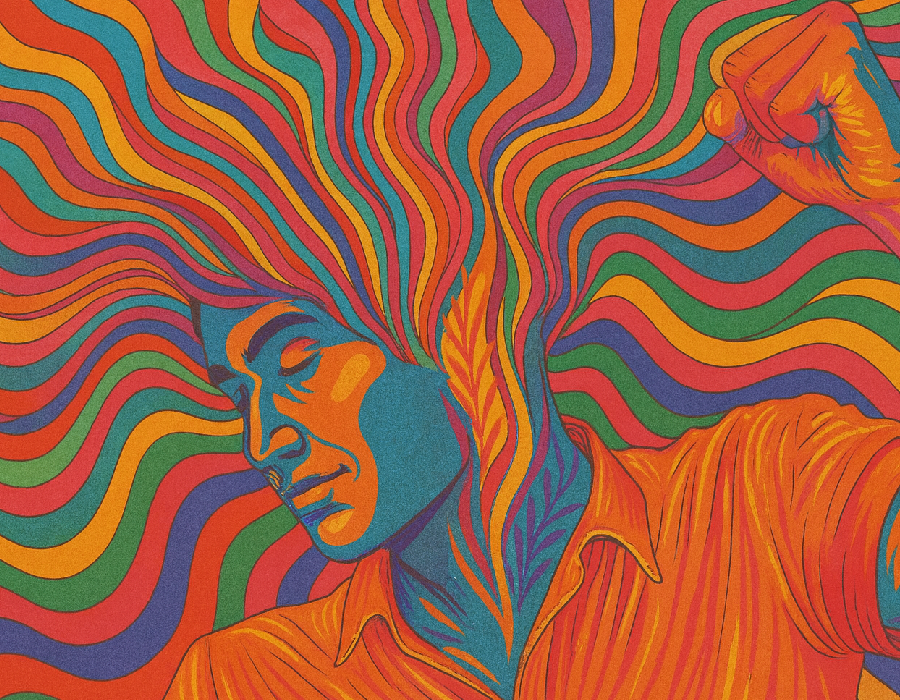
What If the Healing Happened Before the Hurt?
Not all healing happens after the fact. Sometimes, the moment of protection is quiet, invisible, and deeply internal. You won’t always know it when it’s happening. But maybe you’ll recognize it later—in the steadiness that follows, in the silence where fear used to live. Maybe that night you didn’t dissociate, didn’t panic, didn’t break down—that was your nervous system choosing a new path. And maybe the mushrooms helped it find the way.
It’s easy to think of psychedelics as dramatic interventions—tools for catharsis, for confronting the past. But there’s something just as sacred about the way they prepare us. A good journey isn’t always a breakthrough. Sometimes it’s a training ground. Sometimes it’s a nervous system rehearsal for the day things get hard and you discover: you’ve already grown roots.
If you’ve had a trip that brought you through fear but not into trauma—trust that. That was the medicine working. That was the container holding. That was your body remembering how to stay whole in a moment when it used to fracture. And if you haven’t had that experience yet, or are seeking a way to explore it gently, let your preparation be part of your healing.
At Magic Mush, we offer more than products—we offer pathways. Whether it’s our microdosing gummies for emotional recalibration, chocolate mushrooms to ease you into deeper states, or dried mushroom bundles for more intentional journeys, we believe your nervous system deserves support—not just after pain, but before it. Because sometimes, the most powerful trip isn’t the one that helps you heal. It’s the one that keeps you from breaking in the first place.