
Spend enough time around psychedelic content online and you start to notice a pattern. What once felt private, careful, and even a little awkward to talk about has slowly become performative. “High-dose” gets tossed around like a badge of honour, shorthand for seriousness, courage, or spiritual credibility. Somewhere along the way, depth got conflated with intensity, and intensity started to look like proof that you’re doing the work “properly,” often packaged alongside lists of things to do on a shroom trip that quietly reinforce the same pressure to escalate.
Underneath that cultural noise, though, there’s usually something much more human and relatable. People aren’t chasing high-dose experiences because they want bragging rights alone. They’re often looking for relief from suffering, a sense of meaning that sticks, a feeling of resolution after years of circling the same questions. They want something to finally move. That desire makes sense. It deserves respect, not mockery or hype.
This piece is meant to act as a pause button. Not a buzzkill, not a sermon, and definitely not a challenge to go harder. Just a moment to slow the momentum and ask whether “ready” is actually as simple as it’s often made out to be. Because when it comes to a high-dose psychedelic experience, depth deserves discernment, not speed.
📘 Conversations about habit, consistency, and wellbeing often include examples of various approaches people explore. Check out this article to learn about how some people frame a 30-day microdosing routine

Why I’ve Found Myself Asking This Question Too (And Why I Don’t Think It Has a Simple Answer)
I’ll be upfront: I’ve asked myself this question more than once. Not from a place of bravado, but from impatience. There were moments in my own life when I felt stuck between insights and action, when I’d done enough reading and reflecting to feel restless but not enough living to feel settled. In those moments, “more” felt tempting. Not reckless, exactly—but seductive in the way certainty often is.
What I noticed, though, was that the urge to go deeper was rarely clean. It was mixed with frustration, with a quiet hope that one powerful experience might tie everything together into something coherent and final. And that’s where the question started to shift for me. Was I actually feeling ready, or was I bargaining with uncertainty? Was I seeking exploration, or relief from not knowing?
That question—asked gently, without trying to win it—has shaped how I think about readiness ever since. Not as a badge you earn, but as an ongoing conversation with yourself.
What We Mean by “High-Dose” When We’re Not Talking Numbers
In this context, “high-dose” isn’t about a specific amount or threshold you can look up and measure. It’s about crossing into an experience where intensity begins to outweigh control. Where your usual sense of self can soften or dissolve, fear and awe can coexist in uncomfortable proximity, and the ability to make meaning in real time may disappear altogether, an outcome shaped as much by set and setting as by the substance itself.
A high-dose psychedelic experience is often described as one that exceeds language while it’s happening. You may not be able to track the narrative, steer the emotional arc, or reassure yourself with familiar reference points. For some people, that loss of narrative control feels expansive. For others, it can feel destabilizing or frightening, even if the experience is later described as meaningful.
The key point here is that “high-dose” refers to impact, not arithmetic. It’s not a ladder rung that proves advancement. It’s a qualitative shift in how much of the experience you can manage while it’s unfolding—and how much you have to surrender instead.
🗣️ Talking openly with loved ones about sensitive topics can be challenging but important. Read this article to explore respectful ways people approach conversations about magic mushrooms

The Myth That More Depth Automatically Means More Healing
One of the most persistent stories in psychedelic culture is that depth scales with intensity. Go further, feel more, dissolve harder, and healing will naturally follow. It’s a clean narrative, and that’s exactly why it spreads so easily. It offers a straight line in a space that’s otherwise full of ambiguity.
But intensity and insight are not the same thing. You can have a powerful experience that leaves you awestruck and still struggle to translate it into lasting change. Insight, in turn, doesn’t automatically lead to stability. Knowing something deeply doesn’t guarantee you can live it gently or sustainably. And change itself, even when positive, can destabilize relationships, routines, and identity in ways that take time to settle.
The “hero dose” story also feeds into identity. It offers a way to belong, to signal seriousness, to compress complexity into a single dramatic arc. None of that makes people foolish or naive—it makes them human. But it does mean the story deserves scrutiny, especially when it quietly pressures people to escalate before they’re ready.
What “Readiness” Might Actually Mean, Without Turning It Into a Green Light
Readiness, if it exists at all, is not a single switch that flips from off to on. It’s better understood as a collection of capacities, each one imperfect and situational. You might feel steady in one area and fragile in another, and that unevenness matters—especially when quieter questions like what if the mushrooms dont work sit in the background alongside hope or expectation.
Psychological capacity, for instance, has less to do with fearlessness and more to do with how you relate to uncertainty. It includes some ability to stay curious when emotions spike, and a basic familiarity with how you personally respond when overwhelmed. Not mastery—just awareness.
Relational capacity matters too. High-dose experiences often don’t end when the effects fade; they spill into conversations, relationships, and self-perception. Having even one or two people you can speak to honestly afterward, without performing insight or minimizing confusion, can make a significant difference. So can a relatively stable immediate environment, where conflict or chaos isn’t already demanding all your emotional bandwidth.
Situational capacity is often overlooked in favour of inner work, but it’s just as real. Time to rest afterward, space to be a little raw or quiet, and an absence of looming upheavals you’re secretly trying to escape all shape how an experience lands. Using intensity as a way to outrun life tends to backfire.
There’s also what might be called meaning capacity: a willingness to let the experience be unresolved. Readiness here looks like openness to slow integration, to insights that complicate rather than conclude, and to the possibility that no clear answer arrives at all.
None of this adds up to permission. You can be ready in one sense and not in another. And readiness itself isn’t a virtue—it’s simply one variable in how risk and outcome interact.
Check out this magic mushroom!!

A.P.E Psilocybin Chocolate Bar
$60.00Dried Penis Envy Magic Mushrooms
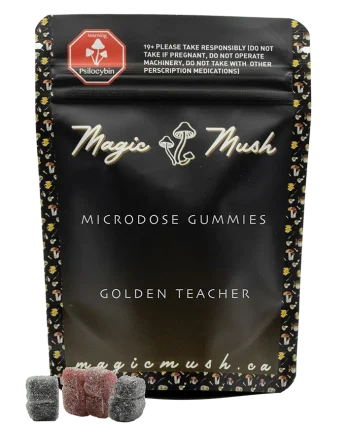
Price range: $60.00 through $240.00Golden Teacher Gummies for Microdosing
$25.00


When “Not Yet” Is a Kind, Intelligent Answer Rather Than a Failure
There are times when the pull toward a high-dose psychedelic experience comes from a place of urgency. A sense that something must happen soon, or else. That feeling deserves attention, not judgment. It often signals pain, fatigue, or a longing to be rescued from an internal stalemate—and sometimes shows up as tripping when not okay rather than from a place of grounded curiosity.
Periods of poor sleep, heightened anxiety, or ongoing major stress can narrow your capacity to metabolize intensity, even if you’ve handled difficult experiences before. So can a strong need to control the outcome, to guarantee that the experience will be meaningful, healing, or decisive. Paradoxically, that need can make surrender harder, not easier.
Social pressure plays a role too. Friends, communities, or online narratives can create a subtle sense that staying where you are means falling behind. And then there’s grief or trauma that feels actively raw—not something that must be “resolved” first, but something that may need steadier ground and more support before adding intensity to the mix.
Patterns matter as well. If anxiety tends to spiral into rumination, or if difficult emotions usually loop rather than move, slowing down can be an act of wisdom. “Not yet” doesn’t mean never. It just means listening to timing as part of care.
Situations That Call for Extra Caution, Spoken About Without Alarm or Labels
Some people face higher baseline risk when it comes to intense altered states, and naming that doesn’t mean writing anyone off. Personal or family histories of psychosis or mania-like episodes, periods of severe dissociation under stress, or current instability marked by panic and loss of grounding all deserve careful consideration.
Feeling unsafe with yourself, or navigating the aftermath of recent major trauma without a support system, also shifts the risk landscape. In these contexts, seeking professional input isn’t a sign of weakness or disqualification. It’s a way of widening the circle of care and information around a significant decision.
None of this implies something is “wrong” with you. It simply acknowledges that minds, like bodies, have different thresholds—and that respecting those thresholds is part of staying in relationship with yourself over the long term.
The Overlooked Possibility of Depth Without Escalation
One of the quieter truths in this space is that depth doesn’t only come from intensity. It can emerge from pacing, from honesty about limits, and from integration that’s given time rather than rushed toward resolution. For many nervous systems, gradual exposure and steady support create more real change than shock ever could, which is part of why meditation matters as a complementary practice that builds capacity rather than overwhelms it.
Choosing not to escalate doesn’t mean avoiding challenge. It can mean choosing a form of challenge that’s metabolizable. Sometimes the bravest move isn’t going bigger, but staying with what’s already been revealed and letting it reshape daily life in small, persistent ways.
This isn’t a dismissal of high-dose curiosity. It’s an invitation to hold that curiosity alongside other forms of depth, rather than treating escalation as the only legitimate path.
The Part After the Peak That Rarely Makes the Highlight Reel
High-intensity experiences often ask for more afterward, not less. Emotional openness can linger, leaving you more sensitive to relationships and environments. Meaning can inflate, turning ordinary events into signs that feel loaded and urgent. Identity may wobble as old narratives loosen before new ones are ready.
Relationships can strain if your perspective shifts quickly while others remain oriented to who you were. There’s also a well-documented temptation to make big life decisions too soon, before the experience has had time to settle into context.
Readiness, in this light, includes readiness for the after. Not just the peak moment, but the weeks or months of digestion that follow. Being able to move slowly, question early conclusions, and prioritize gentleness over certainty is part of what makes intensity survivable—and sometimes meaningful.
🔍 Understanding how certain topics are discussed in cultural and wellness conversations can offer broader context. Check out this article to see the common ways people frame the idea of taking magic mushrooms

Reflection Prompts That Privilege Discernment Over Daring
It can be helpful to sit with questions that slow you down rather than rev you up. Questions like what you’re hoping a high-dose experience will give you that feels unavailable through slower means, or whether it would still feel worthwhile if nothing dramatic or mystical happened at all.
You might ask which part of you is chasing certainty right now, and how that feels in your body compared to curiosity. It can also be grounding to consider who you could talk to afterward without needing to perform insight or coherence, and what humility might look like as an intention rather than an outcome.
Other useful reflections include what you’d actually be willing to change in daily life if a hard truth emerged, how realistic your plans for rest and gentleness afterward really are, and whether this desire is coming from you—or from a story you feel compelled to live up to.
None of these questions demand an answer. Their value is in how they create space.
Readiness as a Relationship, Not a Finish Line
Being ready for a high-dose psychedelic experience isn’t something you arrive at once and for all. It’s an ongoing relationship with risk, support, timing, and humility. Sometimes care looks like moving forward with eyes open. Other times, it looks like slowing down and choosing stability over spectacle.
If there’s one quiet thread running through all of this, it’s that discernment tends to be more sustainable than daring. And that choosing care—for your nervous system, your relationships, and your future self—is rarely the wrong move.
If you’re curious to keep exploring these questions, MM has related pieces on psychedelic readiness, integration, difficult psychedelic experience narratives, and meaning-making that approach the topic with the same grounded, non-performative lens. Depth doesn’t disappear when you slow down. Often, that’s where it actually begins.
💬 Many people seek thoughtful, informative overviews when new or unfamiliar ideas are mentioned. Read this article for a grounded look at how microdosing psilocybin is described
Slowing Down, Choosing Care, and Why at Magic Mush Canada We Believe Readiness Is About Relationship, Not Rushing Toward Intensity
If there’s one thread that runs through this entire conversation, it’s this: readiness for a high-dose psychedelic experience isn’t a finish line you cross or a title you earn. It’s a living relationship with your own capacity, your environment, your support systems, and your willingness to stay humble in the face of uncertainty. We explored how intensity has quietly become a status symbol, why “more” is often confused with “deeper,” and how psychological, relational, situational, and meaning-based factors all shape how an experience unfolds and, just as importantly, how it lands afterward. We talked about yellow flags that invite slowing down rather than pushing through, red flags that deserve extra care and professional input, and the often-unspoken reality that integration can be more demanding than the peak itself. Throughout it all, the central message has stayed consistent: discernment is not fear, and restraint is not failure.
At Magic Mush Canada, this perspective isn’t just editorial—it’s foundational to how we show up in this space. We believe psychedelics deserve respect, context, and education, not bravado or pressure. Our role isn’t to push people toward intensity or to frame high-dose experiences as a rite of passage. Instead, we focus on providing clear, grounded information, promoting safer and more thoughtful engagement, and helping destigmatize magic mushrooms in Ottawa without turning them into a spectacle. We understand that many people arrive here curious, cautious, and searching for something meaningful, not just something extreme.
That’s why we put so much emphasis on education, science literacy, and community support. From our blog and learning resources to our commitment to quality, rigorous testing, and privacy, our goal is to support informed choice—not impulsive escalation. Whether someone is reflecting on psychedelic readiness, thinking about integration after a difficult psychedelic experience, or simply trying to understand how set and setting shape outcomes at a high level, we want our platform to feel steady, human, and non-performative.
We also know that choosing care often means choosing to slow down. Sometimes that looks like continuing to read, reflect, and talk things through before making any decisions. Sometimes it means deciding that “not yet” is the most respectful answer to your nervous system right now. And sometimes it means seeking out a trusted, responsible source that prioritizes education, consent, and quality over hype. That’s where we see ourselves fitting into the larger picture—not as gatekeepers or gurus, but as a reliable partner for people navigating this terrain thoughtfully.
If this article resonated with you, we invite you to explore more of our writing on integration, discernment, and meaning-making, and to engage with our community in a way that feels supportive rather than pressurized. At Magic Mush Canada, we’re committed to helping people approach psychedelics with curiosity, humility, and care—because depth isn’t something you rush toward. More often, it’s something you build slowly, in relationship with yourself and the world around you.

