
It was two in the morning, and I was sitting on my kitchen floor with a mug of cold chamomile tea, scrolling through Reddit threads about magic mushrooms in Canada. The glow of my phone made the dark feel even darker. I’d just gone through what I can only describe as an emotional implosion — a breakup layered on top of burnout, layered on top of that quiet, gnawing sense that I was missing something essential. Every article I read seemed to say the same thing: “Psilocybin can help you heal.” I wasn’t looking for a trip. I was looking for an emergency exit.
I’d never thought much about psychedelics before, but in that moment, they started to sound like salvation. All those stories — people saying mushrooms helped them process grief, depression, heartbreak. I wanted that. I wanted something, anything, that could pull me out of this fog. But I also knew there was danger in that wanting. Part of me wondered if I was grasping for healing before I was ready to actually face what needed to be healed.
The question lingered: Should I trip when I’m not okay? It’s a question that feels simple until it isn’t. Because “not okay” is such a wide landscape. Sometimes it means sadness that needs softening. Other times it means instability that needs care, not expansion. At that hour, with my mind racing and my heart in pieces, I didn’t know which one I was.
I kept reading. Stories of people who found peace through psilocybin in Toronto, who said the mushrooms helped them see their pain differently. Others warned of panic attacks, of journeys that cracked them open too fast. It was hard to know who to believe. I shut my phone off eventually, but the thought stayed with me: maybe the mushrooms weren’t the answer — maybe they were the question.
🍄Check out my guide on what to do when psychedelics don’t seem to work and how “nothing happening” might still be part of your healing journey
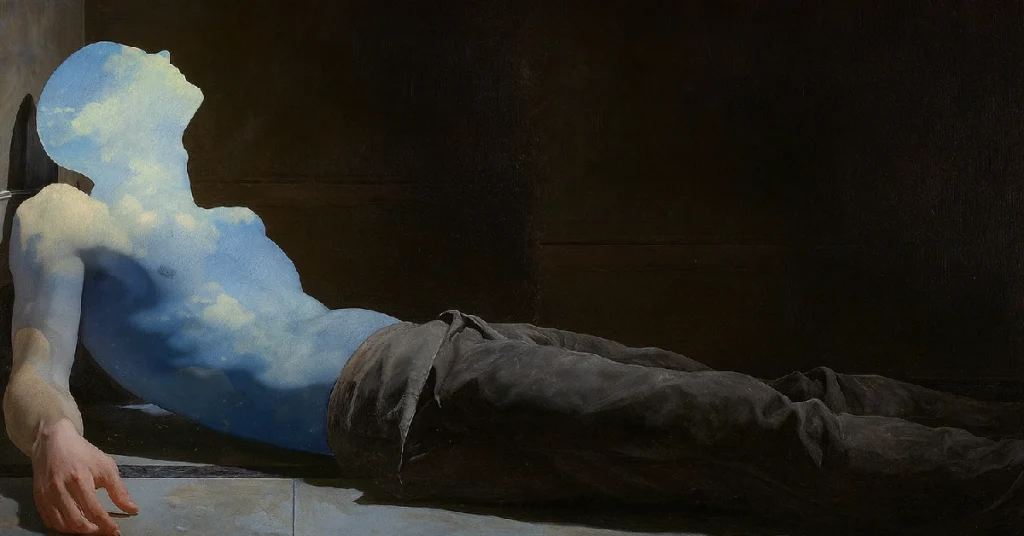
Why the Myth of the Perfect Mindset Isn’t the Whole Story
If you’ve spent any time in psychedelic circles, you’ve heard it before: “Set and setting are everything.” It’s the golden rule, the mantra whispered across retreat spaces and forums alike. And it’s not wrong — your mindset and environment deeply shape the outcome of any trip. But somewhere along the way, that mantra started to morph into myth: that you have to be completely okay before you can touch psychedelics. That your life has to be tidy, your heart calm, your mind clear.
The truth is, almost no one arrives at this work because life is perfect. Most people are drawn to psychedelics because something hurts. As one facilitator I spoke to in Vancouver said, “Most of us don’t come to mushrooms from curiosity — we come from crisis.” There’s a tenderness in that honesty. It dismantles the idea that healing only happens in perfect conditions. Sometimes, the most profound openings come from the places where we’re most fragile.
In recent years, Canada has seen a quiet but steady rise in therapeutic psychedelic spaces — from psilocybin therapy in Toronto and Ottawa to underground circles out west. People aren’t just seeking transcendence; they’re seeking relief. Still, professionals are careful to stress discernment. Not all pain is unsafe to explore, but not all pain is ready for expansion either. The line between those two is subtle — and personal.
I’ve learned that the goal isn’t to force readiness, but to recognize it. Some days, being “not okay” is a sign that you’re ripe for insight. Other days, it’s a sign that you need grounding before you open the door. “The mushrooms don’t discriminate,” another guide told me. “They’ll meet you where you are. But that’s exactly why it matters to know where that is.”
When the Mushrooms Actually Help — Stories of Finding Clarity in the Chaos
I met a woman once — let’s call her Maya — who took psilocybin after her divorce. She wasn’t stable in the traditional sense; she cried daily, barely ate, couldn’t sleep. But she also had a therapist, a close friend sitting for her, and a clear intention: she wanted to forgive herself. During her journey, she said the dried magic mushrooms didn’t erase her sadness — they gave it shape. She described seeing her pain not as a wall, but as a wave. “And somehow,” she told me, “that made it less terrifying.”
Then there was Leo, a man in his fifties who’d battled anxiety for years. After months of preparation, he joined a small guided circle outside Ottawa. The experience was raw and emotional, but it didn’t shatter him. “I realized my anxiety wasn’t trying to destroy me,” he said. “It was trying to get my attention.” The trip didn’t cure him, but it made him curious again — about himself, his patterns, his capacity to feel.
What these stories had in common wasn’t perfection or control. It was support, presence, and intention. They weren’t using psychedelics as an escape hatch. They were using them as a mirror. The medicine works when we meet it with humility — when we’re willing to see what arises, not what we expect.
In both personal and clinical settings, success tends to depend on integration — the “after” part. The ones who find lasting healing are the ones who take time to reflect, journal, talk to someone, or simply rest. The mushrooms open a door, but it’s the work done after that determines what you carry back.
There’s a common thread in every good story I’ve heard: the presence of care. Whether that comes from a guide, a friend, or a community, it’s that human connection that makes even difficult emotions feel survivable. When that’s in place, being “not okay” doesn’t have to mean unsafe. It can mean ready.
🍄Discover my guide on the Trinity mushroom strain what it blends, how it hits, and why it’s considered a next-level psychedelic experience.

When It Goes the Other Way — The Mushrooms Don’t Lie, But Sometimes Honesty Hurts
Of course, not every story ends with peace. Some journeys go sideways, and not because the medicine is cruel, but because it’s honest. Psychedelics have a way of amplifying whatever is already inside you. If that “inside” is a storm, the experience can be overwhelming.
I once talked to someone who’d taken mushrooms during a deep depressive episode, alone in their apartment. They said it started beautifully — colours breathing, a sense of awe — and then turned into something unmanageable. “It was like every sad thought I’d ever had showed up at once,” they told me. “I felt like I was drowning in my own brain.” That person didn’t touch psychedelics again for years. It wasn’t that the mushrooms lied; it was that they told too much truth too fast.
Clinical researchers echo this. Psychedelics can be destabilizing for people with untreated trauma, active psychosis, or suicidal ideation. They can also resurface repressed emotions, which, without support, may feel like re-traumatization. A therapist I spoke with in Toronto said, “The mushrooms don’t care about your timing. They care about your truth. That’s why timing matters.”
There’s a temptation to romanticize psychedelics — to think they’ll always know what’s best. But they’re not healers in themselves. They’re amplifiers. And amplifiers don’t choose what they reveal. That’s where the risk lies. For someone already fragile, too much openness too soon can make the ground disappear.
That doesn’t mean “don’t trip if you’re sad.” It means be honest about your capacity. The medicine will meet you honestly — sometimes more honestly than you expect. As one facilitator put it to me, “The mushrooms don’t lie. But sometimes, honesty can be too much all at once.”
Finding the Middle Path — How Readiness Is Really Just a Relationship With Yourself
Over time, I began to understand that readiness isn’t a destination. It’s a relationship — one that’s built slowly, with self-trust. You don’t become ready by being happy or fixed. You become ready by being able to hold your pain without running from it. Readiness means curiosity without urgency, pain without panic, and responsibility for what arises.
A facilitator from British Columbia once told me, “If you can hold your pain sober, you can hold it on mushrooms. If you can’t, start there.” It’s a simple, grounding truth. Psychedelics don’t magically make you capable of emotional regulation. They just amplify your current capacity. The more you build that capacity in everyday life, the more spacious your journey becomes.
For some, that might look like therapy or breathwork. For others, it’s meditation, journaling, or even gentle microdosing bundles — small doses that help build emotional awareness without full immersion. It’s all about creating stability before you expand. When you know how to return to yourself, even when it hurts, that’s when a trip can become a tool instead of a test.
The middle path is about balance. It’s saying, “I’m not okay, but I’m not in danger either. I’m tender, but I’m willing.” It’s learning to sit with discomfort long enough to understand it. That’s what real readiness looks like — not perfection, but relationship.
And sometimes, choosing not to trip right now is the most psychedelic decision of all. Because it means you’re listening.
Check out this magic mushroom!!

A.P.E Psilocybin Chocolate Bar
$60.00Dried Penis Envy Magic Mushrooms
Price range: $60.00 through $240.00Golden Teacher Gummies for Microdosing
$25.00


Integration — The Real Medicine That Happens After the Trip Ends
What happens after the mushrooms fade is where the real work begins. Integration is the act of weaving what you saw back into how you live. It’s not glamorous, but it’s holy in its own way. It’s making tea in the morning and remembering what you learned about slowness. It’s calling a friend when you feel yourself slipping back into old stories. It’s gardening, cooking, writing — grounding the insights into muscle memory.
I think that’s why so many psychedelic facilitator trainers emphasize integration more than the trip itself. A guide in Toronto once told me, “The mushrooms aren’t asking for your perfection — just your participation.” The trip opens a door, but integration is how you walk through it. Without that, even the most beautiful experience fades into abstraction.
Integration can look like a lot of small, ordinary things. Resting. Taking walks. Creating art. Talking about what you experienced with someone who understands. It’s about honouring what came up, not rushing to package it into meaning. The point isn’t to make sense of everything — it’s to stay in relationship with what you found.
That’s the ethos that communities like Magic Mush embody — grounded, slow, and real. Because psychedelics aren’t about escape; they’re about engagement. The more rooted you are in your everyday life, the more the medicine can deepen, rather than destabilize, your understanding.
The mushrooms don’t care how “healed” you are. They just ask that you show up.
Choosing Presence Over Escape — The Question That Never Really Gets Answered
I never did take mushrooms that night. Not then, anyway. I waited — worked through therapy, let time soften things, learned how to breathe again. When I finally did trip, months later, it wasn’t because I was desperate to stop hurting. It was because I was ready to listen to what the hurt had to say. And that made all the difference.
Maybe that’s the real answer — or non-answer — to the question. Should you trip when you’re not okay? Sometimes, yes. Sometimes, no. The truth is that psychedelics will always meet you where you are. The challenge is knowing whether you can meet yourself there too.
The mushrooms didn’t fix my life. They didn’t make the pain vanish. But they gave it light and shape and sound — and for the first time, that was enough.
Maybe the question isn’t whether you should trip when you’re not okay, but whether you can stay with yourself, even when you don’t.
🍄Discover how microdosing helped me feel more present and how you can tap into that shift too ✨
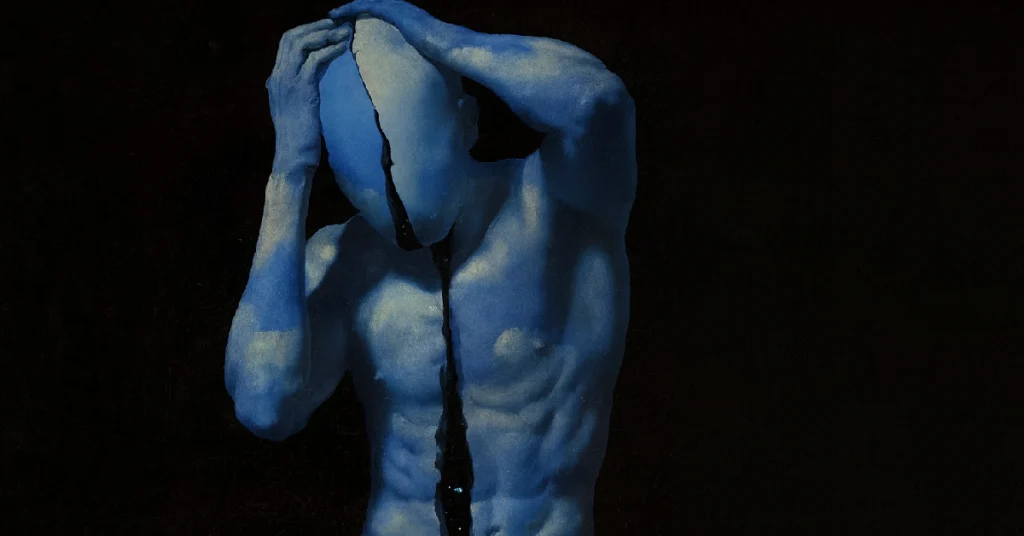
Finding Your Way Back to Yourself with Magic Mush Canada
Sometimes, we come to psychedelics because we’re searching for answers in the middle of chaos. Other times, we find ourselves sitting quietly after the storm, realizing the medicine was never about escaping—it was about remembering how to stay. This whole journey we’ve explored together — from the uncertainty of tripping when you’re not okay to the slow work of integration — isn’t really about whether mushrooms can fix you. It’s about learning to trust yourself enough to know when to reach out, when to rest, and when to listen. Grief, anxiety, heartbreak, burnout — none of it disqualifies you from healing. What matters is how gently you meet yourself there.
If there’s one truth that threads through it all, it’s that readiness isn’t about perfection. It’s about relationship — with yourself, with your pain, with the world. The mushrooms can open the door, yes, but the walking, the steady returning, that’s on us. The more we slow down, the more we realize that psychedelic healing isn’t about escaping what’s hard; it’s about growing the capacity to sit with it. To breathe through it. To let it shape us into something softer, wiser, more alive.
This is where Magic Mush Canada comes in — not as some distant company, but as your friend who’s been down the path and knows how much courage it takes to start. We’ve seen what happens when people approach these experiences with curiosity instead of urgency, with respect instead of fear. That’s exactly what we’re here for: to make this space feel a little safer, a little more human, and a lot more grounded. Whether you’re brand new to magic mushrooms or already exploring microdosing Canada–style, we’ve got your back with premium products, honest education, and a supportive community that actually cares.
At Magic Mush Canada, we’re all about helping you explore the therapeutic potential of psychedelics — in your own way, at your own pace. Every product we offer is rigorously tested for quality and safety because we believe that trust matters, especially when it comes to something as personal as healing. From mushroom chocolate Canada blends to psilocybin Toronto and psilocybin Ottawa resources, we’re here to bridge the gap between science, soul, and the real human stories that connect us all.
So, if you’ve been feeling that quiet pull toward transformation — not to escape yourself, but to rediscover what’s already inside — maybe it’s time to take that next small, intentional step. Join our Magic Mush Canada community, where education, empathy, and authenticity come first. Explore safely, connect deeply, and see where this medicine might lead you. Because healing doesn’t start with a trip — it starts with a choice. And you don’t have to make that choice alone.

