If you spend any time reading or listening to psychedelic stories, you’ll notice how often they sound strangely uniform. There’s the ego death, the cosmic oneness, the download of universal truth, the before-and-after narrative that wraps everything up neatly. Those stories aren’t wrong, exactly, but they’re incomplete. And for many women, they don’t quite fit—especially when experiences are framed through archetypes like the divine feminine, which emphasize relational, embodied, and emotionally textured ways of knowing that rarely get the spotlight.
What often gets labeled as a “different” psychedelic experience isn’t about depth, strength, or emotionality in some simplistic sense. It’s about variables. Bodies, histories, safety, expectations, and meaning-making all shape how a journey unfolds. Difference here doesn’t mean better or worse, stronger or weaker. It means that the internal landscape and the conditions surrounding the experience aren’t the same for everyone.
This article isn’t about rules, predictions, or guarantees. It’s a map of influences, not a prescription. The goal is to separate what research cautiously suggests from what culture casually assumes, and to offer language for understanding experiences that don’t always match the dominant psychedelic narrative.
💖 Looking for uplifting affirmations to support moms through daily challenges? Read this article to discover 50 powerful positive affirmations for moms

My Own Curiosity Started by Listening, Not Explaining
I didn’t start asking this question because I thought women were having some special category of psychedelic experience. I started asking it because I kept hearing similar phrases come up in conversations with women who had journeyed, whether that was with psilocybin, LSD, or other classic psychedelics. Words like safety, trust, permission, and exhaustion showed up again and again. So did themes around the body, self-worth, relationships, and the feeling of finally being allowed to stop holding everything together.
At first, I wondered if I was just noticing patterns because I expected to see them. But over time, the question shifted. What part of this is biology? What part is context? And what part is the story many women have been taught to tell about their inner lives?
That question, more than any single explanation, is what this piece is really about.
What “Different” Can Mean Without Turning It Into a Stereotype
When people say women experience psychedelic journeys differently, they’re often pointing to a cluster of observations rather than a single trait. Difference might show up in emotional tone, where the range can feel broad and layered, sometimes tender, sometimes frightening, sometimes quietly profound rather than explosively mystical. It can show up in body sensations, with more awareness of nausea, temperature, tension, or energy moving through specific parts of the body.
Difference can also show up in themes. Relationships, safety, boundaries, caregiving roles, sexuality, identity, and self-worth often become the material the experience works with—questions that also surface in conversations about why moms microdose for anxiety as they navigate responsibility alongside inner emotional landscapes. Memory and meaning-making can feel more narrative, more relational, or more anchored in lived experience. After-effects may include openness and reflection, but also vulnerability and fatigue that linger longer than expected.
None of this is universal. The variation among women is enormous, and gender is only one lens among many. Plenty of men report similar themes, and plenty of women report abstract, cosmic, or non-relational journeys. The point isn’t to define a “women’s trip,” but to understand why certain patterns may appear more often without turning them into destiny.
🧠 Struggling to keep up as a mom when you feel burned out? Explore this article for ideas on restoring balance

Why This Question Matters, and Why It’s So Often Overlooked
Historically, women’s experiences have been under-centred in both psychedelic research and storytelling. Early studies skewed male, and so did the cultural voices shaping what a “real” trip was supposed to look like. The standard psychedelic narrative often reflects who was in the room, who felt safe letting go, and whose inner world was considered worth documenting including the quieter motivations of those seeking to reconnect with life as mothers after years of prioritizing everyone else.
Cultural permission plays a role here. Not everyone is equally allowed to surrender, dissolve, or fall apart without consequences. Safety realities matter too. If part of your nervous system is scanning for threat, it’s harder to fully open. These factors don’t make an experience lesser; they shape what the experience focuses on.
Nuance matters because it helps people interpret their journeys without self-blame. When someone feels confused because their experience didn’t match the stories they’d heard, understanding context can be grounding rather than diminishing.
What Research Can, and Can’t, Tell Us Yet
The honest answer is that psychedelic research is still catching up to these questions. Many studies aren’t designed to isolate sex or gender variables cleanly, and women have often been underrepresented or grouped into samples too small to draw strong conclusions. Reporting styles also differ, influenced by social expectations and what participants think researchers want to hear.
There are confounds everywhere. Hormonal fluctuations, medications, trauma prevalence, safety context, and prior psychedelic exposure all intersect. It’s also important to distinguish between sex, which refers to biological variables, and gender, which refers to social and cultural ones. Most studies blur this line.
The best available summary is cautious. Research suggests there may be differences in subjective effects, side effects, and the themes people report, but certainty is limited. What science currently offers is not a verdict, but a reminder to stay humble about what we think we know.
Biology and the Body as Possible Influences, Not Explanations
Biology is often the first place people look, and it does matter, just not in tidy ways. Hormonal cycles can influence sensitivity, mood, and perception, which may subtly shape how a psychedelic experience unfolds—something often discussed in conversations about microdosing psilocybin for stress in women as people try to make sense of shifting emotional baselines. Stress response patterns and baseline anxiety levels can affect how easily the nervous system settles or activates.
Differences in body composition and metabolism may influence how substances are processed, though individual variation is large. Sleep deprivation, chronic fatigue, and caregiving load all create physiological contexts that colour perception and stamina. Pain, inflammation, and body vigilance can become background noise that the experience amplifies rather than ignores.
None of this is destiny. Many of these factors overlap with non-gendered human variation. Biology sets conditions, not conclusions.
Check out this magic mushroom!!

A.P.E Psilocybin Chocolate Bar
$60.00Dried Penis Envy Magic Mushrooms
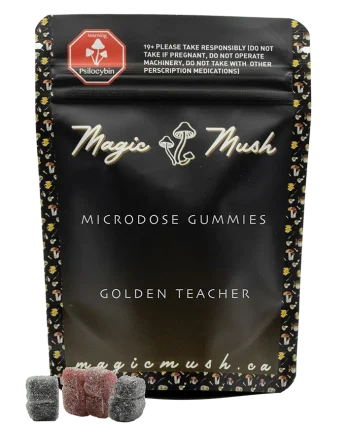
Price range: $60.00 through $240.00Golden Teacher Gummies for Microdosing
$25.00


Psychological and Social Context, Often the Bigger Variable
For many women, context may matter more than chemistry. Safety is foundational. A nervous system that doesn’t feel safe won’t fully surrender, no matter how ideal the dose or setting is supposed to be. Hypervigilance isn’t a flaw; it’s an adaptation, and psychedelics don’t magically erase it.
Social conditioning also plays a role. Many women are trained to be good, to please, to manage other people’s emotions. Those patterns don’t disappear during a psychedelic experience; they often become visible. Boundaries, consent, and trust shape how open someone feels internally. When permission is present, experiences can soften. When it’s missing, they can tighten.
Body image and self-criticism frequently show up somatically, not just as thoughts. Relational identity can become the content of the journey, with relationships examined, repaired, or released. For mothers and caregivers, responsibility can hum quietly in the background, influencing how much rest or surrender feels allowed.
This isn’t about victimhood. It’s about realism.
Themes Many Women Report, Held Lightly and Without Rules
Across stories, some themes appear often enough to be worth naming carefully. Many women describe a sense of permission to rest, receive, and stop performing. Grief and self-forgiveness surface, sometimes unexpectedly. Boundaries become clearer, especially around guilt and obligation.
Body reconciliation is another common thread, with shifts from critique toward compassion. Relationship clarity can arise, whether that means repair, renegotiation, or letting go. Anger sometimes emerges as a rightful emotion, revealing what it has been protecting all along.
Sexuality and agency may be explored in ways that feel healing rather than sensational. Lineage themes, including family patterns and intergenerational roles, can come into focus. Inner child or protector parts often become visible, asking for acknowledgement rather than fixing.
It’s important to say this out loud: many women do not experience these themes at all. Some have abstract, geometric, cosmic, or deeply non-relational journeys. The range is wide, and any checklist misses the point.
Risks, Limitations, and Who Might Need Extra Care
There are risks worth naming without dramatizing them. Heightened vulnerability after an experience can catch people off guard, especially if emotional material has been stirred up—something that sometimes comes up in conversations about microdosing psilocybin for premenstrual syndrome when shifting mood and sensitivity intersect with deeper layers of feeling. Shame, body distress, or relational wounds can be re-triggered rather than resolved.
Spiritual bypassing is another risk, especially when “love and light” narratives discourage honest processing. There’s also cultural pressure to turn experiences into identity, where someone feels they must emerge as a transformed or “healed” version of themselves. Comparison culture can distort meaning, leaving people wondering why their journey didn’t feel profound enough.
None of this means psychedelics are inherently unsafe. It means interpretation matters.
🌿 Curious about what a guide to microdosing psilocybin for major depression in women covers? Read this article for thoughtful, informative context

A Responsible Frame for Meaning-Making Without Gender Myths
A grounded takeaway looks like this: gender may influence psychedelic experience through both body and culture, but it isn’t fate. The most useful question is often not “Is this a women’s experience?” but “What did my system need to show me?”—a framing that reflects how the female psyche on psychedelics is often less about categories and more about listening to what’s actually arising.
Interpreting patterns with curiosity rather than identity-based certainty creates space for learning without self-labeling. Reflection can help without turning insight into doctrine. Questions like where you still perform goodness at your own expense, what part of you is exhausted from managing others, what boundary feels frightening to set, and what safety actually feels like in your body can be more revealing than any generalization.
Other questions worth sitting with include which emotions you’ve been calling “too much,” what it would mean to receive support without earning it, which stories about womanhood you’re ready to compost, and what kind of tenderness you routinely deny yourself.
These aren’t answers to chase. They’re invitations.
Closing Thoughts, and a Gentle Invitation to Keep Exploring
Women’s psychedelic journeys can be shaped by biology, by context, and by the stories women are trained to carry. Understanding those influences doesn’t reduce the mystery; it adds compassion. When experiences are held with nuance, there’s less confusion and less pressure to measure up to someone else’s narrative.
If this piece sparked recognition or new questions, there’s value in continuing to explore meaning-making, emotional processing, and the role of set and setting at a high level, without turning any of it into dogma. At MM, we aim to hold these conversations with care, curiosity, and respect for lived experience, trusting that understanding grows best when certainty loosens its grip.
✨ Want to understand how psychedelics and relationship support intersect in some circles? Discover what this article explains

A Thoughtful Closing on Why Nuance Matters—and How We at “Magic Mush Canada” Support Safer, More Meaningful Psychedelic Exploration
At its core, this article has been about slowing down the conversation around women and psychedelics and making room for nuance. We explored how psychedelic experiences can be shaped by a web of influences rather than a single cause, looking at biology without turning it into destiny, and at culture without reducing everything to ideology. We talked about how hormones, stress, safety, social conditioning, caregiving roles, and meaning-making can all quietly shape what a journey feels like, what themes emerge, and how those experiences are remembered afterward. Most importantly, we emphasized that “different” does not mean lesser, weaker, or more emotional in a shallow sense. It simply means that different variables are in play, and that lived experience deserves interpretation rooted in curiosity rather than comparison.
That perspective is central to how we approach psychedelics at Magic Mush Canada. We believe that understanding context—your body, your mindset, your environment, and the stories you carry—is just as important as understanding the substance itself. Psychedelic experiences don’t happen in a vacuum, and women in particular are often navigating layers of responsibility, expectation, and self-monitoring that deserve to be acknowledged rather than brushed aside. When people feel confused because their experience didn’t match a dominant narrative, our goal is to help replace self-doubt with understanding.
As a trusted source for premium magic mushrooms in Toronto, we don’t just focus on access; we focus on education, safety, and destigmatization. We see psychedelics as tools for exploration, not trophies to collect or identities to perform. That’s why we put so much care into sharing responsible, research-grounded information and maintaining rigorous quality standards. We want our community to feel informed and supported, whether someone is approaching psychedelics with curiosity, caution, or a desire for deeper self-understanding.
At Magic Mush Canada, we also recognize that no two journeys look the same, and that’s especially true when gender, life experience, and social context are part of the picture. Our role isn’t to tell anyone what their experience should be, but to create a safe, respectful space where people can explore these substances with clarity and confidence. Through our blog, resources, and community, we aim to challenge outdated myths, encourage thoughtful reflection, and normalize conversations that have been oversimplified for far too long.
If this article helped you feel seen, reassured, or simply more curious about your own inner landscape, we invite you to keep exploring with us. Whether you’re reading more about meaning-making, emotional processing, or the broader role of set and setting, we’re here to support that journey with care, discretion, and a deep respect for individual experience. At the end of the day, understanding why psychedelic journeys may feel different isn’t about drawing lines between people—it’s about meeting ourselves with more compassion. And that’s a wave of change we’re proud to be part of.