Magic mushrooms have long held a special place in both cultural history and modern psychedelic exploration. With the increasing interest in their potential for personal growth, therapy, and healing, it’s no wonder that more people are seeking to identify and understand these fascinating fungi. Whether you’re a curious adventurer or someone interested in the therapeutic benefits, knowing how to properly identify magic mushrooms is crucial. But, as I learned the hard way, it’s not as simple as picking a mushroom and assuming it’s the right one.
I’ll never forget my first time thinking I had found a magic mushroom. I was hiking in the forests of British Columbia, surrounded by lush greenery and a sense of excitement. I crouched down, phone in hand, trying to compare the mushroom I found with the blurry images I had pulled up on Google. There I was, deep in the woods, trying to decipher if what I was looking at was actually a psilocybin mushroom. After some careful inspection and hours of research, I realized that I had missed some key signs that could have led me to a deadly toxic lookalike. It wasn’t until I connected with seasoned foragers and delved into field guides that I fully understood just how easy it is to confuse the two and why identifying them correctly is of utmost importance.
If you’re venturing into the world of magic mushrooms, either for foraging or simply to better understand them, this guide will provide you with everything you need to confidently identify these fascinating fungi. From key features like cap shape and bruising color to how to spot toxic lookalikes, we’ve got you covered. You’ll learn what makes psilocybin mushrooms unique and how to avoid dangerous mistakes when encountering them in the wild. By the end of this article, you’ll have a better grasp of how to distinguish the true magic mushrooms from their deceptive counterparts, ensuring that your psychedelic journey is a safe and positive experience.
But let’s be clear—knowing what these mushrooms look like is only the first step. If you plan on using them, it’s essential to do so responsibly, and to understand both their effects and risks. Whether you’re exploring psilocybin for microdosing or a full trip, understanding what you’re consuming is crucial to maintaining both your safety and the integrity of your experience. So, let’s dive in and start by learning what exactly magic mushrooms look like and how to identify them in the field.
READ: 6 of the Best Books About Psychedelic Mushrooms

What Are “Magic Mushrooms”?
Magic mushrooms are a type of fungi that contain the psychedelic compound known as psilocybin, which, when ingested, gets converted into psilocin. Psilocin is responsible for altering the way the brain processes information, creating changes in perception, mood, and thought. While magic mushrooms have been used for thousands of years in religious and spiritual ceremonies, their popularity has surged in modern times for both therapeutic and recreational use. Understanding what makes these mushrooms unique is essential for anyone looking to explore their potential benefits or simply curious about their role in our natural world.
The Psychedelic Compound: Psilocybin
Psilocybin, the active compound found in magic mushrooms, has been studied for its profound effects on the brain. When ingested, psilocybin is metabolized into psilocin, which binds to serotonin receptors in the brain. This action leads to changes in perception, enhancing sensory experiences, and sometimes causing visual and auditory hallucinations. People who consume psilocybin mushrooms often report a shift in their sense of time, a deep sense of interconnectedness, and altered emotional states.
Psilocybin is classified as a naturally occurring psychedelic substance, unlike synthetic psychedelics like LSD or MDMA. Its effects can vary based on the dosage, individual brain chemistry, and the setting in which it is consumed. Some may experience profound introspective journeys, while others might have more subtle effects, such as increased creativity or mood enhancement. Despite its reputation for altering consciousness, psilocybin’s therapeutic potential is at the forefront of modern psychological research, particularly in treating conditions like anxiety, depression, and PTSD.
READ: How Long Do Shrooms Stay In Your System?

Types of Magic Mushrooms
There are over 180 different species of mushrooms that contain psilocybin, though not all of them are commonly found or widely used. Some of the most well-known and accessible varieties of magic mushrooms include Psilocybe cubensis, Psilocybe semilanceata (often referred to as Liberty Caps), and Psilocybe cyanescens (commonly called Wavy Caps). Each of these varieties can vary in potency, shape, and appearance, making it important for users to know what they are looking for in order to safely identify them in the wild.
Psilocybe cubensis is by far the most commonly cultivated and used species due to its widespread availability and relatively predictable effects. It typically grows in tropical and subtropical regions and can be recognized by its golden-brown caps and thick, pale stems. Liberty Caps, on the other hand, are smaller and more slender, with distinctive conical caps that give them their name. Wavy Caps are another variety often found in the Pacific Northwest and are easily identifiable by their rippled edges. Regardless of the species, identifying psilocybin mushrooms requires careful attention to detail, as some toxic varieties can look very similar.
The Role of Magic Mushrooms in History and Culture
The history of magic mushrooms dates back thousands of years. Indigenous peoples in regions like Central and South America have used them for religious and ceremonial purposes for centuries. These cultures believe that psilocybin mushrooms offer a gateway to the spiritual world, allowing individuals to connect with divine entities or gain insights into the nature of existence. In fact, ancient artwork in places like Mexico depicts figures interacting with mushrooms in ways that suggest their sacred role in rituals.
In more modern times, psilocybin mushrooms were introduced to Western culture in the mid-20th century by figures like Gordon Wasson, an American banker who famously participated in a mushroom ceremony with the Mazatec people of Mexico in 1955. Wasson’s account of his experience led to a surge of interest in psilocybin mushrooms among Western psychologists, philosophers, and counterculture movements in the 1960s. Since then, research into their psychological effects has blossomed, with many scientists exploring their potential to treat mental health conditions and facilitate personal growth.
Check out this magic mushroom!!

A.P.E Psilocybin Chocolate Bar
$60.00Dried Penis Envy Magic Mushrooms
Price range: $60.00 through $240.00Golden Teacher Gummies for Microdosing
$25.00


Why Are Magic Mushrooms Used?
The use of magic mushrooms spans both therapeutic and recreational purposes. Therapeutically, psilocybin has been shown to have significant potential in treating mental health conditions such as depression, anxiety, and treatment-resistant addiction for women. Research into its efficacy as a treatment for these disorders is currently gaining traction, with studies suggesting that psilocybin, when administered under controlled conditions, can provide long-lasting relief from symptoms.
On a recreational level, magic mushrooms are often used for their mind-expanding properties. Many users seek them out to experience a deep sense of connection to nature, enhanced creativity, or a shift in consciousness that opens them up to new perspectives. For some, this experience can be highly introspective, helping them to gain clarity on life issues, while for others, it may be a means of simply enjoying a more intense, altered experience of reality.
Though there are undeniable benefits, it’s important to note that magic mushrooms are not without their risks. Uncertainty about the dosage, misidentification of mushrooms, or use in unsafe environments can lead to negative or even dangerous experiences. Therefore, responsible usage and education are key to ensuring that individuals can safely and effectively experience the benefits of magic mushrooms.
What Do Magic Mushrooms Actually Look Like?
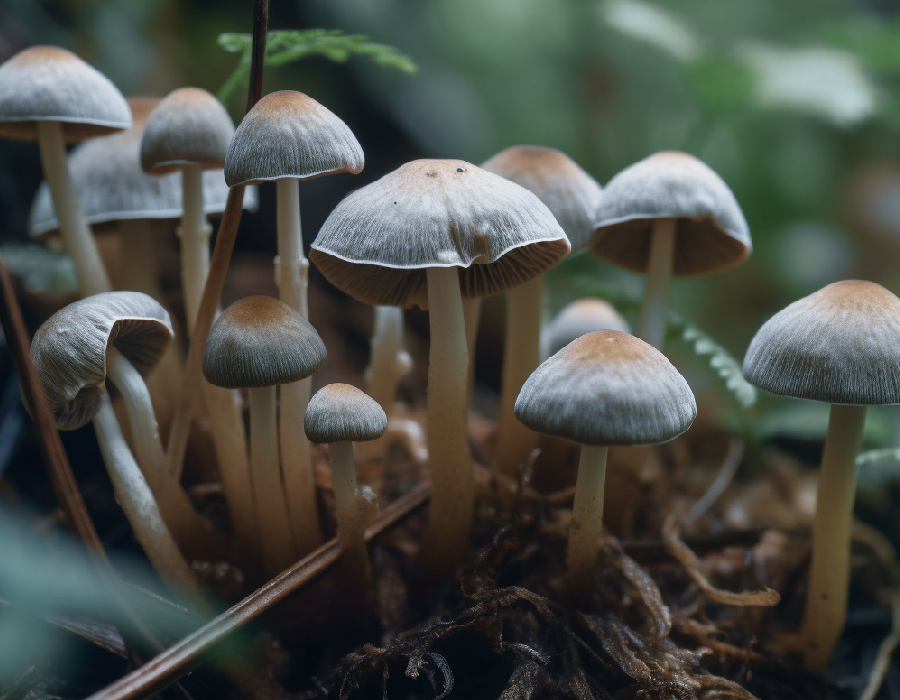
While magic mushrooms vary slightly depending on the species, there are several general features you can look for to identify them. Understanding the key characteristics of psilocybin mushrooms will help you avoid confusion with potentially harmful lookalikes.
READ: How to Prepare for a Psychedelic Journey: Setting the Stage for a Meaningful Experience

Cap
The cap is one of the most important features to identify when foraging for magic mushrooms. The size of the cap can range from 0.5 to 8 cm in diameter, depending on the species. Young mushrooms often have bell-shaped or conical caps, while older mushrooms tend to have flattened or expanded caps.
The color of the cap can vary but typically falls within a range of golden brown, tan, or off-white. When fresh, the cap might have a slimy or sticky texture. One of the defining characteristics of magic mushrooms is the bruise they leave. When the mushroom is handled or damaged, the cap will often turn blue or purplish—this bruising is a key feature for identification. However, this is not always present in some species.
Stem
The stem of magic mushrooms is typically long and thin, and it’s often white or cream-colored. It has a fibrous texture that feels somewhat stringy when touched. Like the cap, the stem will often bruise blue when it’s damaged. However, be cautious, as some non-psilocybin mushrooms may also bruise, so it’s essential to examine all the characteristics together.
READ: Breaking Free: How Microdosing Can Help You Overcome Bad Habits
Gills
Gills are located underneath the mushroom’s cap and are critical for identifying psilocybin mushrooms. The gills often range in color from gray to purple-brown, depending on the stage of spore production. In many species, the gills are not attached to the stem. Over time, the gills darken as the mushroom produces spores.
Dead Giveaways of Toxic Lookalikes
Identifying magic mushrooms can be tricky, especially when you’re faced with toxic lookalikes. While some poisonous mushrooms resemble psilocybin varieties, there are several key signs to look out for to avoid confusion.
Avoid mushrooms with white gills, as this is a sign that the mushroom might be a toxic variety. Additionally, look out for a ring (annulus) around the stem or a bulbous base (volva)—these are features commonly found in poisonous species. A chemical or unpleasant smell is another warning sign. Furthermore, some toxic mushrooms do not bruise blue, or they may exhibit a different bruising color, such as red or yellow.
READ: How to find the Best Dried Magic Mushroom Strain
Common Lookalikes to Watch Out For
When foraging for magic mushrooms, it’s essential to be aware of common poisonous lookalikes. Many of these mushrooms can look quite similar to psilocybin species, so it’s crucial to know what to avoid.
The Galerina marginata, also known as the Deadly Galerina, is a mushroom that resembles a psilocybin mushroom in terms of cap shape and color. However, it has a ring on the stem and white gills, both of which are indicators of its toxicity. This mushroom is highly poisonous and can be fatal if consumed.
Another common lookalike is Hypholoma fasciculare, or Sulphur Tuft, which typically grows in clusters on decaying wood. While it may resemble some magic mushrooms, it has a bitter taste and a yellowish-green color, making it easy to distinguish once you know what to look for.
The Cortinarius species also includes some dangerous varieties that can mimic the appearance of psilocybin mushrooms. These mushrooms typically have rusty-colored spores, and their appearance can be very similar to psilocybin mushrooms, making them especially dangerous. It’s crucial to be aware of these and other potentially toxic varieties when foraging.
How to Safely Identify Magic Mushrooms
Foraging for mushrooms is an exciting hobby, but it’s essential to exercise caution and diligence when identifying them. Always use a trusted field guide, like Mushrooms Demystified by David Arora, which can help you accurately identify different species. You can also join local mycology groups or online communities where you can engage with experts and share your findings for feedback.
When identifying magic mushrooms, it’s important to check multiple features. Examine the cap, gills, stem, bruising, and spore color. Confirm a mushroom’s identity by cross-checking several characteristics rather than relying on a single feature. One of the best ways to do this is by practicing spore printing. Psilocybin mushrooms typically leave a dark purple-brown spore print when placed on a piece of white paper. This can be a valuable step in the identification process.
Never forage based on photos alone, as images can be misleading and don’t capture all the necessary details for accurate identification. Always gather as much information as possible before picking any mushroom, and when in doubt, leave it alone.
READ: How Much Shrooms Should a Beginner Take?

Explore the World of Magic Mushrooms and Trust Magic Mush for Safe and Premium Products
Magic mushrooms have a long history of use for personal growth, therapy, and spiritual exploration. However, it’s crucial to identify them correctly before using them, as misidentifying mushrooms can lead to dangerous consequences. In this guide, we’ve walked you through the process of identifying psilocybin mushrooms, highlighting key features such as cap shape, stem texture, gills, and bruising. We also explored the most common lookalikes to watch out for, and how to safely forage for these powerful fungi. Armed with this knowledge, you can confidently begin your journey into the world of magic mushrooms while avoiding toxic alternatives.
For anyone interested in using magic mushrooms for personal growth, therapeutic benefits, or simply to explore their unique effects, safe identification is the first step. Whether you’re looking to forage in the wild or purchase from trusted sources, understanding the characteristics of magic mushrooms ensures you’re making an informed decision. Remember, this process requires patience, attention to detail, and respect for the natural world.
At Magic Mush, we understand the importance of safety and quality when it comes to dried magic mushrooms. That’s why we offer only the finest chocolate shrooms and shroom gummies, rigorously tested to ensure their potency and purity. Our commitment to education means that we’re here to guide you every step of the way, from identifying the mushrooms in the field to understanding their effects on the mind and body. We believe in fostering a supportive community and destigmatizing the use of magic mushrooms in Ottawa, making them accessible and safe for those who seek their benefits.
In addition to our premium products, Magic Mush offers a seamless online shopping experience, discreet packaging, and exceptional customer support to ensure your journey with magic mushrooms is as smooth and enriching as possible. With a focus on promoting safe and responsible usage, we empower individuals to unlock the full potential of psilocybin in a controlled and positive environment. Explore our shop today and take the first step toward a transformative experience with the help of Magic Mush.