The house was too quiet. Even the refrigerator sounded like it was holding its breath. After the funeral, everyone left in small, polite waves — casseroles cooling on the counter, sympathy cards tucked into the fruit bowl, and silence that settled like dust. I remember standing in the kitchen that night, barefoot on the cold tile, staring at her mug still in the sink. It felt like a crime to wash it. There was a lipstick stain on the rim — coral pink, her favourite — and I wanted it to stay exactly like that. Unchanged. Untouched. Proof that she had been here.
Grief didn’t come like a storm; it came like fog. It crept in slowly, seeping into the corners of my days until even laughter felt foreign. I’d wake up and forget for half a second that she was gone, and then the remembering would hit me — sharp and full-bodied. I thought I understood sadness before, but this was different. It wasn’t just an emotion; it was an environment. I was living inside of it.
I started moving through life in half-steps. The world outside my apartment window kept going — dogs barked, buses hissed, people argued about weather — but I was on a different timeline altogether. I didn’t cry all the time; mostly, I didn’t feel much at all. I’d stare at the TV without really watching, pour coffee without tasting it, check my phone only to find myself reading old texts I’d already memorized. It was like the part of me that connected to life had short-circuited.
I tried to keep up with the routines everyone said would help. Therapy, journaling, meditation — the usual prescriptions for a modern ache. But none of them touched that deep, aching stillness. Friends said time would soften it, but time just made me more aware of how far away she was. That was the truth of it: grief isn’t loud. It’s a quiet rearranging of everything you thought you understood about love and permanence.
🍄Check out my story on coming home to myself and learn how psychedelics helped me reconnect with who I truly am beneath the noise of everyday life
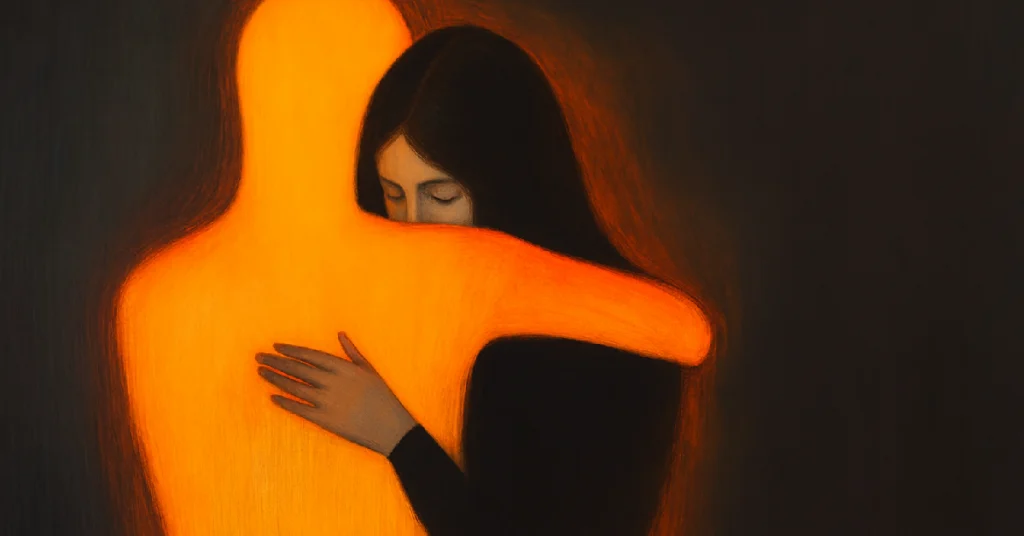
How Grief Reshaped Everything I Touched (And the Strange Way Mushrooms Found Me)
Grief changes the architecture of your days. I became nocturnal — not by choice, but because sleep felt impossible. I’d lie there, listening to the hum of the city through the window, thinking about her last voicemail. I couldn’t bring myself to delete it. Some nights I’d play it again just to hear her voice, that soft lilt that always made things seem less heavy. It’s strange how your brain starts to cling to fragments. A voice, a scent, the way light falls across an empty chair.
Therapy helped me understand the mechanics of loss, but understanding didn’t translate to relief. I still couldn’t breathe right when her name came up. I tried everything — yoga, long walks, cutting out caffeine, even cold plunges because someone on the internet said it “resets your nervous system.” But what I needed couldn’t be reset. It needed to be felt. And feeling, at that time, felt like standing in a burning house with no door.
The first time I heard about psilocybin was accidental. A friend from university mentioned it over drinks — how she’d gone on a guided mushroom retreat somewhere near Tofino. She said it helped her make peace with her father’s passing. I laughed it off at first. Mushrooms? For grief? It sounded like the kind of thing people post about when they’re trying too hard to seem “healed.” But that night, when I couldn’t sleep again, I found myself searching the internet for “psilocybin and loss.” That’s when I fell into a rabbit hole of stories — terminal patients finding peace, widows rediscovering joy, people saying things like, “The mushrooms didn’t take my pain away; they let me hold it differently.”
There was something about that line that stayed with me. Hold it differently. Maybe that’s what I needed. Not a cure. Just another way to carry it. I started reading about how psilocybin works — how it quiets the part of the brain called the Default Mode Network, the one responsible for looping thoughts and self-narratives. I realized that my grief had become a loop. Maybe this could help break it.
I didn’t rush into it. For months, I only read and listened. I found online communities — gentle, curious people sharing their own stories of psychedelic healing and emotional rebirth. Some were from Toronto, others from Ottawa, all talking about psilocybin in ways that felt less like escape and more like coming home. That’s when the idea stopped feeling strange. It started feeling like an invitation.
🍄Discover why feelings are meant to move through us and what happens when we block them in the guide I wrote
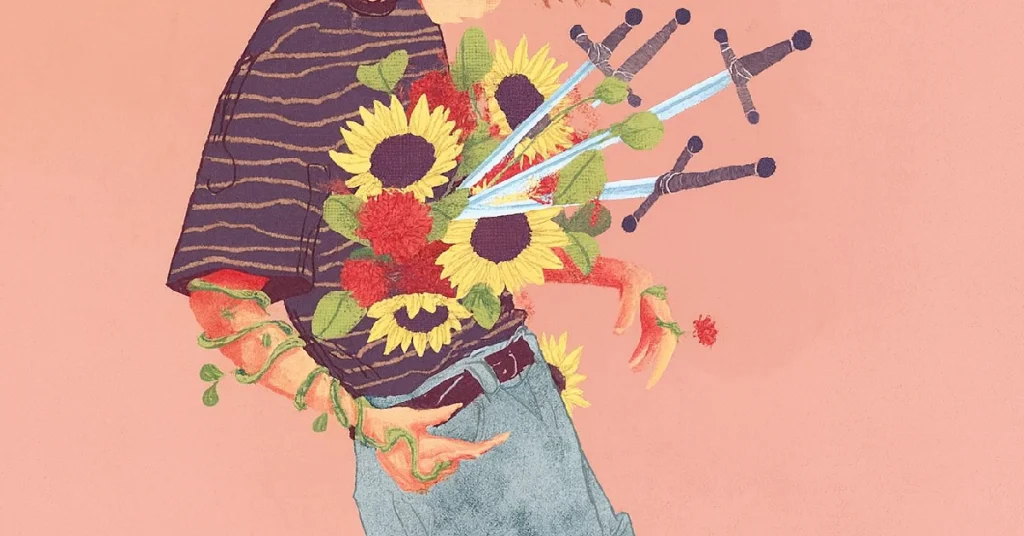
That Small Cabin in the Woods and the Day I Finally Said Yes
It wasn’t a grand decision. I didn’t wake up one morning and declare I was ready. It was quieter than that. A friend of a friend invited me to a small gathering — a weekend in a forest cabin just outside the city. There would be four of us, someone experienced in holding space, and a lot of gentle intention. I hesitated for weeks, but something in me — maybe the part that still believed in connection — said yes.
The day we drove out, the sky was a soft grey, like the world was muted on purpose. The cabin was simple: cedar walls, a fireplace, big windows overlooking a lake. Nothing about it felt ceremonial or dramatic. We lit candles, set intentions, and sat in a loose circle on the floor. I remember how calm it felt — not mystical, just human.
When the shroom gummies began to take hold, it wasn’t what I expected. No wild visuals, no sudden revelations. Just a slow dissolving of boundaries. The air around me felt textured, as if every breath had a story. I closed my eyes, and memories surfaced — not as pain, but as warmth. I saw her hands slicing apples, heard her humming to the radio. It didn’t feel like she was back. It felt like I was closer to where she had gone.
At one point, I thought I might cry, but the tears never came. Instead, there was this quiet, immense understanding: that love doesn’t vanish. It just changes form. I didn’t see her; I just stopped needing to. That realization wasn’t loud or cinematic — it was like a soft click inside my chest, a realignment. The medicine didn’t erase my grief; it let me sit beside it without flinching.
When the experience ebbed, the world returned gently. The lake outside shimmered like a mirror. We sat together in silence, sipping tea, and I realized that stillness didn’t scare me anymore. Something had shifted — not dramatically, but profoundly. The pain was still there, but now it had breath.
What the Mushrooms Whispered About Love, Loss, and How Nothing Really Stays Still
If there was one lesson that crystallized during that time, it was this: love and loss aren’t opposites. They’re two notes in the same song. I had spent so long trying to escape the pain that I forgot grief was just another way of loving someone who’s no longer here. The mushrooms, in their quiet way, helped me see that impermanence isn’t a punishment — it’s the fabric of life itself.
Science backs some of this up. Researchers studying psilocybin therapy explain that it reduces activity in the brain’s Default Mode Network — the part responsible for repetitive thought loops and self-referential stories. When that network quiets, the boundaries between “me” and “everything else” soften. That’s when healing slips in, not through analysis, but through surrender.
A grief counsellor I later spoke with in Toronto told me, “Psilocybin doesn’t show you where your loved one went. It shows you where you still are.” That resonated deeply. Because I realized I had been living like a ghost, orbiting the memory of someone I loved. The medicine didn’t transport me somewhere else; it brought me back into my own body, my own breath.
During the ceremony, I remember feeling a pulse beneath everything — a rhythm older than words. It felt like she was part of it. Not as a spirit or vision, but as continuity. The medicine didn’t show me where she went. It showed me she never really left. The forest, the wind, the warmth on my skin — everything held traces of her. I finally understood that death doesn’t end connection; it just changes its language.
Grief, I learned, isn’t something to overcome. It’s something to integrate. You learn to live alongside it, to give it a seat at the table without letting it consume the conversation. And in that acceptance, something opens — not joy exactly, but peace.
Check out this magic mushroom!!

A.P.E Psilocybin Chocolate Bar
$60.00Dried Penis Envy Magic Mushrooms
Price range: $60.00 through $240.00Golden Teacher Gummies for Microdosing
$25.00


Learning to Live Again, One Quiet Morning at a Time
The days after the ceremony were different, but not in the dramatic way I might have imagined. There were no sudden bursts of euphoria, no perfect clarity. Just a softer kind of presence. I started waking up earlier, making coffee and actually tasting it. I cooked meals again, even invited friends over. I laughed without guilt. It felt like she was still part of those moments — not as a haunting, but as a blessing.
Integration, I realized, was the real medicine. The mushrooms had shown me what was possible, but it was the small, daily choices that carried it forward. I began journaling, walking by the lake near my apartment, letting silence be a friend again. On some mornings, I took a very small microdose — just enough to feel gently connected, not altered. It became a bridge between that sacred experience and the rhythm of ordinary life. Microdosing in Canada is slowly becoming a conversation of its own — not about getting high, but about staying balanced, about living more openly.
The shift wasn’t linear. Some days I still woke up with the old ache, that hollow reminder of what’s missing. But even then, I no longer saw grief as an intruder. It had become part of my story, part of what made life tender and real. I stopped trying to “get over it.” I started trying to listen.
I found myself drawn back to nature more often. I’d walk through the woods and notice things I hadn’t before — the smell of pine, the hum of bees, the way sunlight moves through leaves. Everything felt alive in a way that reminded me of that cabin, that moment of connection. The mushrooms hadn’t fixed me. They’d simply reminded me I wasn’t broken.
That’s what I think healing really is: not forgetting, not replacing pain with pleasure, but remembering how to stay open in the middle of it all.
Realizing That Grief Is a Language We All Speak, Whether We Admit It or Not
When I started to talk about my experience openly, I was surprised by how many people leaned in, how many said, “I’ve been feeling that way too.” It turns out, grief isn’t rare. It’s everywhere — woven into breakups, job losses, the end of friendships, even the quiet exhaustion so many of us felt after the pandemic. We’re all grieving something, whether we call it that or not.
In places like Toronto and Ottawa, conversations about psilocybin and emotional healing are starting to emerge in real ways. Clinics and compassionate advocacy groups are exploring how psychedelic healing might support people in processing grief, trauma, and existential despair. Researchers across Canada are beginning to treat grief not as an illness to be medicated, but as a profound human experience that deserves witnessing and care.
I once read a quote from a counsellor working in psilocybin therapy in Toronto who said, “People don’t take mushrooms to forget the dead; they take them to remember the living.” That hit me hard. Because that’s exactly what it felt like. The medicine didn’t erase my memories. It amplified them. It reminded me that being alive — even in sadness — is still sacred.
In the Magic Mush community, grief isn’t something to escape — it’s something to integrate. The medicine just gives us permission to listen. And maybe that’s the most important thing: to listen, not just to the pain, but to what it’s trying to teach us.
Coming Back to Stillness, and Finally Feeling at Home Again
Months later, I found myself standing in that same kitchen where it all began. The mug was still there, though the lipstick had faded. I washed it this time — not because I wanted to erase her, but because I understood she wasn’t contained in things anymore. I lit a candle by the window and watched the flame dance against the night. The air felt lighter somehow.
The mushrooms didn’t bring her back. They brought me home. Back to myself, back to breath, back to the strange, luminous beauty of being alive even when life hurts. I still miss her every day, but now that missing feels less like falling and more like remembering.
Grief doesn’t need to be cured. It just needs to be witnessed. And when we let ourselves sit close enough to the ache, it begins to change shape. It becomes something softer, something almost holy. I think that’s what the mushrooms taught me — that healing isn’t about moving on; it’s about moving closer.
🍄Discover how to find your direction when you’re feeling completely lost in the guide I wrote
Finding Healing Together — This Is Where Magic Mush Canada Comes In
Grief taught me that healing isn’t about erasing pain — it’s about learning to live beside it. Through my experience with psilocybin, I discovered that love doesn’t end where loss begins. Instead, it shifts and reshapes, teaching us how to stay open even when it hurts. What started as a desperate search for relief became a journey back home to myself — a reminder that grief doesn’t need to be cured, only witnessed. The mushrooms didn’t replace what I’d lost; they helped me understand that connection doesn’t disappear when someone’s gone. It transforms, weaving itself through memory, through breath, through every quiet moment that still holds their name.
If there’s one thing this journey has taught me, it’s that healing is never a straight line. It’s a circle — one that invites us to return again and again to what makes us human: love, loss, and the courage to keep feeling. Psychedelics didn’t “fix” my grief. They simply made space for it, and in that space, I found presence, peace, and a softer kind of understanding. It’s this kind of grounded, compassionate exploration that so many Canadians are beginning to seek — and where communities like Magic Mush Canada make all the difference.
At Magic Mush Canada, we’re not here to sell you a fantasy. We’re here to walk with you through real, human experiences — the messy, the beautiful, the healing, and the unknown. We believe in safe, mindful exploration of psilocybin and other magic mushroom products, all backed by the highest quality standards and careful testing. Our mission is simple: to help people reconnect with themselves and the world around them, whether they’re exploring psychedelics for emotional healing, creativity, or self-discovery. We don’t just offer premium dried magic mushrooms; we offer guidance, education, and a supportive community for every step of your journey.
We know how personal this path can be. That’s why we focus on creating a space that feels welcoming and judgment-free — a place where curiosity and healing can coexist. Whether you’re new to psychedelics or already familiar with their potential, Magic Mush Canada provides the resources, information, and care you need to make your experience meaningful and safe. From premium mushroom chocolates to carefully curated microdosing products, we’ve got something for every kind of explorer.
So if you’re ready to take your next step — whether it’s finding peace through grief, rediscovering creativity, or simply reconnecting with your inner world — we’re here for you. Join our Magic Mush Canada community today. Explore, learn, and experience the transformative power of magic mushrooms in Canada. With seamless online shopping, privacy, and genuine care at every turn, your journey starts here. Because healing isn’t something you have to do alone — and at Magic Mush Canada, we’ll be right there beside you.