
There’s a moment many of us recognize almost immediately, even if we’ve never quite named it. Someone comes back from a psychedelic experience and, somewhere between the sharing circle, the quiet drive home, and the lingering afterglow that clings for days, they say it with a kind of calm certainty: “The mushroom told me.” For some, this moment even gets framed as a sign you’re going through a spiritual awakening, a marker that something meaningful has shifted. The sentence often lands softly, almost tenderly, but it also lands firmly, like a period placed at the end of a paragraph no one else got to read. It has a finality to it that can feel reassuring and unsettling at the same time.
It sounds poetic. It sounds old, like it belongs to a lineage of wisdom rather than a single night or afternoon. It sounds like something that doesn’t require follow-up questions, because how do you gently ask for clarification when the source of the message is framed as something beyond language, beyond personality, beyond ordinary doubt? In that moment, the phrase can feel protective, as if it’s guarding something delicate from being over-analyzed or misunderstood. And often, that protection makes sense. Psychedelic insights can feel fragile when they’re first spoken aloud.
And to be clear, the issue here isn’t that people have insights on mushrooms. That part is obvious, deeply human, and often genuinely meaningful. People notice things they couldn’t see before. They feel truths that had been buried under habit, fear, or distraction. They touch grief, forgiveness, resolve, or compassion in ways that feel real in the body, not just interesting in the mind. None of that is in question.
The hidden problem sits a layer deeper, in the way language quietly shapes responsibility. It begins when a phrase like “the mushroom told me” gently shifts authorship away from the person who had the experience and hands it to something that can’t be questioned, clarified, or asked to slow down. Suddenly, the insight isn’t something someone is holding, testing, or learning how to live with. It becomes something delivered, complete and authoritative, by an outside source. The trouble isn’t insight itself. It’s what can happen when discernment gets skipped, curiosity closes early, and responsibility is subtly outsourced in the name of certainty.
🌿 Thoughtful preparation may help bring clarity to intense experiences. Read this article to understand what steps people talk about before diving in

Why This Phrase Keeps Catching My Attention (And Sometimes My Unease)
I’ve heard “the mushroom told me” in ceremony circles, in podcasts, in Instagram captions floating over softly blurred forest photos. Sometimes it’s tender and clearly still raw, like someone trying to protect something fragile they don’t yet have words for. Other times, it lands with a thud, especially when it’s used to justify a sudden life decision, a moral conclusion, or advice offered to others with complete confidence.
What keeps pulling me back isn’t a desire to correct anyone or to play skeptic-in-residence. It’s a quieter curiosity. What do we gain by saying “the mushroom told me,” and maybe more importantly, what do we avoid when we say it that way? What responsibility does that phrasing gently set down, and who ends up carrying it instead?
What People Usually Mean When They Say “The Mushroom Told Me”
Most of the time, this phrase isn’t meant literally, and treating it as if it is misses the point. When people say “the mushroom told me,” they’re often reaching for shorthand to describe something that felt bigger than ordinary thought. It can mean they received a strong insight that cut through denial or distraction. It can mean something emotionally undeniable surfaced, like grief they’d been outrunning or compassion they didn’t know how to access sober. Sometimes it points to a pattern that finally became visible, or a sense of being guided by an intelligence or presence that felt external even if it wasn’t understood that way intellectually—especially for people already engaged in cultivating a spiritual practice that gives them language for these kinds of inner shifts.
In many cases, it’s simply a poetic attempt to speak about an experience that exceeded language. Psychedelic insights don’t arrive neatly labeled, and “the mushroom told me” can feel like the closest available container for something wordless and intense. The phrase itself isn’t nonsense, and it isn’t proof that someone thinks fungi are literally whispering instructions. It’s a cultural shorthand, born out of awe, vulnerability, and the limits of language.
🔍 The idea that healing could be tied to biological systems like immunity comes up in wellness conversations. Check out this article for an informational look at that theory

Why The Phrase Is So Tempting, And Why It Spreads So Easily
Part of the appeal is how clean the phrase is. Psychedelic experiences are messy, contradictory, and emotionally loud, and “the mushroom told me” packages all of that into a single, elegant sentence. It offers authority without explanation, which can feel like relief after hours of ineffable sensation. It can feel safer than saying “I want this” or “I need to change,” because desire and need invite scrutiny, while revelation feels above debate.
There’s also a social dimension. In communities that value insight and awakening, the language of messages carries status. It signals depth, access, and having been somewhere meaningful. On social media, it’s short, mystical, and easily shareable, fitting neatly into captions and sound bites. Vulnerability gets alchemized into certainty, and certainty travels well. None of this makes the phrase malicious, but it does help explain why it sticks.
The Hidden Problems That Can Quietly Accumulate Over Time
One hidden issue is outsourced authorship. When “the mushroom” replaces “I,” responsibility subtly shifts away from the person making meaning. Insights stop being something you had and start being something that happened to you, which can make it harder to examine them critically or revise them later especially when microdosing doesn’t work in the way someone hoped and the pressure to explain why quietly pushes meaning into more absolute or external frames. Another problem is inflated certainty, where a powerful feeling of truth turns into a commandment rather than a starting point for reflection. What felt meaningful in an altered state can harden into something unquestionable once it’s framed as a message.
Meaning inflation can creep in as well. When everything becomes a sign or instruction, ordinary reality checks fade into the background. Ambiguity, which is often where growth actually lives, gets bypassed in favour of cosmic conclusions. Alongside this is the issue of unchallengeable authority. In a group setting, who gets to argue with the mushroom? The phrase can shut down dialogue without intending to, simply because it places the insight beyond discussion.
There’s also a social power layer that’s easy to miss. In circles where “messages” are valued, those who claim them can end up shaping group narratives, intentionally or not. Difficult emotions might get bypassed by being wrapped in spiritual language, and accountability can be sidestepped when actions are justified as divinely sourced. A breakup, a boundary crossing, or a sudden withdrawal can be framed as destiny rather than choice. Over time, personal insights can slip into overgeneralization, where something deeply individual becomes advice offered broadly, stripped of its context.
Check out this magic mushroom!!

A.P.E Psilocybin Chocolate Bar
$60.00Dried Penis Envy Magic Mushrooms
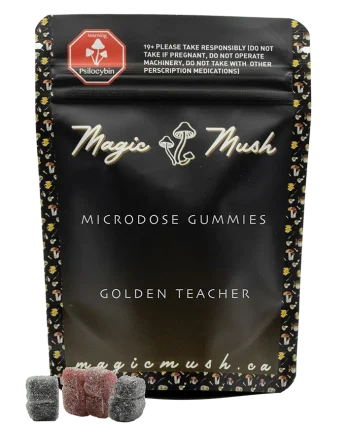
Price range: $60.00 through $240.00Golden Teacher Gummies for Microdosing
$25.00


Separating Insight, Interpretation, and Action Without Killing the Magic
One of the simplest ways to lower the temperature around certainty is to gently separate insight from interpretation and action. Insight is what you felt or realized, the raw material of the experience. Interpretation is the story you attach to that feeling, the meaning you give it, shaped by culture, expectation, and personal history. Action is what you do next in the actual world, with other people involved and consequences unfolding over time. Practices like journaling for emotional integration can help keep these layers distinct, giving you a place to explore what surfaced without rushing it into explanation or behavior.
The experience itself can be real and meaningful without the interpretation being final or fixed. Holding that distinction allows insights to breathe rather than calcify. Actions, especially big ones, tend to benefit from being tested slowly, in conversation, and over time. Ethical integration is rarely dramatic. It’s often relational, iterative, and a little boring, which doesn’t make for good captions but does tend to lead to fewer regrets.
Why Revelations Can Feel More Real Than Real
Psychedelic states amplify emotion, and heightened emotion makes meaning feel urgent and absolute. Boundaries between self and world can soften, so impressions feel external, as if they arrived from outside rather than arising within. Expectation and suggestibility also play a role, shaping the content of what’s experienced in ways that feel invisible from the inside. The mind’s pattern-making machinery is turned up, connecting dots at high speed and with high confidence.
Community narratives matter too. What people around us talk about, value, and repeat influences what gets noticed and reported. None of this explains away the mystery, and it doesn’t need to. It simply reminds us that feeling real doesn’t automatically mean being final. There’s room to respect the intensity of the experience without crowning it unquestionable truth.
The Consent And Power Angle That Gets Overlooked In Group Spaces
In shared psychedelic spaces, language carries weight. When someone says “the mushroom told me,” disagreement can start to feel like a moral failure or a sign of being less evolved. Facilitators or charismatic figures, even unintentionally, can use message language in ways that pressure others or steer group dynamics. Vulnerable participants may absorb someone else’s interpretation as truth, especially when they’re still open and impressionable.
Boundaries can get blurred when certainty is spiritualized. A difficult interaction might be reframed as something someone “needed,” rather than something that requires consent and repair. A grounded ethical stance doesn’t require dismissing mystery. It simply insists that humility, consent, and care matter more than how cosmic an insight sounds.
📓 Journaling can be a powerful way to make sense of intense or meaningful experiences. Read this article for techniques on processing psychedelic experiences through writing

Speaking About Insight In A Way That Keeps The Mystery And Restores Agency
There are ways to talk about psychedelic insights that preserve poetry without giving up authorship. Saying “I had an insight that I’m still testing” keeps the door open. Saying “something felt emotionally true, and I’m integrating it slowly” honours the experience without freezing it in place. Naming that you saw a pattern you’ve been avoiding or that something may be metaphor but still meaningful invites dialogue rather than shutting it down.
Language like “I felt guided, but I’m holding it lightly” or “I’m not sure what it means yet, but here’s what I noticed” doesn’t make the experience smaller. If anything, it makes it more honest. Humility isn’t less spiritual. It’s often a sign that the mystery is being respected rather than used.
Closing Thoughts On Insight That’s Sacred Without Being Sovereign
Psychedelic insights can be profound, destabilizing, healing, and genuinely sacred without needing to rule unchallenged over our lives. Reclaiming authorship doesn’t mean rejecting mystery. It means staying in relationship with it, asking questions, and allowing meaning to evolve. When we hold insights with curiosity instead of certainty, they tend to integrate more gently and ethically.
At MM, we’re interested in that middle ground, where discernment lives alongside wonder and science literacy doesn’t flatten lived experience. If this question resonates, there’s more to explore in our pieces on psychedelic integration, group dynamics, meaning-making, and how to carry powerful experiences back into ordinary life without turning them into doctrine. The mushroom may open the door, but we’re still the ones who walk through it.
✨ Beginners curious about out-of-body experiences often look for structured guidance. Check out this article to learn how people approach astral projection

Keeping the Mystery Alive While Staying Grounded, and How We at Magic Mush Canada Support Responsible, Thoughtful Psychedelic Exploration
Throughout this article, we’ve been circling a simple but important idea: psychedelic insights can be deeply real, emotionally moving, and even life-altering without needing to become unquestionable truths that override discernment, accountability, or relationship. We explored why the phrase “the mushroom told me” is so appealing, how it works as cultural shorthand for experiences that exceed language, and where it can quietly create problems when it replaces authorship, inflates certainty, or shifts power in subtle ways. We looked at the difference between insight, interpretation, and action, why revelations can feel more real than real, and how language shapes consent, group dynamics, and integration long after the experience itself has ended. The thread running through all of this isn’t skepticism or debunking, but humility: respecting the mystery without handing it total authority over our lives.
At Magic Mush Canada, this perspective is foundational to how we approach psychedelics and the role they can play in personal growth, healing, and exploration. We believe dried magic mushrooms can open meaningful doors, but we don’t believe they should replace personal responsibility, critical thinking, or lived discernment. Our work is rooted in the idea that these experiences are most beneficial when paired with education, safe access, and an ongoing integration process that honours both the insight and the real-world context it enters. That’s why we focus not only on providing premium, rigorously tested products, but also on sharing grounded information that helps people relate to their experiences with curiosity rather than certainty.
We see ourselves as part of a broader cultural shift toward destigmatizing magic mushrooms while also encouraging a more mature and ethical relationship with them. Through our educational resources, blog, dosing guides, and community engagement, we aim to support people in making sense of their experiences without rushing to conclusions or turning moments of insight into rigid narratives. We believe integration is not about extracting a single “message,” but about noticing patterns over time, staying in conversation with what arises, and allowing meaning to evolve rather than harden.
If this article resonated, we invite you to continue exploring with us. Whether you’re seeking high-quality products, thoughtful education, or a community that values safety, reflection, and discernment, Magic Mush Canada is here as a trusted partner in your journey. The mystery can remain alive and intact, while you stay grounded, empowered, and fully responsible for how insight becomes action in your life.

