I once did mushrooms with two friends in a little cabin tucked deep in the woods. We had this beautiful idea: no phones, no distractions, just presence and nature. We even lit candles and set intentions. But thirty minutes in, right around when the trees started gently waving at me and the ground was breathing, one of my friends — let’s call him Alex — started narrating everything. And I mean everything. From “I think the trees are flirting with me” to “What if this is all a simulation, and we’re just mushrooms dreaming of being people?” he did not stop. I love Alex, I really do. But by the third philosophical musing, I wanted to scream.
At first, I tried to laugh along, but inside I was quietly panicking. I could feel something massive trying to rise within me — an emotion or maybe a memory — but it kept getting interrupted by a stream of chatter. I eventually walked outside, sat under a tree, and just stopped. No words, no noise, just breath and wind and the occasional sniffle. That silence hit harder than any insight I’d ever spoken aloud. It felt like I finally dropped into myself, no performance, no audience. Just… me.
That experience cracked something open: maybe not talking was the whole point. Maybe silence wasn’t just absence, but presence in its purest form. So in this article, we’re going to explore that tension — between connecting through conversation and disconnecting to go inward. Is it better to talk during a trip, or should you just shut up and feel it?
READ: Doing Shrooms Alone-Guide to Tripping Solo
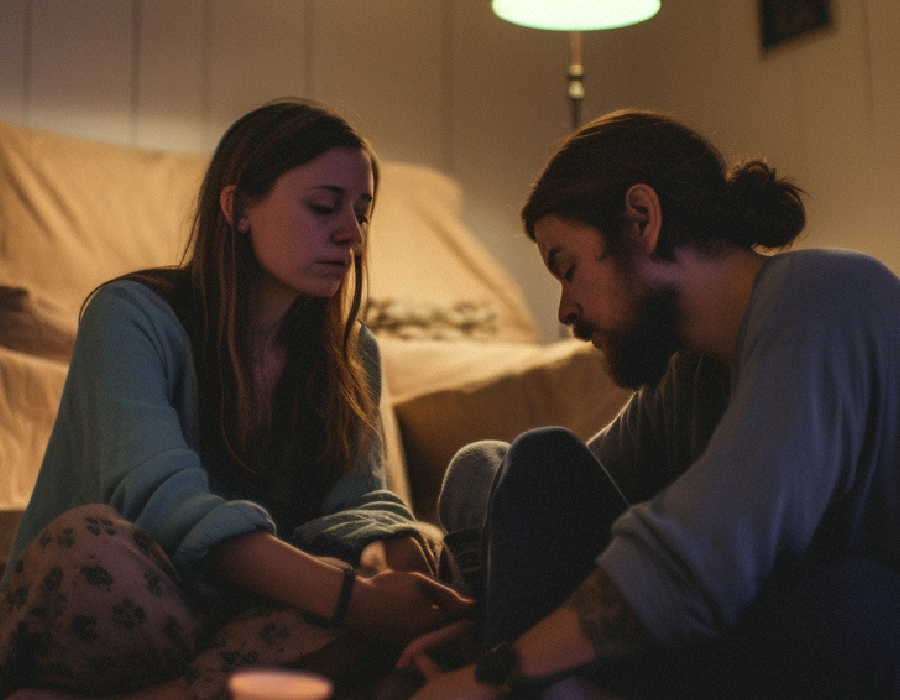
What Happens to Language on Psychedelics?
Psychedelics, especially psilocybin, have a funny way of messing with our ability to speak. Neuroscience offers some clues. Studies show that psilocybin decreases activity in the brain’s default mode network — the part responsible for self-referential thought — and can quiet Broca’s area, one of the primary centers for language production. That means during peak experiences, it can literally feel difficult or unnecessary to form words. Language becomes clunky, like trying to dance in a straitjacket.
Sometimes, though, it swings the other way. Some people find themselves unable to shut up, compulsively narrating or philosophizing. This verbal overflow isn’t random — it often stems from the ego trying to reassert control, to explain the unexplainable. Words can become a shield against the rawness of what’s happening. The brain is trying to process something vast and mysterious, and talking can become a coping mechanism.
But there’s a cost to that. Talking pulls us outward — toward interaction, analysis, and egoic patterns. Silence pulls us inward — into sensation, stillness, and the deep somatic layers where the real medicine often lives. When you’re tripping, every moment has potential to reveal something essential. And every word you speak becomes an energetic ripple. Are you helping the space unfold, or disrupting it?
Cultural and Therapeutic Approaches to Silence
Indigenous cultures have understood this for centuries. In many traditional psychedelic ceremonies, such as those involving ayahuasca, peyote, or psilocybin mushrooms in Mesoamerica, silence is sacred. When there is sound, it’s intentional — songs, chanting, or drumming — not idle chatter. The idea is to hold space, not fill it. These settings encourage introspection, surrender, and deep listening to what the medicine wants to show you.
In modern psychedelic therapy models, silence also holds weight. With psilocybin, the approach is typically non-directive — meaning the therapist or guide says very little during the session. They create a container but don’t lead you through it. This method supports inner exploration. In contrast, MDMA-assisted therapy often includes more dialogue, because MDMA keeps people emotionally present and communicative while working through trauma.
So it’s not that talking is always bad — it’s about how and when it’s used. Verbal processing can be grounding or healing, especially when someone is overwhelmed. But it can also block deeper emotional experiences if overused. Co-regulation — the calming presence of another human — can happen through eye contact, a held hand, or simple nonverbal gestures. Talking isn’t the only way to be together.
READ: Embracing the Quiet: How Mindfulness Meditation Can Transform Your Mental Health

When Talking Helps — and When It Doesn’t
Knowing whether to speak or stay silent during a trip depends on the moment. If you’re having a realization and want to share it, speaking can feel affirming. Saying something like “I need help,” “I feel scared,” or “Can we sit quietly for a bit?” can shift the entire energy of a session in a helpful direction. Similarly, in group settings, a few well-chosen words can anchor or comfort someone else — or set boundaries when needed.
But during peak intensity — when your ego dissolves, when time disappears, when you’re not even sure who you are — silence is usually the better choice. That’s when the most powerful material surfaces: childhood grief, buried emotions, mystical visions. Trying to explain these moments too soon can yank you out of them. It’s like catching a dream mid-flight and trying to pin it down with language — you lose it the moment you speak.
In one trip, I felt an overwhelming sense of peace while watching a fern sway in the breeze. I almost turned to a friend to say, “This is what love feels like.” But I didn’t. I stayed silent, and instead let that feeling wash over me, dissolve me, change me. Later, I wrote about it in my journal and cried. That moment still lives inside me, intact, unfiltered by words.
Group Journeys and the Language of Consent
When tripping in a group, communication is more complicated — and more essential. That’s why it’s so helpful to set agreements beforehand. Do you want to stay mostly quiet? Is it okay to check in with each other? What’s the plan if someone becomes distressed? Just like setting intentions for the trip itself, setting communication norms can create a much safer, more respectful space.
Nonverbal signals can be powerful here. A hand squeeze, a nod, a shared look — these say, “I’m with you,” without breaking the spell. Some groups even use simple hand cues to mean “I’m okay but quiet,” “I need space,” or “Please help me.” Establishing that kind of shorthand can protect both the silence and the connection.
It’s also okay to change your mind mid-trip. If you thought you wanted silence but find yourself craving a conversation, that’s valid. Just be mindful: are you talking to connect, or talking to avoid? There’s no shame in either — but knowing the difference is key.
And then there’s the talking that comes after. Integration conversations in the days and weeks following a journey are often where the deepest connections are made. That’s when you can unpack the insights, compare notes, and piece together the mysteries. Sometimes, the mushrooms give you the feeling — and only later do you find the words.
Check out this magic mushroom!!

A.P.E Psilocybin Chocolate Bar
$60.00Dried Penis Envy Magic Mushrooms
Price range: $60.00 through $240.00Golden Teacher Gummies for Microdosing
$25.00


Microdosing and Verbal Expression
What about microdosing? In smaller, sub-perceptual doses, psilocybin doesn’t typically provoke ego death or intense visuals — but it can make people more emotionally open, connected, and expressive. Many couples who microdose together report deeper conversations, more empathy, and a greater ability to articulate feelings. In therapy settings, microdosing can help clients bypass inner blocks without overwhelming them.
But even in microdosing, silence can be golden. Going for a walk in nature without speaking, doing yoga or meditation in stillness — these practices allow the subtle shifts of microdosing to surface. Words can add clarity, but they can also distract from the internal cues you’re learning to listen for. Silence sharpens perception. It clears mental noise and lets the quieter parts of your psyche speak.
So whether you’re in a full dose state or gently tuned in through microdosing, consider weaving intentional silence into your practice. The mushrooms might have something to say — and they don’t always use words.
Want to Go Deeper? Here’s Where to Start
If you’re curious to explore this topic further, The Manual of Psychedelic Support by MAPS offers incredible insights on trip sitting and space holding, including how to manage communication. Michael Pollan’s How to Change Your Mind dives into the science and tradition behind psychedelic therapy, including fascinating details on how silence plays a role in healing.
Francoise Bourzat, a guide trained in traditional and modern methods, often speaks about the sacredness of silence in her interviews. And integration therapists like Ingmar Gorman stress the importance of post-trip conversation rather than in-the-moment narration. DoubleBlind magazine has some fantastic articles on how to hold space in ceremony, navigate group dynamics, and create intentional journeys — with or without words.
These resources help you move from curiosity to confidence, from noise to nuance. Because ultimately, the journey isn’t just about what you see or say — it’s about what you feel, and how you carry that forward.
Talking Isn’t Bad — But Learn When to Let the Silence Speak
Talking during a trip isn’t inherently wrong. Sometimes a few well-placed words can open a door, soothe a fear, or anchor you back to the present. But if you find yourself talking just to fill the space — ask yourself why. Is there something you’re avoiding? Are you trying to impress someone? Or are you scared of what might rise in the quiet?
Because here’s the thing: the deepest truths rarely come wrapped in sentences. They come in sensations, symbols, silence. And the more space you make for those, the more they’ll speak. So next time you journey — whether alone or with others — try an experiment. Say less. Listen more. Let the trip unfold without narration. You might be surprised what comes through when no one’s talking.
You don’t have to shut up forever. But once in a while, just shut up… and feel it.
READ: Psychedelics, Intimacy, and the Space Between Us: How Mushrooms Help Us Come Home to Ourselves
Ready to Explore Deeper Trips? Let Magic Mush Help You Find the Right Balance
Throughout your psychedelic journey, one question may come up more often than you expect: should I speak, or should I stay silent? This article unpacked that very tension, exploring the neuroscience of speech under psilocybin, the role of ego and emotional regulation, and the deep wisdom of silence found in Indigenous traditions and modern therapy. While talking can bring clarity, connection, or comfort, it can also pull you away from the raw, somatic truth of the moment. Sometimes, the real insights don’t come through language — they emerge through presence, breath, and stillness.
From setting communication boundaries in group trips to honoring the sacred space of inner exploration, knowing when to speak and when to be still is a skill that grows over time. Whether you’re deep in the middle of a peak experience or microdosing for emotional openness, intentional awareness of your verbal patterns can turn a good trip into something truly transformational. Talking isn’t bad — but if you’re always reaching for words, you might miss what silence has to say.
At Magic Mush, we understand the nuance of these experiences. We’re not just a provider of premium magic mushrooms in Vancouver— we’re your partner in creating safe, intentional, and transformative journeys. With expertly sourced products, rigorous quality testing, and a passion for education, our goal is to help you explore these states of consciousness with trust and clarity. Whether you’re preparing for your first trip or integrating your tenth, we offer tools, knowledge, and community support to guide you every step of the way.
We also offer extensive educational resources so you can learn how to design your own experiences — from understanding dosage and set and setting, to embracing practices like silent ceremony or intentional co-tripping. Our friendly team is here to answer questions, help you choose the right products for your goals, and make sure your journey starts from a place of empowerment. You can shop with confidence, knowing that privacy, discretion, and customer care are at the heart of everything we do.
If you’re ready to deepen your relationship with psychedelics — and yourself — let Magic Mush support your process. Explore our shop, join our growing community, and discover why thousands across Canada trust us as their go-to source for healing, growth, and connection. Because sometimes the journey begins not with words, but with a quiet willingness to listen.
And if you’re still unsure about how to prepare for your next experience — whether you’re navigating a solo journey, planning a group trip, or simply wondering what silence might reveal — Magic Mush is here to help. Our commitment to education means you’re never left guessing. From curated guides and thoughtful blog posts to real-time support from our knowledgeable team, we’re more than just a store — we’re a trusted ally on your path to psychedelic discovery. Let us walk with you as you learn, unlearn, and tune into the kind of wisdom that only mushrooms — and a little silence — can offer.