A circle of strangers sits in the candlelight, and the air is thick with the scent of copal. Someone to my left hums low and deep, their voice curling into the silence like smoke. Across from me, a woman in a flowing shawl begins to sing in a language I do not understand. Her hands shake, just slightly, as she rattles a string of shells. My own palms are clammy, and I tell myself it’s because the psilocybin tea is starting to work, but that’s not the whole truth. The real tremor running through me has nothing to do with chemistry — it’s the question blooming in the back of my mind: somewhere out there, someone would say this is not sacred at all. They would say this is theatre. Pretend. An imitation of something holy, dressed up for people who can afford the ticket.
I close my eyes and feel the drumbeat settle into my chest. The room smells ancient, like fire and prayer, yet I know we’re in a rented yoga studio tucked above a busy street. Down below, people are buying lattes and posting photos of their dogs. Up here, we are trying to touch the infinite. I have no idea if we’re succeeding, but I can feel the weight of the attempt. This is the paradox I’ve learned to live with: moments that feel profoundly sacred to me might look, to someone else, like borrowed ritual. It’s that tension — the space between personal meaning and cultural legitimacy — that keeps pulling me back to this question: who gets to decide what’s sacred?
The more ceremonies I’ve sat in, the more I’ve noticed how “sacred” can wear different costumes. Sometimes it’s woven in the chants of a Mazatec curandera, sometimes in the quiet stillness of a therapist’s office, sometimes in my own bedroom with candles I lit myself. And still, each time, I catch myself wondering: is this real? And if it’s real to me, does that matter more than whether it would be called “authentic” by someone else?
🍄 Discover how psychedelics are sparking modern mysticism, reigniting spiritual curiosity, and opening new pathways to self-discovery

That First Time I Stepped Into a ‘Sacred’ Mushroom Space and Realized I Was Carrying More Questions Than Answers
My first brush with what people called a sacred mushroom ceremony came years ago, long before I understood much about psilocybin or its cultural roots. I was invited by a friend to join a small group “circle” in the countryside. The instructions were vague but full of reverence: bring comfortable clothes, an open heart, and something meaningful to place in the center altar. I remember agonizing over what to bring. Was a crystal too cliché? Was a photograph too personal? In the end, I brought a small river stone I’d carried in my pocket for years, smoothed by time and my own anxious fingers.
When I arrived, the space was arranged with care — candles, flowers, a central woven cloth covered with offerings. The facilitator spoke softly, telling us to treat the mushrooms as “teachers.” We each took a small handful, chewed slowly, and waited. The hours that followed were a swirl of visions, tears, and shared silence. I walked away feeling like I had touched something beyond my own understanding. But alongside the awe was a small, sharp question: what made this “sacred” and not just a group of people tripping together?
I later learned that the songs we sang were adapted from indigenous traditions, but we didn’t speak much about where they came from. There was an unspoken assumption that intention alone could make it sacred. That idea comforted me, but it also unsettled me. If intention is enough, then anyone can declare something sacred. But if sacredness requires lineage, permission, and cultural continuity, then was I just participating in a hollow imitation?
I carried that question into every mushroom experience I had afterward. Even when I created my own rituals — lighting candles, setting intentions, listening to music that opened my heart — I wondered if what I was doing was somehow “less than.” Sacredness, I was starting to realize, wasn’t just about the internal experience. It was tangled up with community validation, cultural history, and who holds the right to declare something holy.
🍄 Explore the essence of surrender and discover what spiritual psychedelic trips truly feel like, from profound insight to deep inner peace

Standing at the Cultural Crossroads Where Sacredness Wears Many Different Faces
Over time, my mushroom journeys took me through very different worlds. In one, I sat cross-legged on a dirt floor in a mountain village, led by a Mazatec elder whose voice carried the weight of generations. The ceremony was long and slow, punctuated by silence that felt more powerful than any song. In another, I lay under a weighted blanket in a softly lit therapy room, with a licensed clinician guiding me through my thoughts. And then there were the times I went into the forest alone, letting the wind in the trees be my only guide.
Each of these spaces claimed sacredness in its own way. The indigenous ceremony grounded it in tradition, in a lineage passed down for centuries. The therapeutic setting defined it through the lens of healing and psychological integration. My solo journeys felt sacred in a private, almost secret way — no one to validate them except me.
The contrast was stark. I began to see that sacredness is not a universal language. In some circles, only the ceremony with the elder would be considered truly sacred. In others, sacredness was simply the presence of deep intention and care. I was living in the middle of these definitions, sometimes feeling pulled toward one, sometimes the other, sometimes standing stubbornly in my own middle ground.
Asking the Big Question: Who Gets to Be the Gatekeeper of the Sacred?
The more I explored, the more I found that disagreements about sacredness were rarely just about dried magic mushrooms. They were about power. About culture. About who has the authority to define meaning. I remember one night in particular, after a community gathering, when someone bluntly told me that the ceremony I had attended the week before was “basically a cosplay of indigenous practice” and therefore meaningless. The person leading it, they said, had no right to use those songs or that altar style. My instinct was to defend the experience because it had been deeply meaningful to me. But their comment also made me pause. Could something be sacred for the participant but not for the culture it was borrowed from?
On the flip side, I’ve seen people turned away from traditional ceremonies because they didn’t belong to the community or didn’t follow the expected etiquette. In those moments, sacredness became a boundary — a gate that not everyone could walk through. I couldn’t help but wonder how many people miss out on potentially life-changing experiences because they don’t fit someone else’s definition of who “deserves” to be there.
And then there’s the role of commerce. I’ve attended retreats with glossy websites and high price tags that advertised “authentic sacred mushroom experiences.” Marketing copy promised ancient wisdom and profound healing, and yet, sometimes the heart of the experience felt more like a luxury package than a spiritual rite. Did the cost dilute the sacredness? Or could it coexist with it if the intention was genuine?
This is where the question turns slippery: maybe sacredness isn’t something that can be universally policed — but the way it’s claimed still has real consequences.
Check out this magic mushroom!!

A.P.E Psilocybin Chocolate Bar
$60.00Dried Penis Envy Magic Mushrooms
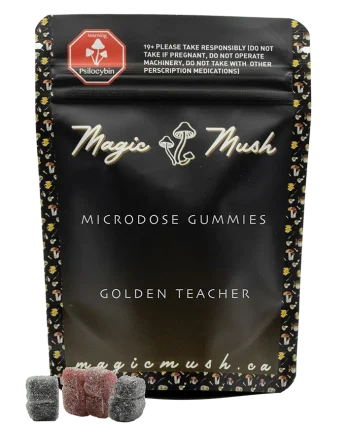
Price range: $60.00 through $240.00Golden Teacher Gummies for Microdosing
$25.00


Coming to My Own Reckoning About What Sacredness Really Means in My Mushroom Practice
After years of sitting in different circles, walking through forests alone, and reading both indigenous writings and Western psychedelic research, I began to notice something shift in me. At first, I had been obsessed with finding the “right” way to make a mushroom journey sacred. I thought if I could just align myself with the correct tradition or format, I’d finally be able to participate without feeling that low hum of doubt in the background. But the more I searched for the ultimate blueprint, the more I realized that sacredness doesn’t arrive as a stamp of approval from outside. It’s something that takes root inside.
One of the clearest moments of this realization came during a solo journey in my own living room. I had arranged flowers in a small vase, lit a single candle, and placed a photo of my grandmother — a woman who had never touched a psychedelic in her life — beside me. I took a microdose that afternoon, not enough to alter my perception dramatically, but enough to bring a soft shimmer to my awareness. As I sat there, I spoke to her aloud, thanking her for the strength she had passed down to me. It was quiet, simple, entirely my own — and yet it felt just as sacred as any elaborate ceremony I’d ever attended.
Mushrooms taught me that sacredness can be present without all the trappings. It can exist in a shared indigenous ritual, in a clinical therapy session, or in a private act of gratitude. But it also showed me the responsibility that comes with declaring something sacred for myself. If I am borrowing from traditions that are not my own, am I honoring them? Am I giving back in some way? Am I acknowledging where these practices come from instead of pretending they emerged fully formed in my own mind?
These questions reshaped how I engage with mushroom work. I started approaching each journey — macro or micro — with more deliberate presence. I still love being in community, especially when led by someone rooted in a living tradition, but I no longer believe there is one authoritative source that can tell me if my experience counts. For me, sacredness now feels like an alignment between intention, respect, and openness. It’s not a set of rules carved in stone, but rather a living relationship between the medicine, the space, and the people present.
🍄 Kick off every new year with vision boarding and turn your dreams into actionable goals and real-life achievements
Returning to the Ceremony With a New Understanding That Sacredness Is as Much About Listening as It Is About Doing
Not long ago, I found myself back in a space that looked a lot like the one from my very first ceremony. There were candles, offerings, soft music, and a facilitator speaking of “honoring the mushroom spirit.” In the past, I might have scanned the room for signs of authenticity or silently questioned the legitimacy of the setup. This time, I focused on my own posture of respect — not just for the people and the ritual, but for the quiet work happening beneath the surface.
During the journey, I kept thinking about all the different ways I’d encountered sacredness over the years: in the words of an elder who had never been on Instagram, in the careful notes of a psychedelic researcher, in the unspoken connection between two strangers sharing a fire, and even in my morning microdosing routine when I step outside to feel the sun before I open my laptop. It struck me that none of these moments canceled out the others. They could all coexist, each carrying its own weight and truth.
When the ceremony closed, we were invited to share our reflections. I didn’t tell the group everything I’d been thinking — how I no longer believe there’s a single council somewhere that can hand out certificates of sacredness. Instead, I just said that I was grateful. Grateful for the space, the people, the medicine, and the reminder that sacredness isn’t something you can buy, or steal, or fake. You can only show up for it, again and again, with the willingness to listen.
I walked out into the night air with that familiar hum in my chest, but this time it wasn’t doubt. It was the quiet, persistent drumbeat of something alive, something I still can’t fully define — and maybe that’s the point. Sacredness is not an answer. It’s an invitation.
Leaving the Question Open So It Can Keep Breathing
I think about that first moment in the candlelit circle often, the one where my hands shook and I wondered if we were just playing at holiness. I see now that the question itself was part of the sacredness — the act of paying attention, of noticing the weight of the space, of asking myself where meaning comes from. Sacredness isn’t static. It can be rooted in centuries of tradition or bloom in a single, unrepeatable moment between you and the medicine.
I don’t know who, if anyone, should get the final say on what counts as sacred in a mushroom journey. Maybe that’s because there is no final say. There’s only the web of our personal experiences, the communities we move in, and the traditions we choose to honor. What I do know is that the act of asking the question keeps me honest. It reminds me to enter every journey — whether it’s a profound ceremonial night or a simple morning microdose — with respect, presence, and humility.
So I’ll keep sitting in circles. I’ll keep walking in forests. I’ll keep lighting candles for people who will never know it. And I’ll keep wondering, not because I’m searching for the answer, but because the wondering itself feels holy.
🍄 Boost your energy and mindset with daily practices designed to raise your vibration and elevate your life

Discover the True Meaning of Sacred Mushroom Journeys With Magic Mush Canada
Reflecting on all the experiences shared in this article, it’s clear that sacredness in mushroom journeys is not a one-size-fits-all concept. From candlelit circles and indigenous ceremonies to solo microdosing rituals, the essence of the experience comes down to intention, presence, and respect. Sacredness is as much about the inner state of the participant as it is about the form or lineage of the ritual. While debates about authenticity and cultural ownership continue, what remains consistent is that these experiences can profoundly transform perspective, emotional awareness, and connection to oneself and the world.
We’ve explored how first encounters can feel both awe-inspiring and confusing, how cultural frameworks shape our understanding, and how questions of authority influence who gets to claim sacredness. Through personal reckoning and reflection, we see that the sacred is ultimately a felt experience, deeply personal yet enriched by community. Whether through a guided ceremony, a structured therapeutic session, or private moments of intention, the act of showing up and honoring the medicine creates a space where meaning can blossom.
At Magic Mush Canada, we understand the power and responsibility that comes with exploring these transformative experiences. As your trusted source for premium magic mushrooms in Toronto, we provide not only high-quality products but also education and guidance to ensure safe, intentional, and meaningful journeys. Our team is committed to helping individuals navigate the world of psychedelics with respect for both the medicine and its cultural history, creating a supportive space for growth and exploration.
By choosing Magic Mush Canada, you gain access to rigorously tested products, expert knowledge, and a community dedicated to destigmatizing psilocybin use. We believe that safe, informed access is essential to unlocking the full potential of these experiences, whether you’re seeking personal insight, emotional healing, or microdosing for daily well-being. With privacy, seamless online shopping, and exceptional customer support, Magic Mush Canada makes it easier than ever to embark on your own sacred mushroom journey with confidence.
Join the growing wave of individuals exploring the therapeutic and spiritual benefits of magic mushrooms with Magic Mush. Sign up for our community updates to stay informed about new products, exclusive offers, and educational resources — plus enjoy 10% off your next order. Step into a world where intention, respect, and connection come together, and let Magic Mush be your trusted partner in discovering the many possibilities that psilocybin can offer.