If you live in Canada and pay even a little attention to mental health conversations, it’s hard to miss how often psychedelics come up now. A headline flashes by about psilocybin research. Someone shares a hopeful article in a group chat. A podcast guest talks about a “renaissance” that feels both exciting and vaguely undefined. Alongside that buzz, people are quietly starting to wonder is legalization diluting the magic, or whether broader acceptance can coexist with the depth and mystery these experiences are often associated with. At the same time, there’s this quiet, nagging awareness that Canadian systems don’t exactly move at the speed of the internet. Healthcare policy is cautious by design. Research takes time. Training takes longer. And anything involving mental health, ethics, and public safety tends to unfold in years, not months.
That’s where the tension starts to creep in. On one side, there’s genuine curiosity and optimism, especially from people who’ve followed mental health research for a long time and know how limited some existing tools can feel. On the other side, there’s skepticism, not in a cynical way, but in a grounded, practical one. People start asking reasonable questions. Is this actually becoming more accessible, or does it just look that way online? When we say “broader access,” are we talking about research studies, carefully supervised therapy, or something much looser that hasn’t really been defined yet? And perhaps most importantly, who would this kind of access actually reach if and when it expands?
This article exists because those questions don’t have simple answers, and pretending they do doesn’t help anyone. The conversation around psychedelics in Canada right now is full of mixed signals. Progress and caution are happening at the same time. Institutions are curious but slow. The public is hopeful but confused. Media narratives swing between breakthrough language and near silence. Rather than trying to predict where things are headed, this piece is meant to act more like a map, helping you understand what’s actually moving, what’s staying put, and why “broader access” is a far more complex idea than it first appears.
🌎 Wondering what plants are considered legal highs in Canada today? Discover what this article has to say

Watching This Conversation Grow Louder Over The Years, And Quietly Wondering What “Access” Even Means
I’ve been watching this topic evolve in the background for years now, long enough to notice the cycles. A promising study gets published, optimism spikes, and suddenly it feels like everything is about to change. Then months go by, systems move slowly, and the conversation cools before heating up again. I’ve seen hopeful posts shared widely online, alongside more cautious commentary from clinicians and researchers who emphasize how early most of this still is. What’s always struck me is how rarely people stop to ask what kind of access they’re actually talking about. Is it access to research participation, access to carefully supervised therapy, or access in the casual, everyday sense that social media sometimes implies? This article comes from sitting with that question rather than trying to answer it prematurely.
What People Usually Mean By “Broader Psychedelic Access,” And Why It’s More Complicated Than It Sounds
When people talk about broader psychedelic access, they’re often bundling several different ideas together without realizing it. One layer is research access, meaning the ability for scientists and participants to engage in clinical trials and studies. Another layer is clinical ecosystem readiness, which includes trained providers, clear protocols, ethical oversight, screening processes, and integration support. There’s also institutional adoption, where universities, hospitals, and professional bodies establish standards and decide whether psychedelic-assisted therapy fits within existing care models. Finally, there’s the public narrative shift, where stigma changes, media tone evolves, and patient interest grows. These layers don’t move at the same pace, and progress in one area doesn’t automatically translate into progress in the others. Understanding that mismatch is essential for keeping expectations grounded.
🌆 Curious how psilocybin therapy is being explored in Toronto right now? Read this article to see how healing and consciousness intersect

Why This Question Keeps Surfacing Right Now, Even Without Clear Answers
There’s a reason this question keeps popping up in conversations, comment sections, podcasts, and private messages, even though no one seems able to point to a single, definitive answer. It isn’t coming from hype alone, and it isn’t just being driven by curiosity. It’s surfacing because a lot of people are sitting in a strange in-between moment where old systems feel increasingly inadequate, new possibilities feel close but unfinished, and the gap between public interest and institutional readiness has never felt wider—a space where people are quietly wondering what institutionalized psychedelia looks like if it ever truly takes shape.
For many Canadians, the past few years have reshaped how mental health is talked about and prioritized. Long waitlists, limited therapy access, and trial-and-error medication cycles have left people exhausted rather than hopeful. When traditional options feel slow or impersonal, people naturally start looking elsewhere. Psychedelic research didn’t suddenly appear out of nowhere, but it has become more visible at exactly the moment when many are questioning whether the existing mental health framework is flexible enough to meet real-world needs. That timing matters. Even without clear policy changes, the question keeps resurfacing because the underlying frustrations that fuel it haven’t gone away.
Another reason this question refuses to fade is the way scientific research now travels. Studies that once lived quietly in academic journals are summarized on social media within hours. A clinical trial in one country can spark conversations across the world almost instantly. When Canadians read about promising psilocybin-assisted therapy outcomes or hear clinicians cautiously discussing paradigm shifts, it creates the impression that access must be close, even if regulatory reality says otherwise. The science feels modern, progressive, and forward-moving, while the legal and medical systems around it feel frozen in comparison. That contrast alone is enough to keep the question alive.
There’s also a cultural shift happening beneath the surface. Psychedelics are no longer framed solely through the lens of counterculture or rebellion. They’re increasingly discussed in therapeutic language, clinical settings, and harm-reduction spaces. When something moves from the margins toward the mainstream, people naturally assume pathways will open to match that shift. But cultural acceptance doesn’t automatically translate into policy change, especially in healthcare systems designed to move cautiously. The result is a kind of collective cognitive dissonance: psychedelics feel more legitimate than ever, yet access remains tightly controlled.
The lack of clear communication from official channels adds another layer of uncertainty. Policies evolve quietly. Special access programs are rarely explained in plain language. Research approvals don’t come with public roadmaps. Without transparency, people fill in the gaps themselves, often relying on fragments of information that don’t tell the whole story. This makes the question feel urgent but unresolved, like a door everyone can see but no one knows how to open. The more opaque the system feels, the more often people ask when, how, or if broader access will actually happen.
Finally, this question keeps resurfacing because it isn’t just academic. For many, it’s deeply personal. It’s asked by people who’ve tried everything else and are searching for something that feels meaningful, human, and hopeful. It’s asked by caregivers watching loved ones struggle. It’s asked by clinicians who see potential but also understand the responsibility that comes with it. When hope intersects with uncertainty, the question doesn’t disappear just because the answer is complicated. It lingers, evolves, and comes back stronger each time the conversation shifts.
That’s why this question won’t settle down, even without clear answers. It lives at the intersection of unmet needs, visible research momentum, cultural change, and systemic inertia. Until those forces align more cleanly, the question will keep resurfacing, not because people are impatient, but because they’re paying attention.
Check out this magic mushroom!!

A.P.E Psilocybin Chocolate Bar
$60.00Dried Penis Envy Magic Mushrooms
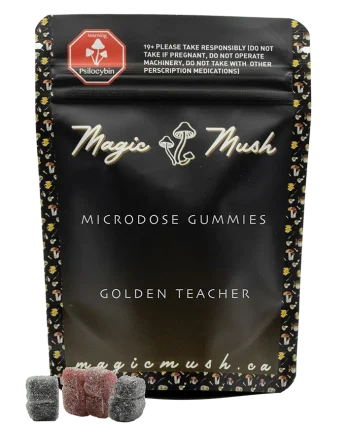
Price range: $60.00 through $240.00Golden Teacher Gummies for Microdosing
$25.00


What The Evidence Suggests So Far, If We Treat It As Signals Rather Than Promises
Looking at the evidence through a sober lens reveals a set of signals rather than conclusions. Research quality has improved, with some studies showing encouraging results for psychedelic-assisted therapy in specific, controlled contexts. At the same time, much of the evidence remains preliminary, focused on small populations and short-term outcomes. Clinical infrastructure is developing, but slowly, as training, ethical standards, and oversight mechanisms take time to build. Access remains uneven, with geography, cost, and strict screening criteria limiting who can realistically participate, alongside persistent psychedelic legal barriers that shape how and where these therapies can move forward. Institutional caution remains strong, particularly within psychiatry and public health, where safety, reproducibility, and long-term data matter deeply. Public trust also plays a role, as exaggerated media narratives can trigger backlash that slows progress rather than accelerating it. What we still don’t know includes long-term outcomes, comparative effectiveness against existing treatments, and how scalable these models truly are within public healthcare.
The Human Reality Check That Often Gets Lost In Big-Picture Conversations
Scaling access to psychedelic-assisted therapy isn’t just a regulatory challenge, it’s a human one. Every potential participant needs careful screening to ensure suitability. Every session requires trained support, preparation, and follow-up. Consistency of care models matters, as does integration support after the experience itself. Data collection, quality assurance, and ongoing evaluation add further layers of complexity. When people talk about access as if it’s a switch that can be flipped, they overlook the labour, care, and coordination involved. Interest alone doesn’t equal readiness, and systems designed to protect people can’t skip these steps without consequences.
Where Hype Creeps In, And Why It’s Tempting But Unhelpful
Hype tends to creep in when early findings are overgeneralized or when anecdotes are treated as evidence. Expectation effects can amplify perceived outcomes, and meaning-making can inflate experiences into narratives of universal healing. There’s also a cultural temptation to see psychedelics as a shortcut through the slow, often frustrating work of mental health care. A responsible conversation acknowledges that not everyone benefits, and some people shouldn’t pursue these therapies at all. Calm restraint here isn’t pessimism, it’s respect for complexity.
🌿 Curious what Golden Teacher eco therapy looks like in Calgary? Read this article to learn how this approach is being explored locally

Thinking About Access As A System Rather Than A Moment
A responsible way to frame broader psychedelic access is as a system slowly taking shape, not a single breakthrough moment. Research, training, standards, oversight, and follow-up care all need to evolve together. Readers can protect themselves from hype by asking better questions when they encounter headlines. What kind of access is being discussed? Who is included, and who is left out? What evidence supports the claims, and what uncertainties remain? More access isn’t automatically better if it comes at the expense of safety, equity, or trust.
A Closing Reflection On Patience, Curiosity, And Letting The Story Unfold
Canada may indeed be moving toward broader psychedelic access in certain, carefully defined ways, but the story is far from settled. Certainty is the wrong posture at this stage. What makes sense instead is patient, evidence-led curiosity paired with a willingness to sit with ambiguity. For readers who want to keep learning without getting swept up in hype, following thoughtful, safety-first reporting and research explainers can be a grounding choice. This conversation is still unfolding, and paying attention without rushing to conclusions is how we honour both the science and the people it’s meant to serve.
🔍 Curious about Golden Teacher and its connections to Toronto culture? Learn more with this detailed resource

Where This Conversation Ultimately Lands For Us At Magic Mush Canada, And Why Patience, Evidence, And Responsible Curiosity Matter More Than Big Predictions
When you zoom out and look at everything we’ve covered in this article, one thing becomes very clear: the question of broader psychedelic access in Canada is far more layered than headlines or social media posts often suggest. We’ve talked about how public excitement can run far ahead of slow-moving healthcare systems, how “access” can mean very different things depending on whether you’re talking about research, clinical readiness, institutional adoption, or cultural attitudes, and why these areas don’t move in sync. We’ve also looked at what the evidence actually signals so far, where uncertainty still dominates, and why scaling psychedelic-assisted care is as much a human challenge as it is a regulatory one. Throughout it all, the central takeaway has been restraint. Progress may be happening, but it’s uneven, cautious, and still unfolding in real time.
That perspective is deeply aligned with how we approach this space at Magic Mush Canada. From the very beginning, our goal has never been to hype timelines or promise outcomes. Instead, we focus on education, safety, and responsible access within the Canadian context. We believe that destigmatizing magic mushrooms starts with honest conversations, clear information, and respect for complexity, not sweeping claims about the future of healthcare. As a trusted Canadian source for high-quality, rigorously tested dried magic mushrooms, we see our role as supporting informed adults who want to learn, ask better questions, and make thoughtful decisions rather than rushing toward certainty.
For readers following the psychedelic renaissance with both hope and skepticism, we’re here to meet you in that middle ground. Through our blog, dosing guides, and educational resources, we aim to provide grounded, science-literate coverage that helps separate cultural momentum from clinical reality. We also work hard to create a safe, private, and supportive environment for those who choose to explore magic mushrooms responsibly, while acknowledging that access, readiness, and appropriateness look different for everyone. At Magic Mush Canada, we see this moment not as a finish line, but as part of a longer conversation about mental health, research, and trust. We’re proud to be part of that conversation, offering clarity where things feel noisy and support where curiosity deserves care.