During one of my early sessions with MDMA-assisted therapy, I expected the tears. I expected memories I hadn’t touched in years to come floating—or flooding—back. What I didn’t expect was what happened after. My chest, which had felt like a locked box for most of my adult life, finally loosened. I remember taking the deepest breath I’d felt in years. Not metaphorically. Literally. My sternum felt like it was unhooking from a cage I didn’t know it was caught in. And it wasn’t just emotional. It was physical. Tangible. Like some switch in my body had finally flipped off.
At the time, I chalked it up to somatic release. “You cried,” my therapist said gently. “The body keeps score, remember?” But weeks later, when I read a new study on psychedelics and inflammation, something clicked. What if that moment wasn’t just psychological release? What if it was my immune system recalibrating? What if my body was doing something my mind could barely catch up to—letting go of fear not just as a memory, but as inflammation?
We don’t talk enough about how complex trauma lives in the body—not just in fascia or breath patterns, but deep in our cellular immunity. Chronic stress doesn’t just haunt us emotionally. It dysregulates how our brain speaks to our immune system, creating a feedback loop where fear keeps firing and inflammation becomes its language. It’s no wonder so many trauma survivors develop autoimmune disorders, gut issues, chronic pain. Their bodies aren’t just remembering. They’re still responding.
That day in psychedelic therapy, when the breath returned to my body, I didn’t yet have the words for what had changed. But looking back, I think I experienced something researchers are just beginning to name: not just emotional healing, but an immune reset. Not just catharsis, but neuroimmune repair. What felt like a sigh of relief may have actually been the silencing of a storm I’d carried inside me for decades.
READ: Somatic Therapy: Signs Your Body Is Releasing Trauma

The Trauma Loop Isn’t Just Psychological—It’s Physiological
For decades, trauma was framed primarily as a psychological wound: something happening in the mind, managed with talk therapy, meditation, or perhaps medication to regulate mood. But emerging research in psychoneuroimmunology—the study of how the nervous and immune systems interact—is radically reframing this picture. It turns out trauma doesn’t just live in your memories or behaviors. It lives in your monocytes, your cytokines, your brain’s inflammatory circuits.
When you experience a traumatic event, your body enters a state of biological defense. Stress hormones like cortisol surge, the sympathetic nervous system activates, and immune cells called monocytes migrate toward the brain. If the event is short and manageable, this storm resolves. But if the fear is chronic—whether from abuse, war, racism, or ongoing neglect—the immune system doesn’t reset. These monocytes lodge in the meninges (the membranes surrounding the brain), where they fuel a constant drip of pro-inflammatory molecules, particularly in the amygdala—the brain’s fear center.
This is the trauma loop: fear generates inflammation, and inflammation keeps fear circuits lit up. It’s not just a metaphor. It’s a feedback cycle at the cellular level. People living with PTSD, anxiety, and depression often show elevated levels of inflammatory markers like C-reactive protein (CRP) and interleukin-6 (IL-6). Inflammation isn’t just a symptom—it’s part of the mechanism. Your immune system remembers the trauma even if your mind has numbed it out.
Here’s where psychedelics come in. Recent studies, particularly from the Wheeler Lab at UCSF and others published in Nature, have shown that compounds like psilocybin and MDMA can disrupt this cycle. In mouse models, these substances prevented trauma-induced immune cells from migrating to the brain and reduced inflammatory gene expression in neural tissue. The result? Lowered fear behaviors, improved mood, and a calmer amygdala. This isn’t just about feeling better—it’s about changing the very terrain of trauma inside the body.
READ: Psilocybin Can Free You From Negative Thought Loops About Body Image
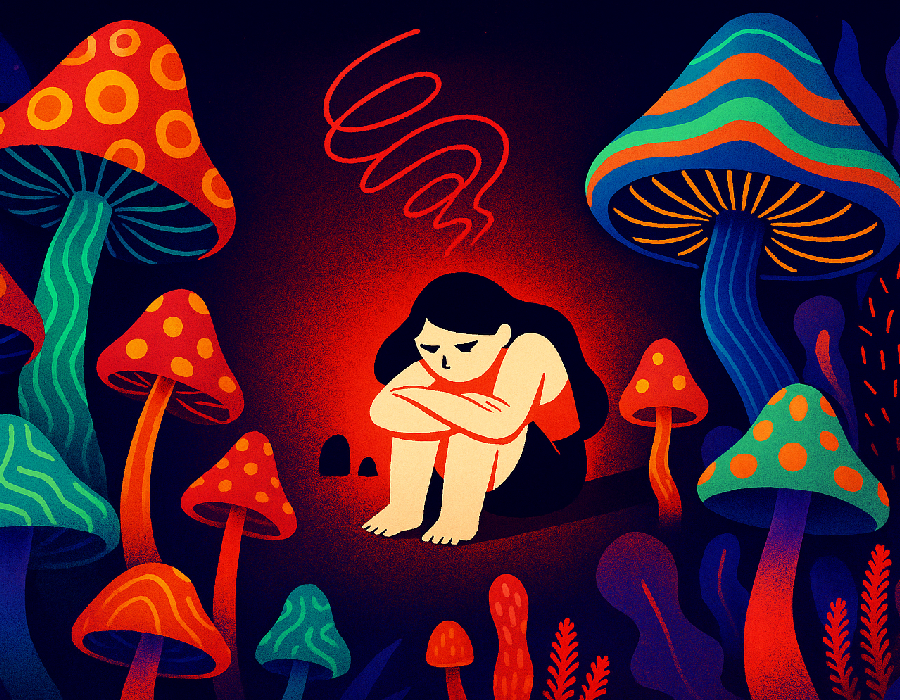
When Healing Is Measurable—But Feels Like a Mystery
The first time I read that psilocybin could lower inflammation in the body, I paused. Not because I didn’t believe it, but because I had already felt it. After one particularly emotional journey—equal parts grief and grace—I didn’t just feel lighter in my heart. I felt different in my body. My usual headaches didn’t come. My digestion settled. Something deep inside me had unclenched, like my immune system had taken a deep breath for the first time in years.
And science is starting to catch up to that feeling. In recent clinical trials, people who took psilocybin for depression or trauma didn’t just report emotional breakthroughs. Their blood showed lower levels of inflammation, especially markers like CRP (C-reactive protein) that are often elevated in people with chronic stress or autoimmune conditions. The deeper the emotional shift, the greater the biological change. That’s not just poetic. That’s measurable.
MDMA is showing something similar. In studies with PTSD survivors, not only did symptoms like flashbacks and hypervigilance decrease—but their immune systems started to recalibrate too. Some researchers believe this is because psychedelics help the brain feel safe again, and when the brain isn’t in threat mode, the immune system doesn’t need to stay on high alert. Less fear means less inflammation. Less inflammation means more room to feel, to heal, to reconnect with the body.
Maybe that’s what I felt, all those months ago. Not just a release of emotion, but a rewiring of the systems that had been bracing for danger for too long. It didn’t feel like science in the moment—it felt like mystery, softness, return. But knowing that the body and brain were speaking a quieter language beneath the tears? That makes the magic feel all the more real.
Check out this magic mushroom!!

A.P.E Psilocybin Chocolate Bar
$60.00Dried Penis Envy Magic Mushrooms
Price range: $60.00 through $240.00Golden Teacher Gummies for Microdosing
$25.00


What If Your Body Is Trying to Heal—but Can’t Exhale?
We often talk about trauma like it’s a wound in the mind—a bad memory, a distorted belief, a haunting image that won’t go away. But what if the deeper damage lives in your body’s ongoing alarm system? What if your immune system is still standing guard, long after the threat has passed, whispering fear into every cell?
This is one of the most radical shifts psychedelics are helping us see: that healing from deep wounds isn’t just about changing thoughts—it’s about teaching the body how to stand down. When the brain no longer sees the world as dangerous, the immune system can stop inflaming everything in response. The fear loop gets broken. And with it, the inflammation loop quiets, too.
This has huge implications for integration. If psychedelics are truly working on this mind-body level, then integration shouldn’t just mean journaling and therapy. It should mean nourishing your immune system, paying attention to your gut health, your sleep, your blood sugar. Integration is no longer just a metaphor. It’s physiological. Maybe that’s why so many people report feeling calmer, clearer, and healthier after a big journey—not just in their spirit, but in their skin, their belly, their breath.
And maybe this is why psychedelic healing feels so different from traditional meds. It’s not about numbing symptoms. It’s about turning off an old siren that’s been blaring in the background of your life for so long you didn’t realize it was there. When the noise stops—when the inflammation lowers—you don’t just feel better. You feel safe. And for a trauma survivor, that might be the deepest medicine of all.
Why This Changes Everything We Thought We Knew About Healing
If trauma lives in the body, and psychedelics speak the body’s language, then maybe it’s time we stop separating psychological health from physiological well-being. For too long, we’ve treated mental health like it happens in a vacuum—as if thoughts and feelings aren’t woven into the immune system, the gut, the breath. But what this science shows—and what so many journeyers have already felt—is that healing is systemic. And that’s both terrifying and hopeful.
Terrifying because it means trauma is more than a story—it’s a biology. Hopeful because psychedelics might be the bridge. Not just a shortcut to insight, but a door into the body’s own recovery process. When a mushroom trip or MDMA session reduces inflammation, it’s not “woo.” It’s repair. It’s the immune system hearing, finally, that the war is over. And for many of us, that message has never quite landed.
This also challenges how we design treatment. What if trauma-informed care doesn’t just mean gentleness and patience, but also tracking biomarkers like CRP or cortisol? What if your therapist worked with your doctor to see how your immune system was responding to your psychedelic integration plan? These ideas might sound futuristic—but they’re already happening in research labs, and they’ll be the standard in clinics before long.
And yet, this doesn’t need to be clinical to be powerful. Anyone working with psychedelics—even outside formal settings—can begin to honor this body-level work. Ask yourself: How did your body feel before the trip? How does it feel now? Not just emotionally, but physically. Are you sleeping better? Digesting more easily? Breathing more deeply? These subtle shifts might be the truest signs that the medicine is still working—quietly, patiently, beneath the surface.
READ: How to Overcome Depression: A Personal Journey of Resilience and Healing
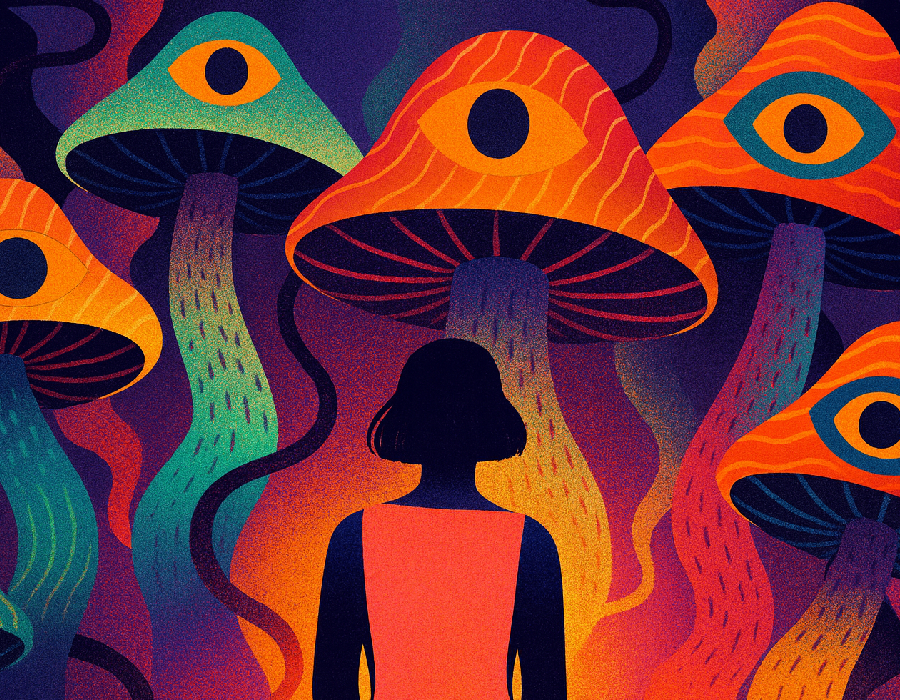
Healing Begins Where Fear Ends
So much of trauma recovery is framed as a backward glance—revisiting the past, naming what hurt, making sense of what splintered. But psychedelic medicine is beginning to show us another way. Not always through epic visions or soul-shaking catharsis, but through subtle recalibrations that start where the inflammation ends. In the body. In the nervous system. In the immune cells that have been bracing for danger for years.
When I think back to that moment in therapy—the chest softening, the tears that didn’t come from panic but from peace—I realize it wasn’t just an emotional release. It was a biological exhale. And maybe that’s what real healing feels like: not fireworks, not a triumphant return, but a slow settling. A quiet rewiring. A body that finally, mercifully, believes it is safe.
Psychedelics might be bold enough to go where words can’t. They may help not by erasing trauma but by repatterning how the body responds to life after it. If we understand trauma not as a scar, but as a stuck signal in the immune system, then the medicine isn’t just about facing fear—it’s about interrupting it, mid-loop, before it becomes the soundtrack of our lives.
At Magic Mush, we believe in supporting that full-spectrum healing—from mind to microbiome. Whether you’re beginning with a microdose to gently soothe the nervous system, or preparing for a deeper journey with our premium dried mushroom bundles, gummies, or chocolate bars, we’re here to offer trusted, intentional magic mushrooms in Toronto. Because your body deserves more than survival—it deserves a reset.