Do You Have to Chew Shrooms? How to Eat Magic Mushrooms
By Lily Pelenis / February 29, 2024 / 11 min read
No, you do not have to chew magic mushrooms. Psilocybin is absorbed in your gut, not your mouth, so what matters is that the dose reaches your stomach in a form it can break down: chewing dried mushrooms well, grinding them into capsules, or eating them in chocolate, gummies or tea all work.
Chewing is simply the easiest way to break tough dried mushroom into small pieces. No study has compared chewing with swallowing pieces whole, so the claim that chewing longer makes a trip stronger comes from user reports, not research. Below: how each method works, what is known, and how to keep the dose the same in any format.
TLDR
You can chew dried shrooms, swallow them ground up in capsules, or take them in chocolate, gummies, tea or lemon tek. In clinical studies psilocybin is swallowed as capsules or powder with no chewing at all, and your body converts it to psilocin, the compound behind the effects, with blood levels peaking about two hours after an oral dose (Otto et al., 2025). Harm-reduction writers report that chewing and swallowing whole dried mushrooms is slower and harder on the stomach than powder or tea (DoubleBlind), but that has never been measured.
Whatever the format, the dose is what decides the trip. Weigh dried mushrooms in grams, chew them well or grind them, and start in the range on our dosing guide. Effects usually appear within 15 to 45 minutes and last four to six hours (Health Canada). Never take more because the first dose seems slow, and never combine mushrooms with lithium.
Who this article is for
- People about to take shrooms for the first time who want to know how to actually eat them
- Anyone who hates the taste or texture and wants to know if they can swallow them whole
- People choosing between dried mushrooms, capsules, chocolate, gummies, tea and lemon tek
- Anyone who has heard that chewing longer or holding shrooms under the tongue makes them stronger

Lily Pelenis
Author’s note
“Do I have to chew them?” sounds like a small question, but it usually comes from someone standing in their kitchen with a bag of dried mushrooms, not sure what to do next. Online answers are confident (chew for ten minutes, hold it under your tongue), but when I looked for the research behind them, I found that nobody has tested chewing against swallowing.
What we do know is enough for a clear, practical answer. Below I separate what is measured from what people report, and cover the dose and safety points that matter more than the method. Every claim links to its source.
Do you have to chew shrooms, or can you swallow them whole?
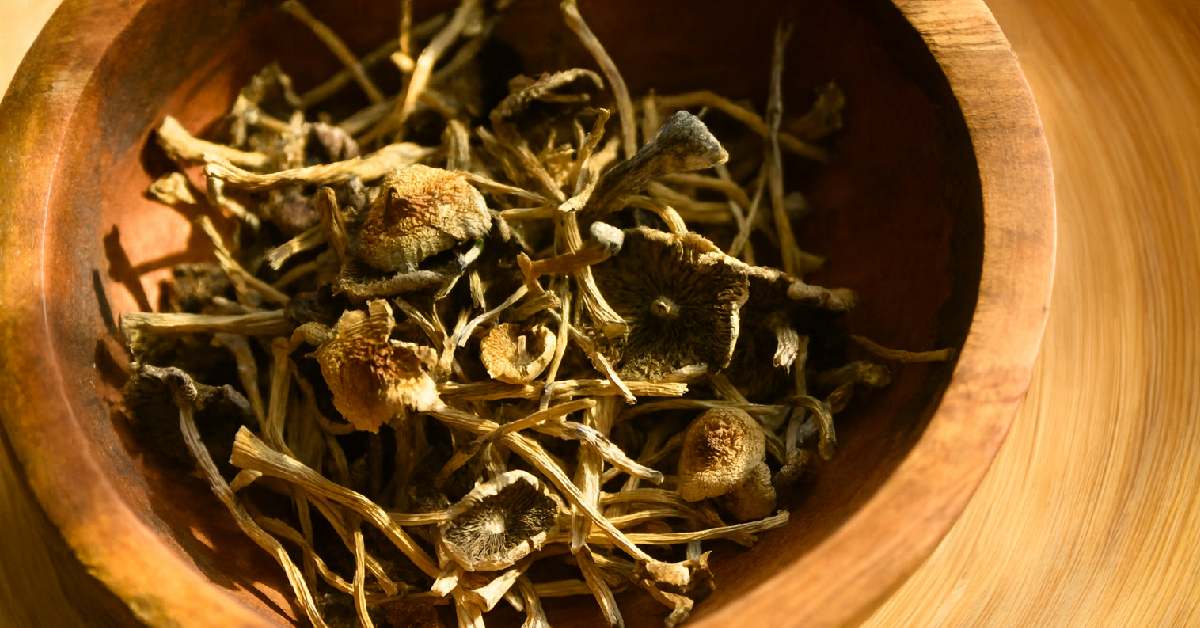
You can swallow shrooms without chewing them, as long as the pieces are small enough to swallow safely, but chewing well or grinding them first is the better habit. Dried mushrooms are tough and fibrous, and breaking them down before they reach your stomach is the practical way to make sure the dose is digested.
Psilocybin works from your gut, not your mouth
Psilocybin is a prodrug: your body removes a phosphate group and turns it into psilocin, which is what acts on the brain (Otto et al., 2025). A 2025 systematic review of every clinical study of psilocybin’s pharmacokinetics found that it was rapidly absorbed and converted to psilocin in all of them, with psilocin blood levels peaking at about two hours after an oral dose in most (Otto et al., 2025). Where the studies described the form, it was capsules or powder taken by mouth (Otto et al., 2025). Chewing is not part of how psilocybin gets into your body.
What chewing actually does
Chewing turns stiff, dried mushroom into small, wet pieces. DoubleBlind’s tea guide puts it this way: when you chew and swallow dried mushrooms, “you’re simply not creating as much surface area as powdered mushrooms,” so it takes your stomach longer to absorb and digest the psychoactive content (DoubleBlind). That is a reasonable idea, and it fits how digestion works in general, but it is an observation, not a measured result. There is no study comparing chewed and unchewed mushrooms, and no evidence that chewing for minutes on end makes a trip stronger.
Swallowing pieces whole
Swallowing whole caps or big chunks of stem is the option most likely to cause problems. Large dry pieces are hard to swallow, and the mushroom body itself is blamed for much of the stomach upset people feel: mushrooms contain chitin, a fibre that, as DoubleBlind puts it, “our stomachs can find difficult to digest and can cause nausea” (DoubleBlind). If you do not want to chew, grind the mushrooms and swallow the powder in capsules instead. You get the same dose without the chewing and without big pieces.
Holding shrooms under your tongue
Some people hold chewed mushroom in their mouth for several minutes on the idea that it absorbs through the lining of the mouth. Until recently, sublingual (under the tongue) psilocybin and psilocin had not been studied in humans at all (Tai et al., 2026). In the first trial to try it, standardized psilocin tablets dissolved under the tongue were well tolerated, but they appeared to deliver less of the drug than swallowed psilocin, and participants did not rate them as peaking any faster (Tai et al., 2026). Those were extract tablets, not chewed mushroom, which has never been tested, so treat any claim about it as anecdotal.
What are the ways to take shrooms?
The main ways to take shrooms are chewing them dried, swallowing ground mushroom in capsules, eating them in chocolate or gummies, steeping them in tea, and lemon tek. All of them are swallowed, so all of them work through the same gut route; they differ in taste, comfort and how easy the dose is to measure.
| Method | What you do | What people report | What the evidence shows |
|---|---|---|---|
| Chew and swallow dried | Weigh, chew well, wash down with water or juice | Slower and rougher on the stomach than powder or tea (DoubleBlind) | Never compared with other methods; typical onset for mushrooms is 15 to 45 minutes (Health Canada) |
| Swallow whole pieces | Swallow small pieces without chewing | Harder to digest; chitin linked to nausea (DoubleBlind) | Not studied |
| Capsules | Swallow ground mushroom in capsules | No taste, nothing to chew | Clinical studies give psilocybin as capsules or powder by mouth (Otto et al., 2025) |
| Chocolate or gummies | Eat a measured square or gummy | Hides the taste | No research comparing them with dried mushrooms |
| Tea | Steep ground mushroom in hot water for 10 to 15 minutes | Faster, slightly shorter, less nausea (DoubleBlind) | Not studied |
| Lemon tek | Soak ground mushroom in lemon or lime juice for 15 to 20 minutes | Faster, shorter, stronger (DoubleBlind) | Swallowed psilocin did not peak faster than psilocybin in a trial (Tai et al., 2026) |
Dried mushrooms, chewed
The simplest method: weigh your dose, break it into small pieces, chew each mouthful thoroughly and wash it down. DoubleBlind suggests teas, juices or water with lemon to help get the chewy pieces down (DoubleBlind).
Capsules
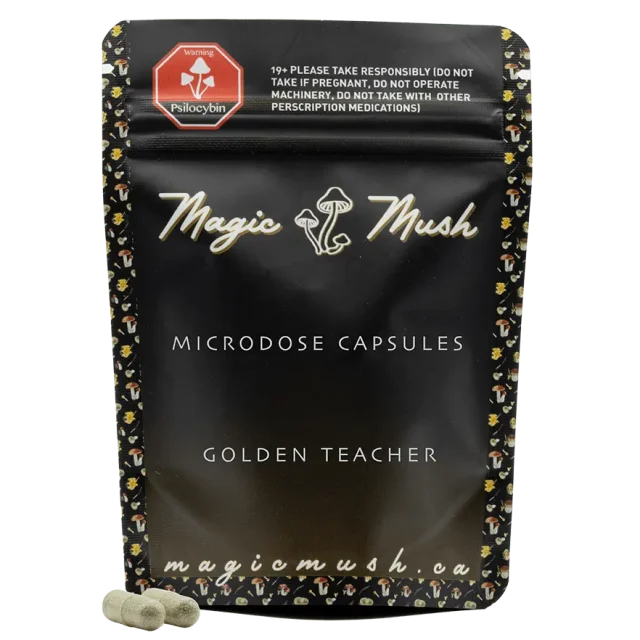
Capsules are the answer if your real question is “can I avoid chewing altogether?” Ground mushroom in a capsule is swallowed whole, the way psilocybin is usually given in clinical studies. Our Golden Teacher microdosing capsules hold 125 mg of ground mushroom each, and our Extra-Strength Golden Teacher capsules hold 350 mg each (dosing guide). Because a trip dose is measured in grams, a full dose takes many capsules, as the dose table below shows.
Chocolate and gummies
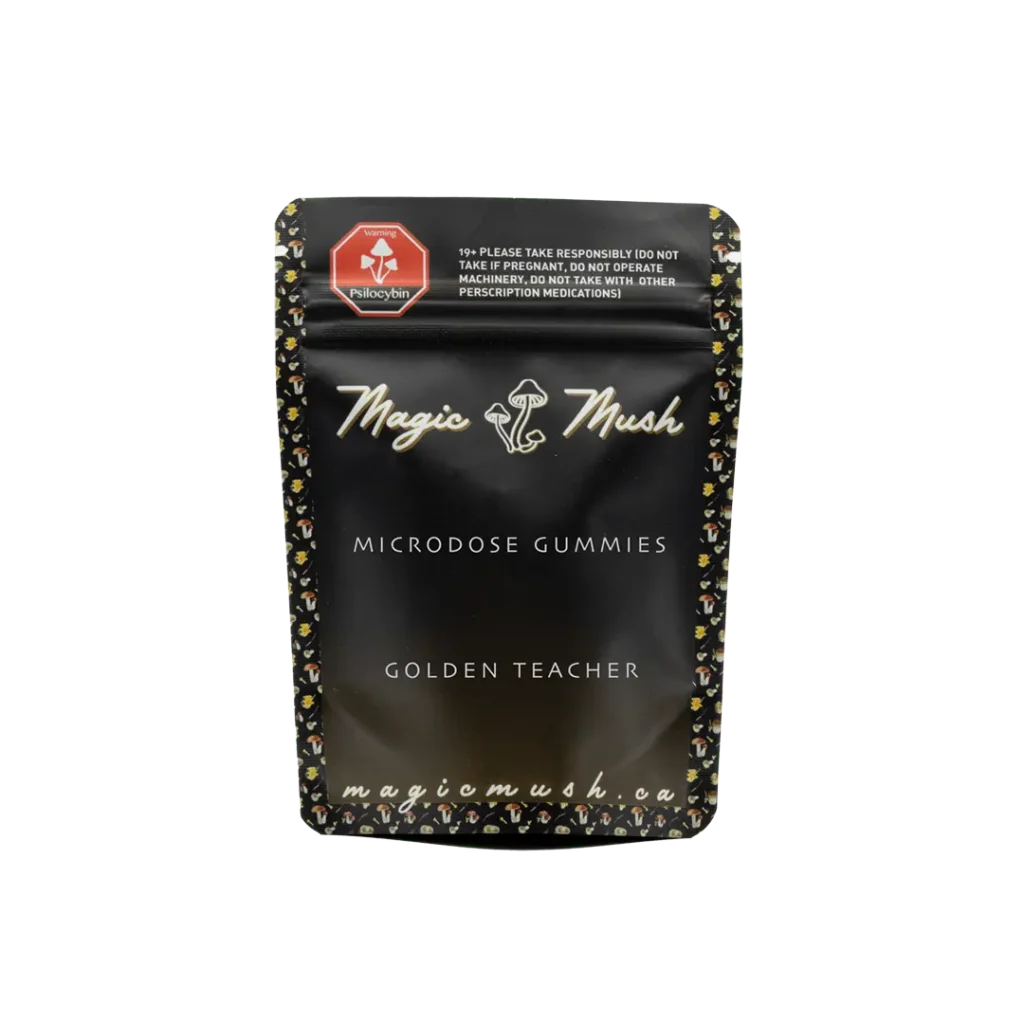
Chocolate and gummies cover the taste and come pre-measured. Our Golden Teacher chocolate bar has 250 mg of mushroom in every square, set in 55 percent Belgian dark chocolate, and our Golden Teacher microdose gummies each equal 100 mg of mushroom (dosing guide).
Tea and lemon tek
Both start with ground mushroom in a liquid, and many people report they are gentler on the stomach and faster, though none of this has been measured. Our lemon tek guide covers the method and the one trial that tested the idea behind it. Take a smaller dose than usual the first time.
Is chewing or grinding better for getting the dose right?
Grinding is better for an even dose. Psilocybin is not spread evenly through a mushroom, so the piece you chew may be stronger or weaker than the piece next to it, and grinding a whole batch into one powder evens that out.
Caps and stems are not equal
In a lab study of Psilocybe cubensis, the stems held roughly half the tryptamine alkaloids of the caps (0.52 percent of dry weight against 1.03 percent), although the difference was not statistically significant because individual mushrooms varied so much (Gotvaldová et al., 2021). The UCSF researchers behind the 2026 trial make the same point: alkaloid content varies by species, strain, growing conditions and even between caps and stems of the same mushroom (Tai et al., 2026). Health Canada also warns that strength varies a lot between mushrooms (Health Canada).
How to grind and store
- Grind only what you plan to use soon. DoubleBlind notes that ground mushroom loses potency over time and is better stored whole (DoubleBlind).
- Store dried mushrooms whole, dry and in the dark at room temperature. In the same lab study, dried mushrooms kept that way showed the lowest loss of tryptamines (Gotvaldová et al., 2021).
- Use a coffee or herb grinder for a fine, even powder, then weigh your dose from it on a scale that reads to 0.01 g.
- Keep any powder or homemade capsules dry, cool and dark (DoubleBlind).
How do you make shrooms easier to eat?
The easiest fixes are to grind them, hide them in something with a strong flavour, or switch to a format that does the work for you. Most people describe the taste of dried mushrooms as earthy and bitter, with a chewy, fibrous texture (DoubleBlind).
- Wash them down with juice or tea. DoubleBlind lists teas, juices and water with lemon as good options (DoubleBlind).
- Mix chopped or ground mushroom into peanut butter, honey or melted chocolate, all of which DoubleBlind mentions for masking the flavour (DoubleBlind).
- Swallow capsules instead, so there is nothing to taste.
- Choose a chocolate or gummy that is already measured.
- Eat a light meal 60 to 90 minutes before, as our dosing guide suggests, so your stomach is settled rather than empty or full. Our guide to eating before shrooms explains why.
Nausea is common whichever way you take them. In a meta-analysis of clinical trials using measured psilocybin, nausea was the side effect with the largest increase over the comparison (Yerubandi et al., 2024), which tells you it is not only about the mushroom material. The authors also note that tips like ginger, lemon juice and eating beforehand are anecdotal, with no clinical studies behind them (Yerubandi et al., 2024).
Does chewing longer make shrooms hit harder or faster?
There is no evidence that chewing longer makes shrooms hit harder. Nothing you do in your mouth can add psilocybin that is not in the dose.
What has been measured points to the dose and the body, not the chewing. Your body converts only part of an oral dose into psilocin that reaches the blood: in a small 1997 study, the estimated bioavailability was about 53 percent, measured in just three people taking pure psilocybin (Hasler et al., 1997). How much food changes that is still unknown (Otto et al., 2025). DoubleBlind reports that an empty stomach brings the fastest onset and a full meal can delay it by about an hour (DoubleBlind), which is again experience, not a trial result.
If you chew well and still feel nothing at the 30 minute mark, that is normal. Psilocin keeps rising for about two hours after an oral dose (Otto et al., 2025). Do not take more on top. If a trip never arrives, our guide on why shrooms sometimes don’t work covers the real causes.
How much should you take, whichever way you take it?
Take the same dose whichever format you choose: the amount of mushroom decides the trip, not whether you chewed it. Our dosing guide sets six levels in grams of dried mushroom, with the equivalent in each format we sell.
| Level | Dried mushroom | Microdose capsules (125 mg) | Extra-strength capsules (350 mg) | Chocolate squares (250 mg) | Microdose gummies (100 mg) |
|---|---|---|---|---|---|
| Microdose | 0.1 to 0.25 g | 1 to 2 | Below one capsule | Half to 1 | 1 to 2 |
| Threshold | 0.25 to 1 g | 2 to 8 | 1 to 2 | 1 to 4 | 3 to 10 |
| Light (first trip) | 1 to 2 g | 8 to 16 | 3 to 5 | 4 to 8 | 10 to 20 |
| Moderate | 2 to 3.5 g | 16 to 28 | 6 to 10 | 8 to 14 | More than a whole pack |
| Strong | 3.5 to 5 g | 28 to 40 | 10 to 14 | 14 to 20 | More than a whole pack |
All amounts come from our dosing guide. Strength also changes from strain to strain: Golden Teacher sits at 6 out of 10 on our potency scale, in the middle of our range.
If you switch methods
- Going from chewing to capsules, chocolate or gummies: keep the same amount of mushroom.
- Trying tea or lemon tek for the first time: take about half your usual dose, as our lemon tek guide explains, because many people report a faster, harder come-up.
- Changing strain at the same time: do not. Change one thing per trip so you know what made the difference.
Safety that matters more than the method
- Lithium: do not combine. In an analysis of online reports, 47 percent of 62 reports of a classic psychedelic taken with lithium described seizures (Nayak et al., 2021).
- MAOIs: do not combine. There are no controlled human studies with psilocybin, so the result is unpredictable (Halman et al., 2024).
- SSRIs and other antidepressants can weaken or change the effects (Halman et al., 2024). Never stop a prescribed medication to trip; talk to your prescriber.
- For a first trip or a bigger dose, have a sober sitter with you. Clinical safety guidelines go further and recommend at least two monitors in the room during research sessions (Johnson et al., 2008).
- Never eat wild mushrooms you cannot identify. People do eat poisonous mushrooms they mistook for magic mushrooms (Health Canada).
Pick a format, then pick your dose
Chew them well, grind them into capsules, or let chocolate or gummies do the work: all of them reach the same place. What changes your trip is the amount, the strain and the setting. Find your level on our mushroom dosing guide, and if you would rather not chew at all, the Golden Teacher chocolate bar (250 mg a square) or, for a microdose, Golden Teacher capsules (125 mg each) give you the same measured amount in every piece.
FAQ
Do you have to chew shrooms for them to work?
No. Psilocybin is absorbed after you swallow it, and in clinical studies it is usually given as capsules or powder taken by mouth (Otto et al., 2025). Chewing or grinding simply breaks dried mushroom down so it digests more easily.
Can you swallow shrooms whole?
You can swallow small pieces, but large dry pieces are hard to get down and harder to digest, and the mushroom fibre is linked to nausea (DoubleBlind). If you do not want to chew, grind them and use capsules.
How long should you chew shrooms?
Chew until each mouthful is soft and broken into small pieces, then swallow. There is no research showing that chewing for several minutes makes the trip stronger.
Does holding shrooms under your tongue make them stronger?
There is no evidence for it. In the first human trial of under-the-tongue psilocin, the tablets appeared to deliver less of the drug than swallowed psilocin and did not peak faster by participants’ ratings (Tai et al., 2026). Mushroom held in the mouth has never been tested.
What is the best way to eat shrooms?
The best way is the one that lets you take a measured dose comfortably. For most people that means a weighed dose of ground mushroom, chewed well or in capsules, with a light meal 60 to 90 minutes before, as our dosing guide suggests.
Is shroom tea stronger than eating them?
Some people report that tea comes on faster and that they needed a smaller dose (DoubleBlind), but this has not been measured. Tea cannot add psilocybin, so start lower and see how it feels.
Find your strain, then your dose
Every product on the shelf shows its potency rating and the effects people report. The dosing guide walks through amounts before you order, and a real person answers if you write to us.

About the author
Lily Pelenis
I'm a Toronto-based lifestyle coach, psilocybin enthusiast and certified yoga instructor. I guide people toward mindful, balanced living, and my coaching blends modern wellness practices with ancient wisdom to help clients find deeper self-awareness, resilience and joy.
I've been experimenting with shrooms for over a decade, and I write about my own experience. I love nature, psychology and humans. That is why my articles tend to follow a trip past its peak and into the weeks after it.
Some pieces start with a strain I have tried myself, such as Golden Teacher or Albino Roller Coaster. Others are the practical ones, like how much to take the first time or how to brew a tea that sits easier on the stomach. Over the years I've learned that intention is everything, so I write about why you are taking it before I get to how.
Related articles





50% off your first order
New strains, restocks, sales and new writing from the Notebook, by email. No spam, unsubscribe any time.