It was somewhere outside of Tofino, on Vancouver Island — the kind of place that smells like cedar and sea salt, the kind of place you go when you need to remember what breathing feels like. I’d signed up for a “psilocybin-assisted healing retreat,” lured by words like integration, awakening, and inner transformation. When I arrived, the space was stunning. There were woven blankets, salt lamps, sound bowls, and freshly pressed juices. Candles flickered on every corner, real flames dancing on real wax — but right beside them sat laminated price lists for “additional integration sessions” and branded mushroom chocolate from Canada. The paradox was instant.
As I unpacked my bag, I couldn’t help but notice how the language of the sacred had been perfectly paired with the aesthetic of the sellable. The retreat centre felt equal parts temple and boutique, equal parts altar and advertisement. Even the playlist was curated to build mood like a luxury experience — an algorithm of transcendence. And in that moment, I realized: healing had become a commodity. The dried magic mushrooms were still ancient, yes, but the packaging around them was undeniably modern.
I remember sitting in circle that first night, feeling both reverent and resistant. On one hand, I was grateful that spaces like this existed at all — that we could even speak openly about psilocybin in Canada, that people were doing this work with integrity and intention. But on the other hand, something about the way the “experience” had been formatted — timed, priced, and branded — left me uneasy. Was this really healing, or had healing itself been repackaged to fit the logic of capitalism?
That question has followed me ever since: Can capitalism and healing actually coexist, or are they destined to cancel each other out? It’s a messy, uncomfortable question — but one we have to ask if we’re serious about creating an authentic culture of wellness. Because while capitalism can build clinics, fund research, and pay therapists, it can also turn sacred tools into trends. And if we’re not careful, the system designed to sell us relief might just become another form of the very sickness we’re trying to heal.
🏛️ Take a look at what institutionalized psychedelia looks like when the government pays for your shaman

Okay, So Maybe Capitalism Isn’t the Villain — It’s Just the Complicated Middleman of Modern Healing
Here’s the thing: it’s easy to villainize capitalism. It’s easy to look at $3,000 retreats or influencer “healing packages” and think, this is everything that’s wrong with the world. But if we zoom out a little, we see a more complex truth — without capitalism, none of this would exist. Without investment, there would be no psilocybin clinics in Toronto or Vancouver, no funding for studies at Johns Hopkins or Imperial College, and no platforms like Magic Mush Canada helping normalize the conversation. Like it or not, capitalism has built the scaffolding for this entire movement.
Dr. Anne Wagner, a Toronto-based clinical psychologist and researcher who studies trauma and psychedelics, once said, “Profit isn’t the problem — disconnection is. Capitalism without conscience is extraction. But capitalism with intention can be medicine, too.” That hit me hard. Because she’s right: money isn’t inherently toxic. It’s the intention behind it that defines whether it heals or harms. The same dollar that funds exploitation can also fund education. The same marketing strategy that sells luxury can also spread awareness.
Let’s be real — none of us are living outside the system. We buy yoga mats, drink branded kombucha, and pay for therapy. Healing has always needed structure, and structure costs money. The real danger isn’t in charging for care — it’s in forgetting why we’re charging in the first place. When profit overtakes purpose, when growth replaces grace, that’s when we start to lose the plot.
Still, it’s not all bad news. Capitalism has helped make psilocybin and other plant medicines accessible in ways that were unthinkable just a decade ago. It’s given us clinics that meet legal standards, facilitators who can pay rent, and research that pushes against decades of prohibition. It’s allowed companies like Magic Mush Canada to exist at all — to provide safe, quality-assured shroom gummies and education in a still-murky legal landscape. So maybe capitalism isn’t the enemy of healing. Maybe it’s just the very human, very imperfect vehicle we’re currently using to deliver it.
When Healing Starts to Look Like Marketing — and We Forget the Sacred in the Sale
Of course, there’s a darker side to this story — one we can’t gloss over with gratitude alone. Because let’s face it: healing has become a brand. From the “wellness influencer” who sells trauma-informed retreats with affiliate codes, to therapists on Instagram turning grief into aesthetics, to corporate retreats offering “psychedelic leadership intensives,” we’re witnessing the mass commodification of our collective pain.
I remember scrolling through a wellness brand’s website one night — everything pastel, everything soft, everything healing. There were candle sets named after chakras, affirmation cards, and psilocybin microdosing kits with slogans like “Unlock Your Highest Self.” Somewhere between the marketing copy and the price tag, I realized we had started selling healing like skincare — subscription-based, promise-heavy, and optimized for optics.
And the emotional cost of this commercialization is steep. Healing — trauma healing — is private, messy, unpredictable. It doesn’t fit neatly into quarterly earnings reports or Instagram grids. Yet the current culture pushes healers, facilitators, and even clients to turn vulnerability into visibility. As one Ottawa-based trauma therapist, Sophie Leclerc, told me, “When healing becomes content, we forget that it’s supposed to be private.”
This hits especially hard in the psychedelic world. The sacred experience of plant medicine is now being distilled into hashtags, reels, and luxury retreats where integration is treated like a service upgrade. For those of us who’ve sat with the medicine in its raw form — in silence, in discomfort, in humility — it’s jarring to watch it turned into an experience package. The irony is impossible to miss: the same system that created burnout is now monetizing its cure.
But here’s the real danger — when healing becomes a product, we start mistaking consumption for transformation. We buy the workshop, book the retreat, sip the cacao — and feel better for a moment. But true healing, the kind that dismantles ego and invites deep change, can’t be bought. It can only be lived.
Check out this magic mushroom!!

A.P.E Psilocybin Chocolate Bar
$60.00Dried Penis Envy Magic Mushrooms
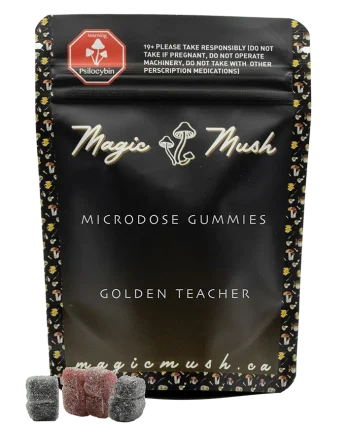
Price range: $60.00 through $240.00Golden Teacher Gummies for Microdosing
$25.00


The Psychedelic Boom Is Here — and It’s a Mirror We Can’t Look Away From
Nowhere is this paradox more visible than in the psychedelic industry. What started as an underground movement rooted in spirituality, activism, and healing has become a multi-billion-dollar “renaissance.” In Canada alone, psilocybin therapy clinics have popped up across Toronto, Vancouver, and Ottawa, offering guided experiences for depression, anxiety, and end-of-life distress. Companies are racing to patent formulations, design “microdosing Canada” kits, and position themselves as the next big wellness disruptors.
It’s progress, sure — but it’s also dizzying. We talk about consciousness, but still chase market share. We talk about ego death, but still build empires. The same medicine that teaches surrender is now caught in the machinery of growth. And that’s where things get messy.
I spoke with Vancouver-based facilitator and educator, Jayne Gansen, who helps run small psilocybin retreats on the Sunshine Coast. “There’s a difference between honouring the medicine and monetizing it,” she said. “I’ve seen venture-backed companies throw millions at psychedelic branding, but not a dime toward community integration or indigenous reciprocity. Healing can’t be industrialized — it needs heart.”
That’s not to say the psychedelic industry is all bad. Some clinics genuinely provide life-changing care, and many facilitators are working with deep integrity. But when capital enters the picture, the tension becomes unavoidable. The mushroom chocolate trend, for instance, has opened doors for normalization — but also blurred lines between medicine and merchandise. When psilocybin becomes just another consumable, we risk losing the reverence that once defined it.
Capitalism is great at scaling. Healing is not. The question, then, isn’t how to stop capitalism — it’s how to slow it down long enough to remember the soul inside the structure.
Maybe There’s Hope After All — Searching for an Ethical Middle Ground
For all the critique, there are glimmers of hope in this story — people and projects trying to do it differently. In Vancouver, some psilocybin therapy clinics operate on sliding-scale models, ensuring that those without deep pockets can still access care. Others, like Roots to Sky, reinvest a portion of their profits into indigenous-led initiatives and community integration programs. These are the small but powerful examples of capitalism infused with conscience.
“Healing needs structure but not domination,” says Lila Thompson, co-founder of an ethical wellness cooperative in Toronto. “Systems can serve spirit, if spirit leads.” Her company runs on a cooperative model — facilitators and clients alike share ownership. It’s not perfect, but it’s proof that alternatives exist.
Transparency, too, is becoming a quiet revolution. Some psychedelic companies now publish where their profits go — whether into scholarships, community education, or sustainability projects. Others are experimenting with reciprocity models, offering free sessions to marginalized groups or donating to reforestation.
These may seem like small gestures, but they represent something bigger: a rebalancing. A reminder that capitalism isn’t inherently soulless — it’s just been running without one. When profit becomes a tool rather than a goal, when money serves meaning instead of the other way around, capitalism can actually support the healing process.
The future of healing might not require burning down the system. Maybe it just needs to evolve — to remember that “growth” isn’t always about numbers, but about nourishment.
The Hard Truth — Capitalism Isn’t Just “Out There.” It’s Living Inside Us
This is the part no one likes to admit: capitalism isn’t just a system. It’s a mindset. It’s the voice inside your head that asks, Am I healed yet? Am I doing enough? Even in silence, I’ve caught myself keeping score — measuring my progress, optimizing my inner work, comparing my healing journey to someone else’s highlight reel. The system isn’t just external; it’s internalized.
And that’s the real paradox, isn’t it? Even in trying to heal from capitalism, we end up using its language — measuring, optimizing, upgrading. Healing becomes another task on the to-do list, another metric of worthiness. It’s a subtle but pervasive kind of self-capitalism, where even rest is performative.
I’ve had to remind myself, over and over, that healing is an immune response. It doesn’t respond to efficiency. It’s wild, cyclical, inconvenient, and deeply human. It asks for surrender, not strategy. For presence, not productivity.
Maybe that’s the first step to reconciling capitalism and healing — to stop trying to win at it. To stop treating our inner growth like a brand expansion. Because when we start from that humility, we begin to rebuild a relationship with both ourselves and the world that feels more honest, more sustainable, and more alive.
🚀 Dive into how the “psychedelic cold war” is playing out from pharma-backed legislation to grassroots, community-led models of care

So, Can Capitalism and Healing Really Coexist? Here’s Why Magic Mush Canada Believes They Can — If We Choose Care Over Growth
If there’s one thing this whole exploration has made clear, it’s that the relationship between capitalism and healing isn’t black and white. It’s complicated, contradictory, and deeply human. Capitalism can make healing more accessible, but it can also distort it. It can fund research and build clinics, but it can also turn suffering into marketing. The key lies in intention — whether we use money as medicine or as manipulation. Because healing, at its core, was never meant to be fast, scalable, or optimized. It was meant to be felt. Slowly.
The truth is, capitalism and healing can coexist — but only if healing leads the conversation. If we prioritize presence over performance, community over consumption, care over profit. That’s not idealism; it’s evolution. We don’t have to abandon systems entirely — we just have to humanize them. Maybe the next era of wellness isn’t about rejecting capitalism, but about reimagining it as something more relational, compassionate, and cyclical.
This is where Magic Mush Canada comes in. We’ve seen firsthand how the psychedelic space can either drift toward hype or return to heart. And our mission is to keep it grounded in what truly matters. We’re here to make healing accessible — but never transactional. At Magic Mush Canada, we believe in safe use, education, and authenticity. We offer high-quality, rigorously tested products because we care about your safety, not your wallet. And more than that, we’re passionate about building a community that values slow growth, deep learning, and genuine connection.
When you connect with Magic Mush Canada, you’re not just shopping — you’re joining a movement that’s redefining what healing can look like in modern times. We believe that commerce doesn’t have to erase consciousness. With care, integrity, and heart, it can actually support it. From psilocybin education in Toronto and Ottawa to mushroom chocolate crafted for mindful use, we’re here to hold that delicate balance — the one between innovation and intention, profit and purpose.
So if you’ve ever wondered whether capitalism and healing can truly walk hand in hand, we’re living proof that it’s possible — when care leads, and when community keeps us accountable. Come join us at Magic Mush Canada. Explore our products, read our resources, and let’s build this new economy of care together. One mindful choice at a time.