A few months ago, I sat in a candlelit living room in Topanga Canyon, cross-legged on a woven rug, sipping lukewarm tea after a mushroom ceremony. The air smelled of palo santo and sweat. Our guide, who called herself a “space holder,” not a therapist, spoke softly about integration—how we carry what we learned back into our daily lives, how we hold ourselves with tenderness in the days after the unraveling. No one mentioned serotonin receptors or trauma-informed frameworks. It was all heart, breath, and story.
A week later, I was in a hotel ballroom in San Francisco at a psychedelic business conference. Rows of suited professionals sat under LED lighting as a biotech CEO gave a PowerPoint on “psilocybin as a disruptive mental health solution.” He spoke in phrases like “scalable protocol” and “IP strategy.” Investors nodded. On stage, there was talk of patents, clinical pipelines, and regulatory pathways. Here too, they talked about healing. But it didn’t feel like the same language.
I couldn’t shake the dissonance. One space offered silence, touch, tears. The other offered structure, legality, reproducibility. Both claimed to facilitate transformation. But only one felt like it understood the soul. I kept thinking: is this a tension we can bridge—or is it a war we’re pretending isn’t happening?
This article is about that quiet war. About the rift forming in the psychedelic world between two competing visions of healing. One led by billion-dollar pharmaceutical companies chasing FDA approval. The other by grassroots networks, underground therapists, and Indigenous lineages trying to preserve something sacred. The question isn’t just who gets access. It’s who gets to define what healing even means.
READ: When the Government Pays for Your Shaman: What Institutionalized Psychedelia Looks Like
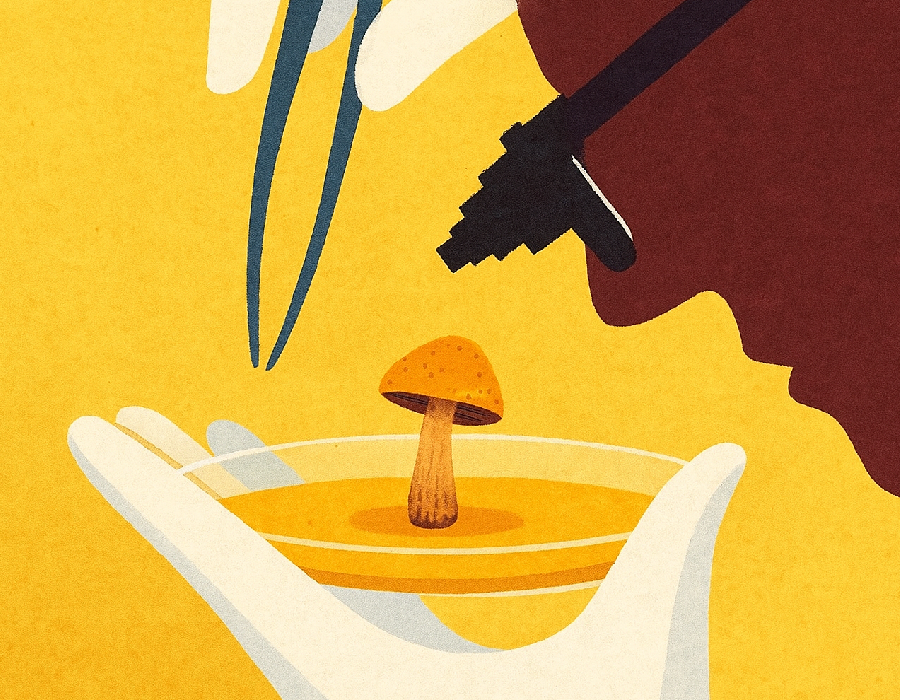
Two Roads Diverging in the Mushroom Field
As psychedelics edge toward mainstream acceptance, two dominant models are crystallizing. On one hand, we have the pharma-backed, FDA-regulated approach—clinical trials, lab-grown psilocybin, standardized treatment protocols, and heavy investment from biotech firms. Companies like Compass Pathways and Lykos Therapeutics (formerly MAPS PBC) are leading this charge, betting that psychedelics will soon be prescribed like Prozac, only with a therapist and a monitored room.
This model promises safety, consistency, and legitimacy. And to be fair, it’s produced results. MAPS’ Phase 3 MDMA trials for PTSD showed remarkable efficacy. Compass Pathways’ psilocybin-assisted therapy for treatment-resistant depression has passed multiple regulatory hurdles. The hope is that with FDA approval, insurance might one day cover sessions, bringing psychedelic care into the clinical fold.
But the cost is steep—financially and spiritually. The average price tag for a single session under this model is estimated between $1,000 and $3,000, often excluding integration support. And while pharma argues for standardization, critics see something else: gatekeeping. Monopolies on healing. Intellectual property claims on ancient medicines. Clinical models that risk sanitizing or erasing the cultural, spiritual, and relational roots of psychedelic practice.
On the other side, community-based models persist—messy, tender, often underground. These are peer-led ceremonies, BIPOC and queer healing collectives, Indigenous practitioners offering medicine with prayer and plant allies. Pricing is sliding-scale or donation-based. Healing happens in circle, not clinic. And the metric of success isn’t “symptom reduction”—it’s reconnection: to land, lineage, community, and self.
Check out this magic mushroom!!

A.P.E Psilocybin Chocolate Bar
$60.00Dried Penis Envy Magic Mushrooms
Price range: $60.00 through $240.00Golden Teacher Gummies for Microdosing
$25.00


A Tension Written Into Policy
The rift between these models isn’t just philosophical—it’s now embedded in legislation. Take Oregon, for example, the first U.S. state to legalize psilocybin services. In theory, their program allows for a dual-track model: licensed facilitators trained in clinical ethics alongside pathways for traditional, spiritual, or ceremonial use. In practice, however, the costs of certification are high, the regulations labyrinthine, and many community healers—especially those from marginalized backgrounds—are being pushed to the periphery.
California’s SB 58, a decriminalization bill for psychedelics, was gutted before it could protect non-clinical use. Meanwhile, MDMA is inching toward FDA approval under a prescription-only model that centers pharmaceutical ownership. Psychedelic policy is being written with corporate consultation, while many grassroots organizers struggle to even be heard. The bills may legalize the molecule, but they criminalize the context.
This isn’t just about access—it’s about power. About who gets to set the terms for what counts as valid, safe, or ethical healing. About which kinds of knowledge are deemed legitimate: peer experience or academic credentials, ancestral teachings or randomized trials. These binaries are false, but the consequences are real. Practitioners are being raided. Sacred ceremonies are being reduced to talking points in venture capital decks.
For Indigenous leaders, the stakes are existential. Medicines like ayahuasca, peyote, and mushrooms are not “psychedelics” in the Western sense—they’re sacraments, kin, cosmological portals. To patent or regulate them without consent is not just cultural erasure—it’s theft. Many Indigenous groups are calling for protection, reciprocity, and sovereignty—not tokenistic inclusion in a whitewashed rollout.
The Cost of Scaling Healing
One of the core arguments from the pharmaceutical side is that clinical models are the only scalable option. That without protocols, patents, and FDA approval, psychedelics will remain niche, illegal, or dangerous. There’s truth to that. Underground spaces can be risky. Not all facilitators are ethical or trained. Without standards, people can get hurt. But scaling isn’t neutral. What we choose to scale determines what kind of healing becomes available—and to whom.
Venture capital firms now pour millions into psychedelic startups, betting on a future where “mental wellness” is a branded, billable product. But many of these companies are filing patents not just on molecules, but on basic elements of human experience—like using soft lighting in a therapy room, or offering music during a trip. These moves don’t just protect intellectual property—they commodify practices that have existed in community for generations.
Meanwhile, the people who kept these medicines alive—often at great personal risk—are being priced out of the very movement they built. BIPOC-led collectives, queer psychedelic circles, harm reduction workers—many are watching from the sidelines as investors repurpose their tools into marketable “solutions.” The irony is bitter. The same communities most targeted by the drug war are now least likely to access legal psychedelic care.
I sat with a harm reductionist recently who put it plainly: “Pharma talks about accessibility, but they mean scalability. We mean community.” That distinction is everything. One model asks, “How can we serve the market?” The other asks, “How can we serve each other?” Psychedelics, in their rawest form, tend to side with the latter.
READ: Where Are Magic Mushrooms Legal?

Can These Worlds Coexist?
Despite the polarization, there are emerging models that attempt to hold both truths. Oregon’s dual-track system, while imperfect, represents one such attempt. It acknowledges that not everyone will—or should—seek psychedelic healing in a clinic. By certifying both licensed therapists and community facilitators, the state has made a quiet, radical admission: there’s more than one way to heal.
Groups like North Star have issued ethics pledges urging psychedelic companies to prioritize transparency, reciprocity, and inclusion. Fireside Project offers free peer support for those navigating difficult journeys, regardless of whether they happened in a clinic or a living room. These efforts signal a broader truth: psychedelic healing doesn’t belong to medicine, or spirituality, or capital. It belongs to all of us—or none of us.
Still, the tension remains. As someone who has journeyed in both spaces, I find myself constantly navigating between worlds. In one, I trust the soft hands of a friend who’s held hundreds of people through darkness. In the other, I trust a therapist who knows how to hold my diagnoses without flinching. What I long for is integration—not just personal, but systemic. A future where both ceremony and science are valued. Where we fund grassroots care, not just biotech. Where healing isn’t owned, but shared.
That future won’t arrive by accident. It will take policy advocacy, mutual aid, reparations, and a shift in how we define success—not just symptom relief, but collective liberation. The psychedelic renaissance is still young. The stories we choose to elevate now will shape what it becomes.
READ: Why Are Magic Mushrooms Illegal When Alcohol and Cigarettes Aren’t?
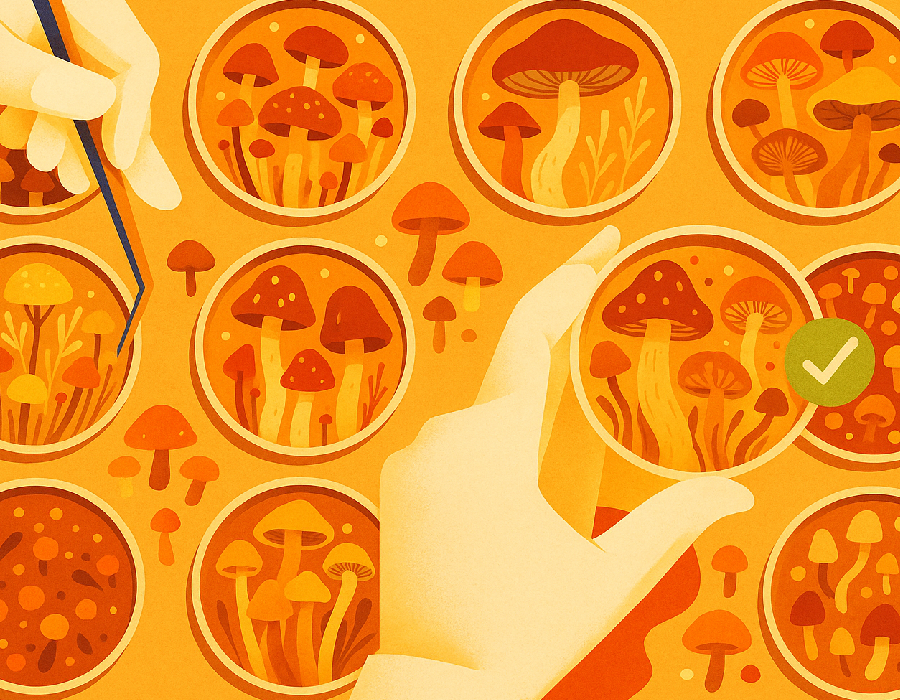
Who Do You Trust to Guide Your Healing? — With Magic Mush
So here we are—at the cusp of a new era. One where mushrooms are being talked about in Senate hearings and sold at farmers’ markets. One where the same substance that opens the heart in ceremony is being filed away as a patent by someone who’s never knelt in the dirt with it. Psychedelics are many things at once: molecules, sacraments, disruptors, friends. And as they become legal, the question becomes not just how we heal—but with whom.
Who do you trust to guide your healing? A therapist in a lab coat with a treatment plan? A peer who’s sat in ceremony and cried beside you? Maybe both. Maybe neither. What matters is that you have the choice—and that the models emerging reflect the diversity of ways humans find wholeness. Not just the ones that turn a profit.
At Magic Mush, we walk the line between reverence and access. We source full-spectrum, high-integrity psilocybin products—from dried mushroom bundles for ceremonial use, to microdose gummies that support nervous system balance, to chocolate-infused mushrooms that blend ease with depth. But more than that, we’re part of a wider movement to keep psychedelic healing rooted in community, reciprocity, and respect.
We don’t believe healing should be gatekept by venture capital. We believe it belongs in the hands of the people. So whether you’re preparing for a solo journey, joining a circle, or just learning what’s possible, we invite you to explore with intention. Visit Magic Mush, read our guides, support grassroots spaces—and help us shape a psychedelic future that’s not just legal, but liberatory.