I remember lying in the grass after my first real psilocybin trip, staring up at a sky so impossibly blue it felt alive, like the whole universe was pulsing in sync with my breath. The earth beneath me felt soft and endless, and every sound—the rustle of the trees, the buzzing of insects—was woven into a bigger song I had never really heard before. I was barefoot, my clothes damp with dew, and I couldn’t stop laughing at the thought that something so ancient and mysterious could be waiting quietly inside a humble mushroom. In that moment, the idea of psilocybin ever being bottled, labeled, and sold at a pharmacy felt impossible. This wasn’t “medicine” in the way I’d grown up thinking about medicine—it was something sacred, wild, and alive.
Fast-forward to today, and the landscape couldn’t feel more different. Instead of whispered conversations with friends about trips in the woods or silent retreats, I’m seeing headlines about companies like Compass Pathways, Usona, and MAPS. There are clinical trials, breakthrough therapy designations from the FDA, and even venture capitalists staking their claims in the “psychedelic space.” Psilocybin—the same substance that once had me lying in a meadow, convinced the sky was breathing—now has billion-dollar valuations and polished pitch decks.
Honestly? I’m conflicted. Part of me feels thrilled. After all, psilocybin has the power to change lives, and the thought of people who might never have tried it otherwise getting access in safe, legal settings is incredible. I’ve seen firsthand what dried magic mushrooms can do for the mind and spirit, and it’s hard not to imagine the ripple effect if that kind of healing becomes available on a massive scale. But another part of me hesitates. I wonder what gets lost when something so boundless is squeezed into the frameworks of patents, clinics, and profit margins. Can psilocybin still be psilocybin when it’s mediated by insurance codes and prescription pads? Or does it risk becoming just another product, stripped of its depth and mystery?
That tug-of-war—the mix of hope and unease—is what keeps me glued to this unfolding story. On one side, you’ve got grassroots psychedelic culture, rooted in community, ritual, and personal transformation. On the other, you’ve got Big Pharma, with its clinical models, standardized doses, and regulatory oversight. Both sides are aiming at healing, but they’re speaking very different languages. And as psilocybin moves further into the mainstream, those of us who’ve known it as something more than a compound in a lab are left asking: what happens now?
🍄Check out my guide on what happens when psychedelics enter institutional spaces and how government-funded shamanic programs are changing the landscape
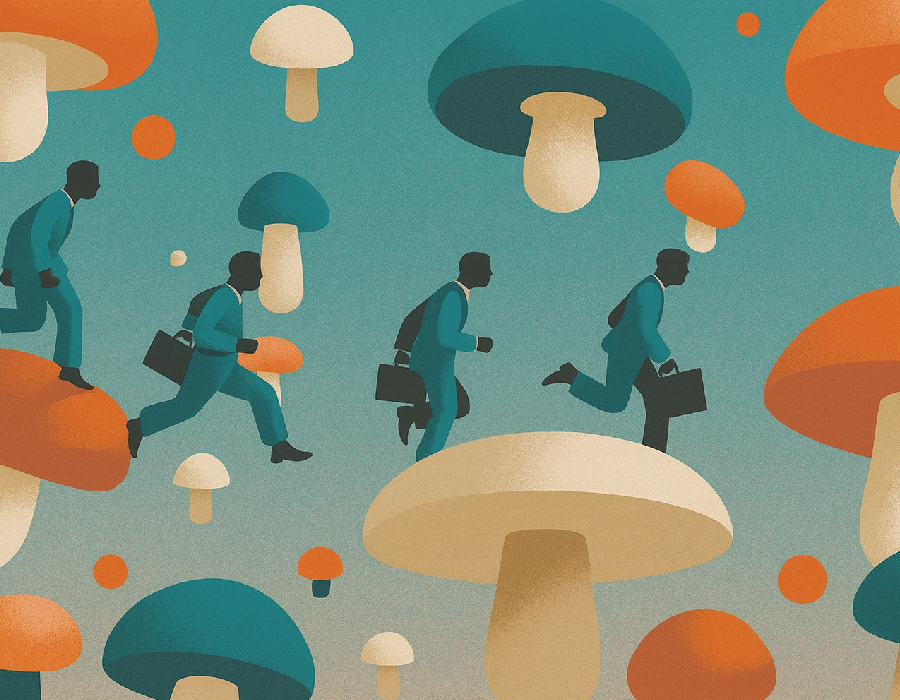
Let’s Talk About What’s Really Going On Here: Psychedelic Culture Colliding With Institutional Medicine
To understand this whole dance between Big Pharma and psilocybin, we’ve got to zoom out. Psilocybin isn’t new. Indigenous traditions, particularly the Mazatec people in Mexico, have been using sacred mushrooms for centuries in healing rituals and spiritual ceremonies. What Western science now calls “psilocybin” was, long before clinical trials, a doorway into communion with the divine.
Then came the 1960s. Psychedelics exploded into counterculture, embraced by seekers, hippies, and rebels. Timothy Leary was telling college students to “turn on, tune in, drop out.” Mushrooms weren’t just plants—they became symbols of rebellion, of alternative ways of seeing and being. And then the backlash hit hard. By the early ’70s, psilocybin was classified as Schedule I: “no accepted medical use.” Research dried up, stigma cemented, and for decades the mushroom was pushed underground.
But here we are again. The “psychedelic renaissance” is real. Johns Hopkins, MAPS (now Lykos), and Usona Institute have led groundbreaking studies. Compass Pathways has made waves with their trials targeting treatment-resistant depression. The FDA granted psilocybin “breakthrough therapy” status, which is basically the agency’s way of saying, “We think this could be a big deal, and we’re willing to fast-track it.” What was once ridiculed as counterculture escapism is now being published in The New England Journal of Medicine.
And so we arrive at the clash. On one hand, we have grassroots psychedelic culture—underground guides, spiritual seekers, indigenous knowledge keepers. On the other hand, we have Big Pharma, clinical trials, patents, insurance codes, and regulatory bodies. Both want healing, but they speak completely different languages.
Is Access Worth It If It Comes at the Cost of Authenticity?
One of the biggest promises of Big Pharma stepping into psychedelics is access. For decades, if you wanted to explore psilocybin, you either had to find an underground guide or risk picking mushrooms yourself. That meant privilege, connections, and a certain level of risk tolerance. The idea that someone struggling with severe depression could one day walk into a clinic and receive a psilocybin-assisted therapy session under the supervision of a trained professional is nothing short of revolutionary.
But here’s the rub: does this version of psilocybin resemble what many of us know it to be? When you strip away the forest, the chanting, the sense of ancient ritual, and replace it with sterile white rooms, eye masks, and medical forms, is it the same medicine? Some say yes—it’s the molecule that matters, not the setting. Others argue that the essence of the experience is inseparable from its roots in community, spirituality, and nature.
For me, the tension lies in this: yes, more people will be able to access psilocybin through legal, regulated channels. But access isn’t just about legality. It’s also about authenticity. What’s the value of healing if we remove the heart and soul from the experience?
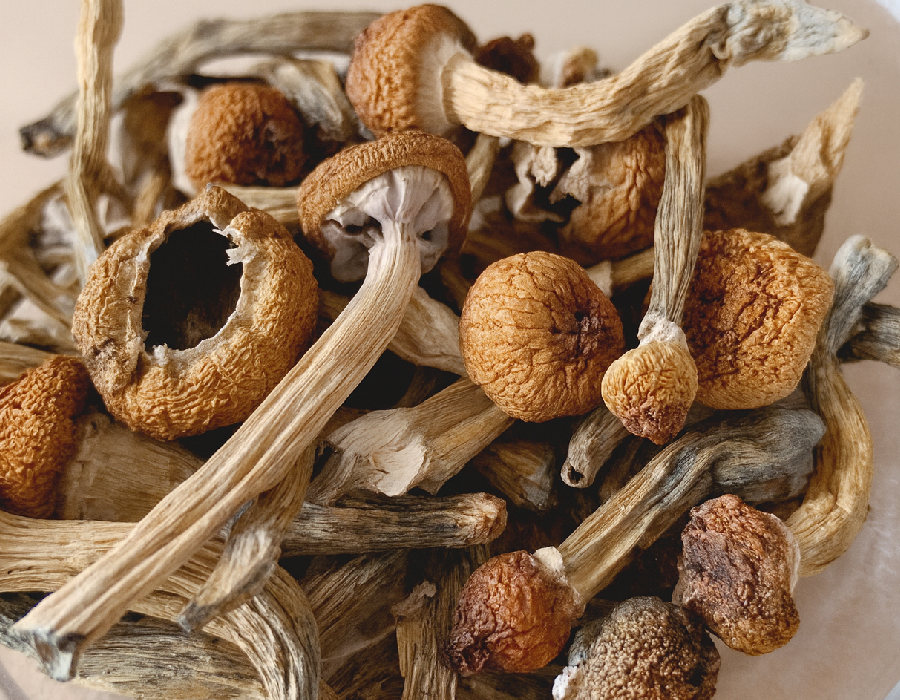
Check out this magic mushroom!!

A.P.E Psilocybin Chocolate Bar
$60.00Dried Penis Envy Magic Mushrooms
Price range: $60.00 through $240.00Golden Teacher Gummies for Microdosing
$25.00


The Gatekeepers of Healing: Will Psilocybin Only Belong to the Diagnosed?
Another tricky piece of the puzzle is medicalization. Right now, the pathway to legal psilocybin in the U.S. is through FDA approval. That means psilocybin won’t just be available for anyone who wants it. You’ll need a diagnosis. You’ll need to qualify under specific conditions like treatment-resistant depression, PTSD, or addiction.
But what about those who use psilocybin not for pathology but for growth? For creativity? For spiritual connection? For simply being curious about consciousness? Do they get left out of this new system? In Oregon, we’re seeing an experiment where both models coexist: clinical psilocybin therapy alongside decriminalized personal use. Maybe that’s the path forward. But if Big Pharma dominates the narrative, we risk reducing shroom products like chocolate shrooms to tools for “sick people only,” when in reality, they’ve always had a much broader role.
Patents, Profits, and the Strange Case of Owning a Molecule
This part almost feels like a parody, but it’s real. Companies are racing not just to bring psilocybin to market but to patent specific forms of it. We’re talking about polymorphs—crystal structures of psilocybin molecules—and even methods of administering them. Critics call this extractive, even colonial: taking something indigenous cultures have used for generations and claiming ownership over it in a Western legal framework.
Defenders argue that patents are the only way to attract investors and fund the costly clinical trials needed for FDA approval. Without the lure of profit, no company would spend tens of millions running these studies. And they’re right, to a degree. But it raises the uncomfortable question: who should benefit? Do indigenous communities get a share? Do underground therapists who kept the tradition alive during prohibition? Or does all the money flow into corporate pockets?
🍄Discover my guide on how students are standing up against the DEA and why defending mental liberty with psychedelics matters more than ever
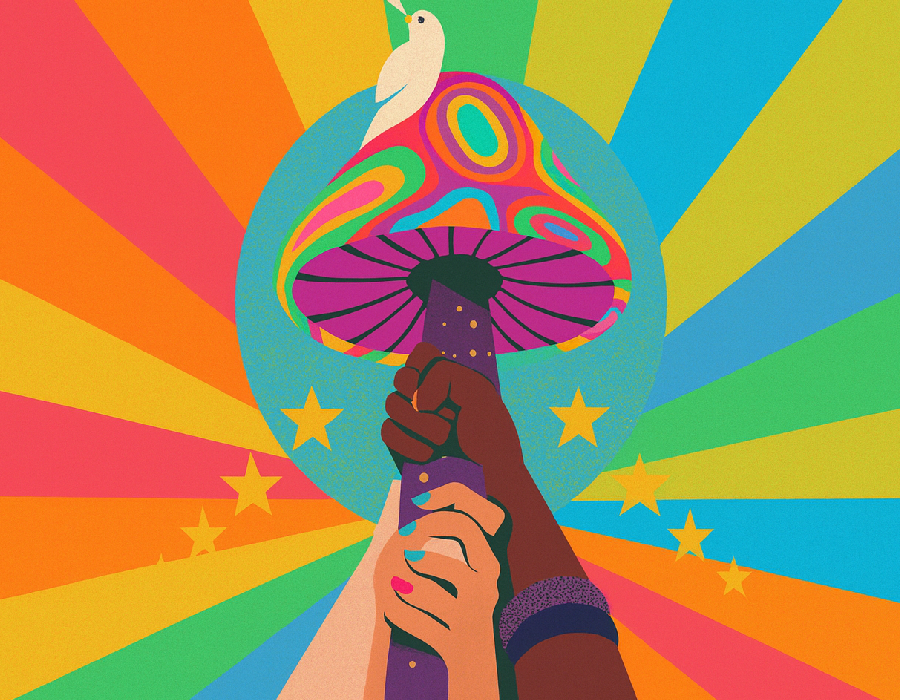
Can You Really Treat the Trip Like It’s a Side Effect?
Here’s one of the strangest quirks of how medicine thinks: in clinical models, anything subjective is often treated as a “side effect.” But in psilocybin therapy, the subjective experience is often the point. Studies show that the intensity of mystical-type experiences—those moments of awe, ego dissolution, and interconnectedness—directly correlate with better outcomes in treating depression or addiction. The spiritual trip isn’t an accident; it’s the mechanism.
And yet, there’s already talk of designing psychedelic-inspired compounds that deliver neuroplasticity without hallucinations. Some scientists are excited about this possibility. Others see it as missing the forest for the trees. If mushrooms heal because they show us something bigger than ourselves, what happens when we remove that very element? Do we still have medicine, or just another pill?
Watching Psychedelic Capitalism Rise: Retreats, Apps, and the Hustle
Even beyond Big Pharma, psychedelics are being pulled into the orbit of capitalism. Luxury retreats promise “transformational journeys” for thousands of dollars. VC-backed mental health apps brand themselves as psychedelic integration platforms. Influencers sell themselves as psychedelic coaches on Instagram. The line between authentic healing and marketing hustle is blurring fast.
Is this inherently bad? Maybe not. After all, people deserve options. Some will find healing in a clinical setting, others in a retreat, others on their own with trusted guides. But there’s something jarring about watching a sacred mushroom become content for a subscription-based app. The more psychedelics scale, the more we’ll need to ask: are we commodifying medicine, or are we democratizing it? Maybe it’s both.
🍄Explore my guide on why psilocybin could be a right to try and yet remains out of reach, and what that means for mental freedom
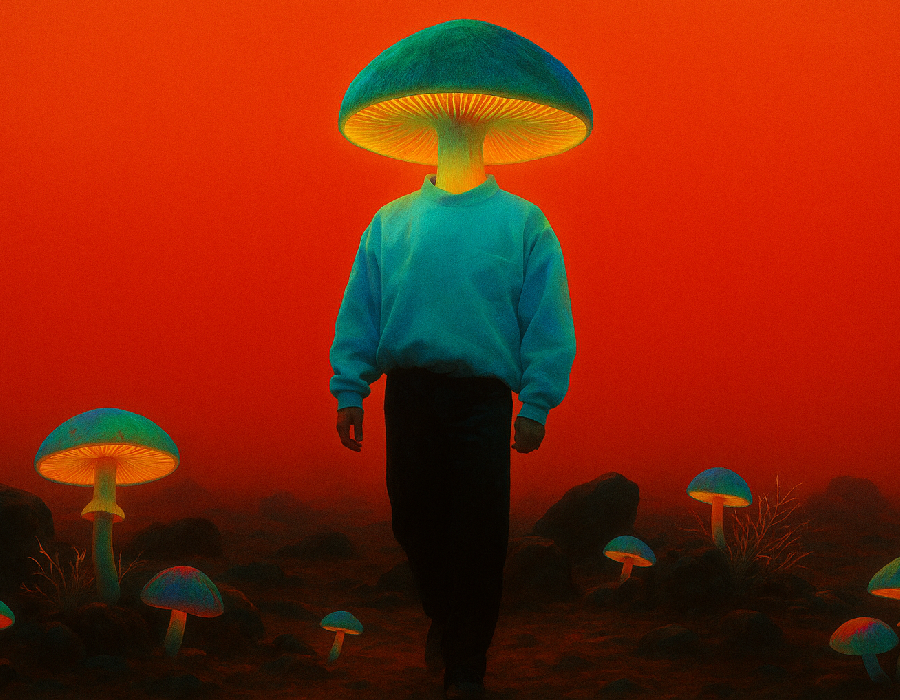
Could There Be a Middle Path That Actually Respects the Roots?
Here’s where I land when I try to make sense of all this: maybe the future isn’t either/or. Maybe it’s both/and. We can have FDA-approved psilocybin therapies for people who need medical access. We can also have decriminalized models for personal use, where individuals take responsibility for their journeys outside of pathology. And woven through it all, we can—and must—honor the indigenous traditions that kept these medicines alive long before science rediscovered them.
That means reciprocity: financial, cultural, and spiritual. That means not pretending we invented something that was here long before us. And it means acknowledging that mushrooms aren’t just chemicals. They’re teachers, too.
Sitting With the Complexity, Instead of Rushing to Choose Sides
At the end of the day, Big Pharma’s entry into psychedelics isn’t a villain story or a savior story. It’s complicated. On one hand, this shift could unlock healing for millions who have been stuck in cycles of suffering. On the other hand, it risks flattening something deeply mysterious into another commodity.
For those of us who’ve already had the privilege of meeting the mushroom in its raw, unpolished form, there’s an unease watching it morph into a prescription pill. But maybe that unease is the point. Psilocybin taught me to sit with paradox, to accept that two conflicting truths can coexist. Maybe the medicine will survive this transformation. Maybe it will even thrive. But only if we keep listening—listening to each other, to the wisdom of those who came before us, and to the voice of the mushroom itself.
Because if psilocybin ever taught us anything, it’s this: don’t stop listening.
🍄Discover my guide on how students are bringing psychedelics out of the underground and making them a public movement
Why It All Matters Right Now—And How Magic Mush Canada Can Help You Explore Safely
So, where does that leave us? We’ve gone on a journey through psilocybin’s wild history—from indigenous roots to the hippie era, from prohibition to clinical trials and headlines about FDA approvals. Along the way, we talked about how the mushroom sits at this crossroads: it’s got one foot in the world of sacred rituals and the other in Big Pharma boardrooms. We’ve seen how access might expand, but we’ve also questioned whether the heart of the experience risks getting lost if it’s reduced to just another pill.
And still, there’s so much to feel hopeful about. For the first time in decades, more people than ever might soon have legal access to psilocybin’s healing potential. That could mean breakthroughs for folks struggling with depression, PTSD, or burnout. But it also raises tough questions—like who gets access, how much it’ll cost, and whether the deeper, soulful side of mushrooms will survive the medical system. The truth is, it’s complicated. But if mushrooms have taught us anything, it’s that sitting with complexity is part of the process.
Here’s where Magic Mush Canada comes in. If you’ve been curious about mushrooms but don’t know where to start, they make it feel a whole lot less overwhelming. Think of them like that friend who’s been down the path before and wants to hand you a flashlight. They’re not about stripping the magic away or turning it into something clinical. They’re about keeping things safe, straightforward, and still connected to the sense of wonder that mushrooms bring.
At Magic Mush Canada, you’re not just getting high-quality products—you’re also getting the peace of mind that comes with knowing everything’s been tested, sourced with care, and backed by people who actually care about this community. They share knowledge, encourage safe use, and do their part to chip away at the stigma that still lingers around psychedelics in Canada. It feels more like joining a circle of people who get it, rather than just ordering from a faceless shop.
So if you’ve been sitting here thinking, “Okay, this all sounds amazing, but where do I even begin?” the answer’s pretty simple: start with “Magic Mush Canada.” They’ll make the whole process easy, give you the resources you need, and make sure you feel supported every step of the way. While Big Pharma works out its grand plans, you don’t have to wait—you can start your own exploration today, with people who are genuinely rooting for you.