
Are the Voices in the Medicine Real or Parts of You?
By Lily Pelenis / October 21, 2025 / 7 min read
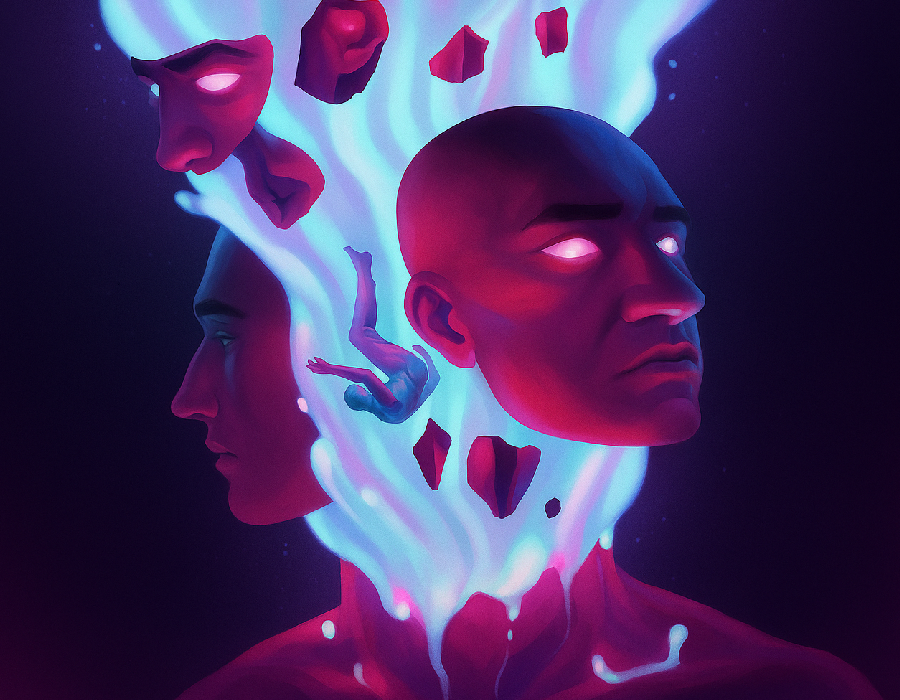
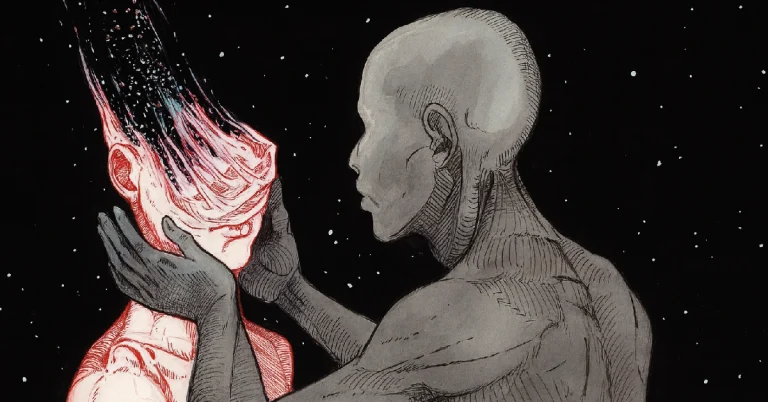
The “voices” people hear or sense on psilocybin are real experiences, but whether they come from an outside presence or from parts of your own mind cannot be settled by science. What research can say is that psychedelics loosen the brain’s usual sense of a single, unified self, that people often feel they receive messages from a guide or being, and that these experiences can feel completely convincing while still coming from inside you.
A practical way to hold this is to treat what the voice says as worth listening to, and then judge it the way you would judge advice from any part of yourself: with care, over time, and against your values. Below is what research has found about voices and presences on psychedelics, the “parts” view from psychology, how to tell an insight from a warning sign, and how to integrate it.
TLDR
Psilocybin changes the sense of self: in brain imaging it reduced activity and connectivity in hub regions linked to self-referential thinking (Carhart-Harris et al., 2012), and during a meditation retreat, the loosening of those connections tracked the feeling of ego dissolution (Smigielski et al., 2019). With a related psychedelic, DMT, 69 percent of 2,561 people who had an “entity encounter” said they received a message, and most described the being as conscious, intelligent and benevolent (Davis et al., 2020).
Experiences like these can also shift beliefs: after psychedelic use, people moved away from materialist views of reality for at least 6 months (Timmermann et al., 2021). Whatever you believe about their source, voices that tell you to harm yourself or others, or voices that continue after the trip ends, are a reason to get help right away: call or text 9-8-8 (988.ca).
Who this article is for
- People who heard or sensed a voice, guide or presence on mushrooms and want to understand it
- Anyone unsure whether to trust a message they received during a trip
- Readers curious about the “parts” view of the mind and how it relates to psychedelics
- Trip sitters and friends supporting someone who talks about “the medicine” speaking

Lily Pelenis
Author’s note
Many people describe something like a voice on psilocybin: a calm instruction to breathe, a hard truth, a sense of being spoken to. When they ask me whether it was “real”, I tell them honestly that I do not know where it comes from, and that nobody can prove it either way.
What I do believe is that the question “what do I do with what it said?” matters more than “who said it?”. I care about integration, and this is where it lives: listening, then checking what you heard against your life and your values. This guide shares my view and what research has found, and it is not medical or spiritual advice.
What are the voices people hear on mushrooms?
They are usually not voices in the ordinary sense. People describe a felt sense of being addressed, a thought that seems to arrive from outside, an inner dialogue that suddenly has its own character, or a sense of presence. On psilocybin, a pooled analysis of 110 healthy volunteers found it dose-dependently changed mood, perception, thought and self-experience, and most described the experience as pleasurable and enriching (Studerus et al., 2011).

Entity encounters with psychedelics
The most detailed research is on DMT, a related psychedelic. In a Johns Hopkins survey of 2,561 people about their most memorable entity encounter, the main senses involved were visual and “extrasensory”, such as telepathic communication. People most often called the entity a being, guide, spirit, alien or helper. Although 41 percent felt fear, the strongest emotions were love, kindness and joy, and 69 percent said they received a message (Davis et al., 2020). DMT is not psilocybin, so these numbers do not transfer directly, but they show how common and convincing such experiences can be.
Are the voices real or parts of you?
The experience is real, but its source is a question science cannot answer. There are three common ways to understand it, and you do not have to choose only one.
| View | What it says | What supports it |
|---|---|---|
| Parts of your own mind | The voice is a part of you that is usually quiet, coming forward as self-control loosens | Psilocybin reduces activity in brain hubs tied to the sense of self (Carhart-Harris et al., 2012) |
| An outside presence | The voice is a being, spirit or intelligence beyond you | Many people describe entities as conscious and existing in a real dimension (Davis et al., 2020) |
| Open question | The source cannot be known; what matters is how you respond | Beliefs about reality often shift after psychedelics (Timmermann et al., 2021) |
The “parts” view
Some therapists work with the idea that the mind is naturally made of parts. Internal Family Systems (IFS), a therapy model developed by Richard Schwartz, views every person as a system of protective and wounded inner parts guided by a core Self, and describes this multiplicity as healthy (IFS Institute). Seen this way, a kind voice telling you “you are safe” might be a caring part of you that rarely gets heard, and a harsh one might be an inner critic speaking louder than usual.
Why it can feel like someone else
In a Swiss study during a mindfulness retreat, psilocybin loosened the connection between two brain regions thought to support the sense of self, and that change went along with the feeling of ego dissolution (Smigielski et al., 2019). When the usual feeling of “this is me thinking” fades, your own thoughts can arrive as if from somewhere else. That does not prove the voice is “only” you, but it explains why an inner voice can feel so foreign. Our piece on quieting the default mode network explains that network in more detail.
Should you trust what the voice tells you?
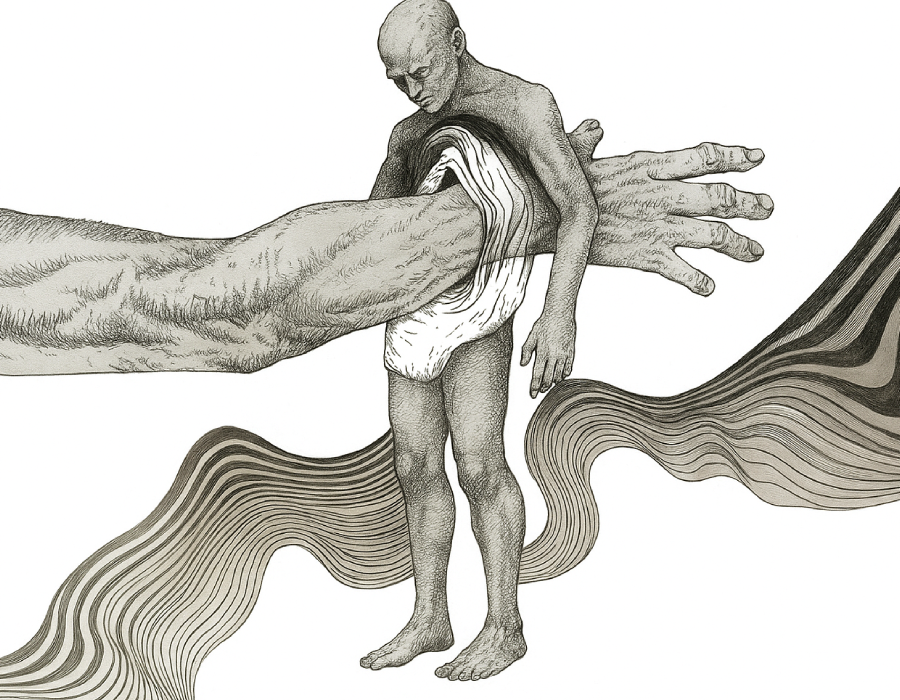
Listen to it, then check it. A message can be meaningful and still be wrong, and the feeling of certainty on a trip is not the same as accuracy. In a controlled study, psilocybin increased false feelings of familiarity, making people feel they recognized things they had not seen (Doss et al., 2024).
Some questions that help:
- Is it kind? Messages of care, rest, forgiveness and honesty are usually safe to explore.
- Does it fit your values when you are sober? Revisit it after a few days.
- Is it asking for something drastic? Big decisions, confrontations or cutting people off deserve time and advice first. Our piece on why psychedelic insights need time explains why.
- Does it ask you to harm yourself or anyone else? Then it is not guidance. Get help.
When are voices a warning sign?
Voices are a warning sign if they continue after the trip has worn off, if they tell you to hurt yourself or others, or if you feel you are losing touch with reality. Health Canada notes that frequent or intense use can bring on flashbacks (Health Canada), and psilocybin can worsen illness in people with or predisposed to psychotic disorders (Johnson et al., 2018).
If any of this applies, stop using psychedelics and contact a health professional. In Canada, the 9-8-8 Suicide Crisis Helpline is available by call or text, 24 hours a day (988.ca), and for an emergency call 9-1-1. People with a personal or family history of psychosis or bipolar disorder are excluded from psilocybin trials for safety reasons (Johnson et al., 2008).
How do you integrate a voice or message from a trip?
Write it down as soon as you can, let it sit for a few days, then come back to it with curiosity rather than obedience. Integration means letting a message inform your life gradually, not following it like an order.
- Record it word for word, along with how it felt and what was happening at the time.
- Wait before acting. A few days of ordinary life gives you a clearer view.
- Ask which part of you it sounds like. A protector, a critic, a younger you, a wiser you?
- Talk it through with someone you trust or a therapist, ideally one familiar with psychedelic experiences.
- Try a small, safe step if the message still feels right, and notice what happens.

If the trip brought up something painful rather than a voice, our guide to when mushrooms show you something you are not ready to see covers that.
Listen carefully, act slowly
Whatever you believe the voice was, the safest way to honour it is to listen, wait and check. If you plan another experience, keep the dose moderate and a sober sitter nearby; our dosing guide explains each level and the basics that apply to all of them.
FAQ
Is it normal to hear voices on shrooms?
Many people describe a sense of being spoken to, an inner dialogue with its own character, or a presence. It is more often a felt sense or thought than an actual sound.
Are the voices on mushrooms spirits?
No one can prove where they come from. Some people understand them as spirits or guides, others as parts of their own mind, and research cannot settle the question.
What does it mean when the mushroom talks to you?
It usually means a thought or feeling has come forward with unusual force as your normal sense of self loosens. Whatever its source, treat the message as something to reflect on, not an instruction.
Should I follow advice I got on a mushroom trip?
Reflect first and wait a few days. Kind, gentle messages are worth exploring; anything drastic deserves time and a second opinion.
What if I still hear voices after the trip?
That is a reason to stop using psychedelics and see a health professional promptly. If you feel unsafe, call or text 9-8-8 or call 9-1-1.
Can psychedelics change what you believe about reality?
They can. After psychedelic use, people in a large survey shifted away from materialist beliefs for at least 6 months.
Find your strain, then your dose
Every product on the shelf shows its potency rating and the effects people report. The dosing guide walks through amounts before you order, and a real person answers if you write to us.

About the author
Lily Pelenis
I'm a Toronto-based lifestyle coach, psilocybin enthusiast and certified yoga instructor. I guide people toward mindful, balanced living, and my coaching blends modern wellness practices with ancient wisdom to help clients find deeper self-awareness, resilience and joy.
I've been experimenting with shrooms for over a decade, and I write about my own experience. I love nature, psychology and humans. That is why my articles tend to follow a trip past its peak and into the weeks after it.
Some pieces start with a strain I have tried myself, such as Golden Teacher or Albino Roller Coaster. Others are the practical ones, like how much to take the first time or how to brew a tea that sits easier on the stomach. Over the years I've learned that intention is everything, so I write about why you are taking it before I get to how.
Related articles




50% off your first order
New strains, restocks, sales and new writing from the Notebook, by email. No spam, unsubscribe any time.