It happened in the most ordinary place — the produce aisle of a grocery store in Toronto, of all places. I was reaching for a bag of apples when the overhead light caught the sheen of a nearby tile just right, and suddenly, my chest expanded with that familiar, shimmery calm. The same hum I’d felt during my psilocybin journey weeks before. The colours deepened, the air thickened, and for a heartbeat, the world wasn’t a grocery store anymore. It was that sacred space again — the one where everything made sense, where I could feel my breath and the heartbeat of the Earth as one continuous rhythm. Then, just as quickly, it was gone. I blinked, the hum faded, and I laughed quietly to myself. Was that… a flashback?
The word itself made me pause. “Flashback” has always sounded so ominous — like a glitch in the matrix or a warning label from the sixties. But what I felt wasn’t frightening. It was familiar, gentle even. It didn’t pull me back into chaos; it simply reminded me of something my body hadn’t forgotten. Later that night, lying in bed, I could still sense the echo of that calm. It wasn’t the trip returning; it was my nervous system remembering how it felt to be that open, that alive.
If you’ve ever had a moment like this — where the light shifts, or a certain song brings you right back to the feeling of your journey — you’re not alone. Psychedelic “flashbacks” are more common than most people realize, though not in the way the media once warned us about. Sometimes, they’re not really flashbacks at all. They’re something softer, more nuanced, more embodied. They’re the body’s way of saying, Hey, I remember this feeling — let’s hold onto it a bit longer.
Over the years, and after a few journeys with psilocybin and other healing plant medicines, I’ve come to see these echoes as small love notes from my nervous system. They’re not signs that something went wrong, but rather gentle nudges reminding me that healing doesn’t end when the trip does. It continues quietly, subtly, in the spaces between ordinary moments. And the more I’ve learned about the science of memory and integration, the more I’ve realized — what we call a “flashback” might just be the body’s beautiful way of remembering how to heal.
So, let’s talk about it. Let’s reframe what it means when those sensations return — not as something broken, but as something still unfolding. Because sometimes, the medicine doesn’t just visit once. Sometimes, it lingers as a whisper, a shimmer, a pulse that reminds you: you’re still becoming.
🌿 Dive into what plant medicine really means and how it can guide a beginner toward mindful healing

The Whole “Flashback” Fear Thing We Grew Up With — And Why It’s Totally Missing The Point
If you’ve ever heard older generations talk about psychedelics, you’ve probably noticed how quickly the word “flashback” comes up — usually with a tone of hushed warning. Back in the 1960s, when LSD first hit mainstream consciousness, the idea of “acid flashbacks” took on a life of its own. News headlines warned of users suddenly hallucinating weeks or months later, stuck in terrifying visions that never seemed to end. Movies turned it into a trope. Teachers and parents used it as a scare tactic. And before long, the word “flashback” became synonymous with danger — as if taking one trip could trap your mind in a perpetual kaleidoscope.
But here’s what most of those cautionary tales missed: true clinical flashbacks, known as Hallucinogen Persisting Perception Disorder (HPPD), are actually extremely rare. They do exist, and for those who experience them, they can be distressing and disorienting. But the majority of what people describe as “flashbacks” after using substances like psilocybin or LSD aren’t pathological. They’re subtle, fleeting moments — like light patterns dancing on a wall, or a sudden wave of emotional clarity. As one psychotherapist I spoke to in Vancouver, Dr. Mina Kalinsky, put it, “The word ‘flashback’ got hijacked by fear — but not every echo is an emergency.”
For many people who journey with psilocybin in Canada today, what they call a flashback might actually be a sign of integration. It’s the nervous system gently revisiting what was once expanded, allowing new pathways to strengthen. “Psychedelics can heal. They work on a neuroplastic level,” explains Dr. Kalinsky. “That means the brain keeps rewiring itself long after the medicine has left your system. So when something — a smell, a song, a pattern of light — triggers that memory, it’s not your brain malfunctioning. It’s your brain reconnecting.”
This shift in understanding is important. The old narrative was rooted in stigma and misunderstanding. The new one invites compassion and curiosity. Rather than asking, “What’s wrong with me?” we can begin asking, “What is my body trying to remember?” The distinction changes everything. Because in truth, most of us aren’t “flashing back” to something gone wrong — we’re re-encountering a feeling that went right, one that our nervous system is still learning how to hold.
Your Body Remembers Everything — The Body As The True Archive Of Your Psychedelic Journey
We tend to think of memory as something that lives in the brain — stored like data in a hard drive, ready to be accessed when we recall it. But anyone who’s ever had a somatic flash of grief, joy, or awe knows that memory doesn’t live only in thoughts. It lives in the body. The body is an archive — one that records the sensory, emotional, and even spiritual imprints of everything we’ve ever experienced. And psychedelic journeys? They’re like entire chapters written in bold ink across that archive.
Somatic therapists in Toronto and Ottawa are increasingly exploring how these experiences imprint not just on neurons but on fascia, breath patterns, and the subtle language of sensation. As somatic integration coach Rae Milner explains, “After a deep journey, your body might replay sensations — not to scare you, but to remind you that something opened.” She tells her clients that what they often call a flashback might actually be the nervous system’s way of continuing its dialogue with the medicine.
Here’s where the science gets fascinating. When we take psilocybin, our brain’s default mode network — the system that organizes our sense of self — quiets down. This allows for new connections between regions that don’t usually communicate. The result is heightened neuroplasticity, or the brain’s ability to form new pathways. But that rewiring doesn’t end when the trip does. For days, even weeks after, those new circuits are still alive, still firing, still finding their rhythm. This is why certain triggers — like a song you listened to during your journey, or a scent that reminds you of the forest where you tripped — can awaken sensations or insights from that state.
The body doesn’t know the difference between memory and presence. It simply feels. So when you experience that shiver of recognition, that flutter of expansion, it’s not because you’re “tripping again.” It’s because your body remembers what it’s like to be open, to breathe deeply, to trust. The echo is a sign that your integration process is alive and well.
Understanding this changes the narrative from fear to wonder. Instead of pathologizing these echoes, we can honour them. They’re not proof that you’ve lost touch with reality — they’re reminders that your healing begins in the body, not in the mind. And in a culture that often teaches us to think our way through healing, it’s refreshing — even radical — to remember that sometimes, the body leads.
Check out this magic mushroom!!

A.P.E Psilocybin Chocolate Bar
$60.00Dried Penis Envy Magic Mushrooms
Price range: $60.00 through $240.00Golden Teacher Gummies for Microdosing
$25.00


When Feelings Return Before The Colours Do — Emotional Flashbacks Versus The Visual Kind
Not all echoes look the same. Some arrive quietly, like a sudden wash of tenderness while you’re brushing your teeth. Others shimmer through your vision — a familiar sparkle at the edge of your peripheral sight when sunlight hits the window just right. These moments can be emotional, sensory, or both, but understanding their flavour helps us navigate them more gently.
Emotional flashbacks are perhaps the most common. They might feel like a wave of peace, a sudden swell of vulnerability, or even a burst of joy that seems to come out of nowhere. You might feel tears rising, or notice that your heart feels soft again — the same way it did during your psilocybin journey. These are often signs that something is still integrating. Your body is catching up to your insights. Your nervous system is practicing what it learned.
Visual or sensory echoes, on the other hand, can feel more literal. Maybe you notice patterns shifting slightly, or colours deepening when you stare at the sky. Perhaps a flicker of movement in your peripheral vision reminds you of the fractals you saw on the medicine. These can be startling, especially if you weren’t expecting them. But for most people, they’re brief and harmless. They don’t mean you’re hallucinating again — they simply mean your perception is still more open than usual.
As psilocybin integration therapist Dr. Adrian Barlow in Ottawa notes, “A flashback is often just integration in motion — the nervous system catching up to the insight.” He adds that these experiences can actually be helpful, if approached with curiosity. “If a wave of emotion comes back, ask what it’s trying to show you. If a visual shimmer appears, take it as a reminder that your perception is still flexible — and that’s a good thing.”
What’s crucial is to stay grounded in context. If these sensations feel manageable, they’re likely part of a healthy integration process after the psychedelic experience. If they start to feel overwhelming or interfere with daily life, that’s a cue to reach out for support. But for most, these moments are simply the echo of transformation. They’re the bridge between where you were and where you’re still going — and sometimes, that bridge is made of light and breath and memory all woven together.
When The Echo Feels Too Loud — What To Do When Flashbacks Feel Like Too Much
Let’s be honest — sometimes these echoes don’t feel magical at all. Sometimes they arrive as confusion, anxiety, or even panic. Maybe you’re sitting in traffic and suddenly feel your heart racing, or you catch a scent that sends your mind spiralling back into vulnerability you thought you’d already integrated. When that happens, it’s easy to think something’s wrong. But more often than not, it’s just your body asking for gentleness.
The first thing to remember is that this is normal. Integration isn’t always neat or linear. Healing often revisits the same ground more than once. If the sensations or emotions feel intense, the goal isn’t to suppress them — it’s to ground yourself in the present moment. Simple things help: feel your feet against the floor, place a hand over your heart, take a deep breath, or look around and name five things you can see. These aren’t clichés — they’re physiological anchors that tell your nervous system, we’re safe here.
Another powerful practice is writing. Instead of analysing what’s happening (“Why is this coming up again?”), try describing what you’re feeling in the moment. “My chest feels tight.” “I feel warmth in my arms.” “I see that shimmer again.” The act of naming helps integrate the experience into language, giving the nervous system a way to release it.
🧠 Unlock stronger memory and sharper recall — see how microdosing could enhance your cognitive edge.
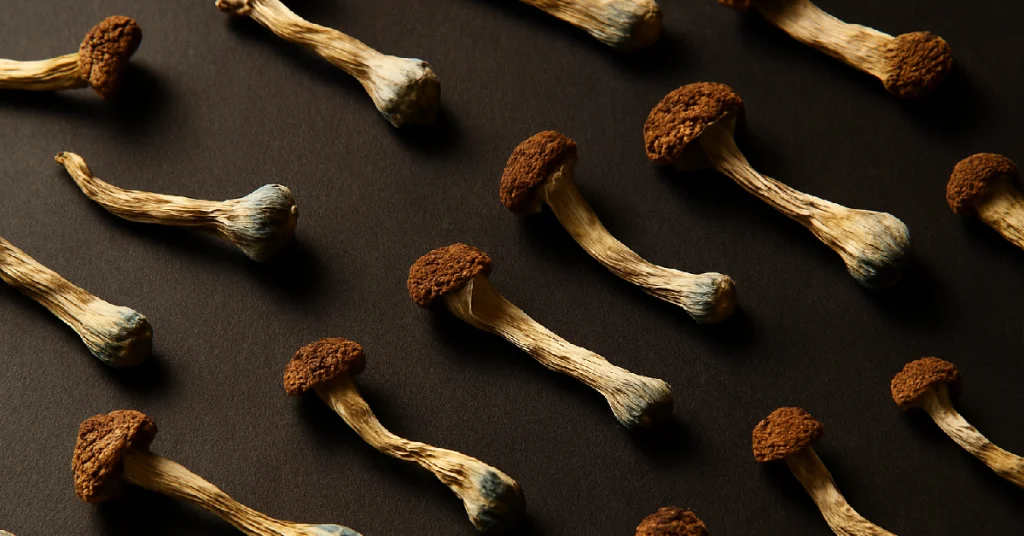
Maybe It’s Not The Trip Returning At All — Maybe It’s The Trip Refusing To Be Forgotten
Here’s the part that’s hardest to put into words: sometimes, these echoes are beautiful. They’re the unexpected reminders that something sacred has taken root inside you. A moment of calm in a busy day, a subtle shimmer in sunlight, a quiet pull back to gratitude — these are signs that your healing is still unfolding, not repeating.
I’ve come to see these moments as gifts, not glitches. They’re the slow bloom of understanding that doesn’t happen all at once. In a world that loves clean endings, integration asks us to embrace the spiral instead of the line. We don’t move on from transformation; we orbit it, each time with a little more awareness, a little more softness.
“Integration doesn’t always look like closure,” says Rae Milner, the somatic coach from Toronto. “Sometimes it looks like déjà vu.” Her words ring true. Healing isn’t about tying up every loose end — it’s about letting life replay its lessons until they’re fully embodied. And maybe that’s what these so-called flashbacks really are: life looping back, whispering, Remember what you learned? Don’t forget how it felt to open.
So maybe flashbacks aren’t the trip returning. Maybe they’re the trip refusing to be forgotten — the body’s way of saying that some memories are too sacred to fade.
The Echo Is The Lesson — Learning To Trust The Body’s Way Of Remembering
When I think back to that moment in the grocery store, I no longer see it as strange or intrusive. I see it as perfect — the light, the hum, the soft reminder that something in me had changed and was still echoing through my everyday life. Healing doesn’t always look like breakthroughs and revelations. Sometimes, it looks like a shimmer on a tile that reminds you of who you’ve become.
Maybe the trip never ended. Maybe it just moved into me — into the way I breathe when I’m anxious, the way I listen when someone speaks from their heart, the way I pause when sunlight hits just right. Maybe flashbacks aren’t about revisiting the past at all. Maybe they’re about staying present with the parts of ourselves that finally feel safe enough to be remembered.
If you ever find yourself caught in a wave like that — a flash of memory, a flicker of colour, a sudden emotion that feels too familiar — see if you can meet it with curiosity instead of fear. The body remembers, yes, but it also re-teaches. Every echo is a lesson in how to stay open, even after the medicine fades.
And that’s really the beauty of it all. The echoes mean you’ve been changed — that something in you is still vibrating at the frequency of awe, gratitude, and connection. They’re proof that your healing didn’t disappear when the trip ended; it found a home inside you.
So the next time the world hums again, even for just a second, don’t flinch. Breathe it in. Smile at it. Because that’s not your mind glitching — that’s your body remembering how to live in the present.
🌊 Explore why feelings are meant to flow through us — and what happens when we hold them back.
Let’s Talk About What Comes Next — And Why Magic Mush Canada Is Here To Walk This Path With You
When you really sit with it, the idea of a “flashback” starts to feel less like something to be afraid of, and more like something to be curious about. Throughout this article, we’ve explored how what people call flashbacks might actually be echoes of healing — moments when your body, mind, and spirit remember how to feel open again. We’ve looked at how the nervous system keeps integrating long after the trip ends, how memories are stored in the body, and how emotional or sensory waves can resurface as part of the transformation process. These aren’t signs of regression — they’re signs that your journey is still unfolding in the quiet corners of daily life. Every shimmer, every pulse, every unexpected calm is the body whispering, I still remember how to feel alive.
And maybe that’s the whole point — that the medicine doesn’t leave us when the trip fades. It lingers in our breath, our attention, our ability to meet the moment with softness. The so-called flashbacks are not glitches but reminders that healing is cyclical. The trip doesn’t replay; it reawakens. It moves through the body as memory, insight, and compassion, calling us to keep integrating what we’ve learned. In this way, the echoes themselves become the lesson: to trust the rhythm of our own becoming.
This is where Magic Mush Canada comes in because integration isn’t something you have to do alone. We know how transformative these journeys can be, and we’ve made it our mission to create a space where you can explore them safely, thoughtfully, and with support. At Magic Mush Canada, we’re not just about premium mushrooms; we’re about helping you deepen your relationship with the medicine and yourself. From high-quality psilocybin products and mushroom chocolate to educational resources and integration guidance, we make sure your experience is grounded in safety, quality, and genuine care.
We’re here to make the conversation around magic mushrooms in Toronto more open, compassionate, and informed. Whether you’re microdosing for creativity or navigating a deeper psilocybin journey in Toronto or Ottawa, we’ve got your back with products you can trust and education you can rely on. Our experts ensure every item meets the highest standards, so you can focus on your experience — knowing it’s supported by people who genuinely care. We believe that the future of healing lies not in fear or secrecy, but in community, connection, and curiosity.
So if you’re feeling the echoes of your last journey, or you’re simply curious about starting one, come see what we’re all about. We’re building more than a brand — we’re building a community of people learning, growing, and remembering together. Experience seamless online shopping, privacy, and exceptional support. Explore our range of thoughtfully curated psilocybin products, stay connected for new releases, and sign up to be part of a growing movement that celebrates safe, soulful exploration.