
There’s a certain kind of quiet that only makes sense when you’re finally alone. I still remember one evening years ago, sitting on the floor of my small apartment in Toronto with the lights dimmed and the city humming faintly through the window. I wasn’t planning anything dramatic. I wasn’t chasing a revelation, nor was I trying to escape anything. I just wanted space — space from other people’s expectations, space from my own buzzing mind, space from the constant feeling that every part of my emotional life had become something I had to manage around someone else’s comfort. I wasn’t proud or ashamed of that moment. I simply knew I needed to turn inward, and solitude felt like the only place I could hear myself think.
That evening wasn’t about bold experimentation or trying to recreate the kinds of glossy “spiritual journeys” people talk about online. It was quieter, more personal. It was simply a moment when I felt myself drawn inward. And in that softness, a question surfaced — one I’ve heard echoed by many people over the years: why do so many people use psychedelics alone, even though we now understand how deeply set and setting influence neuroplasticity and emotional processing?
This article doesn’t tell anyone to use psychedelics alone, nor does it romanticize isolation. Instead, it explores the deeply human reasons so many people choose solitude, even when the wellness world increasingly emphasises the opposite. Understanding those reasons matters, not because solitude is inherently right or wrong, but because it reveals something essential about our emotional lives in this moment in history — what we long for, what we fear, and why sometimes the most difficult place to be is also the place we choose to return to.
🍄 Thinking about doing shrooms solo? Check out this honest guide on what to expect and how to stay safe
Acknowledging the Reality of Solo Psychedelic Use in the Modern World
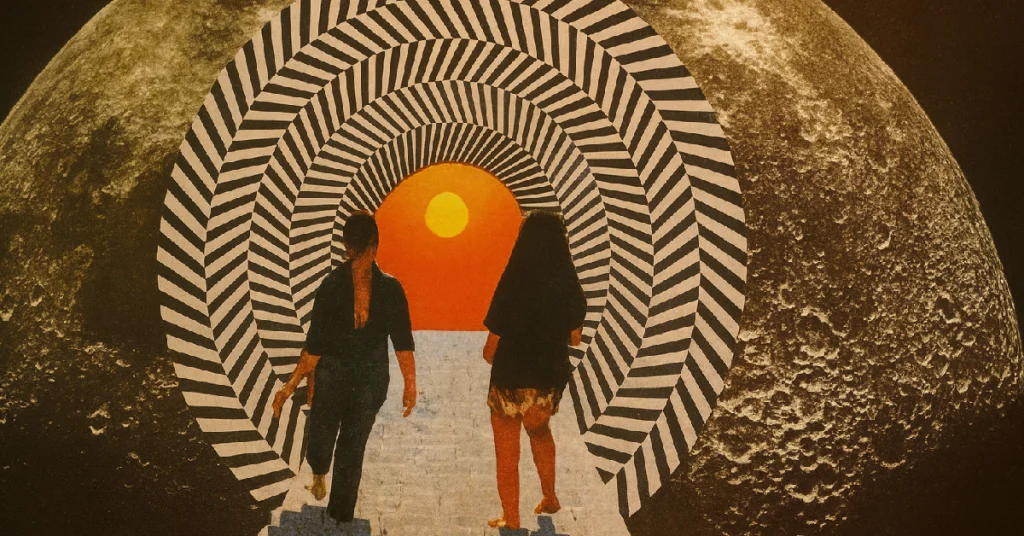
Before diving into the layers of emotion, psychology and culture that shape solo use, it’s important to start with a simple truth: most psychedelic use around the world happens alone. Not in therapeutic offices, not in formal ceremonies, not with facilitators trained in a specific lineage, but in private. Some of this is driven by accessibility — the cost, the location, the waitlists and the lack of legal frameworks — but a great deal of it is simply because people don’t have anyone they trust to share such an intimate experience with. Many people aren’t part of communities where psychedelics are openly discussed. Some can’t tell partners, friends or family members about their interest in psychedelics without fear of judgement or conflict. Others live in regions where psychedelic therapy is still a distant dream, far from their financial or geographic reach.
Many people aren’t part of communities where psychedelics are openly discussed. Some can’t tell partners, friends or family members about their interest in psychedelics without fear of judgement or conflict. Others live in regions where psychedelic therapy is still a distant dream, far from their financial or geographic reach. And given the ongoing debate around whether psychedelics “work” without a therapist — with science offering both reassurance and caution — many people end up navigating the experience privately.
It’s easy for public conversations to focus on structured, guided use because those stories are more visible. But the reality unfolding behind closed doors is different: countless individuals quietly turning inward, often because they feel they have nowhere else to take their inner questions. Bedrooms become sanctuaries. Forest trails become safe places to breathe. Beaches at sunrise become moments of reflection. These aren’t glamorous scenes; they’re deeply human ones. And they set the stage for a nuanced question: what draws people inward when the world around them insists that healing should happen in community?
The Psychological Reasons So Many People Choose Solitude With Psychedelics
When people talk openly about why they choose to use psychedelics alone, the psychological reasons often surface long before the logistical ones. It’s not just about access. It’s about the internal world — the layers of privacy, vulnerability and introspection that shape how someone wants to encounter themselves.
For many, the desire for privacy is the most immediate reason. Psychedelic experiences can open emotional doors that have been shut for years. Tears can come unexpectedly. Memories can surface without warning. The sense of being exposed — raw, unguarded, without the polished version of yourself you normally present — can be overwhelming in the presence of someone else. Some people fear appearing fragile or messy. Others worry about saying the wrong thing, or about being misinterpreted in a moment of emotional intensity. Being alone can feel protective, not because solitude is inherently safer, but because it removes the fear of being perceived.
Finally, some people consciously avoid outside influence. They want an experience that isn’t shaped by someone else’s expectations, interpretations or frameworks. Even well-meaning guidance can feel like an intrusion. Some individuals crave an unmediated encounter with their own mind, without the subtle pressure of another person’s worldview. This doesn’t mean they reject support altogether; it simply means they value an experience that unfolds without external narrative.
🧠 Curious why so many feel anxious before their first trip? This breakdown explores common concerns and what research says

The Social and Cultural Forces That Quietly Push People Toward Solo Use
Beyond the psychological layers, the cultural landscape surrounding psychedelics plays a significant role in shaping who turns inward alone. Stigma remains one of the biggest factors. In many families, workplaces or communities, psychedelics are still seen through the lens of danger, illegality or irresponsibility. Being open about interest in psychedelics can risk judgement, conflict or social repercussions. As a result, many people keep their curiosity private, and their experiences even more so. Solitude becomes not a choice, but a necessity.
Cultural narratives also create pressure. Online communities frequently celebrate solo “deep dives,” positioning them as signs of emotional bravery or spiritual integrity. These narratives influence behaviour, even when they unintentionally romanticize difficult journeys or encourage people to over-interpret the “message” of an experience.
The Emotional Wounds and Trauma Histories That Make Solitude Feel Safer
For many people, the pull toward solitude is not simply psychological or cultural; it is deeply emotional. Trauma — whether from childhood, relationships or major life events — shapes how a person relates to vulnerability. Some individuals carry wounds that make it difficult to be witnessed in moments of emotional intensity. The thought of breaking down, crying or confronting painful memories in front of someone else can feel overwhelming. In those cases, solitude feels like the only place where emotional expression doesn’t activate fear.
People with attachment injuries — those who grew up learning that closeness can be unsafe or unpredictable — may find guided or supervised settings uncomfortable. Being held emotionally by another person can feel foreign, even threatening. The internal belief that “I have to face this alone” is not always a sign of pride or independence; it can be a reflection of old wounds that never had the space to heal. And yet, for many, solitude remains the only environment where they feel truly in control of their emotional boundaries.
Grief is another layer that often goes unspoken. Many people turn inward after losses that they haven’t fully processed — the death of a loved one, the end of a relationship, a period of profound change. They may want emotional privacy to honour what they’ve lost. In solitude, they can let that grief breathe without worrying about how it appears to others.
These dynamics show up differently for different groups. For example, women navigating hormonal shifts often report that psilocybin experiences feel more unpredictable, something rarely discussed but increasingly researched. For them, solitude can feel like the only place where they can move through emotion at their own pace.
Check out this magic mushroom!!

A.P.E Psilocybin Chocolate Bar
$60.00Dried Penis Envy Magic Mushrooms
Price range: $60.00 through $240.00Golden Teacher Gummies for Microdosing
$25.00


The Practical Realities That Shape How People Actually Use Psychedelics Today
Even if someone is psychologically and emotionally open to the idea of guided support, practical realities often intervene. Therapy is expensive. Underground guides vary widely in experience and training. Retreats can cost thousands of dollars and require international travel. Psychedelic-assisted therapy, while promising, remains limited in accessibility and legality. Many people who are curious about psychedelics simply don’t have access to the kinds of structures that public conversations tend to promote.
For others, the reality is more personal. They don’t know anyone they trust with such an intimate experience. Their social circles may not include people who understand psychedelics or who can hold emotional space without projecting judgement or fear. Some people prefer smaller doses or microdosing, which already tends to happen alone. Others feel that the restrictive schedules of daily life — work, caregiving, responsibilities — make solitude the only practical option.
Others lack trustworthy companions. Some prefer microdosing, which typically happens alone. And many people — especially teenagers, who are largely absent from psychedelic research despite ongoing debate about whether they should be included — have no safe or socially accepted avenue for guided experiences at all.
The Quiet Risks of Isolation And Why They Deserve Gentle Honesty
While it’s important to understand why people choose solitude, it’s equally important to acknowledge that isolation during psychedelic experiences carries risks — emotional, psychological and interpretive. This isn’t about warning or fearmongering; it’s about honesty. When someone is alone with difficult emotions, there is no external anchor to help steady them if panic or overwhelm surfaces. Without another person to offer reassurance, an experience can spiral inward, becoming more intense than expected.
Trauma memories may reappear in ways that feel disorienting. Symbolic or metaphorical content may be misinterpreted as literal. Without the presence of another mind to provide perspective, it’s easy to get caught inside one’s own cognitive loops. Some individuals describe feeling stuck in an echo chamber, where every thought amplifies itself. Others report experiences that made sense at the time but later left them confused, uncertain or unsettled.
The absence of a supportive presence can also affect emotional regulation. Moments that might have felt manageable with grounding or reassurance can feel overwhelming in solitude. This doesn’t mean that solo use is inherently dangerous, but it does mean that isolation changes the emotional landscape. Understanding those nuances helps people reflect more compassionately on their choices, without judgement or shame.
Why Solitude Still Feels Meaningful for So Many People
Despite the risks, it’s undeniable that many people find meaning in solitude. Being alone can offer a sense of agency, the feeling of choosing your own path, without external expectations shaping the moment. People often describe solo experiences as deeply introspective, offering clarity or emotional honesty that can be harder to access in daily life. Nature, especially, becomes a powerful companion. Forests, lakes and quiet trails offer a kind of presence that feels both expansive and grounding, allowing people to feel held by something larger than themselves even in solitude.
For some, the absence of another person removes the pressure to perform or manage impressions. They can cry freely, laugh unexpectedly or sit in silence without wondering how it looks. This freedom can feel profoundly meaningful, especially for those who spend much of their lives navigating invisible emotional expectations. Solitude can also deepen connection to intuition, allowing individuals to feel more attuned to their inner world.
None of this means solitude is safer than guided support. It simply means it can be meaningful and meaning is a powerful force in human behaviour. The goal is not to elevate solitude, but to understand why it resonates with so many.
🔄 Debating solo vs. partner for a first psychedelic experience? This guide helps walk you through pros and cons
The Inner Processes That Act as a “Guide” When No One Else Is There
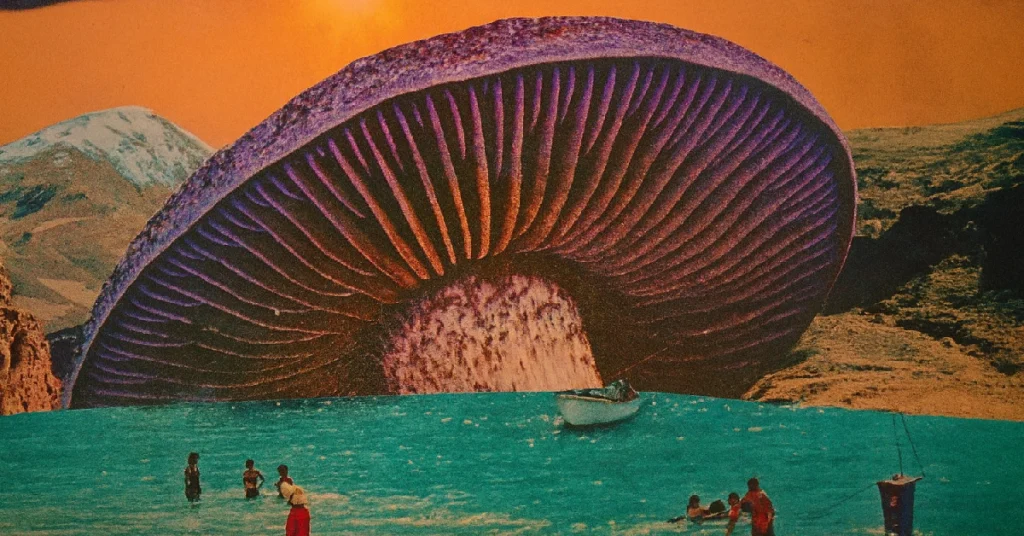
One of the most fascinating aspects of solo psychedelic experiences is the way the mind generates its own sense of guidance. Even when someone is physically alone, their internal world is far from empty. Psychological processes such as memory networks, inner parts, imagination and predictive processing all come alive in dynamic ways. People often describe feeling as though they’re being guided, not by an external entity, but by an internal presence — sometimes compassionate, sometimes challenging, often deeply personal.
This inner guidance can take many forms. It might feel like a younger version of oneself resurfacing with messages that were never expressed. It might feel like an older, wiser internal voice offering perspective. Some describe symbolic imagery or narratives that help them process emotions. Others experience a kind of self-reflective loop where insights unfold through internal dialogue.
These experiences don’t replace external support, nor do they function like a trained facilitator. But they help explain why solitude can feel directed rather than chaotic. The mind has its own systems of meaning-making, its own mechanisms for integrating emotion, memory and imagination. Recognizing this helps make sense of why people often feel guided even when no one else is present.
The Integration Challenge: Why Coming Back Requires Connection
While solitude may feel right in the moment, integration often reveals the importance of connection. After a solo experience, many people find themselves needing someone to talk to — a friend, a therapist, a partner or a community. Making sense of an internal journey can be difficult when left entirely to one’s own interpretations. Conversations can offer grounding, perspective and emotional processing that are harder to access alone.
Integration is not just about understanding what happened; it’s about weaving the experience back into daily life. Solo journeys often surface insights that feel profound at the time but can be difficult to hold onto without companionship. External support doesn’t erase the value of solitude; it complements it. Isolation during the experience does not require isolation afterwards. In fact, many people find that the most meaningful integration is relational — rooted in conversation, connection and shared understanding.
A Compassionate Look at Why People Go Inward Alone
When we step back and look at the full picture, the choice to use psychedelics alone becomes far more complex than it first appears. People turn inward for psychological reasons, cultural pressures, emotional needs and practical realities. Solitude can be a refuge, a ritual, a necessity or a deeply personal preference. It can reflect self-trust, trauma, introspection or simply the circumstances of modern life. There is no single story that captures everyone’s experience, and that’s precisely why this conversation deserves nuance.
Solitude can be meaningful, but it can also be vulnerable. It can offer insights, but it can also intensify emotion. This article isn’t here to praise or discourage solitude, but to understand it — to hold space for the many reasons people choose to journey inward without someone else in the room. What matters most is the intention behind the choice, the emotional landscape surrounding it and the care taken afterwards to integrate whatever surfaced.
In a world that often feels loud, demanding and crowded, it makes sense that some people seek quiet corners to meet themselves more honestly. Psychedelics don’t create that longing; they simply reveal it. And sometimes the truth inside us is that we needed space — not because solitude is better, but because it was the only place where we could finally hear ourselves breathe.
🌿 Going through anxiety or emotional turbulence? Here’s a thoughtful take on what psychedelics might do or just show
Before You Go, Here’s Why Understanding Solo Psychedelic Use Matters And How “Magic Mush Canada” Can Support Your Journey Beyond the Myths
When you step back and look at everything we’ve explored, it becomes clear that solo psychedelic use isn’t some fringe behaviour or bold act of rebellion — it’s a deeply human response to the realities of modern life. People turn inward for psychological reasons, emotional needs, personal histories, cultural pressures and practical limitations that don’t always leave room for guided or communal experiences. Some seek privacy because vulnerability feels safer without an audience. Others want introspection without external influence. Many carry trauma that makes being witnessed feel overwhelming. And countless people simply don’t have access to legal, affordable or trustworthy psychedelic support. Solitude becomes a space where they can breathe, reflect and meet themselves honestly, even if it’s not perfect, even if it’s complicated.
This is where Magic Mush Canada comes in, and honestly, think of us less like a big official company and more like the friend who actually gets it — the one who isn’t judging, isn’t lecturing and isn’t trying to push some dramatic agenda. We’re here because we genuinely care about making this space less confusing and less stigmatized for people who are curious, cautious or quietly navigating their own relationship with psychedelics. At Magic Mush Canada, we focus on education and safety because we know how overwhelming it can be to sort through myths, hype and misinformation. We’re committed to making high-quality products accessible, but just as importantly, we’re committed to providing knowledge that helps people feel grounded, informed and respected.
What we offer isn’t just dried magic mushrooms — though yes, we take quality ridiculously seriously with rigorous testing and top-tier standards — it’s also a sense of community. A place where you don’t have to whisper your curiosity or feel ashamed of your interest. We’ve always believed that the more people feel supported, the better their relationship with psychedelics becomes, whether they’re microdosing, exploring emotional wellness or simply learning. And we try to keep everything as approachable as possible: seamless online shopping, discreet delivery, warm customer support and a genuinely supportive environment for anyone who wants to learn or grow.
If you’re someone who resonated with anything in this article — the privacy, the stigma, the need for space or the desire to understand yourself more deeply — consider hanging out with us at Magic Mush Canada. Join the newsletter, check out the community updates, explore what’s available, and feel free to learn at your own pace. We’re basically your buddy in the magic mushroom space in Toronto — the one who actually knows what they’re talking about and genuinely wants you to feel empowered, not overwhelmed. Whatever your journey looks like, we’re here to make the world around psychedelics feel a little more open, a little more supportive and a lot less lonely.

