
The first time I woke up after a truly difficult journey, I remember staring at my ceiling with this heavy, confusing mix of clarity and disorientation. I wasn’t panicking, exactly, but it felt like my mind had been stretched wider than it wanted to go, and now everything was echoing. There had been images that felt charged with meaning. A few emotional scenes that felt like memories—except they weren’t memories. A symbolic thread that seemed like a warning until it didn’t. Part of me felt like I’d experienced something profound, but another part of me wondered whether I had just watched the psychological equivalent of a thunderstorm rolling through my nervous system. I didn’t know what was insight and what was noise. I didn’t know if my brain had been showing me something I needed to fix, or if it had just offloaded emotional backlog. Mostly, I just felt unsure—unsure of what mattered, unsure of what was symbolic, unsure of what the experience was trying to tell me, if anything at all.
And maybe that’s the part that no one warns you about: the morning after a difficult psychedelic experience can feel lonely in a very specific way. You wake up with the weight of it still sitting on your chest, and your mind wants to define it immediately, give it shape, assign it meaning. But you’re not thinking clearly yet. You’re still in the afterglow/hangover haze. And in that space, it’s easy to convince yourself that everything you saw was a message, a sign, a directive, or a revelation. It’s easy to inflate imagery into destiny, symbolism into instruction, or intense emotions into cosmic truth. If you’ve been there—or if you’re in it right now—you’re not alone. Difficult journeys aren’t rare. They’re not a failure. They’re part of the psychedelic landscape, and honestly, they can be some of the most meaningful experiences if handled with care, grounding, and patience.
💬 Discover what happens when one person in a relationship changes and the other doesn’t and how to integrate those changes together
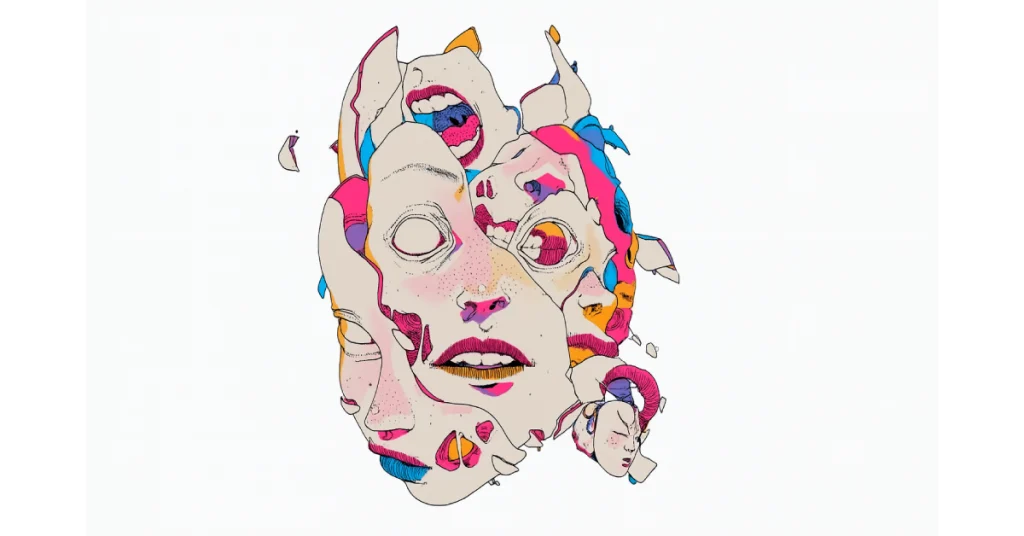
Why Our Brains Want to Turn a Difficult Psychedelic Experience Into a Literal Message, Even When It Was Never Meant to Be Interpreted That Way
One of the most common things people struggle with after a tough journey is the urge to interpret every moment as symbolic, significant, or instructive. Psychedelic states amplify emotional salience, which is a fancy way of saying that everything feels important. A small thought feels like a revelation. A random image feels like it carries a secret code. A difficult confrontation in the trip feels like a warning or prediction. You might catch yourself thinking things like, “The dried magic mushroom told me to break up with my partner,” or “Ayahuasca showed me that I’m supposed to change careers,” or “I saw a past life and it means I have unfinished business.” And while these interpretations come from a very real emotional place, they often grow out of the state itself—not out of grounded, everyday reality.
This isn’t something to mock or dismiss. When you’re deep in it, these moments genuinely feel like messages. Your nervous system is wide open. You’re emotionally raw. Your brain is processing without the usual filters. And because we’re meaning-making creatures, our minds naturally want to turn emotional intensity into narrative structure. The problem isn’t that you interpreted things; the problem is believing the interpretation before you’ve grounded yourself. Psychedelics create an environment where emotional truth is loud, vivid, and convincing—but that doesn’t automatically turn it into literal truth. Understanding the difference is the heart of healthy integration.
The Science Behind Why Psychedelic Experiences Feel Like They’re Communicating Something Important (Even When They’re Not)
There’s a perfectly grounded, research-backed reason why psychedelic experiences feel meaningful. Psychedelics lower the rigidity of your brain’s internal predictions—a concept known as relaxed priors in the predictive processing model. Under normal circumstances, your brain filters incoming information through a thick layer of assumptions, patterns, and learned expectations. But psychedelics quiet those filters, allowing raw emotional and sensory material to feel fresher and more immediate. At the same time, emotional centres in the brain become more active, and the Default Mode Network—the part responsible for storytelling, identity, and self-referencing—loosens its grip. The result is a dream-like state where waking consciousness mixes with symbolic, emotional, and sometimes surreal content.
This cocktail leads to increased pattern recognition. You may see connections where none exist, or interpret neutral content as meaningful. Trauma can also surface symbolically—through images, metaphors, or emotional surges—because the brain communicates unresolved pain in non-verbal ways. That doesn’t make the symbols literal. It just means the brain is using its full artistic range to express something normally buried. So when a difficult moment feels loaded with meaning, the intensity is real, but the interpretation isn’t automatically accurate. The science helps us understand the experience without assuming it carries prophetic truth.
🧩 Uncover the honest and messy truth about psychedelic integration vs. avoidance and learn how to tell the difference

The Subtle but Crucial Difference Between an Insight and the Story You Build Around It
One of the most important pieces of integration is learning to separate insight from interpretation. An insight is an emotional truth—something like, “I feel disconnected,” or “I’m afraid of being abandoned,” or “I’ve been ignoring my boundaries.” These are internal realities that psychedelics can highlight with painful clarity. But then the mind starts building a story around the insight. Insight: “I feel trapped.” Interpretation: “I need to move across the country next month.” Insight: “I don’t feel safe.” Interpretation: “My friend secretly hates me.” Insight: “I feel disconnected from my partner.” Interpretation: “The trip is telling me to end the relationship immediately.”
The insight is valid. The interpretation might not be. Psychedelics amplify feelings, and when something feels overwhelming, it’s easy to attach dramatic meaning to it. But insight is emotional. Interpretation is narrative. One deserves your attention; the other needs to be held lightly until you’re grounded.
Difficult Journeys Aren’t Punishment or Cosmic Warning — They’re Often Emotional Processing in Disguise
It helps to reframe what a difficult journey actually is. Instead of seeing it as a message or ultimatum, it’s often better understood as emotional release. Psychedelics can bring buried or fragmented material to the surface—not because you’re supposed to act on it, but because it finally had the space to be felt. Sometimes what emerges is trauma that hasn’t been processed. Sometimes it’s grief that didn’t have language yet. Sometimes it’s old memory fragments or unresolved tension. Sometimes it’s shadow material—the parts of ourselves we don’t like seeing but need to acknowledge.
These experiences can be uncomfortable, chaotic, painful, or disorienting, but that doesn’t make them directives. The purpose of a difficult experience is rarely to give instructions. It’s to create movement. To let something shift in your emotional ecosystem. The meaning comes later—slowly, organically, without pressure.
Check out this magic mushroom!!

A.P.E Psilocybin Chocolate Bar
$60.00Dried Penis Envy Magic Mushrooms
Price range: $60.00 through $240.00Golden Teacher Gummies for Microdosing
$25.00


Here’s How to Keep Yourself Grounded So You Don’t Turn a Symbolic Moment Into a Major Life Decision You’re Not Ready For Yet
The first guideline is simple: wait. Give your nervous system time to stabilize before assuming the experience meant something literal. Decisions made in the echo of a big emotional event—whether psychedelic or not—tend to be impulsive. Let the intensity settle before analysing anything. Once you’re grounded, look for themes instead of instructions. Ask what feelings kept recurring. What memories resurfaced. What emotional threads ran through the experience. These themes hold more psychological significance than any specific image or symbol.
Evaluate your insights through different lenses. Ask how they feel in your body, how they show up in your relationships, and how they hold up in sober, ordinary life. Talk to someone grounded—an integration facilitator, a therapist, or a psychonaut who isn’t prone to mystical exaggeration. When in doubt, ask yourself the simplest question: “Would this message still feel true outside the psychedelic state?” If the answer is no, it’s likely symbolic. And always remember: metaphor is not mandate. A death scene doesn’t mean real death. A breakup scene doesn’t mean you’re meant to end your relationship. A snake isn’t necessarily a cosmic omen. Symbols are symbols—nothing more.
Sometimes Interpreting Things Literally Can Cross Into Harmful Territory, and That’s When You Need Extra Support
Literal interpretation can become dangerous when it starts fuelling paranoia, magical thinking, catastrophic predictions, or a sense of being chosen or singled out. If you catch yourself obsessing over symbols, developing rigid beliefs based on imagery, or feeling like the experience placed you on a special path, that’s a sign that grounding is needed. It doesn’t mean anything is wrong with you. It simply means the experience overwhelmed your system and needs support to digest.
Practical, Real Integration Steps You Can Actually Use, Not Just Abstract Advice
Real integration happens slowly. Structured journaling can help organize the experience—writing down what happened, what you felt, and what you think it might mean. Returning to the body is essential. Grounding exercises, breathwork, movement, and rest can calm the nervous system after an intense journey. Talking to an experienced, non-mystical person can create perspective. Revisiting the experience from a calm state often reveals that what felt like a directive was simply an emotion looking for expression. Ask yourself what the experience wanted you to feel—not what it wanted you to do. And track subtle behavioural changes over time instead of looking for big, dramatic meanings. Integration isn’t about conclusions; it’s about gradual shifts.
🔄 Follow one person’s journey from engineering to awakening and discover how psychedelic integration unfolded in unexpected ways
What the Research Says So You Don’t Feel Like You’re Making This Up
Roland Griffiths’ work at Johns Hopkins has shown how mystical-type experiences can feel incredibly convincing, even when they’re symbolic. Robin Carhart-Harris’ REBUS model explains why the brain becomes more flexible and impressionable during psychedelic states. Studies on memory reconsolidation show how trauma can resurface in metaphorical or dream-like ways. And research on meaning-making demonstrates how altered states increase the tendency to perceive significance where there may be none. These aren’t signs of delusion. They’re natural features of the psychedelic mind.
At the End of the Day, Difficult Journeys Aren’t Assignments—They’re Invitations to Slow Down, Reflect, and Let Meaning Unfold Gently Over Time
If you’re coming out of a difficult journey feeling confused, overwhelmed, or tempted to romanticize the experience into a message, take a breath. You’re not broken. You’re not being punished. You’re not meant to decode a cosmic instruction manual. Difficult journeys are part of the terrain, and they often carry emotional truth rather than literal truth. Meaning doesn’t need to be squeezed out of the experience immediately. It emerges with time, reflection, conversation, and grounding. Trust slow integration, not instant interpretation. Trust your emotional intelligence, not your most dramatic thoughts. And trust that difficult experiences can transform you without demanding anything drastic or mystical from you. Healing is slow. Meaning is gentle. You don’t have to rush it.
🌿 Step into the world of sacred mushroom journeys and discover what makes them meaningful beyond just the trip
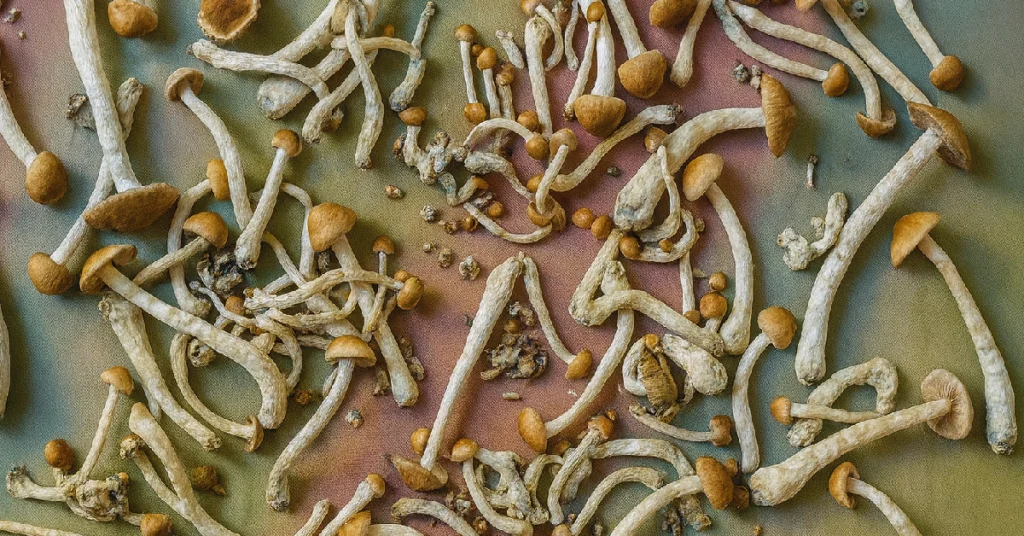
If You’re Ready for Clearer, Grounded Integration Support, Here’s Why Magic Mush Canada Is Actually the Buddy You Want in Your Corner
After everything we’ve explored throughout this article, it becomes pretty clear that difficult psychedelic journeys aren’t signs of something having gone wrong — they’re signs that something meaningful has surfaced. We talked about how those overwhelming moments don’t have to be treated like warnings from another dimension or instructions to overhaul your life overnight. Instead, they’re usually emotional truths wrapped in intense imagery, the brain’s way of showing us what we’ve been carrying, ignoring, or avoiding.
And this is exactly where Magic Mush Canada comes in — not as some corporate voice telling you what to do, but more like a friend who actually gets it. We’re people who’ve been around this space for a long time, who’ve had our own confusing nights, our own breakthroughs, and yes, our own “what the hell was that?” mornings. At Magic Mush Canada, we genuinely care about helping folks explore chocolate mushrooms in a way that’s grounded, safe, and informed — not dramatic and not romanticized. We’re here to help you sort through the noise, understand what matters, and feel supported while you make sense of your own inner landscape.
A lot of people find us because they want quality products they can trust, but what keeps them with us is the community, the education, and the sense of “okay, I’m not doing this alone.” We put a ton of energy into making sure everything we offer is rigorously tested, responsibly sourced, and backed by real knowledge — because when you’re exploring something as powerful as psilocybin, you deserve to feel like you’re in good hands. And honestly, we like being those hands. That’s why we focus not just on giving you access to premium mushrooms but also on helping you understand how to use them in a way that supports healing, clarity, and personal growth.
Let’s look into this wild, meaningful, transformative space together — slowly, clearly, and without turning every experience into a prophecy. That’s what we do here at Magic Mush Canada, and we’d love to have you with us.

