
Imagine a world where the boundaries of reality are constantly being challenged and redefined. Terence McKenna, a pioneer in psychedelic thought, has been at the forefront of this exploration, offering profound insights that continue to captivate and inspire. His quotes offer a window into his visionary perspective on consciousness, culture, and the human experience. Dive into McKenna’s most memorable sayings and discover how his wisdom can expand your understanding of the world.
Terence McKenna, an influential figure in the psychedelic community, has left behind a legacy of thought-provoking quotes that challenge conventional thinking and inspire deeper exploration of consciousness. Known for his unconventional views and profound insights, McKenna’s quotes delve into topics ranging from the nature of reality to the role of psychedelics in human evolution. His work encourages us to question our perceptions, embrace creativity, and understand the transformative power of the mind
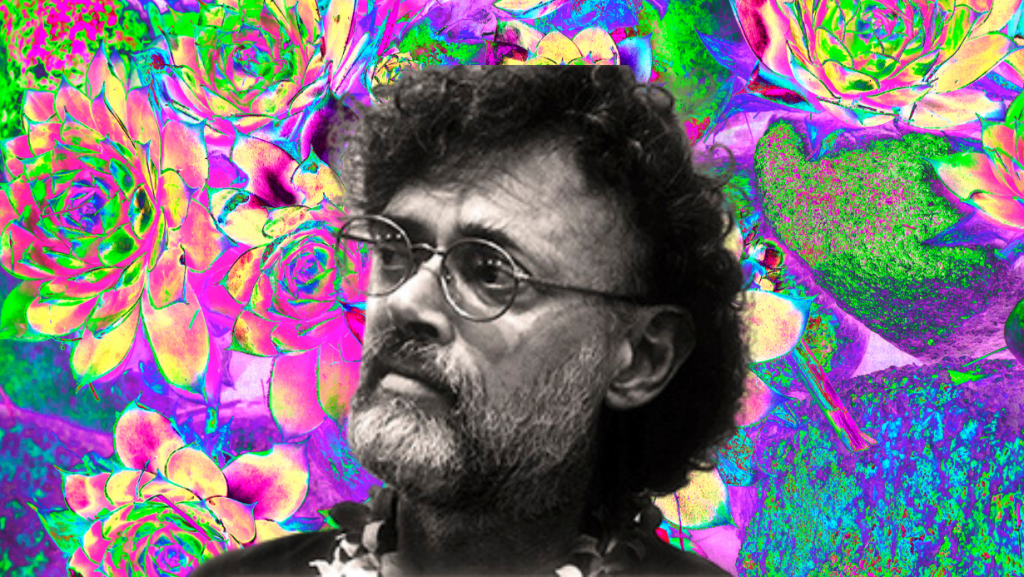
“Nature loves courage.”
McKenna’s belief in the power of courage is central to his philosophy. He posits that taking bold steps and embracing the unknown are essential for personal growth and transformation. According to McKenna:
- Nature’s Support: He suggests that when we act with courage, nature itself supports us, aligning with our inner drive and aspirations. This implies that the universe is more cooperative when we take risks and venture into uncharted territory.
- Personal Growth: Embracing courage means stepping out of our comfort zones and facing challenges head-on. This approach not only fosters personal development but also aligns us with a greater cosmic order.
“The imagination is the golden pathway to everywhere.”
For McKenna, the imagination is not just a faculty of the mind but a crucial tool for exploring consciousness and expanding our reality. Here’s what makes this quote significant:
- Gateway to New Realities: McKenna viewed imagination as a bridge to alternate realities and dimensions. By tapping into our imaginative capabilities, we can explore new possibilities and perspectives that are beyond the ordinary.
- Creative Exploration: This quote underscores the importance of creativity in discovering and shaping our experiences. Imagination allows us to transcend the limitations of conventional thinking and unlock new realms of understanding.

“Culture is not your friend.”
McKenna often criticized modern culture for its role in limiting individual freedom and creativity. This quote highlights his views on culture’s constraints:
- Cultural Limitations: He believed that mainstream culture imposes restrictions on personal growth and self-expression. By conforming to cultural norms, we may stifle our true potential and creativity.
- Encouraging Independence: McKenna’s call to reject cultural conformity encourages us to forge our own paths and create our own values, rather than passively accepting societal expectations.
“You are an explorer, and you represent our species.”
McKenna’s call to view oneself as an explorer reflects his belief in the importance of pushing the boundaries of human understanding. Here’s what this quote signifies:
- Individual Responsibility: He emphasizes that each person has a unique role in advancing human knowledge and consciousness. By exploring new ideas and experiences, we contribute to the collective evolution of our species.
- Adventure of the Mind: McKenna’s view suggests that life is an adventure of the mind, where our explorations can lead to profound insights and discoveries about ourselves and the world.
“The syntactical nature of reality, the real secret of magic, is that the world is made of words.”
McKenna’s idea that language shapes reality highlights the power of words in defining our experiences. This quote reflects his perspective on the role of language:
- Language as Reality: He proposed that our understanding of reality is constructed through language. Words not only describe but also influence our perception of the world.
- Unlocking Possibilities: By recognizing the syntactical nature of reality, we can harness the power of language to create new possibilities and reshape our experiences.

“We have to create culture, don’t watch TV, don’t read magazines, don’t even listen to NPR.”
McKenna’s critique of passive consumption of media reflects his belief in the importance of actively creating one’s own culture. Key points include:
- Active Participation: Instead of passively consuming media, McKenna advocates for actively participating in cultural creation. This involves engaging in activities that foster personal and collective growth.
- Cultural Innovation: By creating our own culture, we can break free from the constraints of mainstream media and develop more meaningful and innovative ways of living and thinking.
“Find the others.”
McKenna’s advice to “find the others” emphasizes the importance of connecting with like-minded individuals. Here’s why this quote is significant:
- Building Communities: He suggests that finding others who share your values and interests can create supportive communities that foster growth and exploration.
- Shared Vision: Connecting with others who are passionate about similar pursuits can amplify individual efforts and contribute to collective advancements in understanding and consciousness.
“The artist’s task is to save the soul of mankind.”
For McKenna, the role of the artist is crucial in guiding humanity through transformative experiences. This quote highlights:
- Art as Transformation: McKenna believed that artists have a unique ability to inspire and elevate human consciousness. Through their work, they can help humanity navigate profound changes and challenges.
- Visionary Impact: The artist’s role involves not just creating beauty but also offering insights and visions that can lead to spiritual and cultural renewal.
“If you don’t have a plan, you become part of somebody else’s plan.”
This quote reflects McKenna’s views on personal agency and the importance of taking control of one’s destiny. Key ideas include:
- Personal Agency: Without a clear plan or vision, individuals risk being influenced by external forces and agendas. McKenna advocates for taking proactive steps to shape one’s own path.
Empowerment: By setting goals and making deliberate choices, individuals can assert control over their lives and avoid being subject to others’ designs.

“Psychedelics are illegal not because a loving government is concerned that you may jump out of a third-story window. Psychedelics are illegal because they dissolve opinion structures and culturally laid down models of behavior and information processing.”
McKenna’s critique of the prohibition of psychedelics highlights their transformative potential:
- Challenge to Norms: He argues that psychedelics are banned not out of concern for safety but because they challenge established norms and structures of society.
- Transformative Power: Psychedelics have the potential to dissolve entrenched beliefs and open new avenues for understanding and personal growth.
“Reality is not what it seems.”
McKenna’s perspective on reality suggests that our perceptions are limited and often distorted. Here’s what this quote means:
- Hidden Layers: McKenna implies that reality has deeper layers that are not immediately apparent. Psychedelics and other explorations can reveal these hidden dimensions.
- Expanded Perception: By questioning the nature of reality, we can expand our understanding and gain insights into the true nature of existence.
Check out this magic mushroom!!

A.P.E Psilocybin Chocolate Bar
$60.00Dried Penis Envy Magic Mushrooms
Price range: $60.00 through $240.00Golden Teacher Gummies for Microdosing
$25.00



“Chaos is what we’ve lost touch with. This is why it is given a bad name. It is feared by the dominant archetype of our world, which is the ego, which clenches because its existence is defined in terms of control.”
McKenna’s views on chaos highlight its role in growth and transformation:
- Embracing Chaos: He argues that chaos is a natural and necessary force for growth, contrary to its negative perception. Embracing chaos can lead to new possibilities and insights.
- Ego and Control: The ego’s desire for control conflicts with the inherent nature of chaos, which challenges conventional structures and encourages transformation.

“We are the inheritors of a million years of striving for the unspeakable.”
This quote reflects McKenna’s view on humanity’s collective journey:
- Historical Striving: McKenna sees humanity as engaged in a long quest for transcendent experiences and understanding. This ongoing pursuit shapes our evolution and potential.
- Transcendent Goals: The idea emphasizes the importance of continuing to strive for deeper truths and experiences, building on the legacy of past endeavors.
“It’s clearly a crisis of two things: of consciousness and conditioning. We have the technological power, the engineering skills to save our planet, to cure disease, to feed the hungry, to end war. But we lack the intellectual vision, the ability to change our minds.”
McKenna’s critique of modern society highlights a gap between technological capability and intellectual vision:
- Consciousness and Conditioning: He identifies a crisis in our ability to address global challenges due to limitations in consciousness and cultural conditioning.
- Call for Change: McKenna’s call emphasizes the need for a shift in thinking and vision to address pressing global issues effectively.
“We have to stop consuming our culture. We have to create culture.”
This quote underscores McKenna’s belief in the importance of cultural creation over passive consumption:
- Active Engagement: He advocates for individuals to actively contribute to cultural development rather than merely consuming existing media and ideas.
- Cultural Innovation: Creating new cultural forms and expressions can lead to more meaningful and progressive societal change.
“We are on the brink of making ourselves unrecognizable to ourselves as a species.”
McKenna’s thoughts on rapid societal and technological changes highlight concerns about the future:
- Transformative Change: He suggests that humanity is undergoing changes so profound that we may become unrecognizable in terms of our identity and experience.
- Future Challenges: This perspective invites reflection on how we navigate these changes and what it means for our future as a species.
“The way you stretch the envelope of culture is by creating art.”
McKenna’s view on art as a force for cultural transformation emphasizes its role in pushing boundaries:
- Artistic Impact: He sees art as a revolutionary force that challenges and expands cultural norms and perceptions.
- Cultural Evolution: By creating art, individuals contribute to the evolution of culture and explore new dimensions of human experience.
“Half the time you think your thinking, you’re actually listening.”
This quote reflects McKenna’s views on self-awareness and external influences:
- Influence of Ideas: He suggests that our thoughts are often shaped by external ideas and influences, highlighting the need for greater self-awareness.
- Active Listening: Recognizing the impact of external ideas can lead to more conscious and authentic thinking.

“The cost of sanity in this society is a certain level of alienation.”
McKenna’s commentary on alienation underscores the challenges faced by those who see beyond conventional norms:
- Alienation Experience: He argues that those who question or deviate from societal norms often experience a sense of alienation.
- Sanity and Norms: This perspective highlights the tension between societal expectations and personal authenticity.
“We must overcome the notion that we must be regular. It robs you of the chance to be extraordinary and leads you to the mediocre.”
McKenna’s encouragement to embrace individuality challenges societal expectations:
- Breaking Conformity: He advocates for rejecting conventional norms in favor of pursuing extraordinary and unique paths.
- Embracing Uniqueness: Embracing individuality can lead to a more fulfilling and authentic life.
“The apocalypse is not something which is coming. The apocalypse has arrived in major portions of the planet, and it is only because we live within a bubble of incredible privilege and social insulation that we still have the luxury of anticipating the apocalypse.”
McKenna’s view on global crises highlights ongoing challenges:
- Current Crises: He suggests that the world is already experiencing apocalyptic conditions in many areas, despite our relative insulation from these realities.
- Need for Awareness: This perspective calls for greater awareness and action to address global challenges.
“What we call reality is, in fact, nothing more than a culturally sanctioned and linguistically reinforced hallucination.”
McKenna’s provocative take on reality challenges conventional perceptions:
- Constructed Reality: He argues that our understanding of reality is shaped by cultural and linguistic constructs, rather than objective truth.
- Questioning Perceptions: This quote invites us to question and explore the nature of our perceived reality.
“Life lived in the absence of the psychedelic experience is life trivialized, life denied, life enslaved to the ego.”
McKenna’s belief in the transformative power of psychedelics emphasizes their role in liberating the mind:
- Psychedelic Liberation: He argues that psychedelics offer a means of transcending ego constraints and experiencing deeper dimensions of existence.
- Enhanced Experience: Embracing psychedelic experiences can lead to a more profound and liberated understanding of life.
“This is what the psychedelic experience is all about: to transcend, to redeem, to resurrect, to explore the soul, and to enter into the cosmic arena.”
McKenna’s description of the psychedelic experience highlights its spiritual and transformative aspects:
- Transcendence and Exploration: He views psychedelics as tools for exploring the soul and engaging with the broader cosmic reality.
- Spiritual Growth: The psychedelic experience offers opportunities for profound spiritual growth and insight.
“If the words ‘life, liberty, and the pursuit of happiness’ don’t include the right to experiment with your own consciousness, then the Declaration of Independence isn’t worth the hemp it was written on.”
McKenna’s advocacy for the right to explore consciousness links to broader themes of freedom:
- Fundamental Rights: He argues that the right to explore and experiment with consciousness is essential to personal freedom and autonomy.
- Link to Independence: This quote connects the exploration of consciousness to fundamental human rights and freedoms.
Conclusion
Terence McKenna’s quotes offer a rich tapestry of insights into consciousness, culture, and personal growth. His wisdom challenges us to rethink our perceptions, embrace creativity, and actively participate in shaping our own realities. Reflecting on McKenna’s ideas can inspire profound shifts in how we understand ourselves and the world around us. By exploring these quotes, we can gain new perspectives and consider how to apply McKenna’s visionary wisdom to our own lives and journeys of exploration.

- Should You Be Able To Patent A Mystical Experience? - 02/21/2026
- The Shadow Side Of The Psychedelic Industry - 02/19/2026
- Will Psychedelics Repeat Cannabis’ Biggest Mistake? - 02/18/2026
