Music Taste Change After Psychedelics: Why It Happens
By Lily Pelenis / November 20, 2026 / 8 min read
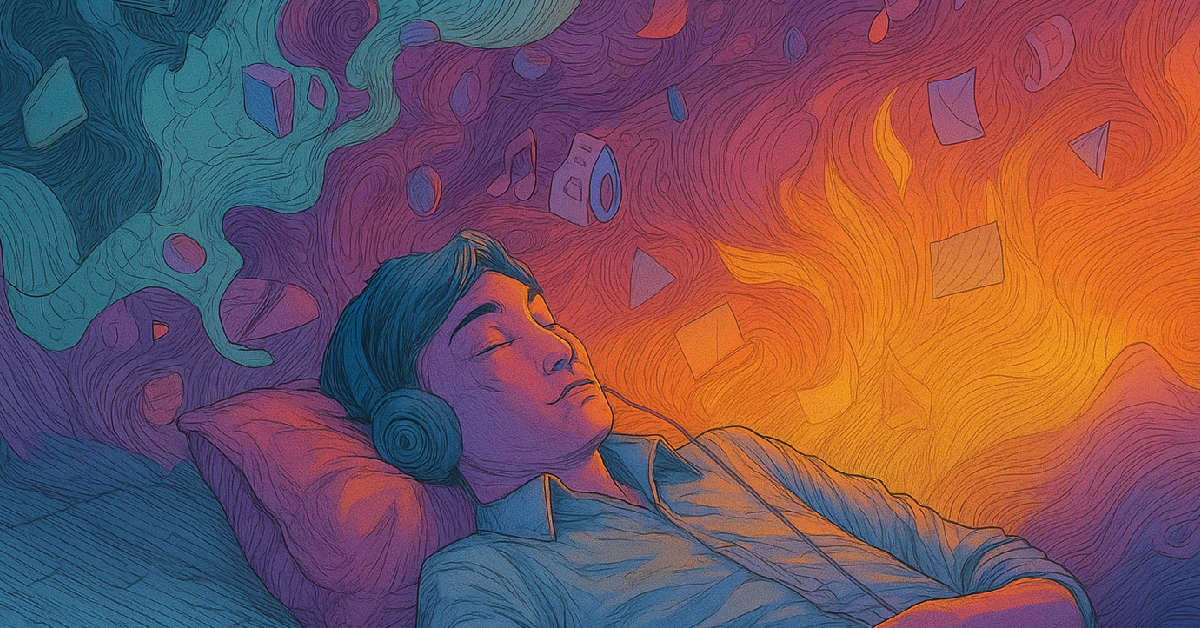
“Went from Drake to being a Deadhead,” one commenter on Reddit’s r/LSD wrote, calling it one of the best things that ever happened to him. A music taste change after psychedelics is one of the most common stories in the community, and it is not just talk: in the Canadian Psychedelic Survey, 52% of people who answered said psychedelics had changed their relationship to music. What no study has done yet is measure someone’s favourite genres before a trip and again after, so the why is still a set of good guesses.
I find that gap more interesting than a tidy answer, so this piece lays out what people report, what the research measures and the three best explanations.
TLDR
Most people describe their taste opening up, not flipping. They add jazz, psychedelic rock, ambient or classical rather than dropping what they loved. Lab studies show psychedelics make music feel more emotional during the trip, and one small study found people felt more from music after psilocybin therapy.
Three ideas could explain lasting change: you heard music differently, you let go of rules about what you are supposed to like, or you joined a scene with its own playlist. None has been tested. The practical lesson from Canadian survey data is simple: pick your own music, before you dose.
Quick facts
- 52%
- said a trip changed how they relate to music
- 92%
- of psilocybin users want music for at least part of a trip
- 10%
- agreed trip music should be unfamiliar
- Over 1 year
- openness stayed higher after a mystical session
Who this article is for
- A trip left you suddenly loving a genre you used to skip, and you want to know why.
- Your favourite albums sounded brand new on mushrooms and you wonder if that will last.
- You are building a playlist for your next trip and want to know what experienced people prefer.
- You like the science of music and the mind.
Lily Pelenis
Author’s note
This piece began as a letter to our newsletter readers in September 2026. Everyone writes the “best music to trip to” article. I wanted the question people ask afterwards: why did one night move me into a new genre for good? I spent a week reading community threads and published research side by side.
I am a Toronto-based lifestyle coach and yoga instructor, and I have worked with psilocybin for over a decade. Music has always been part of my setting, and I care about what we carry out of a trip, so this question sits close to home.
Does music taste change after psychedelics?
For many people it seems to, but the change people describe is usually expansion, not replacement. “My taste didn’t change, it just opened up” is close to the typical report.
What people report
Read enough threads and a pattern shows up. The direction is almost always the same: into jazz, psychedelic rock, ambient, classical, instrumental music from other cultures, psytrance and jam bands. In everything I read, I found only two accounts going the other way.
People also describe what changed in sensory terms. Nobody says “I decided I liked jazz.” They say they felt lost in the textures, that they were not just listening but feeling it. And the conversation lives mostly in LSD threads; I found very little about lasting taste change in mushroom communities.
What a Canadian survey found
The best numbers come from a team in Montreal. In the Canadian Psychedelic Survey, Gloeckler and colleagues (2024) asked people who use psychedelics outside clinics about music. Of 1,668 who answered, 52% agreed that psychedelic experiences had changed their relationship to music, and 31% were neutral.
That is a broad question. A changed relationship could mean new genres, deeper listening or simply caring more. It still tells us the effect is common, not a few loud stories.
What does research say about music and psychedelics?
Research shows psychedelics make music feel stronger in the moment, and it has hints about the weeks after. It does not measure taste.
During the trip
At Imperial College London, Kaelen and colleagues (2015) played instrumental tracks to 10 volunteers on a placebo day and an LSD day. On LSD, people felt more, especially wonder, transcendence, power and tenderness. A follow-up brain scan study of 12 volunteers, Kaelen and colleagues (2016), linked music on LSD to vivid closed-eye imagery.
After the trip
The closest anyone has come to the real question is Shukuroglou and colleagues (2023). Nineteen people with treatment-resistant depression rated music before psilocybin therapy and the day after their second dose. Music moved them more afterwards, and the change tracked a drop in anhedonia, the loss of pleasure. If music has gone flat for you, read my piece on when music does not do it for you on mushrooms.
Notice what that study measured: how much people felt, not which music they chose.
| Study | People | What it measured | Measured taste? |
|---|---|---|---|
| Kaelen et al., 2015 | 10 volunteers, LSD | Emotion from music during the drug | No |
| Kaelen et al., 2016 | 12 volunteers, LSD | Music and closed-eye imagery, brain scans | No |
| Shukuroglou et al., 2023 | 19 patients, psilocybin | Emotion from music before and after therapy | No |
| Gloeckler et al., 2024 | 1,668 survey answers | Whether trips changed how people relate to music | Indirectly |
No published study has measured someone’s favourite genres before a psychedelic experience and again after it.
Why would a trip change what you listen to?
There are three likely stories, and each is plausible: a change in how you hear, a change in who you think you are, and a change in who you spend time with. None has been tested.
The ears
You may have picked out structure you never noticed: the improvising, the layers, the space between notes. Once heard, it is hard to unhear. This is the version people describe most, but nobody has tested whether the change in perception outlasts the night.
The ego
The community’s favourite explanation is sharp. One person wrote that it was almost like their ego had been keeping them from enjoying pop music. They did not suddenly love all of it, but the old idea that it sucked was gone. In this story nothing changed in the ears. What dropped away was a rule about what someone like you is allowed to like.
Everyone else
People rarely convert to a random genre. They convert to the psychedelic canon: Pink Floyd, the Grateful Dead, Tame Impala, Shpongle, jazz. That is a scene with a well-known playlist, and joining a community usually means taking on its music. My list of the best psychedelic albums shows how strong that canon is.
Some people say it never happened to them. Others admit they cannot tell whether it was tripping or getting older. That second point matters: a study of more than a quarter of a million people, Bonneville-Roussy and colleagues (2013), found tastes shift with age anyway, with intense styles fading and what the authors call sophisticated styles rising.
Lily’s take
The version I like best is the least mystical one. You did not get new ears. You spent a few hours without the part of you that decides in advance what kind of person you are, and some people never fully put that part back.
Is openness to experience the missing link?
It is the best guess, but it is weaker than it sounds. The theory joins two real findings that nobody has tested together.
The two halves of the theory
First, at Johns Hopkins, MacLean, Johnson and Griffiths (2011) found that openness, the personality trait linked to imagination and love of new ideas, rose after a high-dose psilocybin session. In people who had a mystical experience, it stayed higher more than a year later.
Second, research on music preference going back to Rentfrow and Gosling’s 2003 study of more than 3,500 people links openness with liking “reflective and complex” music: classical, jazz, blues and folk. Those are exactly the genres people say they moved into.
Why it is not settled
A 2024 review by Solaja and colleagues pooled 10 controlled studies with 304 people. For most measures of personality, thinking and emotion, it found no clear lasting effect. So the openness link is a hypothesis built from separate studies, not a finding.
In a 2024 review of 10 controlled studies, most lasting effects of psychedelics on personality were not significant.
How should you choose music for a mushroom trip?
Choose it yourself, while sober, and let it include songs you love. The old clinical rule of unfamiliar classical music without lyrics has little support from people who trip outside a clinic.
What experienced people prefer
In the Canadian survey, only 10% agreed trip music should be unfamiliar and only 22% agreed it should have no lyrics you can understand. Of 1,550 people who had used psilocybin, 56.5% preferred a mix of music and silence, 35.9% preferred music throughout and 5.1% preferred none.
Even in the clinic the default wobbles. In a small Johns Hopkins trial, Strickland, Garcia-Romeu and Johnson (2021) let 10 people try Western classical and overtone-based music, then choose for a third session. Six chose the overtone music.
Setting up your own soundtrack
No strain will change your taste, and anyone who tells you one is “the musical one” is guessing. What product pages describe is how a trip can feel. People who try Dried Golden Teacher report changes to how the world looks and sounds, and the Albino Penis Envy Magic Mushrooms page describes sounds that seem to play along with what you see. APE is among the strongest strains we sell, so save it for when you know your dose; start with our dosing guide.
For playlist ideas, see my best music for mushrooms and my take on whether music is a guide or a distraction. Tripping as a group? Agree on the music first; my guide to tripping with friends explains why. And if you keep replaying what a trip meant, including for your playlists, my piece on overthinking after a trip may help.
Try this
- Queue it soberBuild the playlist the day before, so no algorithm picks for you at hour two.
- Mix in favouritesAdd albums you already love; they can sound brand new.
- Plan quiet stretchesLeave room for silence, which most psilocybin users like for part of a trip.
- Write down what moved youNote the tracks that hit hardest, then play them again sober a week later.
FAQ
Why is my music taste changing?
Taste shifts with age, personality, the people around you and new experiences. A large study found preferences move steadily from adolescence through middle age. If the change followed a trip, it may be how you heard music, what you allow yourself to like, or the community you joined.
Does your music taste change as you get older?
Yes. In data from more than a quarter of a million people, interest in intense and contemporary styles fell with age while liking for styles the researchers call sophisticated rose. Music also tends to matter a little less as people age, though adults still value it.
What affects your music taste?
Personality plays a part: people high in openness tend to like reflective and complex music such as classical, jazz, blues and folk. Age, culture, friends and memorable experiences shape taste too.
Why am I not enjoying music anymore?
Losing pleasure in music can be part of anhedonia, a common sign of depression, and it is worth raising with a doctor if it lasts. In one small study of people with hard-to-treat depression, music moved them more after psilocybin therapy, alongside a drop in anhedonia.
Find your strain, then your dose
Every product on the shelf shows its potency rating and the effects people report. The dosing guide walks through amounts before you order, and a real person answers if you write to us.
About the author
Lily Pelenis
I'm a Toronto-based lifestyle coach, psilocybin enthusiast and certified yoga instructor. I guide people toward mindful, balanced living, and my coaching blends modern wellness practices with ancient wisdom to help clients find deeper self-awareness, resilience and joy.
I've been experimenting with shrooms for over a decade, and I write about my own experience. I love nature, psychology and humans. That is why my articles tend to follow a trip past its peak and into the weeks after it.
Some pieces start with a strain I have tried myself, such as Golden Teacher or Albino Roller Coaster. Others are the practical ones, like how much to take the first time or how to brew a tea that sits easier on the stomach. Over the years I've learned that intention is everything, so I write about why you are taking it before I get to how.
Related articles


50% off your first order
New strains, restocks, sales and new writing from the Notebook, by email. No spam, unsubscribe any time.