
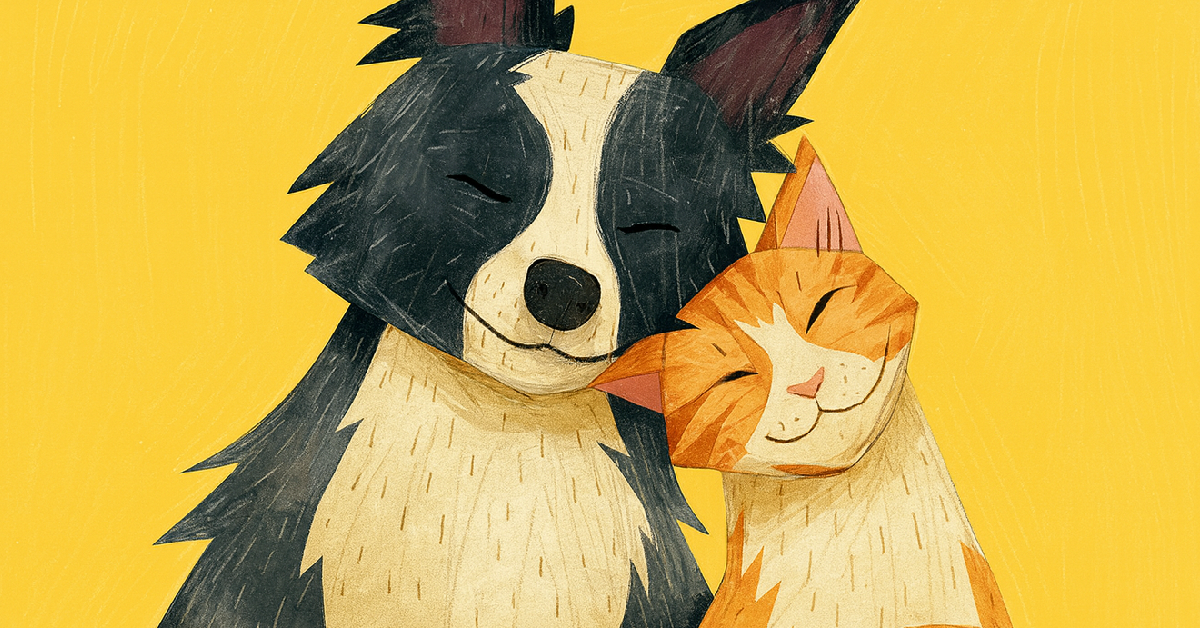
Does My Dog Know I Am Tripping? What Pets Really Notice
By Lily Pelenis / November 20, 2026 / 9 min read
About ninety minutes in, the cat sits down a few feet away, folds its paws and starts watching you with a look that feels almost clinical. Sooner or later you hear yourself ask it out loud: “Do you know?” Does my dog know I am tripping, or my cat? Not in the way you mean: your pet has no idea what psilocybin is. But it can notice that you look, move, sound and maybe even smell different, and research shows dogs can pick up on human stress through scent alone.
That is the fun part. The serious part is that magic mushrooms are toxic to dogs and cats, so where you keep them matters more than what your pet thinks of your evening.
TLDR
Your pet cannot know you took mushrooms. It can see your wider pupils, hear your voice change and read your body, and dogs can tell stressed human breath and sweat from calm samples. In one study, four trained dogs picked the stress sample 93.75% of the time across 720 trials.
Cats notice changes too, but the cat research is thin. What is well documented is the risk: veterinary poison experts report pets eating their owner’s mushrooms, with signs like stumbling, crying out, a racing heart and overheating.
Store everything locked away before you dose, let your pet leave the room, and if your pet eats anything, call a vet or Pet Poison Helpline at (855) 764-7661, which serves Canada.
Quick facts
- 93.75%
- dogs that found the stressed sample
- 4 dogs
- the size of that study
- 30 to 180 min
- when signs start in a poisoned pet
- 855-764-7661
- Pet Poison Helpline, open in Canada
Who this article is for
- Your cat stared at you for an hour during your last trip and you want to know what it was seeing.
- Your dog gets clingy, restless or upset when you take mushrooms, and you want to make the night easier on it.
- You share your home with a pet and want a simple storage plan.
- You are worried your dog got into something and need the warning signs fast.

Lily Pelenis
Author’s note
This piece began as a letter to our newsletter readers in September 2026. It is one of the questions I see most often in the psychedelic community, and the answer turned out to be more interesting than yes or no.
I am a Toronto-based lifestyle coach and yoga instructor, and I have worked with psilocybin for over a decade. I care a lot about setting, and for many of us the setting includes a dog on the couch or a cat on the windowsill. They deserve a plan too.
Does my dog know I am tripping?
No, your dog does not know you are tripping, but it does know something about you has changed. Dogs read people closely, and a mushroom trip shifts several of the signals they watch.
What your pet can see
Start with your eyes. In a careful study of 28 healthy adults, Holze and colleagues (2022) found that psilocybin made pupils larger at both 15 mg and 30 mg. The higher dose also weakened the normal way pupils shrink in bright light. Psilocybin raised blood pressure and body temperature as well.
Dogs pay attention to faces. A study in Biology Letters (Albuquerque et al., 2016) showed dogs a happy or angry human face while playing a happy or angry voice. The dogs looked longer at the face that matched the voice, which means they put sight and sound together to read emotion.
What your pet can hear and feel
Then there is everything else: how fast you cross the room, how long you sit still, where your hands go, how your voice sounds. My guess is that this is the biggest signal of all, because your pet has years of practice reading you. No study has tested this during a trip, so take it as my observation, not a finding.
You are a pattern your animal knows very well. On a mushroom night, the pattern is off, and your pet notices.
Can dogs smell when you are stressed?
Yes, early research says dogs can smell the difference between a calm person and a stressed one. This is the part that surprises most people, because it means your dog may read your state through its nose, not just its eyes.
The breath and sweat study
At Queen’s University Belfast, Wilson and colleagues (2022) took breath and sweat samples from 36 people, once at rest and once after a hard mental math task. Trained dogs were then asked to pick the stress sample from the same person’s calm sample and a blank.
The dogs chose right in 93.75% of 720 trials. The catch is that only four dogs took part, so this is promising, not settled. The dogs were not naming the person. They were naming the state.
In one study, trained dogs told a person’s stressed breath and sweat from their calm sample 93.75% of the time.
When your mood rubs off on your dog
Smell can do more than inform a dog. In a study of Labradors and Golden Retrievers by D’Aniello and colleagues (2018), dogs exposed to sweat from frightened people showed more stress behaviours, and their heart rates were higher than in the happy or no-odour groups.
A 2024 study from the University of Bristol, Parr-Cortes and colleagues, tested 18 dogs. With the smell of stressed strangers in the room, the dogs were more cautious about an unclear choice, which the authors read as a more pessimistic mood. So your state may not just get noticed. It may spread.
| Study | Animals | What it found |
|---|---|---|
| Wilson et al., 2022 | 4 dogs, 720 trials | Picked the stressed sample 93.75% of the time |
| D’Aniello et al., 2018 | Labradors and Golden Retrievers | Fear sweat raised stress behaviour and heart rate |
| Parr-Cortes et al., 2024 | 18 dogs | Stress smell made dogs more cautious |
| Saito and Shinozuka, 2013 | 20 cats | Knew their owner’s voice but mostly just turned an ear |
| d’Ingeo et al., 2023 | Pet cats at home | Fear odour caused more stress than neutral odour |
Does my cat know when I am high?
Your cat almost certainly notices that you are different, but nobody has tested whether it can smell your stress the way dogs can. The cat research is small, mostly single studies with a few dozen animals.
Cats know your voice, then do nothing about it
In a Japanese study of 20 cats, Saito and Shinozuka (2013) played recordings of strangers and then the owner calling the cat’s name. Most cats reacted more to their owner’s voice. But they reacted by moving an ear or turning the head, not by meowing or walking over. They registered you, and then stayed put.
Cats and the smell of fear
An Italian team, d’Ingeo and colleagues (2023), gave pet cats human odours collected during fear, happiness, physical stress and calm. The fear odour caused more stress behaviour than the physical stress or neutral odours. Cats also leaned on the right nostril more as their stress rose.
So that long, unblinking stare is real attention. Anyone who tells you your cat knows you are tripping is guessing past the evidence.
Lily’s take
I do not assume my dog is enjoying the night as much as I am. If a pet seems anxious around you, the kindest thing is to give it space and a familiar spot to go to, not more attention.
How do you keep your pet calm and safe while you trip?
Sort the storage before you dose, keep the dose modest, and make sure your pet can leave the room. Most of the work happens before the night starts.
Some dogs get upset, and that is worth respecting
In online trip communities, people share stories that go both ways. Some say their dog curls up beside them for hours. Others describe a dog that whines, shakes and herds them back onto the couch every time they stand. That second dog is not having fun. It is reading something it does not understand as a problem.
My rule is to leave a door open. An animal that can walk into another room usually does not need to. One that is shut in with you has no choice but to deal with it. If you trip with friends, ask the sober buddy to keep an eye on the pets too; my guide to tripping with friends covers that role.
Store everything before you dose
Height is not storage. Cats climb and dogs dig through bags. A closed cupboard or a lockable box works better than a high shelf. Chocolate and gummies need extra care, because dogs like the taste. The ASPCA notes that dogs are more likely than cats to eat a whole chocolate bar, and chocolate made up 13.6% of the exposures its poison centre handled in 2024.
If you keep a Golden Teacher Chocolate Bar at home, treat its spot like a medicine cabinet. For more ideas, read my guide to safe storage for psychedelic homes and my piece on storing gummies and chocolate.
Know exactly what you have
If something does go missing, a vet will want to know what it was and how much. A measured format makes that easy. Each Golden Teacher Microdosing Capsule holds 125 mg, so you can count what is left. For a full trip, Dried Golden Teacher is the strain I suggest for learning your own dose; weigh it with our dosing guide and put the rest away before you start.
Try this
- Lock it up firstPut every mushroom, chocolate and gummy in a closed cupboard or box before you dose.
- Keep the packagingLeave labels on, so you can tell a vet exactly what a pet got into.
- Leave a door openGive your pet a quiet room with its bed and water that it can reach on its own.
- Save the numberPut Pet Poison Helpline, (855) 764-7661, and your vet in your phone.
- Brief your sitterAsk the sober person to watch the pets and the snack table.
What happens if a dog eats magic mushrooms?
A dog that eats magic mushrooms can become wobbly, agitated, noisy and overheated, and it needs a vet right away. Most pets recover with care, but it is an emergency, not something to wait out.
Signs to watch for
According to ASPCA Poison Control, signs reported in dogs include crying out, wide pupils, stumbling, a fast heart rate, confusion, overheating and anxiety. Tremors and seizures are rare. The ASPCA adds that these cases happen more often inside the house, because the pet found its owner’s supply.
A 2024 review in Today’s Veterinary Practice by ASPCA toxicologist Tina Wismer says signs start 30 to 180 minutes after eating and last 6 to 24 hours. Dogs tend to vocalize, while cats may stare off into space. Large amounts can cause serotonin syndrome, the minimum toxic dose in pets is unknown, and death has rarely occurred.
What to do right away
Call your vet or Pet Poison Helpline, a 24-hour animal poison service that covers the United States and Canada. Wherever you live, from Hamilton to the coast, the number is (855) 764-7661.
Do not try to make your pet vomit first. The helpline’s own advice is to call before giving any treatment, to have the packaging in front of you, and to bring it to the vet. I walk through the rest in so your dog found your stash.
Veterinary poison experts say psilocybin cases in pets usually start with the owner’s own supply.
Never give a pet mushrooms on purpose to share the night. If you are curious why people tell stories about animals seeking altered states, I look at the evidence in do animals get high.
FAQ
Can dogs sense if you’re on drugs?
Dogs cannot identify a drug, but they can sense changes it causes in you. They read faces and voices together, and a small study found trained dogs could smell the difference between a person’s stressed and calm breath and sweat.
Can magic mushrooms be toxic to dogs?
Yes. ASPCA Poison Control reports dogs with stumbling, crying out, a fast heart rate, overheating and anxiety after eating psilocybin mushrooms. Large amounts can cause serotonin syndrome. Call a vet or Pet Poison Helpline right away.
How quickly do dogs get sick from mushrooms?
With psilocybin mushrooms, signs usually start 30 to 180 minutes after eating and can last 6 to 24 hours, according to a veterinary review. Other wild mushrooms work differently, and some take up to 24 hours to show signs, so treat any mushroom as urgent.
How do dogs react when they are high?
A dog that ate magic mushrooms may cry or bark, stumble, look confused, pant from overheating or seem anxious. Its pupils may be wide and its heart fast. It is not a fun state for a dog, and it needs a vet.
Find your strain, then your dose
Every product on the shelf shows its potency rating and the effects people report. The dosing guide walks through amounts before you order, and a real person answers if you write to us.

About the author
Lily Pelenis
I'm a Toronto-based lifestyle coach, psilocybin enthusiast and certified yoga instructor. I guide people toward mindful, balanced living, and my coaching blends modern wellness practices with ancient wisdom to help clients find deeper self-awareness, resilience and joy.
I've been experimenting with shrooms for over a decade, and I write about my own experience. I love nature, psychology and humans. That is why my articles tend to follow a trip past its peak and into the weeks after it.
Some pieces start with a strain I have tried myself, such as Golden Teacher or Albino Roller Coaster. Others are the practical ones, like how much to take the first time or how to brew a tea that sits easier on the stomach. Over the years I've learned that intention is everything, so I write about why you are taking it before I get to how.
Related articles





50% off your first order
New strains, restocks, sales and new writing from the Notebook, by email. No spam, unsubscribe any time.