There was a time I used to think I was just “anxious.” That was the polite word I used for it. But the truth was, I was terrified of my own mind. The constant looping thoughts, the racing heart for no reason, the endless replaying of every awkward moment I’d ever had — it was exhausting. It’s like being stuck in an echo chamber where the walls whisper your insecurities back to you. You keep trying to drown them out with noise — music, work, caffeine, scrolling — but the silence always finds you again.
Back then, I couldn’t sit still for more than a few minutes without feeling like my brain was turning on me. Every quiet moment became an interrogation: Why aren’t you doing more? Why aren’t you enough yet? The more I tried to outrun those questions, the louder they got. I went to therapy, downloaded meditation apps, even signed up for yoga classes that I ghosted after two sessions. Nothing stuck. Nothing softened that constant hum of inner tension that followed me everywhere I went.
I remember one night, sitting in my small apartment in Toronto, lights off, phone face down, just staring at the ceiling. I’d spent the whole day trying to act normal — replying to work emails, chatting with friends — but inside, it felt like I was suffocating. It wasn’t sadness or anger. It was something deeper — like my mind had become this place I didn’t trust anymore. That’s when a friend mentioned magic mushrooms Canada style — psilocybin — not as a party drug, but as a tool for self-understanding. She told me about how psilocybin therapy was starting to take off in psilocybin Toronto circles, how people were finding a sense of peace they hadn’t felt in years.
I wasn’t convinced. Honestly, I thought it sounded like a last resort for people who’d tried everything else — which, at that point, was starting to sound a lot like me. I didn’t want to hallucinate or see colours dancing on walls. I wanted to breathe again. I wanted to stop fearing the sound of my own thoughts.
So, on a rainy Saturday, after weeks of talking myself in and out of it, I finally decided to try. My friend — someone I trusted deeply — agreed to sit with me. We kept it small: a modest dose, brewed into tea, nothing wild. I told her, half-laughing, half-terrified, “If I start losing it, just remind me who I am.” But deep down, I already knew — that was exactly the point.
I didn’t take mushrooms to escape reality. I took them because reality had started to feel like quicksand — the more I struggled, the deeper I sank. And in that moment, I realized something simple but terrifying: maybe the only way out was in.
🍄Check out my guide on why magic mushrooms can make you cry and how those tears might actually be part of your emotional healing and release.

The Room, the Music, and the Moment I Realized Control Was the First Illusion to Go
The setting was simple: my living room in Toronto, curtains drawn, a playlist of ambient guitar humming softly. My friend brewed tea, the kind that smells like soil and old stories. The air felt still, like the world was holding its breath with me. I remember the first 20 minutes — how nothing seemed to happen, how I wondered if I’d done something wrong. Then the edges began to blur.
The walls didn’t melt or dance, like the movies promise. Instead, everything got closer. My thoughts, my heartbeat, even the weight of my body against the rug — it all became amplified. I tried to control it, to guide the experience toward calm. I told myself to think positively, to “flow.” But that only made it worse. The more I tried to curate the trip, the more resistance I met. My body trembled with a quiet panic that didn’t have words.
That’s when my sitter — bless her — whispered, “You don’t need to steer it. Just let it take you.” Those words landed like a key in a lock I didn’t know existed. I exhaled for the first time in what felt like years.
The mushrooms, I realized, weren’t asking me to escape. They were asking me to surrender. Not in defeat, but in trust. The control I’d clung to my entire life — the constant managing of emotions, outcomes, and impressions — dissolved like mist. What replaced it wasn’t chaos, but honesty.
I’d read somewhere that psilocybin loosens the Default Mode Network — the part of the brain that keeps your sense of self stitched together. As that stitching loosened, what emerged wasn’t madness. It was space.
When the Mind Turns on Itself and Everything You’ve Avoided Comes Knocking
The fear came in waves — not cinematic horror, but deep, aching vulnerability. I saw memories I thought I’d buried: a fight with my mother when I was sixteen, the look of disappointment in a friend’s eyes, the echo of my own self-criticism looping like a bad song. I cried, not because I was sad, but because I finally felt the sadness I’d been dodging.
At one point, I remember whispering, “Make it stop.” My sitter squeezed my hand and said, “What if it’s not trying to hurt you?” That line — so small, so human — became the hinge that turned the entire experience.
The fear wasn’t the enemy. It was information. It was my body saying, “This is where it hurts.”
Somewhere between the tears and the trembling, I began to see how much energy I’d spent fighting myself. Every anxious loop, every perfectionist impulse, was a misplaced survival instinct — my mind’s desperate attempt to protect me from feeling unsafe. But in doing so, it had made my inner world a battleground.
Later, when I learned more about psychedelic integration therapy, I found language for what I’d felt: the Default Mode Network quiets, the brain’s usual boundaries dissolve, and repressed emotions rise to the surface, demanding acknowledgment. But in that moment, it wasn’t science. It was surrender — and, for the first time, compassion.
🍄Check out my guide on sacred geometry to explore the hidden patterns of the universe and understand how they connect everything from nature to consciousness
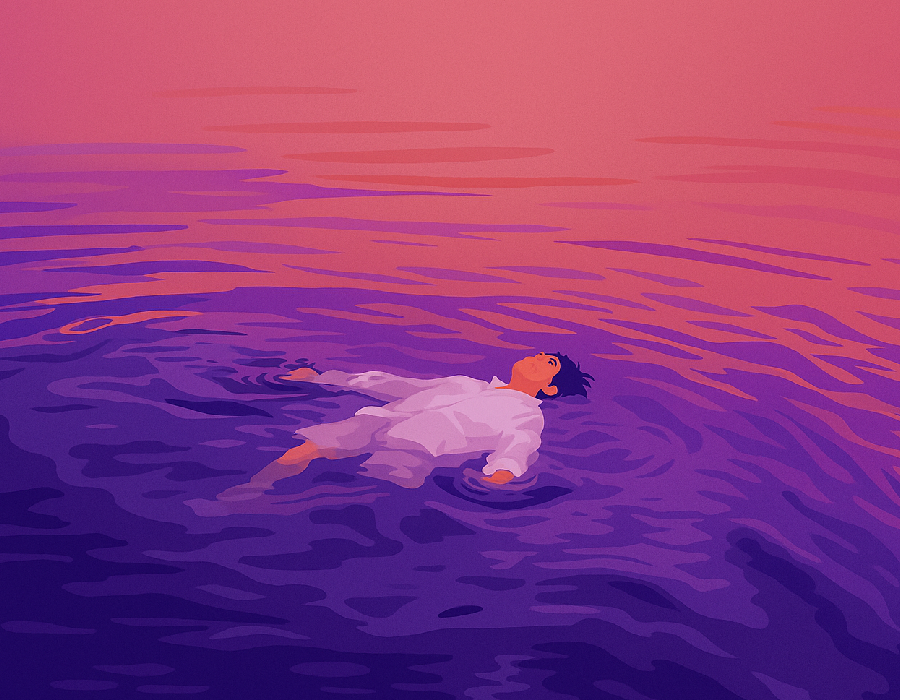
The Moment I Finally Met Myself — and Didn’t Look Away
There was no grand vision, no cosmic geometry, no voice from the sky. What I saw was simple: a child version of myself, sitting cross-legged, eyes wide and trembling. And she wasn’t asking for enlightenment — she was asking to be seen.
“It wasn’t God or geometry that saved me,” I later wrote in my journal. “It was the moment I looked at my own thoughts and didn’t flinch.”
That moment — fragile and clear — was the beginning of self-trust. I realized that every time I ran from discomfort, I reinforced the belief that I wasn’t strong enough to face it. But sitting there, breathing, with tears streaming down my face, I learned otherwise. I could hold fear without being consumed by it. I could meet sadness without collapsing. I could love myself without conditions.
That’s what psilocybin taught me — not to erase fear, but to sit inside it until it turned into understanding.
When I finally opened my eyes, everything was still. My friend smiled softly. The room hadn’t changed, but I had. It felt like returning home — not to a place, but to myself.
Learning to Live with My Mind — Not Against It
Integration came slowly, like the morning after a long storm. I started journaling every day, not about goals or gratitude lists, but about what hurt. Therapy helped me weave the insights into something sustainable. Walks became meditations. Rest stopped feeling like weakness.
I even started microdosing Magic Mush style — low, intentional doses that helped me stay connected to the same awareness without plunging back into the deep end. It wasn’t about chasing the trip; it was about honouring the lesson.
Over the following months, the panic attacks that once defined my days softened. My relationships deepened because I wasn’t constantly editing myself for approval. I could finally sit in silence without fear of what might surface.
And maybe that’s the quiet miracle of mushrooms: they don’t change who you are — they remind you that you’re already whole.
In the broader mental health landscape, this is the conversation that’s slowly emerging: not about escaping discomfort, but learning to befriend it. Psilocybin therapy and psilocybin research are now part of a growing wave of studies reframing how we understand trauma and self-regulation. Burnout, anxiety, depression — they’re not personal failures, but messages from a nervous system craving gentleness.
Check out this magic mushroom!!

A.P.E Psilocybin Chocolate Bar
$60.00Dried Penis Envy Magic Mushrooms
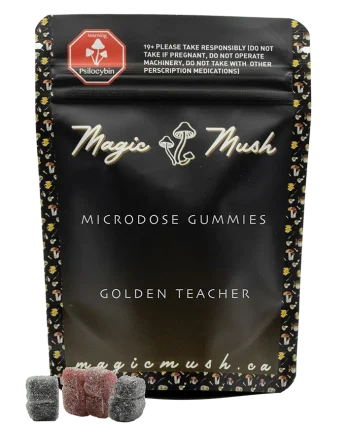
Price range: $60.00 through $240.00Golden Teacher Gummies for Microdosing
$25.00


Why We’re All So Scared of Our Own Minds — and What Psychedelics Are Teaching Us About Coming Home
It’s not just me. Most of us are scared to be alone with ourselves. The constant notifications, the noise, the need to stay busy — they keep us from hearing the quiet truths underneath. Capitalism thrives on distraction. Silence, on the other hand, demands honesty.
A Toronto-based psilocybin facilitator I later interviewed put it perfectly: “Psychedelics don’t delete pain; they dissolve the distance between you and it.” That’s what makes them terrifying — and transformative.
Across dried magic mushrooms communities, this theme keeps resurfacing. People aren’t chasing bliss. They’re searching for safety within their own heads. And maybe that’s what healing actually is — not escaping the storm, but learning to sit through the rain without needing to run.
So, What Did the Mushrooms Really Teach Me About Fear, Healing, and Being Human?
When I think back to that night, it’s not the visuals or the intensity I remember most. It’s the stillness afterward — the sense that my mind, for the first time in years, wasn’t something to survive but something to explore.
The mushrooms didn’t fix me. They didn’t erase my anxiety or rewrite my past. They just handed me a mirror and whispered, “You can stop fighting now.” And that changed everything.
Among the Magic Mush community, this theme surfaces again and again — not chasing bliss, but learning to feel safe inside your own head.
Now, when fear shows up, I don’t treat it like a trespasser. I offer it tea. I ask what it’s trying to say.
🍄Check out my guide on how to live in the present and learn simple, mindful practices to quiet your thoughts, reduce stress, and truly experience life as it unfolds
Why We at Magic Mush Canada Believe That’s Where Real Healing Begins
When I think back to that journey now, it feels like looking at an old photograph — one where you can still feel the air, the temperature, the heartbeat of the moment. It’s strange how something so small, so organic, could hold up a mirror so clear. The mushrooms didn’t erase my anxiety, they didn’t make me “enlightened.” What they did was far quieter and infinitely more powerful — they made me curious. Curious about why I reacted the way I did, why I pushed myself so hard, why I kept running from silence.
After that experience, life didn’t suddenly become perfect. I still have anxious days. I still overthink things I said three weeks ago. But now there’s space around those thoughts — a kind of gentleness that didn’t exist before. I no longer feel like my mind is my enemy. It’s more like a roommate I’ve finally learned how to live with — occasionally messy, sometimes loud, but full of surprising wisdom when I take the time to listen.
That’s the heart of what psychedelics have to offer — not escape, but engagement. They don’t take your pain away; they hand it back to you in a language you can finally understand. They teach you that healing isn’t about deleting your darkness, but learning how to sit with it until it stops feeling like a threat.
And that’s exactly what we believe in at Magic Mush Canada. We’re not here to sell some mystical fantasy or make psychedelic use look glamorous. We’re here to make it human. To make it safe, informed, and grounded in care. We know what it’s like to want more from life than stress, burnout, and mental noise. We’ve been there — and we’ve seen firsthand how psilocybin, when used responsibly and respectfully, can help people reconnect to themselves.
At Magic Mush Canada, we see this work as more than just selling magic mushrooms in Toronto. It’s about building a community that values courage — the kind it takes to sit quietly with your mind and listen. We focus on education, safety, and destigmatizing the conversation around psychedelics in mental health Canada culture. Whether you’re curious about microdosing Canada programs, exploring integration after a deeper journey, or just learning what psilocybin is all about, we’ve got you.
We test every product rigorously, source ethically, and care deeply about your experience — because this isn’t just about mushrooms. It’s about transformation, and about having someone in your corner while it unfolds. We believe every person deserves access to information, compassion, and quality you can trust.
So if you’re reading this and wondering whether mushrooms might help you make peace with your own mind — start slow. Read, learn, ask questions. And when you’re ready to take that next step, know that we at Magic Mush Canada are here to guide you — not as a brand, but as fellow travelers who’ve been through the storm and know there’s calm waiting on the other side.
Because at the end of the day, that’s what this whole thing is about: coming home to yourself. And maybe — just maybe — realizing that you were never broken to begin with.