
Facts About Mushrooms: 12 Surprising Truths About Fungi
By Lily Pelenis / November 20, 2026 / 8 min read
The biggest living thing I know of is not a whale or a tree. It is a fungus in Oregon that spreads across about 965 hectares of forest floor. That is the kind of fact I love, and it is a good place to start, because the best facts about mushrooms all point the same way: fungi are their own kingdom, closer to us than to plants, and far bigger, older and busier than the caps we see.
Below are the facts I find most surprising, each one checked against a study or an official source, plus a few popular claims that turned out to be shakier than they sound.
TLDR
A mushroom is only the fruit of a fungus. The main body is a web of threads called mycelium, hidden in soil or wood. Fungi and animals are each other’s closest relatives, and fungi build their cell walls from chitin, the same tough material found in insect shells.
Scientists have named about 120,000 fungi, yet they estimate 2.2 to 3.8 million species exist. One fungus in Oregon may be up to 8,650 years old. One common wood fungus has about 23,328 mating types. Some species glow in the dark, and the gene set behind psilocybin seems to have jumped between unrelated mushrooms.
Quick facts
- 2.2 to 3.8M
- estimated fungus species on Earth
- 965 ha
- the Humongous Fungus in Oregon
- 23,328
- possible mating types in one fungus
- 1928
- the year a mould gave us penicillin
Who this article is for
- You love a strange fact and want ones you can trust before you repeat them.
- You are curious what a mushroom actually is, beyond the cap on your plate.
- You have heard that trees “talk” through fungi and want to know what the science says.
- You want a few good conversation starters for a slow, curious evening with friends.
Lily Pelenis
Author’s note
This piece began as a letter to our newsletter readers in January 2025, a list of mushroom facts we promised would make good conversation starters for your next trip. Readers kept asking for more, so I went back to every fact, opened the research behind it, and rebuilt the list.
I am a Toronto-based lifestyle coach and yoga instructor, and I have worked with psilocybin for over a decade. I also love nature, and fungi are my favourite corner of it. The more I learn about them, the more respect I have for the small brown mushrooms I work with.
What are the most surprising facts about mushrooms?
The most surprising facts about mushrooms are about scale and family: fungi are a huge, mostly unnamed kingdom, they are closer to animals than to plants, and a single fungus can cover hundreds of hectares. Here is my short list, with the source for each.
| Fact | The number | Source |
|---|---|---|
| Fungi species named so far | About 120,000 of an estimated 2.2 to 3.8 million | Hawksworth and Lücking, 2017 |
| Largest known fungus | 2,385 acres (about 965 ha), possibly 8,650 years old | Oregon Encyclopedia |
| Closest relatives | Animals, not plants | Baldauf and Palmer, 1993 |
| Glowing fungi | 71 species reported by 2015 | Oliveira et al., 2015 |
| Mating types in split gill fungus | About 23,328 | Journal of Fungi, 2025 |
| Penicillin found in a mould | 1928 | Nobel Prize records |
Most fungi have never been named
In a 2017 review, mycologists David Hawksworth and Robert Lücking estimated there are 2.2 to 3.8 million fungus species. With about 120,000 accepted species, that means only 3 to 8% have names. New species are still being described faster every decade.
A mushroom is the fruit, not the whole fungus
What we call a mushroom is the part a fungus pushes up to release spores. The living body is the mycelium, a mass of fine threads that feeds in soil, dung or wood. I like to picture an apple tree living underground, with only the apples poking through.
Are fungi closer to animals than to plants?
Yes, fungi are more closely related to animals than to plants. That surprised me the first time I read it, since mushrooms sit in the produce aisle. The evidence comes from comparing the proteins all three groups share.
The Canadian study that settled it
In 1993, Baldauf, then at the National Research Council of Canada in Halifax, and Palmer compared 25 proteins across plants, animals and fungi. Their paper found small gaps and insertions in these proteins that only animals and fungi share. Every protein they tested put animals and fungi together, with plants on a separate branch.
Animals and fungi are each other’s closest relatives, and plants sit on a separate branch of life.
They make vitamin D in sunlight, like we do
Here is a fun overlap. A 2018 review found that common mushrooms make useful amounts of vitamin D when they sit under sunlight or a UV lamp. Their main form is D2, while animal foods mostly carry D3. Like insects, fungi also build their cell walls from chitin rather than the cellulose plants use.
How big and how old can a fungus get?
A single fungus can grow across thousands of acres and live for thousands of years. Because most of its body is hidden underground, it took DNA testing to prove that patches of fungus kilometres apart were one living thing.
The Humongous Fungus of Oregon
In the Malheur National Forest, one honey fungus, Armillaria ostoyae, covers 2,385 acres, about 965 hectares. The Oregon Encyclopedia says it may weigh as much as 35,000 tons and may be 8,650 years old. It feeds on the roots of trees, mostly grand fir, and fruits in fall as clumps of honey mushrooms.
It was not the first giant. The same entry notes that in 1992, scientists found that a different Armillaria in a Michigan hardwood forest was one organism covering 37 acres. That discovery started a worldwide search, which led to Oregon.
A Quebec fossil that may not be a fungus after all
In 1843, Canadian geologist William Logan found a huge log-shaped fossil on the shore of Gaspé Bay in Quebec. The group it belongs to, Prototaxites, lived 420 to 375 million years ago and stood up to 26 feet tall. Many scientists long thought it was an early giant fungus.
A 2026 study, reported by Smithsonian magazine, found no chitin in one species and argued it was a separate, extinct kind of life. The debate is still open, which I find more fun than a neat answer.
Do mushrooms really let trees talk to each other?
Fungi do link the roots of many plants, and carbon can move between trees through those links, but the idea of trees sending messages and gifts through a “wood wide web” goes further than the evidence. This is one fact I had to soften after reading the research.
What the research shows
Mycorrhizal fungi wrap around or enter plant roots and trade nutrients for sugar. When their threads link several plants, scientists call it a common mycorrhizal network. A 2023 paper by Klein and colleagues sums up decades of work, from lab tests in 1969 to field studies by Suzanne Simard and colleagues in 1997, and argues that carbon transfer between trees is well supported.
Where the story gets ahead of the science
Karst, of the University of Alberta, and two colleagues checked the popular claims in a 2023 review. They found that the claim that mother trees send resources and warnings to their own seedlings has no peer-reviewed, published evidence. They also found that unsupported claims about these networks doubled in the scientific literature over 25 years.
Lily’s take
I still love the image of a forest linked underground. I just tell it now as “fungi connect roots and move carbon,” and leave the whispering trees to the poets.
Why do some mushrooms glow, and others make psilocybin?
Some fungi glow, and some make psilocybin, and in both cases the best guess is that it helps them deal with insects. Neither trait is common, and both have surprised the scientists who study them.
Glowing mushrooms keep a body clock
By 2015, only 71 glowing fungus species had been reported. A team led by Oliveira found that one species, Neonothopanus gardneri, glows on a daily clock rather than all the time. Fake mushrooms lit with a green LED drew beetles, flies, wasps and ants, which may help spread spores in still forest air.
The psilocybin genes jumped between species
Psilocybin shows up in mushrooms that are not closely related. In 2018, Reynolds and colleagues found the gene cluster that builds it and evidence that the cluster passed sideways between fungal lineages. They suggest it may have helped mushrooms living in dung and rotting wood, where hungry insects are common.
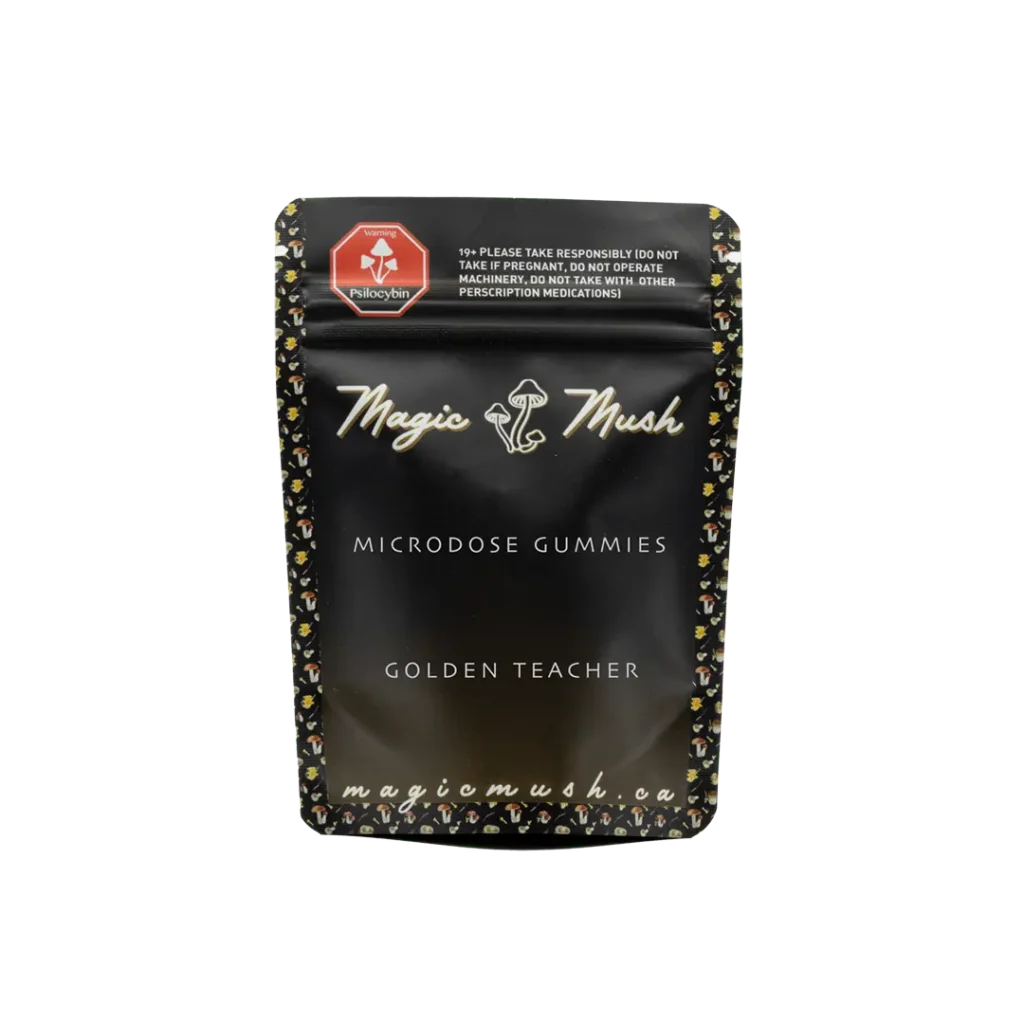
Those same mushrooms are the ones on my shelf. Dried Golden Teacher Magic Mushrooms are the strain I point curious friends to, since our page describes a trip that turns inward and a sense of connection to the natural world. If you have wondered why they bruise blue, read my piece on why magic mushrooms turn blue.
What do fungi do for the planet and for us?
Fungi recycle dead wood into soil, and one mould gave us the first antibiotic. Without them, forests would pile up with fallen trunks that never break down.
The only real wood recyclers
Wood is hard to rot because of lignin, the tough material that stiffens it. A 2012 study of 31 fungal genomes states that the only organisms able to break down lignin in a big way are white rot fungi. The authors link the rise of this skill to a sharp drop in buried carbon near the end of the Carboniferous period.
A mould that changed medicine
In 1928, Alexander Fleming saw a mould growing in one of his bacteria dishes, with no bacteria growing near it. That mould led to penicillin, and in 1945 Fleming shared the Nobel Prize in Physiology or Medicine with Ernst Chain and Howard Florey.
A single mould in a dish of bacteria in 1928 led to penicillin and a shared Nobel Prize in 1945.
Fungi in my own routine
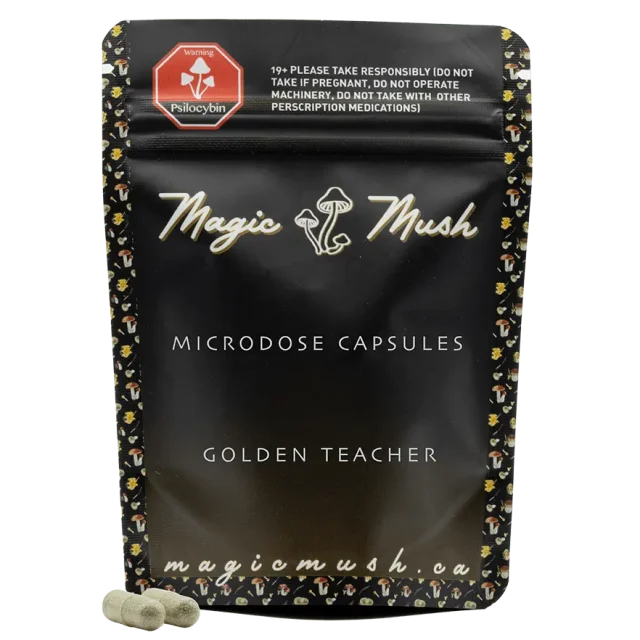
Lion’s mane is a fungus too, and it sits inside the Focus Blend (Stamets stack) Microdosing Capsule with psilocybin mushrooms and niacin. For a slow day outdoors, the Forest Explorer Bundle pairs Mazatapec and Aztec Gods with a chocolate bar. Our dosing guide sets out the amounts for every format.
Try this
- Look at a fallen logCount the shelf fungi and soft spots, the signs of wood being recycled.
- Find the threadsLift a little leaf litter and look for white, cottony mycelium.
- Go back at nightBring a red light and check old wood for a faint green glow.
- Leave wild mushrooms alonePhotograph them, and never eat one an expert has not identified.
Readers from Vancouver to the Maritimes can do this in any wet patch of woods. If these facts sparked something, the documentary in my Fantastic Fungi review is a lovely next step, and my piece on the book Plants of the Gods covers the history of sacred plants and fungi.
FAQ
What are some fun facts about mushrooms?
Some fungi glow in the dark, with 71 glowing species reported by 2015. One honey fungus in Oregon covers about 965 hectares and may be 8,650 years old. Fungi are also closer relatives of animals than of plants.
What are some basic facts about mushrooms?
A mushroom is the spore-making fruit of a fungus. The main body is mycelium, a web of threads in soil, dung or wood. Fungi cannot make food from sunlight, so they feed by breaking down or trading for organic matter.
What are 5 facts about fungi?
One, there may be 2.2 to 3.8 million species. Two, only about 120,000 are named. Three, they are closer to animals than plants. Four, white rot fungi are the main recyclers of wood. Five, a mould led Alexander Fleming to penicillin in 1928.
What mushroom has 23,000 sexes?
That is the split gill fungus, Schizophyllum commune. Two separate sets of genes control which strains can mate, and each set comes in many versions. A 2025 paper puts the total at about 23,328 possible mating types. They are mating types, not body differences.
Find your strain, then your dose
Every product on the shelf shows its potency rating and the effects people report. The dosing guide walks through amounts before you order, and a real person answers if you write to us.
About the author
Lily Pelenis
I'm a Toronto-based lifestyle coach, psilocybin enthusiast and certified yoga instructor. I guide people toward mindful, balanced living, and my coaching blends modern wellness practices with ancient wisdom to help clients find deeper self-awareness, resilience and joy.
I've been experimenting with shrooms for over a decade, and I write about my own experience. I love nature, psychology and humans. That is why my articles tend to follow a trip past its peak and into the weeks after it.
Some pieces start with a strain I have tried myself, such as Golden Teacher or Albino Roller Coaster. Others are the practical ones, like how much to take the first time or how to brew a tea that sits easier on the stomach. Over the years I've learned that intention is everything, so I write about why you are taking it before I get to how.
Related articles


50% off your first order
New strains, restocks, sales and new writing from the Notebook, by email. No spam, unsubscribe any time.