Women in Psychedelic History: The Names Left Off the Page
By Lily Pelenis / November 20, 2026 / 8 min read
Women in psychedelic history were there from the first night, holding the candle, writing the notes and sitting with the person who was scared. Most of them were simply left off the page. A Mazatec healer named María Sabina opened the door to psilocybin for the West, and in the 1950s labs, wives and assistants guided sessions that their husbands and bosses wrote up.
I went looking for their names, and I found a lot more of them than I expected.
TLDR
Women shaped psychedelic history as healers, researchers, therapists, writers and organizers. María Sabina’s ceremonies introduced psilocybin mushrooms to Western science in 1955. Valentina Wasson, Betty Eisner, Joyce Martin and Margot Cutner helped build early psychedelic therapy, including much of what we now call set and setting.
Historian Erika Dyck found that wives often guided early sessions but almost never appeared on the published papers. Today, women like the late Ann Shulgin, Amanda Feilding and Bia Labate have shaped how psychedelics are studied and protected.
Quick facts
- 1914
- Mabel Dodge Luhan takes up peyote
- 1955
- María Sabina’s velada reaches the West
- 10 Nov 1955
- Betty Eisner’s first LSD session
- 12 million
- Circulation of Valentina Wasson’s 1957 magazine
Who this article is for
- You keep reading psychedelic history and wonder why every name in it belongs to a man.
- You want to know who María Sabina was, and what happened to her after the West found her.
- You care about set and setting and want to know who actually worked it out.
- You are looking for women in the field today whose work you can follow.
Lily Pelenis
Author’s note
This piece began as a letter to our newsletter readers in March 2025, on International Women’s Day, and grew with a second letter that May, for Mother’s Day. We asked readers which women in psychedelics inspired them. The replies told me how few names most of us know.
I have used psilocybin for over a decade, and the people who made my sessions safe were usually women: the friend who sat with me, the one who checked in the next day. As a lifestyle coach, I think that quiet work is the heart of integration. So I wanted to give it names, dates and sources.
Who are the women in psychedelic history?
The women in psychedelic history include Indigenous healers, scientists, therapists, writers and patrons, from the 1910s to today. Here are the ones I could document with primary or academic sources.
| Woman | When | What she did |
|---|---|---|
| Mabel Dodge Luhan | 1914 | Took up peyote; her memoir gives the first account of a peyote experience in white America |
| María Sabina | 1955 | Mazatec healer whose velada brought psilocybin to Western science |
| Betty Eisner | 1955 to 1970s | Psychologist who helped shape LSD therapy and set and setting |
| Joyce Martin | from 1954 | London analyst who pioneered LSD therapy at Marlborough Day Hospital |
| Margot Cutner | from 1955 | Jungian analyst on the Powick Hospital LSD team |
| Valentina Wasson | 1957 | Pediatrician who published her own mushroom experience |
| Gertrude Paltin | 1971 | Co-author of a landmark bibliography of LSD and mescaline research |
| Ann Shulgin | 1978 to 2022 | Lay therapist and co-author of PiHKAL and TiHKAL |
| Amanda Feilding | 1996 to today | Founded what became the Beckley Foundation |
| Bia Labate | today | Anthropologist who founded the Chacruna Institute |
I link the source for each one in the sections below. My earlier piece on the female psyche on psychedelics covers the research gap from the other side: how few women end up in the studies themselves.
Who was María Sabina, and what did fame cost her?
María Sabina was a Mazatec curandera, or healer, from Huautla de Jiménez in Oaxaca, Mexico. She used psilocybin mushrooms in all-night healing ceremonies called veladas. Her story is the clearest example of how a woman’s knowledge entered psychedelic history and how little came back to her.
The 1955 velada
Banker and writer R. Gordon Wasson attended her velada in 1955 and later published accounts without her consent, according to a 2026 review in the Journal of Psychopharmacology. Those accounts revealed her identity and her village, and brought a wave of outsiders that disrupted local life and led to her being shunned.
Her chants survive. Plants of the Gods prints part of one: “Woman who thunders am I, woman who sounds am I.” I wrote about that book in my review of Plants of the Gods.
What Albert Hofmann saw in 1962
Albert Hofmann, the Swiss chemist who isolated psilocybin, visited her in 1962 and described it in his memoir, LSD: My Problem Child. He wrote that the house where Wasson’s session took place had been burned, “presumably by angered residents or an envious colleague,” because she had shared the secret with strangers. He gave her synthetic psilocybin pills, and at dawn she said they had the same power as the mushrooms.
Who benefits now
A 2021 paper by Gerber and colleagues notes that psilocybin compounds have been the focus of dozens of attempted and successful patents since 1957. The Mazatec communities who kept this medicine are not party to any of them. Our article on María Sabina tells more of her life, and this piece looks at what Western culture still gets wrong.
María Sabina’s house was burned after she shared the mushroom with outsiders, and her community holds none of the patents that followed.
Which women shaped early psychedelic science?
Several women designed the methods that made early psychedelic therapy work, even when their male colleagues got the credit. The biggest of those methods is set and setting: your mindset and your surroundings.
Valentina Wasson, the first writer
Valentina Pavlovna Wasson was a pediatrician and Gordon’s wife, and she was the mushroom lover in the couple. A week after his Life story in May 1957, she published her own account of her “Technicolor” visions in This Week, a Sunday magazine with a circulation of 12 million, as JSTOR Daily reports. She died in 1958.
Betty Eisner and low doses
Psychologist Betty Eisner (1915 to 2004) became Sidney Cohen’s first LSD subject on 10 November 1955, writes historian Zoë Dubus in Chacruna. Left alone after a later session, Eisner hit a dark place and Cohen brushed her off. She switched to a low dose of 25 micrograms and built her practice around it. Her 1958 paper with Cohen, “Psychotherapy with lysergic acid diethylamide,” lists her as first author.
Historian Tal Davidson credits her with theorizing set and setting, including music, art and mirrors. He also found that a client died in her care in 1976, and that clients later described boundary crossings and reckless care, as he writes in “Betty Eisner: Heroine with a Hitch?” I include that because honouring women does not mean hiding the hard parts.
Joyce Martin and Margot Cutner in England
Dubus also names two British analysts. Joyce Martin began LSD work in 1954 at the Marlborough Day Hospital in London and offered patients warm, physical comfort during sessions. Margot Cutner, who fled Nazi Germany, joined the Powick Hospital team in 1955. She warned it “would not be safe to give the drug without adequate supervision.”
Lily’s take
Cutner wrote that in 1959, and it is still the first rule I give anyone: a sober, kind person in the room. Eisner learned it the hard way, alone after a session. That rule exists because of women.
Why were women left out of psychedelic history?
Women were left out because they did the work that did not get printed: sitting with people, recruiting volunteers and writing up what happened. Historian Erika Dyck says so plainly.
The wives in the room
In a 2018 interview with Chacruna, Dyck says that in the 1950s experiments, women were “central, but often invisible, contributors.” Many early experimenters had their first session with their wives, then the wives guided later volunteers. In her research, none of these wives ever appeared on a published paper. Mrs. Al Hubbard sat in on many sessions, but her first name is not even recorded.
Some of those women were part of the Saskatchewan research I describe in my piece on the origin of the word psychedelic. Rose Hoffer, Abram Hoffer’s wife, remembered feeling sick and worrying it would ruin the experiment. Mary Agnew helped guide students in her husband’s lab, and he told Dyck she was “the best guide there was.”
Trials built for men
Dyck also found that the 1950s alcoholism trials were aimed at men. Women with drinking problems were more often treated for depression or anxiety instead, and some doctors thought a frightening drug was “an appropriate male therapy.”
The writers who got there first
Nurse and scholar Mariavittoria Mangini, writing in the MAPS Bulletin, adds three more names. Mabel Dodge Luhan became interested in peyote in 1914 and held a session in her New York apartment. Gertrude Paltin co-wrote a bibliography of LSD and mescaline research with Oscar Janiger, yet her role is otherwise unknown. Poet Mary Barnard argued in 1963 that the magic plants of myth were real plants.
Dyck found that wives guided many 1950s psychedelic sessions, yet none of them appeared on a published paper.
Who are the women leading psychedelics today?
Women now lead some of the field’s best-known research, therapy and policy work. Three of them carry threads from the stories above.
Ann Shulgin
Ann Shulgin (1931 to 2022) worked as a lay therapist with MDMA and 2C-B while they were still legal, drawing on Jungian ideas, according to her MAPS memorial. With her husband Sasha she wrote PiHKAL (1991) and TiHKAL (1997), and they started their own press when publishers refused.
Amanda Feilding
Amanda Feilding set up the Foundation to Further Consciousness in 1996 and renamed it the Beckley Foundation in 1998. She is a co-author of a 2012 brain-imaging study that scanned 30 volunteers on psilocybin and found lower activity in key brain hubs.
Bia Labate
Bia Labate is a Brazilian anthropologist and the founder of the Chacruna Institute, which works to protect sacred plants and lift up the voices of marginalized communities. Chacruna is also where much of the history in this article was first published.
How can you honour this history in your own practice?
You honour it by keeping the parts women built: preparation, a safe setting and a caring sitter. Johns Hopkins safety guidelines stress all three, and screening out anyone with a personal or family history of psychosis. Health Canada warns that magic mushrooms are illegal without authorization, and that heart disease or mixing with alcohol raises the risks.
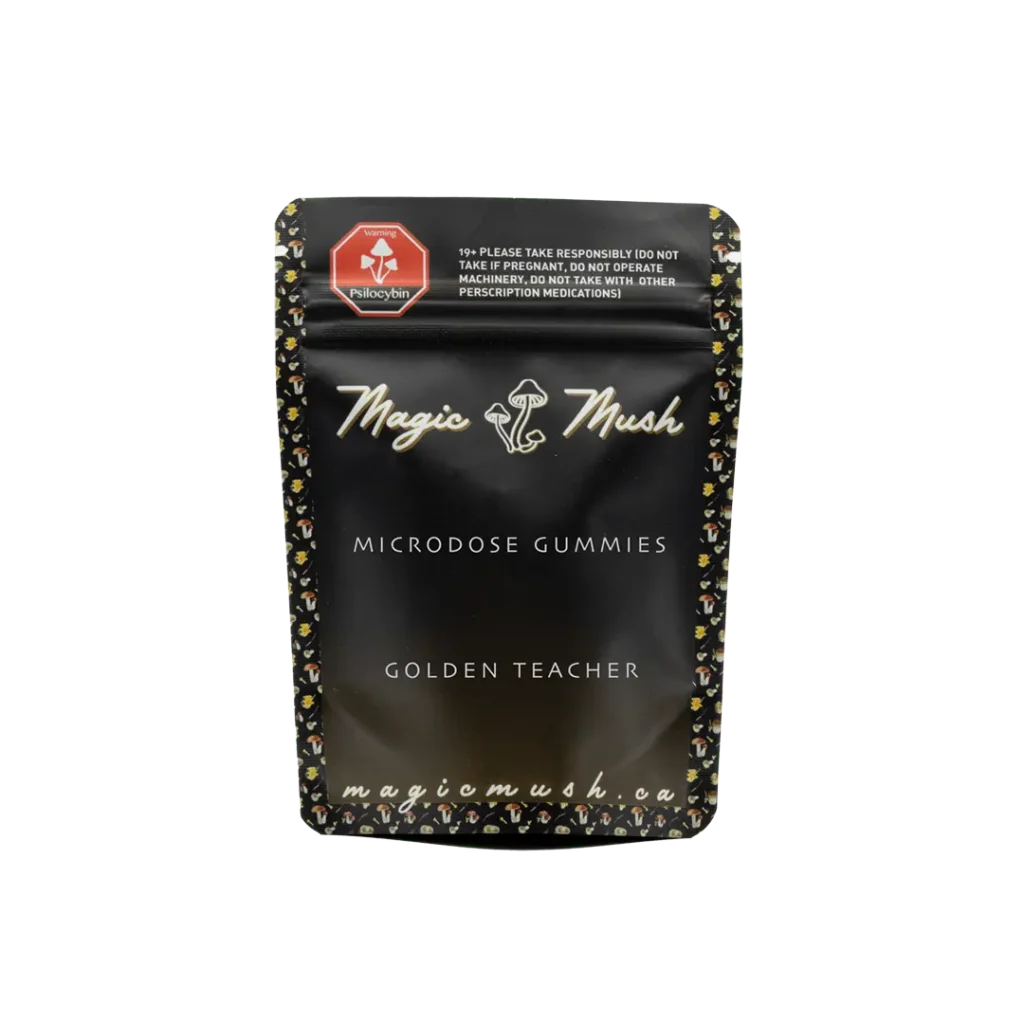
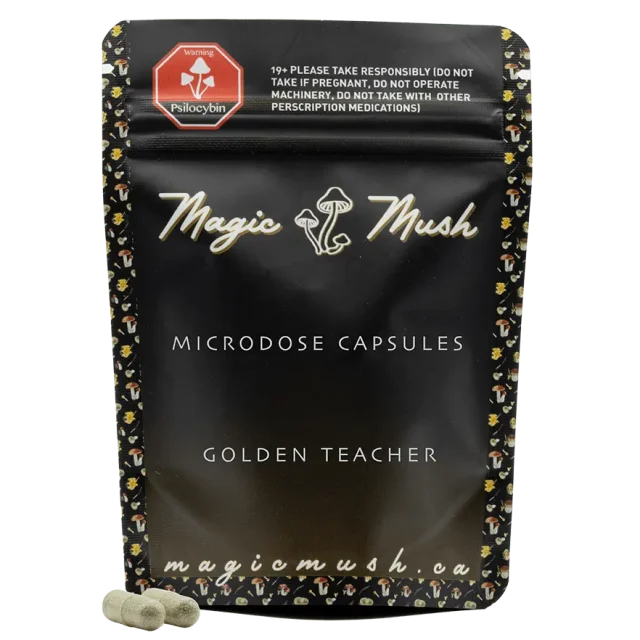
From there, read our dosing guide before you choose anything. Wherever you are, from Montreal to Vancouver, that guide is where I tell friends to begin. For a slow, nature-centred day, I like the Forest Explorer Bundle, which pairs Mazatapec and Aztec Gods for calm, meditative sessions. If you prefer to start small, the Golden Teacher Microdosing Capsule holds 125 mg in each capsule. The Golden Teacher Chocolate Bar comes in 250 mg squares, so your first piece can be a small one.
Lily’s take
Next time you sit with a friend, write down who held the space, not just what you saw. That is how the next Rose Hoffer gets a name.
FAQ
Who is considered the mother of psychedelics?
No one holds an official title, but the name most people give is María Sabina, the Mazatec healer whose 1955 velada brought psilocybin mushrooms to the West. Her ceremonial use of the mushrooms became known worldwide after Wasson’s visit, as a 2026 review points out.
Who were the pioneers of psychedelics?
The pioneers include healers like María Sabina, chemists like Albert Hofmann and psychiatrists like Humphry Osmond. Women pioneers include Betty Eisner, Joyce Martin, Margot Cutner, Valentina Wasson and Ann Shulgin, each covered above.
Who is the father of psychedelics?
No single person holds that title either. The name most often given is Albert Hofmann, the first person to make LSD and the first known to feel its effects, who also first made psilocybin in the lab, as Scientific American notes.
Why were women left out of psychedelic research?
Historian Erika Dyck found that women in the 1950s did much of the guiding and recruiting but were rarely named as authors. Early trials were also designed around men, which shaped who got studied.
Find your strain, then your dose
Every product on the shelf shows its potency rating and the effects people report. The dosing guide walks through amounts before you order, and a real person answers if you write to us.
About the author
Lily Pelenis
I'm a Toronto-based lifestyle coach, psilocybin enthusiast and certified yoga instructor. I guide people toward mindful, balanced living, and my coaching blends modern wellness practices with ancient wisdom to help clients find deeper self-awareness, resilience and joy.
I've been experimenting with shrooms for over a decade, and I write about my own experience. I love nature, psychology and humans. That is why my articles tend to follow a trip past its peak and into the weeks after it.
Some pieces start with a strain I have tried myself, such as Golden Teacher or Albino Roller Coaster. Others are the practical ones, like how much to take the first time or how to brew a tea that sits easier on the stomach. Over the years I've learned that intention is everything, so I write about why you are taking it before I get to how.
Related articles

50% off your first order
New strains, restocks, sales and new writing from the Notebook, by email. No spam, unsubscribe any time.