
Should I Microdose on a Bad Day? When I Skip a Dose
By Lily Pelenis / November 20, 2026 / 8 min read
Should I microdose on a bad day? Usually not, because in my experience a microdose does not lift a bad day to neutral. It turns up whatever is already there, so a calm morning gets a little brighter and an anxious one gets a little louder.
That surprises people, since many start microdosing to feel better on exactly those days. Here is how I decide when to skip, what the research says about mood before a dose, and why one skipped day never breaks a protocol.
TLDR
Skip your microdose when you slept badly, woke up anxious, just had a fight, are grieving something fresh, are hungover or sick, or your gut simply says no. Mood going in shapes what you get out: the Alcohol and Drug Foundation notes that psilocybin’s effects vary with a person’s mood, which researchers call the set.
A skipped dose costs you very little. Take your next dose on your next planned day, and never double up to make up for it. If you take lithium, have a personal or family history of psychosis or bipolar disorder, or take an antidepressant, the question is not about bad days at all: talk to a doctor first.
Quick facts
- 0.1 to 0.25 g
- of dried mushroom is a microdose
- 6.7%
- of 278 microdosers reported more anxiety
- 47%
- of lithium reports involved seizures
- 9-8-8
- call or text in a crisis in Canada
Who this article is for
- You woke up anxious or exhausted on a dose day and are not sure whether to take it.
- You had a microdose day that felt worse instead of better and want to understand why.
- You worry that skipping a day will ruin your schedule.
- You take a medicine, or have a mental health history, and want to know where the hard lines are.

Lily Pelenis
Author’s note
This piece began as a letter to our newsletter readers in May 2026, called “The one thing nobody tells you about microdosing on bad days” in the subject line. Readers kept writing back with the same story: they took a dose to fix a rough morning, and the morning got rougher.
I have used psilocybin for over a decade, and as a yoga teacher and lifestyle coach I care a lot about intention. A microdose taken to escape a feeling is a very different thing from one taken with a clear head and a plan. Learning to say “maybe not today” is a skill, and I think it is the one that keeps people microdosing well for the long run.
Should I microdose on a bad day?
In most cases, no: a microdose tends to amplify the state you start in rather than correct it. If you start the day steady, that is what gets carried forward. If you start it frayed, the dose leans into that too.
Why a microdose sharpens a bad mood
Psilocybin acts on the brain’s 5-HT2A serotonin receptors, like other classic psychedelics, as a 2018 Johns Hopkins review describes. Many microdosers report that, even at a dose they barely feel, emotions seem a touch more vivid. On a calm day I experience that as focus and presence. On an anxious day the same nudge feels like a louder version of the anxiety.
The Alcohol and Drug Foundation says psilocybin’s effects vary with mood and surroundings, which people call set and setting. Health Canada lists anxiety, panic attacks and mood changes among the possible short-term effects of magic mushrooms.
What research on mood before a dose found
Most of this research used bigger doses than a microdose, so read it as a strong hint rather than proof. In a study that followed 654 people before they took a psychedelic, Haijen et al. (2018) found that low anxiety right before the dose went with fewer challenging experiences. Feeling prepared, open and in a good mood pointed the same way.
In a lab analysis of 261 healthy volunteers, Studerus et al. (2012) found that high emotional excitability, younger age and a PET brain-scan setting best predicted anxious reactions to psilocybin.
In a study that followed 654 people before a psychedelic dose, low anxiety right before taking it went with fewer challenging experiences.
Which days should you skip a microdose?
Skip a microdose on any day when your body or mood is already off balance, or when the day ahead leaves no room for a surprise. This is the list from our May letter, with the reason I hold to each one.
| Skip the dose when | Why |
|---|---|
| You slept less than five hours | Tiredness already lowers your patience; a dose adds intensity, not rest |
| You woke up anxious, the tight-chest kind | The dose tends to turn up what is already there |
| You just had a fight or a hard email | Fresh conflict is exactly the signal you do not want amplified |
| You face a big meeting or deadline | No room to adjust if the day feels different |
| You are grieving a recent loss | Big emotions need care and support, not more volume |
| You are hungover, sick or over-caffeinated | Your body is already under strain |
| Your gut says no | Your own read of the morning is useful data |
The hangover rule
This one has a source beyond our inbox. In an interview study of 21 microdosers by Johnstad (2018), one respondent warned against dosing even when slightly hungover, saying it makes things worse, not better. A few also described insomnia, especially after dosing late in the day.
The side effects people report
A University of Toronto team, Anderson et al. (2019), coded reports from 278 microdosers. Improved mood was the most common benefit at 26.6%, but 18.0% described physical discomfort and 6.7% described more anxiety. A rough morning is a poor time to find out you are in that group.
Lily’s take
My line is simple: if I would not want this day turned up a notch, I do not dose. A skipped day is the protocol working, not failing.
How do you find your own triggers?
You find your triggers by writing down what each dose day was like and looking for the pattern after a few months. Generic warning signs help, but your personal ones help more, because they are the ones that keep coming back.
I sort them into two kinds. Internal triggers live in your head and body: poor sleep, hormonal shifts, building anxiety, a low mood that has been creeping in. External triggers are events: conflict, money stress, the news cycle, work pressure, a social plan you are dreading. For some people the pattern is all about sleep, while for others it follows a time of the month or a family situation.
A guide by researcher Tunde Aideyan in Aeon suggests journalling from the first day to catch bad reactions and checking your physical and mental health before a cycle starts. Once you know your pattern, skipping becomes a decision instead of a guess. And if bad days keep stacking up through a whole cycle, that may be a sign to pause for longer, which I cover in when to stop microdosing.
Try this
- Rate the morning Before you dose, give your sleep, mood and stress a number from 1 to 5.
- Set your skip line Decide ahead of time which score means no dose today.
- Log the skip Write one line on why you skipped, so the pattern shows up later.
- Review monthly Read the month back and circle the triggers that repeat.
Does skipping a microdose break your protocol?
No, skipping one microdose does not break your protocol. Your next dose day stays your next dose day, and the rest of the schedule carries on as planned.
Research backs up how little one day matters. In a six-week diary study, Polito and Stevenson (2019) found that the lift people felt on dose days mostly did not carry into the following days. The changes they did find were measured across the whole six weeks, not one morning. If you are wondering how those weeks add up, I wrote about how long microdosing takes to work.
Why I never double up the next day
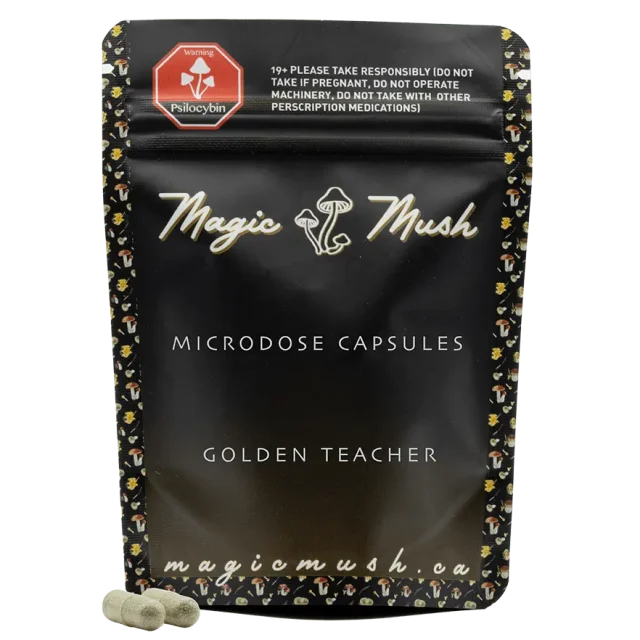
Doubling up turns a microdose into something closer to a small trip, and tolerance to psilocybin builds fast with doses close together. Keep the amount you planned. Our Golden Teacher Microdosing Capsule holds 125 mg in every capsule, so one capsule always means the same dose, and our dosing guide puts a microdose at 0.1 to 0.25 g of dried mushroom.
What I do instead on a skipped day
The things that usually pair with a microdose still work on their own. I take a walk outside, breathe slowly for five minutes, write one sentence about what is going on, eat a real meal and call someone who calms me down. Then I go to bed early. If a dose day ever stirs up more feeling than you expected, our guide on what to do when microdosing brings up unexpected emotions walks through it.
Skipping one microdose does not reset your progress; in a six-week study, the lift on dose days mostly faded by the next day anyway.
When should you not microdose at all?
Do not microdose at all if you take lithium, and talk to a doctor first if you take antidepressants or have a personal or family history of psychosis or bipolar disorder. These are not bad-day questions. They are every-day questions.
Lithium and other medicines
In online reports analyzed at Johns Hopkins by Nayak et al. (2021), 47% of 62 cases of psychedelics taken with lithium involved seizures. A survey by Gukasyan et al. (2023) found that SSRI antidepressants often made mushrooms feel weaker. A 2024 review of drug interactions found both weaker and stronger effects across medicines, including MAOIs. Our guide on psilocybin and antidepressants covers this in depth.
Mental health history and the heart
Research safety guidelines from Johns Hopkins researchers exclude people with a personal or family history of psychosis, and the Aeon guide notes that trials screen out psychotic and manic-depressive disorders. Health Canada warns that a faster heart rate and higher blood pressure could harm people with heart disease. If a bad day turns into a crisis, readers from Winnipeg to St. John’s can call or text 9-8-8 at any hour.
FAQ
Can you have a bad trip if you microdose?
A true microdose should not cause a full bad trip, but it can bring on anxiety or discomfort, and a dose that is larger than planned can tip into a noticeable experience. In Johnstad (2018), several respondents accidentally took enough to feel real effects, in one case at work. Weigh your dose, or use pre-measured formats.
What amount is considered a microdose?
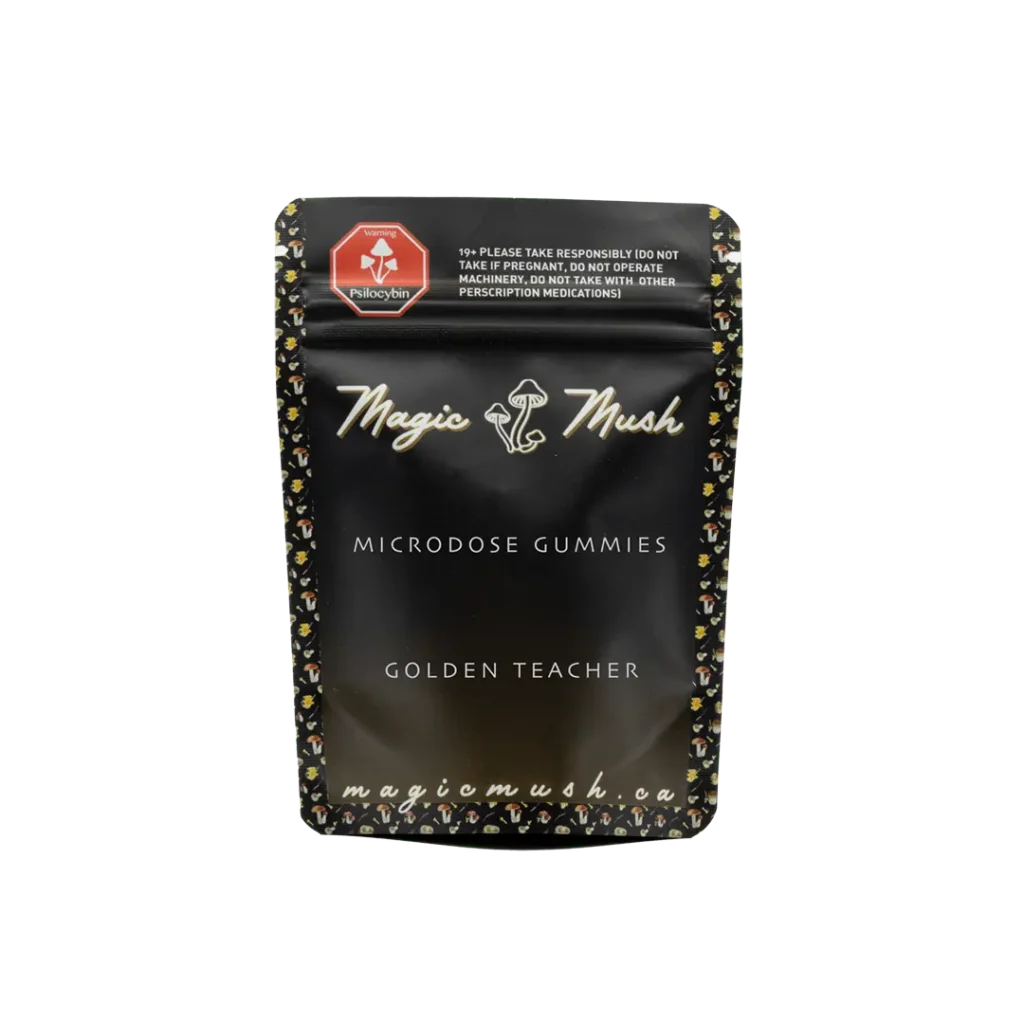
A microdose of dried psilocybin mushrooms is about 0.1 to 0.25 g, according to our dosing guide. In pre-measured form, that is 1 to 2 of our 125 mg capsules or 1 to 2 of our Golden Teacher Gummies for Microdosing, which hold 100 mg each.
How long does a microdose kick in?
Swallowed psilocybin usually takes effect within 15 to 45 minutes, according to Health Canada, and effects usually last 4 to 6 hours. With a microdose, the start is subtle and many people notice nothing distinct.
Can microdosing make anxiety worse?
Yes, for some people. In Anderson et al. (2019), 6.7% of 278 microdosers reported more anxiety, and Health Canada lists anxiety and panic attacks among the possible effects of magic mushrooms. Anxious days are the ones I skip, and if anxiety lasts after you stop, talk to a doctor.
Find your strain, then your dose
Every product on the shelf shows its potency rating and the effects people report. The dosing guide walks through amounts before you order, and a real person answers if you write to us.

About the author
Lily Pelenis
I'm a Toronto-based lifestyle coach, psilocybin enthusiast and certified yoga instructor. I guide people toward mindful, balanced living, and my coaching blends modern wellness practices with ancient wisdom to help clients find deeper self-awareness, resilience and joy.
I've been experimenting with shrooms for over a decade, and I write about my own experience. I love nature, psychology and humans. That is why my articles tend to follow a trip past its peak and into the weeks after it.
Some pieces start with a strain I have tried myself, such as Golden Teacher or Albino Roller Coaster. Others are the practical ones, like how much to take the first time or how to brew a tea that sits easier on the stomach. Over the years I've learned that intention is everything, so I write about why you are taking it before I get to how.
Related articles





50% off your first order
New strains, restocks, sales and new writing from the Notebook, by email. No spam, unsubscribe any time.