
I’ll never forget stepping into that sleek clinic just off King Street in Toronto, the one with the polished glass doors and calming taupe lobby. It felt surreal. On one hand, I remember thinking — wow, we’ve come so far — because a few years earlier I had sat in a forest just outside Vancouver with a handful of wild mushrooms, awkwardly trying to tune into the medicine without knowing what was coming. On the other hand, the moment I saw the patient intake form named “psilocybin-assisted therapy” and the Visa terminal next to the mushroom gummies display, I felt something shift. Once upon a time, you whispered about mushrooms in the woods. Now you could book them online, pay with Visa, and get a receipt for your transcendence.
I’d come because I believe in the medicine. I believe in the embodiment of mystery that mushrooms offer, the way they crack open our assumptions and leave us a little more alive. And yet, as I wandered that lobby, I felt a subtle unease. The candles were real. So were the price tags. Somewhere in that tension lay the question I wanted to explore: when psychedelics become legal, accessible, audited, and insured, do they lose a piece of their magic — or does legalization protect the very thing we most need?
That question has haunted me ever since that day. Because somewhere between the ritual and the regulation lies a choice: do we safeguard the soul of the medicine, or do we let the system steamroll it? In Canada, we’re standing at that crossroad. As clinics open, as the language of dried magic mushrooms in Canada enters mainstream conversation, and as “psilocybin Toronto” becomes a search term — we are asking not just whether the laws should change, but whether our relationship to the medicine is changing, too. And that’s what this article is about: the paradox, the promise, and the risk of legalization.
🔍 Dive into the “Psychedelic Cold War” where pharma-backed bills clash with community-based models of care
So Yes — Legalization Brought Some Really Good Things (And We Should Say That Out Loud)
Let’s start there: legalization, or at least regulated access, is doing work. It’s saving lives, reducing stigma, creating frameworks where healing isn’t whispered about but supported. I recently spoke with a Toronto-based facilitator, Dr. Andrew Bui-Nguyen, whose clinic received approval to administer psilocybin-assisted psychotherapy in Quebec. According to the study I analyzed, he said: “It’s a privilege to be able to accompany people in the exploration of psychological distress and to offer something different than conventional treatment such as antidepressants.”
In Canada, the shift is palpable. According to a 2024 survey, 79% of Canadians believe that psilocybin-assisted therapy is a “reasonable choice” for patients facing end-of-life distress. The language is changing, the fear is softening, and access is slowly expanding through the TheraPsil exemptions and the Numinus Wellness-licensed clinics.
Quality control now matters. No longer are brave seekers purely operating in underground circles with uncertain dosage or unknown source. Legal pathways mean laboratories, standards, integration protocols. That matters. It means fewer risks of contamination, fewer legal liabilities, more education around safe usage. In other words: the medicine stepping into the light, with guardrails, and that’s a beautiful thing.
And the truth is, many who were denied access or forced to work covertly now have legitimacy. Legalization gives permission. As one facilitator put it: “Legalization gives people permission to heal. That’s something prohibition could never do.” The system is beginning to reflect the sacred urgency of this work, not just the stigma. So yes, there’s real hope here. The medicine isn’t just in shadows anymore — it’s in clinics, research papers, conversations across Ottawa, Vancouver, and beyond.
But There’s a Quiet Cost in All This Shine — And We Can’t Pretend It Doesn’t Exist
Now for the other side of the coin. Because what happens when something once wild, unruly, mysterious becomes licensed, certified, sanitized? When the ineffable is packaged and regulated? Some of the soul starts to slip away. Legalization protects — but it can also flatten.
I felt it during that Toronto clinic visit. The lounge chairs were plush, the soundtrack was curated, the entire experience felt like a luxury retreat—therapeutic yes, but also comfortably clinical. And I wondered: is something lost when ceremony is replaced by protocol? When the medicine is delivered in scheduled slots, rather than open fields of intuition?
In regulatory systems, there’s an emphasis on pathology over purpose. We talk about “treatment‐resistant depression” and “qualified patients” and “dosage protocols.” Yet many of us came to this medicine not just to treat but to transcend. When we reduce it to function, we risk losing the mystery. As one indigenous-rooted guide told me: “In trying to make medicine universal, we risk making it uniform.” The ritual gets streamlined, the threshold raised, and some seekers may find themselves excluded—those who can’t navigate the paperwork or afford the premium price. That’s a spiritual cost.
The problem isn’t insurance or safety. The problem is when regulation becomes control. When wonder is traded for warranty. When the code of the clinic replaces the code of the forest. Because the medicine asked for surrender; the system asks for consent forms. And in the tension between surrender and consent, something gets tugged.
The question then becomes: are we prepared for that trade-off? Are the freedom, awe, and unknowing of the medicine worth conceding in return for protection? Or is the magic only intact when it’s uncontained? This isn’t a protest cry—it’s a sober reflection on what we might be sacrificing in our push toward legitimacy.
Check out this magic mushroom!!

A.P.E Psilocybin Chocolate Bar
$60.00Dried Penis Envy Magic Mushrooms
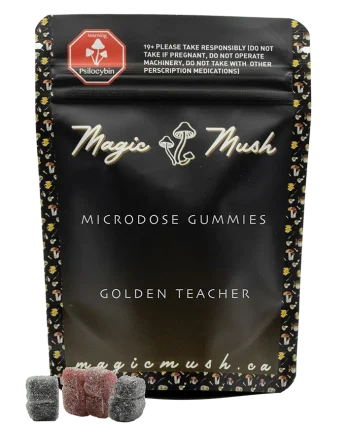
Price range: $60.00 through $240.00Golden Teacher Gummies for Microdosing
$25.00


The Spiritual Algebra of Making the Invisible Visible: When Regulation Meets Reverence
Let’s dig deeper into the heart of the matter: visibility versus mystery. In regulatory culture, everything must be measurable, accountable, replicable. But the medicine we’re talking about thrives in paradox, in the unseen, in the subtle interplay of self and landscape. The state can regulate psilocybin; but can it regulate wonder?
I remember sitting alone after my first legal session, looking up at the pink dusk of a Vancouver sky, wondering whether the experience felt the same as when it wasn’t “legal.” Something about the grid of scheduling, the intake forms, the after-session survey, tugged me out of the timeless moment I’d known before. The medicine was still medicine, but the container had changed. The boundary between sacred and standardized felt thin.
The psychologist’s equation doesn’t quite compute here: healing isn’t linear like pharmaceuticals. It doesn’t yield a predictable outcome, a fixed dose, a measurable return. Yet legalization frequently demands such metrics. When the ineffable becomes legible, an essential tension emerges. Humans need both safety and uncertainty—to feel held and to feel undone. The regulatory model emphasises the former, but the medicine invites the latter.
In some ways, the ritual of dried magic mushrooms used to be un-regulatable by design. That didn’t make it unsafe—it made it wild. And wildness has value. So perhaps the real risk of legalization isn’t just over-regulation or loss of ceremony—it’s the possibility of forgetting that the medicine doesn’t belong to the structures. The systems are there to carry it, but the magic lives in the margins.
Let’s Give Credit Where It’s Due: The Underground Culture Still Holds the Flame
It’s easy to romanticize the underground psychedelics but we must. Because in many ways, the soulful roots of this work still live in places that haven’t been commercialized or regulated yet. Guides, elders, community circles that held the medicine when it was invisible, unprofitable, unseen—they matter.
I visited a small integration group just outside Ottawa, by invitation only, where no branding, no Visa payment, no logo—just people sitting in stump circles, sharing stories and nervous laughter. The space was nowhere near “approved,” but it felt alive. One facilitator said: “Legal doesn’t mean better — it just means visible. The underground will always be where the soul of the work lives.”
Legal and underground don’t need to be enemies. They can be companions. The legal clinics provide safety and scale. The underground provides depth and tradition. Together they could map a continuum of access and authenticity. But we’ve got to keep one hand in the boardroom and the other in the woods. Otherwise the forest will shrink while the building grows.
And as we move forward, we need respect for both. The people who have carried this work in the shadows—indigenous elders, grassroots facilitators, seekers without economic ballast—they deserve recognition and space. Because we can’t build a future of healing without honouring the past of resistance and reverence. The underground isn’t just a risk; it’s a reservoir of soul.
📣 Dive into how student activism is shaping the conversation around psychedelics from grassroots movements to policy reform

Here’s What The Ideal Future Might Look Like — Where the Legal System Supports and Doesn’t Replace the Sacred
Okay, let’s imagine. Not a utopia. But a direction. A future where legalization isn’t the end of the story—it’s step one of integration. Where clinics, community centres, retreats, and circles exist together, honouring both structure and surrender.
Picture this: a psilocybin therapy session in Vancouver where you go through intake, yes—but then you’re handed off to community elder-facilitators who took you for a walk in the forest before the medicine, sat you quietly afterwards, and invited you into story. Or a Toronto clinic that sets aside half its appointments for “community reciprocity” clients, so that healing isn’t only for those who can pay premium. Or microdosing Canada circles that align with indigenous knowledge rather than just Silicon Valley self-optimization.
These models are emerging. Sliding-scale pricing, cooperative ownership, reinvestment of profit into indigenous-led programs. Transparency around profit. Ethics in the supply chain. Regulation that honours lineage, not just licensing. Because the next evolution of psychedelics isn’t simply legalization—it’s integration.
Canada is well positioned to lead this. From psilocybin therapy in Toronto to microdosing Canada conversations in Vancouver, the national context offers both diversity and reckoning. And we’re already seeing policy watchers and community activists pushing for regulation that isn’t just about “when will it be legal” but “how will it be meaningful.”
What if the question we ask isn’t just can legalization happen, but how can legalization happen so that magic stays magic? The systems of care we build must protect the body and free the soul. That’s not a paradox—it’s the invitation of our time.
🚧 Explore the legal barriers surrounding psychedelics and what it takes to change the rules
Alright — What’s the Verdict? And Why Magic Mush Canada Is Asking Us to Stay Curious
So here we are, with all our excitement and all our caution. The verdict? There isn’t a simple one. Legalization can and does protect. It opens doors, legitimizes healing, expands safety nets. And yet it can also flatten, standardize, and sterilize what made the medicine tender, weird, and utterly alive.
Legalization is not the endpoint—it’s the beginning of a new question: when the medicine is legal, how do we keep it sacred? How do we stay alert to wonder, surprise, intimacy, depth? Because the risk isn’t only in prohibition—it’s in assuming that legality equals full access to essence. The magic wasn’t magically preserved by law; in fact, law can only protect so much. The rest is up to us.
And that’s where Magic Mush Canada comes in. We’re not just part of this trend; we’re committed to keeping the ripple of meaning alive. We’re in this because we believe that mushrooms aren’t just chemical compounds—they’re portals to something deeper, something that doesn’t always fit into a form or a label. We want access, yes—but we also want awe. We want clinics, yes—but we also want circles. We want research, yes—but we also want ritual.
When you hear “mushroom chocolate Canada” or microdosing Canada, we hope you think of more than product. We hope you think of possibility. We’re investing in education, in safe usage, in community, in destigmatization. We see the legal pathways. We also feel the hum of the forest. And we believe you deserve both.
So if you’re asking yourself whether legalization is killing the magic, we’d invite you to hold both: yes, be excited about access; yes, be vigilant about wholeness. The real work isn’t only in the regulation—it’s in the reverence. The real path forward is not law versus lore—but law that honours lore. Systems that serve spirit. Healing that refuses to be wholesale.

