
Taking a trip with magic mushrooms is akin to stepping onto an emotional rollercoaster that not only captivates you but also refuses to let go. When psilocybin enters your bloodstream, it acts as a catalyst that unlocks the deepest chambers of your subconscious, where a whirlpool of emotions resides. This experience can be so profound that even those who pride themselves on their emotional resilience might find themselves overwhelmed with tears.
The act of crying during a psilocybin journey is not merely about shedding tears; it’s a profound, cathartic release. It varies widely from one individual to another. Some might find themselves crying uncontrollably, their tears a torrent of emotions that they perhaps didn’t even know they were harboring. Others might experience a gentle, cleansing trickle of tears, just enough to feel a subtle shift in their emotional state. Then there are those who, despite the intense journey, may not cry at all. This variance speaks to the deeply personal nature of each individual’s encounter with psilocybin, shaped by their unique emotional landscapes and personal histories.
🍄🌈🪬👁👽
How Psilocybin Affects Mood?
Mind-altering substances like psilocybin are renowned for their profound impact on emotional states. Research reveals that individuals who take a dose of psilocybin report an uplift in mood that begins within a week. They become more attuned and responsive to emotional stimuli, indicating a heightened emotional sensitivity. A month after ingestion, these positive effects not only persist but intensify. Feelings of anxiety and negativity recede, making way for a more positive outlook on life. Additionally, during periods of rest, the brain’s functional connectivity—its ability to coordinate between different regions—shows marked improvements.
These shifts are indicative of increased neuroplasticity, where the brain becomes more adept at forming new connections and pathways. This enhanced plasticity facilitates a surge in positive emotions and a significant reduction in negative ones, suggesting why psilocybin is gaining traction in mental health circles. It’s particularly appealing for treating conditions like anxiety and depression, especially in cases where conventional therapies have fallen short.
This emerging understanding of psilocybin’s role in mental health is backed by its ability to remodel the brain’s architecture. By fostering new neural pathways, psilocybin helps patients break free from rigid patterns of negative thinking and chronic emotional distress. This potential makes psychedelics a promising frontier in psychiatry, offering hope and new treatment avenues for those whose options were previously limited.
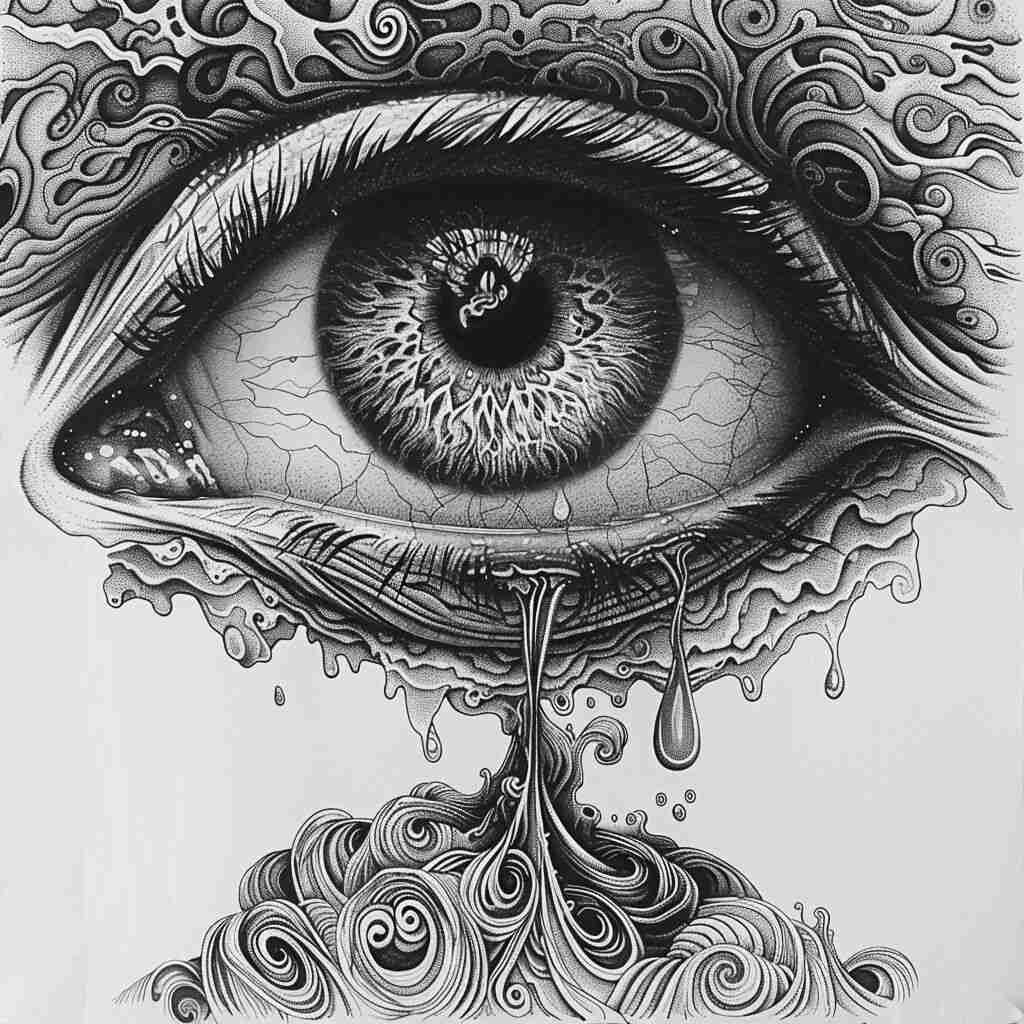
Why We Cry When We Are On Mushrooms?
Crying is a complex behavior, prompted by various triggers ranging from physical irritants to profound emotional upheavals. Whether it’s a speck of dust that brings reflex tears or a burst of laughter that results in joyous tears, the act of crying serves multiple purposes. It’s a physiological response that humans uniquely exhibit when overwhelmed by strong emotions. British behavioral neurologist Michael Trimble highlights that among all creatures, only humans shed emotional tears, and this might have an evolutionary advantage. It’s believed that showing vulnerability through tears could evoke empathy and compassion from others, strengthening social bonds.
Given psilocybin’s powerful impact on emotions, it’s hardly surprising that it often leads to tears. Psilocybin has a profound effect on the brain’s serotonin receptors, which play a critical role in our mood and emotional responses. When psilocybin is introduced into the system, it can dramatically amplify feelings, bringing normally subdued or controlled emotions to the forefront. This can lead to several scenarios where tears are a natural response:
Surfacing of Suppressed Emotions: Psilocybin can unlock deeply buried emotions, whether they are unresolved grief, suppressed anger, or hidden fears. This release can be overwhelming, leading to intense crying as a form of emotional catharsis.
Reflection on Personal Traumas: Individuals might find themselves revisiting past traumas or painful memories under the influence of psilocybin. This confrontation with the past can be both healing and emotionally draining, often resulting in tears.
Euphoria and Joy: Not all tears are sad; psilocybin can also heighten feelings of joy and euphoria to such an extent that they overflow into tears, reflecting an intense appreciation of the moment or a profound sense of gratitude.
Existential Insights and Stress Release: Psilocybin may prompt existential contemplation, leading to insights about life’s purpose or one’s place in the universe. This can be both enlightening and unsettling, prompting tears as a release of built-up existential stress.
Connection with the Universe: Users often report feeling an intense connection to the world around them or a sense of unity with the universe. This profound realization of interconnectedness can be incredibly moving, often expressed through tears.
By amplifying both the positive and negative emotions, psychedelic drugs like psilocybin enhance the emotional experience, making every sensation feel more profound. This heightened emotional state is why many find themselves crying during a trip—tears become a vehicle for emotional expression and release, providing a therapeutic benefit that can be integral to personal growth and healing.
Check out this magic mushroom!!

A.P.E Psilocybin Chocolate Bar
$60.00Dried Penis Envy Magic Mushrooms
Price range: $60.00 through $240.00Golden Teacher Gummies for Microdosing
$25.00


Understanding Crying From A Biological Perspective
From a biological perspective, tears are more than just a response to emotions; they are an essential part of our physiological health. Basal tears, which are continuously secreted in small amounts, play a critical role in maintaining the health and functionality of our eyes. They provide constant lubrication, protect the eyes from airborne particles, and help to keep the corneal surface smooth and clear for optimal vision.
Reflex tears, on the other hand, are produced in response to irritants such as smoke, wind, or onions. These tears are more than just water; they are a complex mixture that includes antibodies and enzymes. These components are crucial for protecting the eyes from infection by neutralizing and flushing out potentially harmful substances.
When it comes to tears triggered by emotions, the process becomes even more complex. Emotional crying is unique to humans and serves several psychological and social functions. Biologically, when we cry from emotions, our bodies release a cocktail of chemicals, notably oxytocin and endorphins. Oxytocin, often referred to as the “love hormone,” helps in promoting a sense of well-being and enhancing social bonds. Endorphins, known as natural pain relievers, can help to ease both physical and emotional pain.
Studies have explored the cathartic effects of crying and have found that shedding emotional tears can be immensely therapeutic. It’s not just about expressing feelings of sadness or joy; crying can actively help to reduce stress and may assist in restoring emotional equilibrium. This release of stress can have a calming effect, reducing the body’s level of stress hormones such as cortisol, which, if left unchecked, can be harmful over time.
Moreover, crying in a social context can signal distress, vulnerability, or a need for support, triggering empathy and strengthening interpersonal connections. This can play a crucial role in human survival by enhancing social bonds and increasing the likelihood of receiving support during emotional distress.
Understanding crying from a biological perspective reveals its dual role as both a protective physical function and a critical emotional and social behavior. It highlights how integral crying is not just for eye health but also for emotional coping, stress management, and social interaction.
Crying as Therapy
Crying is often considered a natural therapeutic practice, akin to an emotional cleanse. It’s a physical manifestation of a range of emotions—joy, sadness, frustration, pain—that can lead to a profound sense of relief. While it might be challenging for some to cry spontaneously, emotional triggers such as those induced by substances like psilocybin can facilitate this process. Psilocybin, in particular, has been known to lower emotional barriers, allowing individuals to access and express feelings that might be suppressed under normal circumstances.
The therapeutic value of crying lies in its ability to provide not just emotional release but also self-soothing. When we cry, our bodies undergo a chemical transformation, releasing oxytocin and endorphins, which help to alleviate physical and emotional pain. This release can bring about a calming effect, significantly reducing stress levels and enhancing mood. The act of crying can reset the emotional system, like hitting a refresh button, which can be particularly beneficial in times of overwhelming stress or sadness.
Different people have different needs when it comes to processing emotions. For some, gaining perspective might involve stepping back from a situation, perhaps through meditation or solitude, to analyze feelings from a distance. For others, emotional release is more direct and physical. These individuals might find solace in “cleansing tools” such as crying, which allows for an immediate release of pent-up emotions, or dancing, which channels emotions through physical movement and expression.
The idea of using crying as a therapeutic tool is rooted in the belief that fully feeling and expressing one’s emotions is integral to mental health. In therapeutic settings, encouraging patients to cry can be a way to help them confront and process deep-seated emotional pain from past traumas or current stresses. It’s a form of catharsis that can make subsequent emotional work less daunting and more manageable.
Moreover, in supportive environments, where crying is seen as a strength rather than a weakness, it can foster deeper connections between individuals. Sharing one’s vulnerability can lead to increased empathy, understanding, and support from others, which are crucial components of social bonding and emotional healing.
Thus, crying serves not only as a personal tool for emotional management but also as a bridge to better interpersonal relationships and a healthier mental state. Whether induced naturally or through substances like psilocybin, crying can be a powerful ally in the journey towards emotional resilience and psychological well-being.
🍄🌈🪬👁👽
Crying Under The Influence Of Magic Mushrooms Is A Common Phenomenon
Many who use psychedelics report crying from joy, sorrow, love, or even without understanding why. They often view it as a purifying ritual, finding it therapeutic and accepting it as part of their journey.
Some struggle to cry and need extra stimulation to release emotions. Mushrooms can offer a beneficial and safe way to express feelings compared to other outlets like punching bags or shouting.
Notably, Snoop Dogg once shared how a 2017 psychedelic experience led to uncontrollable crying, preventing him from performing. Despite the unexpected reaction, it was a cathartic and positive experience for him.
Another story involves Nancy Selleck, who described her tearful journey with magic mushrooms. Her experience involved confronting past traumas and unresolved memories, highlighting how psychedelics can affect even repressed memories.
In our busy, scrutinized world, it’s easy to avoid fully feeling emotions. A psychedelic experience can help you be present with yourself, embracing all emotions and their effects.

- Autumn Is a Season of Metabolism - 09/28/2026
- What If Creativity Isn’t Something You Create? - 09/24/2026
- Quick Relief Or Lasting Shift? The Psychedelic Trade-Off - 03/30/2026
