
SSRIs, Psilocybin, and the Question of What Healing Really Means
By Liddya Plenis — Magic Mushrooms Integration Coach & Contributing Writer at Magic Mush
The Fog and the Floodlight
For a long time, I thought healing meant feeling less.
When I first went on SSRIs, it was like someone had gently dimmed the world. My thoughts slowed. The sharp edges of panic softened. I could finally get out of bed, answer emails, eat something without crying. It was quiet. Manageable. A kind of merciful fog.
But that same fog dulled everything else too. I stopped crying — but I stopped laughing from my belly. I stopped spiralling — but I also stopped feeling awe. I was surviving, but barely tethered to my aliveness.
Years later, on my first psilocybin journey, the opposite happened.
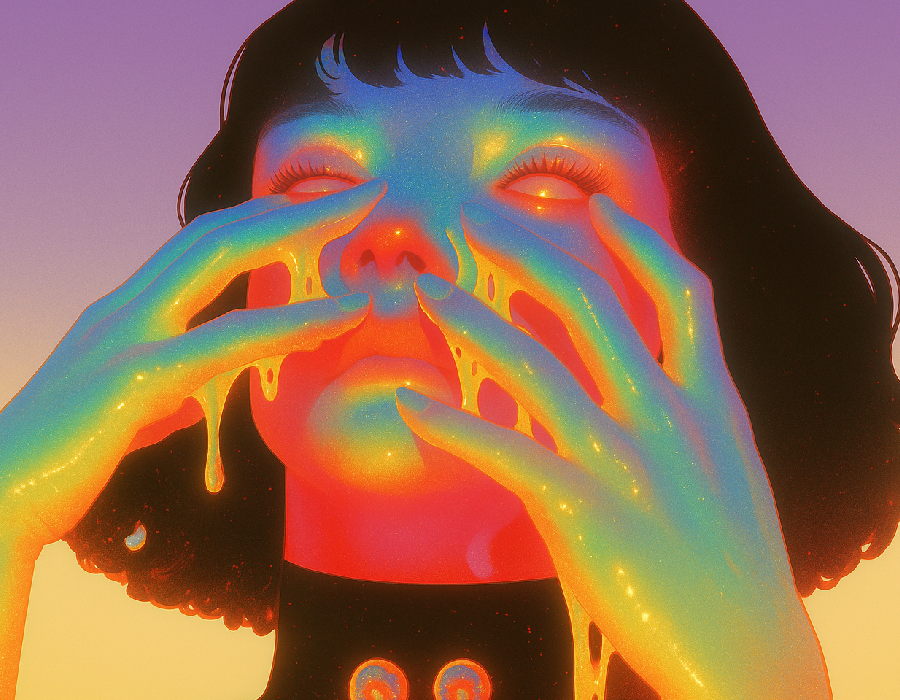
Tears came before I understood why. Laughter rose out of nowhere. Music split me open. Every leaf shimmered with unbearable beauty. It wasn’t gentle. It was a floodlight aimed at the heart.
That’s when I realised:
SSRIs had helped me survive by softening my feelings.
Psilocybin was helping me heal by letting me feel them.
And maybe the real question isn’t which is “better.”
Maybe the question is:
Are you seeking to quiet the pain — or to move through it?
SSRIs: The Gift and the Cost
SSRIs (selective serotonin reuptake inhibitors) — like escitalopram, sertraline, or fluoxetine — are among the most widely prescribed antidepressants on earth. They work by increasing serotonin availability at synapses over time, gently boosting mood and stabilising emotional volatility.
They don’t transform you overnight. They build up slowly, like tide filling a bay.
And for millions, they are lifesaving.
People often describe the first weeks as a lifting of weight. Thoughts feel less sharp, less urgent. Panic softens into worry. Sadness becomes muted enough to breathe under. Energy returns. You can function again.
But there’s a cost we rarely name:
emotional blunting.
SSRIs often dampen emotional highs and lows, not just the painful ones. The grief goes quiet — but so does the joy. The inner critic fades — but so does the spark. You don’t crash anymore, but you don’t soar either.
A composite client once told me,
“I don’t want to die anymore.
I just don’t know if I want to live either.”
This is the paradox: SSRIs can make life bearable,
while quietly dimming the very colours that make it feel worth bearing.
Psilocybin: Feeling Comes Roaring Back
Psilocybin does the opposite.
In a landmark 2020 JAMA Psychiatry study, psilocybin was shown to be as effective as escitalopram for treating major depression — but it worked within days, not weeks, and with a completely different neurological signature.
Rather than slowly adjusting serotonin tone, psilocybin binds to 5-HT2A serotonin receptors, rapidly increasing brain network connectivity, emotional openness, and neuroplasticity.
What that looks like from the inside is hard to capture in words.
It’s raw grief surfacing without narrative. Laughter through tears. Awe so intense it makes your chest ache. It’s seeing the world not as an idea, but as sensation — colour, sound, breath, presence.
Pull-quote:
“If SSRIs are a dimmer switch, psilocybin is a floodlight aimed at the heart.”
Music becomes almost unbearably beautiful.
Memories become living rooms you walk through.
Buried emotions come up not as “thoughts about feelings,”
but as the feelings themselves.
SSRIs manage symptoms.
Psilocybin reveals roots.
It doesn’t numb the pain — it shows you what the pain is trying to say.
The Catch: Feeling Isn’t Always Gentle
But here’s the part people often miss:
feeling again is not the same as feeling better.
The emotional intensity psilocybin brings can be overwhelming — even destabilising — if you’re unprepared or unsupported.
Trauma that’s been buried for years can surface all at once. Grief can crash through like a wave. Journeys can unravel old identities faster than the nervous system can keep up.
That’s why set, setting, and integration are not optional. They are the container that makes this level of emotional return survivable.
The goal isn’t just to unleash more feeling.
It’s to make meaning from what arises.
Psilocybin can open the heart wide.
But what heals you is how gently you hold what comes out of it.
The Middle Path: Microdosing
For some, microdosing offers a gentler bridge —
a middle path between the fog and the floodlight.
Tiny, sub-perceptual doses of psilocybin don’t overwhelm the nervous system. They nudge it.
Early observational studies suggest microdosing can lift mood, energy, and creativity while subtly reopening emotional range. Many of my clients describe it like colour seeping back into the edges of their world — not overwhelming, just enough to remind them they’re still here.
But microdosing is not passive.
It only works when paired with structure, intention, and reflection.
Think of it as slowly loosening the soil.
The dose softens old grooves; your daily practices plant the seeds.
What Are You Seeking?
There’s no moral hierarchy here.
No “better.” Only fit.
SSRIs offer stability, safety, relief — a lifeline when you are drowning.
Psilocybin offers reconnection, insight, transformation — a door when you’re ready to walk through it.
Ask yourself gently:
- Am I seeking to cope or to change?
- Do I have support in place if big emotions surface?
- What does healing mean to me right now — relief, or reconnection?
Either answer is valid.
Both are brave.
Numb or Alive?
SSRIs were my fog.
Psilocybin became my floodlight.
Both saved me — just at different stages of the same journey.
Maybe emotional pain isn’t a chemical glitch to be erased.
Maybe it’s a signal — a soul trying to speak.
And maybe healing isn’t about dulling what we feel,
but about feeling just enough to remember:
we are still alive.
—
Liddya Plenis is a Magic Mushrooms Integration Coach and a contributing writer at Magic Mush. She supports people in weaving psychedelic insights back into daily life with compassion, grounding, and curiosity.

- Autumn Is a Season of Metabolism - 09/28/2026
- What If Creativity Isn’t Something You Create? - 09/24/2026
- Quick Relief Or Lasting Shift? The Psychedelic Trade-Off - 03/30/2026
