
I didn’t mean to overdo it. Nobody ever really means to. It started with one ceremony that cracked something open in me — a psilocybin journey that made me weep for an hour straight, then laugh at the sheer absurdity of being human. For days after, I felt soft and alive in a way I hadn’t in years. But then, two weeks later, I found myself scrolling through retreat listings again, feeling that pull to go back in. I told myself it was for “integration,” for “deeper healing,” but if I’m honest, it was because I didn’t know how to sit still in the silence that followed.
There’s something about psychedelics — especially magic mushrooms — that can make you feel like you’re always on the brink of another revelation. You start to believe that maybe, if you just take a little more, go a little deeper, surrender a little harder, you’ll finally arrive at some grand understanding that will make everything click. I thought I was chasing clarity, but really, I was running from the quiet ache of integration — the part where you’re supposed to live with what the medicine showed you, not just chase the next high of insight.
I remember sitting in my apartment in Toronto one rainy night, tea gone cold beside me, reading Reddit threads about people microdosing for months on end. Some said it changed their lives; others admitted they couldn’t remember the last time they felt normal. That line stuck with me — because I realised that’s what I was afraid of losing, too: my normal. Somewhere along the way, the medicine had stopped being a mirror and started becoming a mask, one I didn’t know how to put down without feeling like I was losing the magic.
Psychedelic work has this strange duality — it teaches surrender, yet it also tempts control. You start thinking you can steer your healing by scheduling it, like booking a haircut or a yoga class. But the truth is, the medicine doesn’t always ask you to go deeper. Sometimes, it asks you to stop. Sometimes, the real work isn’t another ceremony — it’s the pause that lets the last one take root.
And so that’s what this piece is really about: the wisdom of resting. Of learning to recognise when your system — your heart, your mind, your nervous system — needs space more than stimulation. Of remembering that integration isn’t the afterthought of the psychedelic journey — it’s the whole point. Because if the trip is the storm, integration is the morning after, when the air is clean, and you finally get to see what’s left standing.
In the next few sections, we’re going to talk about that — the myth of infinite growth, the subtle signs that your soul might be asking for a breather, and why learning to pause isn’t a failure but a form of reverence. Whether you’re microdosing in Canada, attending psilocybin retreats in Toronto or Ottawa, or simply exploring the magic mushrooms path on your own, maybe this is your gentle reminder that you don’t have to keep going to keep growing.
Because sometimes, the most healing thing you can do isn’t to open another door — it’s to sit by the one you’ve already walked through, and let the light slowly settle in.
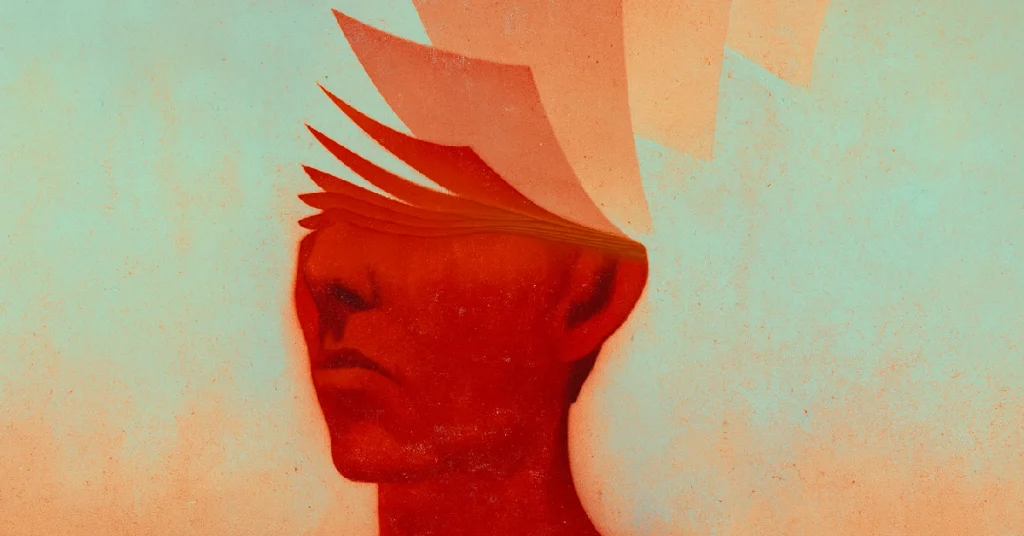
The Myth Of Infinite Growth (And How It Sneaks Into Psychedelic Culture Without Us Even Realising It)
If you’ve ever lived in a city like Toronto or Vancouver, you’ve probably felt it—the hum of productivity culture, the belief that progress equals movement. We hustle, optimise, upgrade, repeat. And somehow, that same mindset slips into spiritual spaces, too. Psychedelic culture isn’t immune.
When I first got into the world of magic mushrooms Canada, I noticed how quickly the “healing journey” became another form of self-improvement. Friends were talking about back-to-back ceremonies, ayahuasca weekends, ketamine therapy in psilocybin Ottawa, microdosing Canada protocols stacked with breathwork, sound baths, and therapy. Transformation had turned into a lifestyle—one that didn’t leave much space for stillness.
A Canadian facilitator I spoke with—let’s call her Mara—put it perfectly: “Sometimes the medicine keeps showing up because we keep asking questions it already answered.” Her words landed like a soft punch to the heart. I realised how often I was mistaking movement for depth. I wasn’t listening anymore; I was chasing.
This obsession with endless evolution mirrors our wider cultural paradox: expansion without digestion. We want constant novelty, constant insight, constant “aha” moments. But without time to integrate, those insights scatter like seeds on dry soil. We think we’re growing forests when really, we’re planting faster than we’re watering. Psychedelics don’t demand constant transformation—they demand cycles. The inhale, the exhale. The opening, and the closing. And both matter.
The Subtle Signs You Might Need A Pause (Even If Everything Still Looks “Spiritual” On The Surface)
Looking back, I can see the signs so clearly now. I was emotionally exhausted after every trip, even the ones I’d labelled “good.” I’d cry easily, sleep poorly, and struggle to make sense of what I’d experienced. But because I’d been told that healing looks messy, I kept pushing. I told myself discomfort was proof of progress.
Then came the integration fatigue—the sense of being “full” but disconnected. I was journaling, meditating, talking about my insights endlessly, but nothing felt alive. It was as if the light had dimmed. And yet, I kept going through the motions because I didn’t want to lose the magic.
There’s another subtle one too: spiritual inflation. That phase where every synchronicity feels like divine instruction, and every feeling feels urgent. It’s intoxicating—but it can also pull you away from grounded life. I caught myself dismissing “ordinary reality,” preferring cosmic downloads over doing laundry, community over solitude, daily life over mystery. I thought I was evolving, but really, I was orbiting.
A guide from an integration circle in Vancouver told me once, “When you can’t feel the medicine between journeys, it’s time to rest.” That line hit home. Because the goal isn’t to stay in ceremony forever—it’s to carry its echo into daily life. If the only time you feel alive is when you’re tripping, you’re missing the point.
Recognising these signs isn’t failure—it’s wisdom. It means you’re ready to learn a different kind of lesson: how to stay still.
Check out this magic mushroom!!

A.P.E Psilocybin Chocolate Bar
$60.00Dried Penis Envy Magic Mushrooms
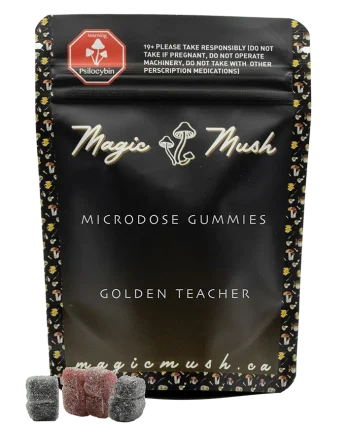
Price range: $60.00 through $240.00Golden Teacher Gummies for Microdosing
$25.00


Integration Isn’t Just Aftercare—It’s Medicine Too, And It Works Better When You Give It Time To Breathe
We talk about integration like it’s an optional follow-up, but it’s actually half the medicine. In fact, it might be the part that changes you most. Integration is where the insights take root, where the nervous system learns what safety feels like, where the brain rewires in real time.
There’s science behind it too. Studies show that psilocybin increases neuroplasticity—the brain’s ability to form new connections. But those new patterns need stability to lock in. If you rush into another trip before your system settles, those fresh pathways can scatter. You end up chasing novelty instead of nurturing growth.
One therapist I worked with in psilocybin Toronto told me, “Every insight is a seed. If you plant new ones before the last ones take root, nothing grows.” She was right. My mind had been a garden of half-grown insights, none given enough sunlight or water to mature. I realised that silence, therapy, journaling, walking, even boredom—those were the conditions that helped things bloom.
Integration is medicine. It’s when you let your nervous system digest the experience. It’s when you build trust with your body again. It’s when you remember that healing isn’t something you achieve—it’s something you allow.
So when people ask me now, “How long should I wait between journeys?” I tell them this: wait until you stop hearing echoes. Wait until your body says, “I’m ready.” Wait until what you learned feels lived, not just remembered. That’s when you’ll know.
The Fear Of Losing The Magic (And Why It’s The Real Reason Many Of Us Keep Dosing)
If I’m honest, my biggest fear in taking a break wasn’t about rest—it was about loss. I was scared the magic would fade. I thought if I didn’t keep engaging with the medicine, the connection would vanish, the insights would dull, and I’d fall back into the grey of ordinary life.
For a while, I believed the mushrooms were the bridge. But as one facilitator in psilocybin Ottawa told me gently, “Turns out they were the reminder that you can walk.” That hit me right in the gut. The medicine had never been the bridge—it had been the spark that reminded me the bridge was already there.
Many of us confuse the medicine with the source. We think psilocybin, LSD, ayahuasca, or mushroom chocolate Canada is where the magic lives. But the truth is, the molecule only opens the door. What walks through is you. If the only time you can feel spiritual, connected, or alive is when you’ve taken something, it’s time to remember that the medicine was never the chemical—it was your own capacity to feel.
That doesn’t mean the connection fades when you rest. It deepens. It matures. Like a relationship that no longer needs constant talking to know love is there, your connection to the medicine grows quieter, steadier, more embodied.
Taking a break isn’t saying goodbye to the magic. It’s trusting that it lives in you now.

Rest Isn’t Resistance—It’s The Other Half Of The Journey (And Maybe The Most Sacred Part)
There’s a line I once heard from an Indigenous elder during a retreat near the Sunshine Coast: “The pause is part of the prayer.” I didn’t fully understand it then. Now, I do.
Rest is not what happens when the journey ends. Rest is part of the journey. It’s the ceremony of silence, the space where everything you’ve seen and felt finally has time to settle. It’s the breath between songs, the darkness before dawn. It’s not lazy—it’s sacred.
In many traditional frameworks, fasting from the medicine is considered an act of respect. It honours the plant, the spirit, the process. It’s a way of saying, “I trust that what you’ve shown me will keep working, even without you.” That reverence changes everything.
For me, rest looks like cooking meals with friends, tending to my houseplants, journaling under dim light, walking along the seawall in Vancouver, reconnecting with the body I’d left behind in all that expansion. It looks like remembering that life itself is the ceremony, and the mundane is holy ground.
If you’ve been moving fast, chasing healing, or thinking you’ve “fallen behind” because you haven’t tripped lately—this is your reminder: you’re right on time. The stillness is not the absence of transformation. It’s transformation in disguise.

When You’re Finally Ready to Pause, Magic Mush Canada Is Here to Help You Honour the Stillness
If there’s one thing this entire conversation has reminded us, it’s that growth doesn’t always mean doing more. Sometimes, it’s about doing nothing — about sitting quietly and letting the lessons sink in, about trusting that the medicine is still at work even when you can’t feel it buzzing through your veins. Taking a break isn’t a setback; it’s a sign of maturity in the psychedelic path. Throughout this piece, we’ve explored what it means to know when to stop reaching for the next ceremony and instead tend to what’s already been awakened. Because truthfully, healing that’s rushed often unravels — but healing that’s given room to breathe becomes something real, something steady.
Psilocybin, in all its mystery, teaches patience as much as revelation. The beauty of the medicine lies not only in the visions or emotional breakthroughs but also in the quiet mornings after — the ones where you’re learning how to live differently, not just feel differently. And if you’ve ever wondered whether the stillness means you’re falling behind, you’re not. You’re simply arriving at a deeper phase of integration, one where the light doesn’t flash — it glows softly from within.
And honestly, that’s exactly the kind of wisdom we try to hold space for at Magic Mush Canada. We get it — this path can feel like a balancing act between curiosity and caution, between wanting to explore and needing to rest. That’s why we built “Magic Mush Canada” around the idea that the journey doesn’t have to be rushed. Whether you’re microdosing in Canada, exploring psilocybin in Toronto or Ottawa, or simply curious about the next step, we’re here to remind you that it’s okay to slow down. Healing isn’t a race — it’s a rhythm.
At Magic Mush Canada, we care deeply about creating safe, empowering experiences for anyone walking this path. From our high-quality, rigorously tested magic mushrooms and mushroom chocolate to the educational resources we share, everything we do is grounded in care and respect for the medicine. We want you to explore psychedelics with confidence, curiosity, and compassion — because when those three things meet, the experience becomes transformative in all the right ways.
So, if you’re in that in-between space right now — where you’re not sure if it’s time for another trip or a season of rest — take this as your sign. Trust the pause. Let your insights settle. And when you’re ready, come visit us at Magic Mush Canada. We’ll be here with open arms, ready to walk beside you whenever you decide to return to the medicine.

- Before You Trip: The Questions That Actually Matter - 02/05/2026
- When Mushrooms Don’t Show You the Universe — They Show You You - 02/04/2026
- The Hidden Problem With “The Mushroom Told Me” - 02/03/2026
