I wasn’t looking for a shortcut to enlightenment—just something to stop me from snapping when my kid spilled juice on my laptop… again. I’d tried meditation, downloaded every breathing app, even flirted with cutting out caffeine. Nothing stuck. Every day felt like a loop of tiny explosions—melted crayons on the radiator, a tantrum over the wrong color socks, that crushing feeling of watching the clock inch toward bedtime like it was stuck in molasses. Then a friend asked me, “Have you ever tried microdosing?” I laughed. And then I Googled.
I came into it skeptically, not as someone looking for a high, but as someone desperate for a little more space between stimulus and response. What if I didn’t go from calm to yelling in two seconds flat? What if I could soften the edges of my reactivity—not escape my life, but meet it with more grace? I wasn’t trying to check out. I was trying to check in—to myself, to my kids, to the version of parenting I wanted but couldn’t quite reach on two hours of sleep and existential dread.
What I discovered wasn’t a magic bullet. Microdosing didn’t make the dishes wash themselves or the toddler tantrums evaporate. But it did something quieter. I noticed my shoulders weren’t perpetually clenched. I cried less in the shower. I started to hear myself before I yelled. And that, honestly, felt like a miracle. Not the kind with fireworks, but the kind where you realize you’re allowed to feel soft even in the middle of chaos.
This piece isn’t about promoting a miracle cure. It’s about telling the truth: parenting is hard, sacred, and relentless. For some of us, microdosing psilocybin has become a quiet, intentional part of that journey—not to escape it, but to be more fully present inside it.
READ: How to Talk to Your Loved Ones About Magic Mushrooms: Share Your Journey Without Judgment
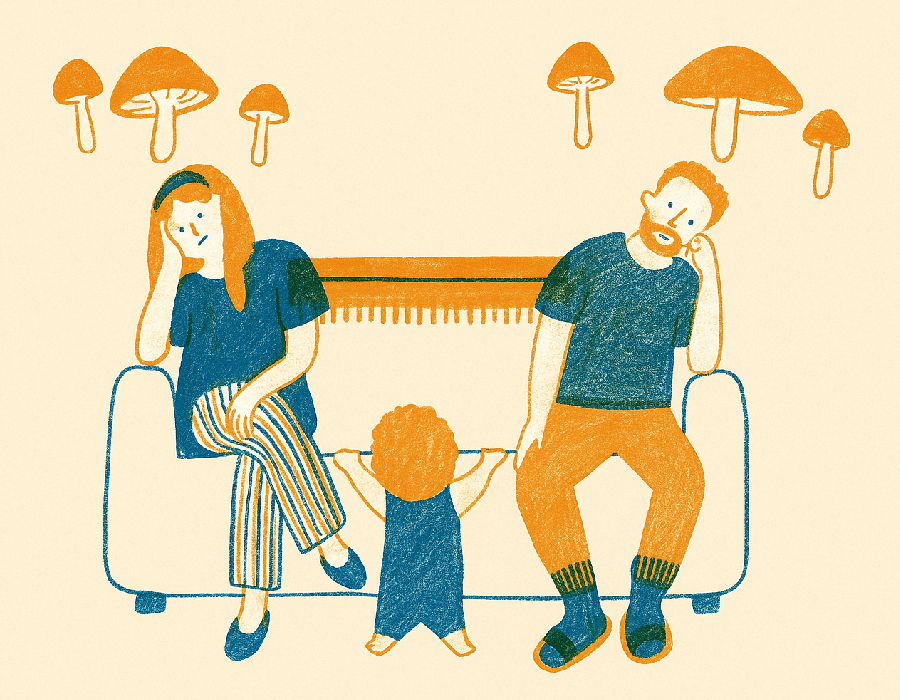
What Is Microdosing, Really?
Microdosing typically means taking a sub-perceptual dose of a psychedelic substance—usually psilocybin—often in the range of 0.1 to 0.3 grams of dried mushrooms. These doses are low enough that you don’t “trip,” but high enough to subtly shift your emotional, cognitive, or sensory state. Think: a slightly brighter world, a little more room in your chest to breathe, a little less reactivity.
The two most common protocols are the Fadiman method (one day on, two days off) and the more contemporary Stamets stack (four days on, three days off, often combined with lion’s mane and niacin). I chose something more intuitive—one day on, when I knew I could be reflective, and a few days off to integrate and notice. Some parents I’ve talked to stick to strict protocols; others microdose seasonally, during transitions like returning to work or navigating sleep regressions.
While mainstream media often focuses on tech bros and wellness influencers, the truth is microdosing has found a quiet home among parents—especially mothers—who are seeking support not just for mood or focus, but for meaning. It’s not about chasing productivity. It’s about grounding into presence. As one mom told me, “I just want to yell less and love more. That’s it.”
For many, it’s not even about noticeable effects on the day of dosing—it’s about cumulative softening. The sense that your inner world is becoming more resilient, less rigid. Like your nervous system is slowly unlearning the habit of panic and relearning the language of breath.
Why Parents Are Turning to Mushrooms
Parenting today feels like an emotional endurance sport played inside a broken system. We’re expected to raise emotionally intelligent children while juggling work, managing overstimulation, battling our own unhealed wounds, and surviving the collapse of community. It’s no wonder more and more parents are taking psychedelics for support emotional regulation and resilience.
Microdosing has emerged in parenting circles not as a trend, but as a lifeline. I first heard about it in an online postpartum group, where moms were whispering about mushrooms the way past generations whispered about martinis. But the tone was different. It wasn’t about numbing. It was about reconnecting—to joy, to presence, to a self that didn’t feel so buried beneath the weight of invisible labor.
I spoke with several therapists and integration coaches who support parents exploring microdosing. The common themes were clear: people wanted more patience, more creativity, and less disconnection from themselves. “It’s not about getting high,” one therapist told me. “It’s about lowering the threshold for compassion—especially self-compassion.”
When you’re parenting in a world that rarely makes space for your nervous system, tools that foster softness matter. Microdosing, for many, is one such tool—not a replacement for therapy, not a fix-all, but a gentle companion in the daily act of choosing presence over overwhelm.
Check out this magic mushroom!!

A.P.E Psilocybin Chocolate Bar
$60.00Dried Penis Envy Magic Mushrooms
Price range: $60.00 through $240.00Golden Teacher Gummies for Microdosing
$25.00


The Science: Mood, Neuroplasticity, and Regulation
A growing body of research is beginning to back up what parents have been saying anecdotally for years. A 2022 study in Nature Scientific Reports found that microdosing correlated with improved mood, increased focus, and reduced anxiety. Participants also reported better emotional awareness—a crucial skill for parenting, where the line between reaction and regret is razor thin.
The Beckley Foundation, which has long been at the forefront of psychedelic research, released preliminary data showing improvements in emotional regulation and cognitive flexibility. While most of this research isn’t parent-specific, the mechanisms at play—neuroplasticity, serotonin modulation, and decreased default mode network activity—point to real potential.
Neurobiologically, microdosing may help regulate the same pathways that get hijacked during chronic stress and sleep deprivation. The Default Mode Network, associated with rumination and self-referential thought, often calms under psychedelics—even at low doses. That quieting may create space between trigger and reaction, allowing more conscious responses.
From a lived experience perspective, it tracks. I started noticing when I was about to yell, rather than realizing it after. I became curious instead of reactive. It didn’t make me a perfect parent—just a more present one. And in the trenches of modern parenting, that presence is gold.
Not an Escape, But a Way In
One of the biggest misconceptions about microdosing is that it’s about escape—checking out, dulling the edges, floating above the mess. But every parent I spoke to echoed the opposite. Microdosing, they said, brought them deeper into their lives. Into the present moment. Into their breath. Into their own inner child, often wounded and waiting to be heard.
I felt it myself. On microdose days, I didn’t magically stop being overwhelmed. But I noticed the overwhelm sooner, before it turned into shouting or shutdown. I had more access to tenderness. I started apologizing more quickly—not as guilt, but as connection. And in those moments, the whole dynamic with my kid shifted. We were learning regulation together.
There were other subtle shifts too: more playfulness, less catastrophizing, a greater tolerance for mess—in the kitchen and in my heart. One day I found myself dancing in the living room with my child, without a plan, without thinking. Just moving. Being. Something I hadn’t done in months, maybe years.
This is the quiet gift of microdosing: not transcendence, but immanence. Not bypassing, but embodiment. You’re not escaping the chaos. You’re becoming more capable of meeting it with clarity and softness. That might not sound radical, but to me—and to many parents I’ve met—it’s the revolution we need.
READ: How to Microdose Psilocybin: A Beginner-Friendly Guide
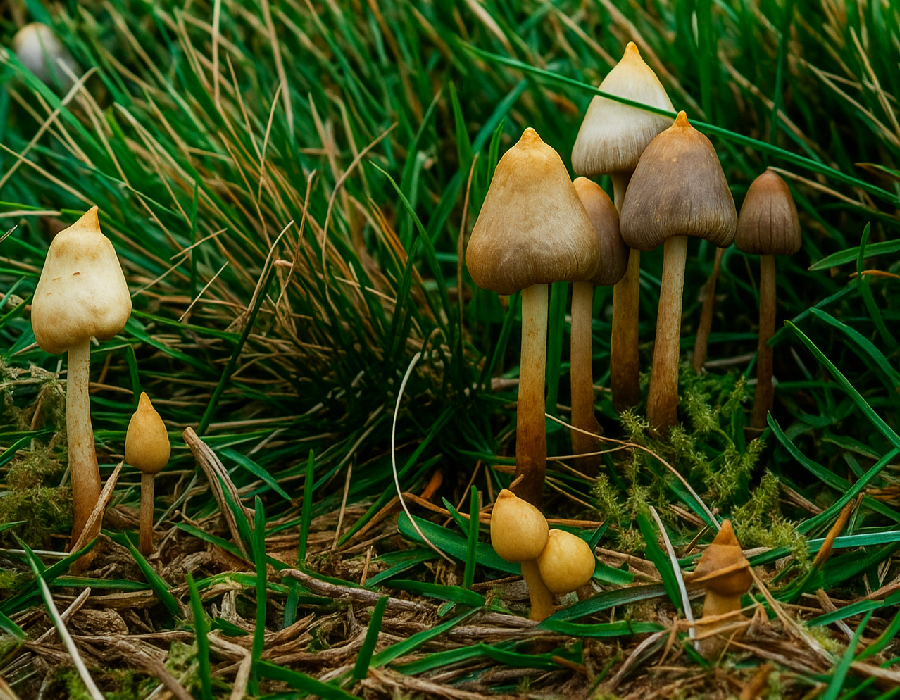
Boundaries, Safety, and the Nuance of Consent
Of course, this path isn’t without complexity. Microdosing remains legally ambiguous in most places. Accessing safe, accurately dosed products requires a level of trust, privilege, and discretion that many don’t have. Parenting while under the influence of anything—even mildly—is a sensitive topic, and rightly so.
That’s why intention and setting boundaries are critical. Microdosing is not about parenting while altered. It’s about preparing your internal landscape so that when parenting gets hard—and it will—you have more inner resources to draw from. I don’t dose on days I’m driving a lot, or navigating solo bedtime, or already sleep-deprived. I don’t use it as a crutch. I use it as a compass.
Therapists I spoke to emphasized the importance of integration: journaling, therapy, community. “Mushrooms can open the door,” one said, “but it’s your daily choices that decide how you live in the house.” That landed deeply. I still need breaks. Still need rest. Still need support from my partner, my friends, my co-parents.
Microdosing isn’t a cure-all. It’s not a replacement for therapy, sleep, or systemic change. But in the absence of those things being fully accessible or consistent, it’s one way—just one—of reclaiming a little sovereignty over your nervous system. And in this era of parental burnout, that matters.
Parenting as a Psychedelic Practice
In a strange, poetic way, parenting itself is already psychedelic. It strips you down, dissolves your ego, blasts you into the now whether you’re ready or not. It humbles you. Exhausts you. Remakes you. It brings you face to face with your shadows, your history, your fear, your longing. Microdosing doesn’t create that intensity—it helps you stay present with it.
What I’ve noticed over time is that mushrooms, even in small amounts, have helped me see my children less as tasks to be managed and more as beings to be witnessed. Their tantrums started to feel less like offenses and more like invitations—to slow down, to listen, to regulate with them. That kind of shift can’t be faked. It has to be felt.
Microdosing has also brought me back to myself in moments I thought were lost forever. That moment I stood in the sunlight while my daughter napped on my chest and felt joy—not as an idea, but as a full-body sensation. That was new. That was holy. And I don’t credit the mushrooms. I credit the way they helped me clear enough noise to feel something again.
In the end, the question isn’t “Should parents microdose?” It’s “What do parents need to be more resourced, more regulated, more rooted in love?” For some, that’s therapy. For others, it’s spiritual practice or medication. For a growing number, it’s mushrooms. And that’s worth talking about—with honesty, nuance, and care.
READ: Psychedelics, Intimacy, and the Space Between Us: How Mushrooms Help Us Come Home to Ourselves
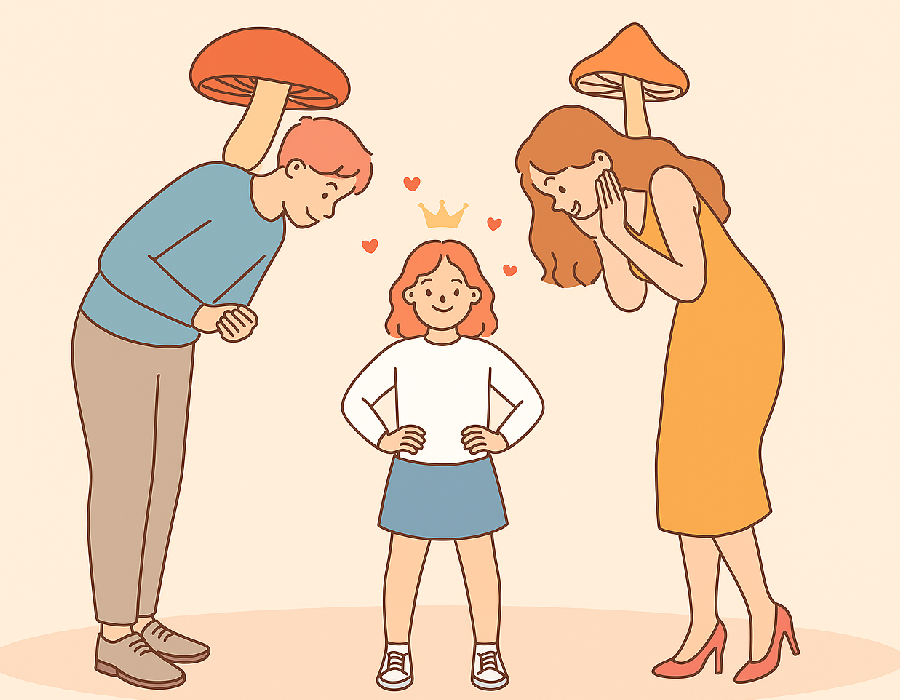
Reclaiming Presence, One Dose at a Time — With Magic Mush
There’s no hack for parenting. No perfect protocol. No supplement, spiritual system, or microdose that will erase the mess or stop the juice from spilling. But there are ways to meet the mess with more presence, to soften your reactivity, to come home to your breath when everything feels too loud. And for some of us, psilocybin has been that way—not a fix, but a friend. Not an escape, but an anchor.
At Magic Mush, we understand the tenderness and complexity of this path. As Toronto’s most trusted provider of psilocybin products, we’re proud to support parents, caregivers, and curious minds with offerings designed for intention—not escapism. Whether you’re exploring microdose gummies for emotional resilience, chocolate mushrooms for a gentle entry point, or dried magic mushroom bundles for ritual and reflection, we source with integrity and care.
We know that the decision to microdose as a parent is not taken lightly. That’s why our platform goes beyond commerce. We offer educational content, harm-reduction guidance, and space for questions that deserve real answers. Because when you’re parenting from a place of presence, how you support yourself matters.
So if this piece resonated—if you’ve been holding your breath in the storm of parenting, wondering if there’s a gentler way—we invite you to explore with us. Visit Magic Mush, and take that next step not just toward calm, but toward connection. To your kids. To yourself. To the version of parenting that feels more alive, more honest, and just a little more possible.