
The Quiet Revolution Underfoot
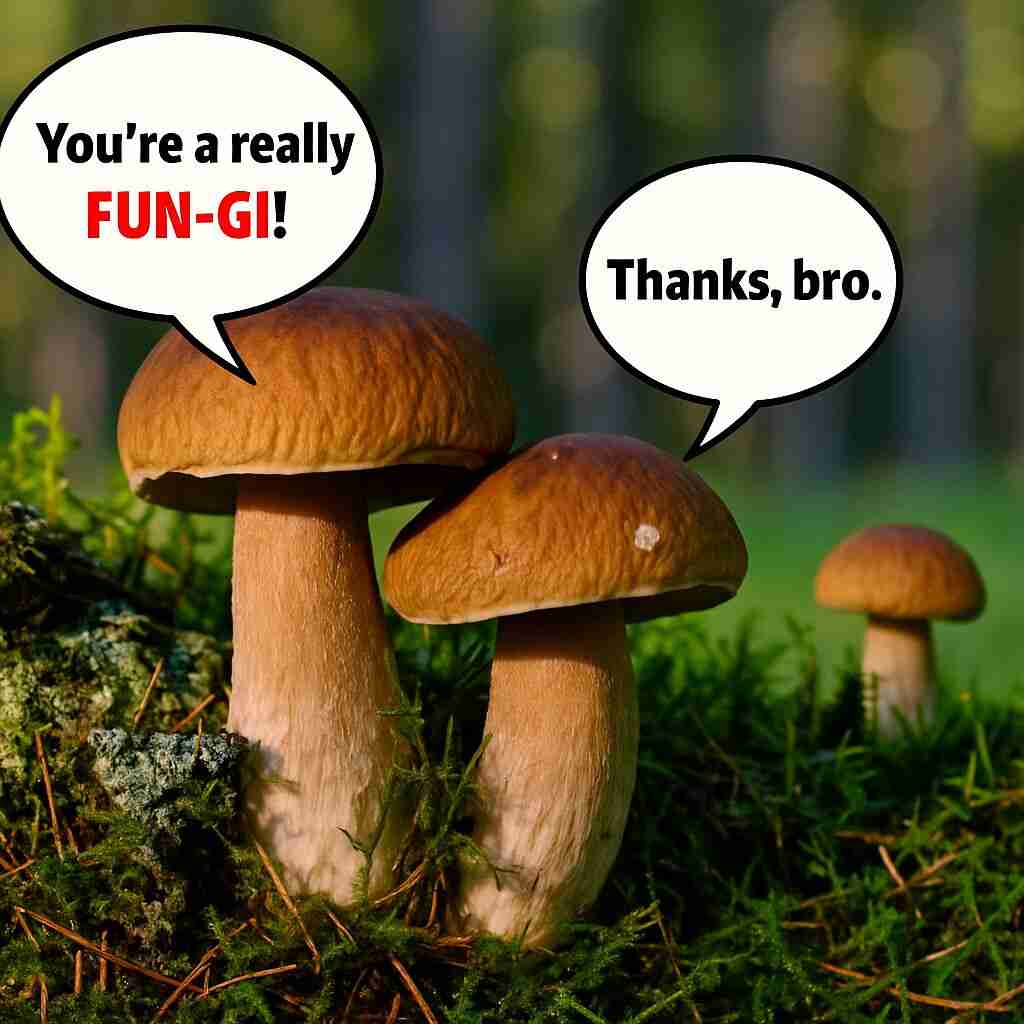
Most of us grew up thinking of mushrooms as quirky plants — the odd little umbrellas that appear overnight after rain, here for a moment and gone just as quickly. They were side characters in the story of life, decorative at best, decomposers at worst.
But science is quietly rewriting that story.
Fungi are not plants at all. Genetically, they’re closer to animals. They breathe oxygen, exhale carbon dioxide, and build their cell walls not from the cellulose of trees but from chitin — the same tough material found in the shells of insects and crabs. They are ancient, older than forests, older even than roots. And beneath every mushroom we see above ground is a hidden world: a branching, pulsing network of microscopic threads called mycelium.
What we are just beginning to discover is astonishing: this underground web might be communicating.
It’s a sentence that makes even scientists hesitate — not because it’s untrue, but because of how much it asks us to reimagine. If fungi are speaking, what are they saying? And what does it mean that we have never thought to listen?
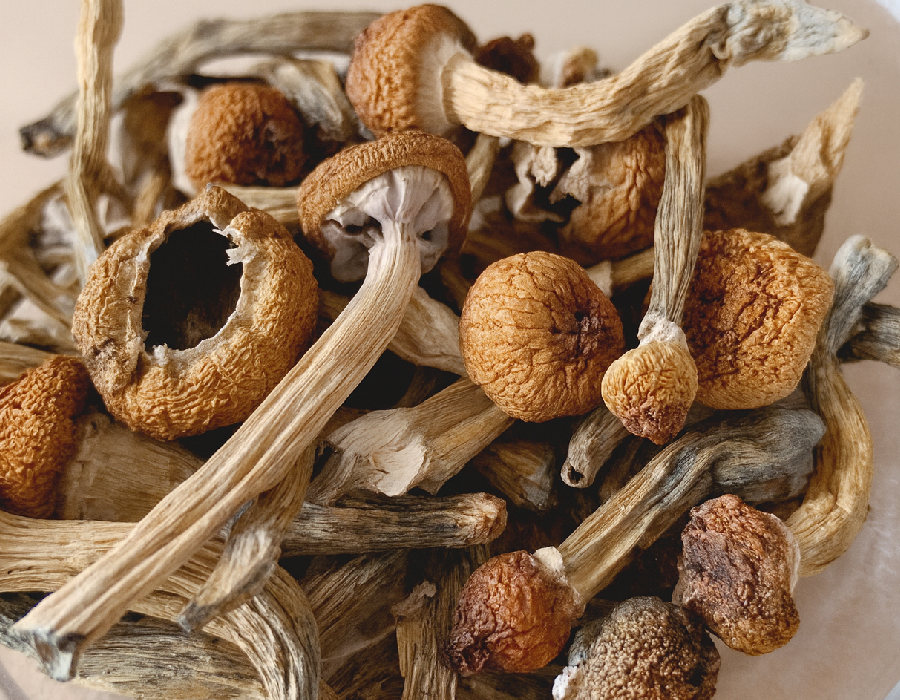
I remember the first time I ate psilocybin mushrooms in ceremony and felt them speak. Not in words, but in pulses — as if the earth itself had a heartbeat. Back then I thought it was only a metaphor. Now I’m not so sure.
The Mycelial Network and Its Signals
Imagine a living internet under your feet.
This is the mycelial network: a vast subterranean mesh of threadlike filaments called hyphae, weaving through soil, wrapping around tree roots, linking one organism to another. It’s not just sprawling — it’s systemic. A single cubic inch of healthy forest soil can contain kilometres of mycelium.
Trees use this network to exchange nutrients and chemical signals. A mother tree can feed a shaded sapling through it. Plants under insect attack can release distress signals through the fungal threads, prompting neighbours to raise their chemical defences.
But here’s where the story takes a stranger turn: the fungi themselves may be sending signals — not just acting as fibre-optic cables for plants, but communicating.
In controlled lab studies, researchers have placed electrodes into fungal networks and recorded tiny electrical impulses, like the spikes seen in animal nerve cells. These spikes respond to light, heat, pressure, food, toxins, and even anaesthetics.
When sedated, the fungi go quiet.
When the sedation wears off, their signalling resumes — like a nervous system slowly waking.
Unlike our rapid-fire neurons, these fungal pulses are slow, often spaced minutes apart, but they are patterned, not random. Their rhythms change depending on the stimulus — hunger, injury, threat, or growth.
“They speak slowly — but they do not speak nonsense.”
Some spikes cluster in bursts. Others ripple like Morse code through the threads. The more scientists record, the harder it becomes to dismiss this as mere chemical noise. It looks increasingly like intentional information transfer — not thought, exactly, but something startlingly close to it.
A Fungal Vocabulary?
In 2022, a team of researchers from the University of the West of England published a paper that stunned the scientific world.
They recorded electrical activity from four species of fungi and analysed it with linguistic algorithms — the same kinds used to study human languages. What they found was eerie:
- Distinct clusters of electrical spikes forming repeatable patterns.
- Over 50 different “signal types” identified in some species.
- The average “word length” of these spike clusters was similar to that of English or Greek.
In other words, fungal signals showed statistical structure similar to language.
To be clear, this isn’t the same as human conversation. There are no sentences, no symbolic grammar, no abstract concepts. The fungi aren’t debating philosophy underground. But the spikes are not random; they appear to carry discrete packets of information — like primitive words.
This raises a deeper question:
What is language, anyway?
Does it require intention? Conscious planning? Or is language simply the reliable exchange of information between living beings?
Birds sing, whales click, bees dance. None of them form complex sentences, yet we accept their signals as communication. If fungi can send patterns, remember stimuli, and adjust their behaviour, why wouldn’t that qualify?
The hesitation, perhaps, is not in the fungi — it’s in us.
We are reluctant to see intelligence where we have not granted permission for it to exist.
Why This Matters
If fungi truly communicate, the implications ripple far beyond curiosity.
Ecologically, it could mean that fungal networks actively coordinate the health of entire forests. They might warn nearby trees of disease or drought. They might route nutrients toward weaker plants, or isolate infected areas to contain damage. Some studies even suggest they can “remember” previous conditions — responding faster the second time a stressor appears.
This borders on what we might call primitive cognition: sensing, responding, adapting, and remembering.
Philosophically, it cracks open our human-centric definition of intelligence.
Must thought be fast to be real?
Must consciousness look like ours to count?
Could fungi be aware — not self-aware like humans, but environmentally aware, attuned, awake in a way we haven’t had language to describe?
Spiritually, this research hums with resonance.
Anyone who has sat in ceremony and felt the mushrooms speak — guiding, teaching, sometimes scolding with eerie precision — knows the sensation. Psychedelic experiences often include a palpable sense of dialogue, of being in communion with something ancient and intelligent.
If the mycelial mind is real — even in its simplest form — then maybe those experiences weren’t purely projections of our psyche.
Maybe they were conversations, however faint, with a living network that has been here long before us.
From Science to Sci-Fi
What’s even stranger is how quickly this is moving from theory to technology.
In labs across Europe and the UK, researchers are experimenting with mycelium-based bio-computers. They wire fungal networks with electrodes, feed them nutrients, and train them to solve logic puzzles. Slowly — over hours instead of microseconds — the fungal circuits learn to route electrical signals along the most efficient paths.
Other teams are developing living building materials: mycelium bricks that grow themselves, heal cracks, and adapt to stress.
Forestry scientists are designing soil health sensors that “listen” to mycelial chatter — hoping to detect ecological stress before trees show symptoms.
The idea isn’t that fungi will replace silicon chips. They are far too slow for that. But they are astonishingly adaptive, thriving where logic doesn’t need to be fast — only flexible, self-repairing, and resilient.
In this sense, fungi hint at a new paradigm:
biological intelligence that grows instead of computes.
They won’t build smartphones.
But they might quietly help us build worlds that heal themselves.
A New Relationship With Mushrooms
If fungi are speaking — even in whispers of electricity — then they are not just resources. They are relatives.
They are our ancient neighbours: older than plants, breathing like animals, weaving the living skin of the planet. They sense. They respond. They remember.
And maybe — they speak.
For those of us who work with psilocybin, this changes everything.
It invites more reverence.
More listening.
More reciprocity.
Maybe we aren’t just “using” mushrooms to explore our minds.
Maybe the mushrooms are also exploring us — nudging us, gently, to remember how to belong to the world again.
During my last ceremony, as I lay on the earth with my ear pressed to the soil, I swear I could hear it — a soft, patient rhythm, like roots breathing.
Back then, I thought it was my imagination.
Now, I’m not so sure.
They were speaking long before we were listening.
The question is: are we ready to listen back?

- Autumn Is a Season of Metabolism - 09/28/2026
- What If Creativity Isn’t Something You Create? - 09/24/2026
- Quick Relief Or Lasting Shift? The Psychedelic Trade-Off - 03/30/2026
