When my friend Ravi, a full-stack engineer at a startup in Toronto, told me he’d booked a psilocybin “performance optimization” retreat in Tulum, I nearly choked on my yerba mate. Ravi wasn’t exactly what you’d call woo-woo—he was the kind of guy who debugged code while wearing compression socks and measuring his HRV on an Oura ring. So when he said he was going to Mexico to take mushrooms “intentionally,” I assumed he meant he was chasing some Instagrammed version of enlightenment.
But then he showed me his itinerary. There was a biometric intake session, breathwork at dawn, a personalized music playlist curated by a psychedelic coach, guided journaling templates, dietary restrictions, an EEG headset rental, and a post-trip Zoom integration session with a certified guide. The retreat was marketed not as healing, but as an upgrade: “Optimize your nervous system, unlock flow, and achieve breakthrough creativity with sacred fungi.” I didn’t know whether to be skeptical or impressed.
What struck me most wasn’t the retreat itself—it was how normal it all felt. Ravi wasn’t alone. Another friend, a yoga teacher in Vancouver, told me she had created her own microdosing protocol: microdosing alongside a self-designed morning ritual of tarot, cold plunges, and gratitude journaling. She called it “psychedelic attunement.” Even on Reddit and Discord, people are sharing full trip blueprints: what strain to take, what music to listen to, which journaling prompts to use on each come-up. We’ve moved beyond the question of whether to trip. Now the question is how to curate it.
Suddenly, psychedelics weren’t just a mysterious force or a sacred medicine—they were becoming something else: a customizable experience. And in that shift, something profound was happening. Healing, insight, and even ego death were being sliced, sorted, and scheduled—another item on the self-improvement to-do list. I found myself wondering: in our hunger for transformation, have we started over-optimizing the very thing that’s supposed to teach us how to let go?
READ: A Handy Guide on How to Stop A Shroom Trip
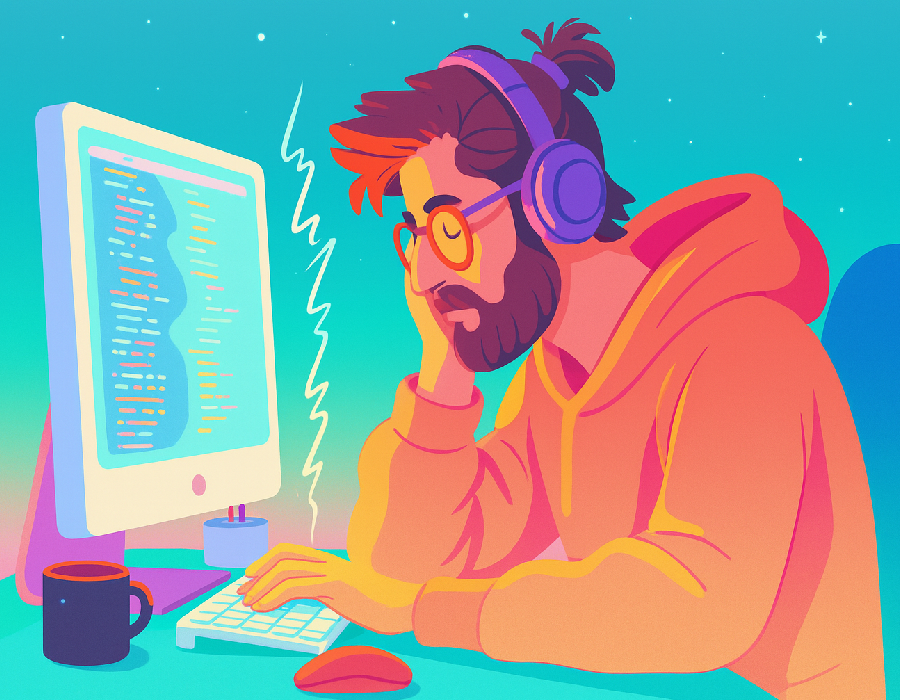
What Exactly Is a “Custom Trip”?
The idea of customizing a psychedelic journey isn’t new—at least not entirely. Traditional Indigenous ceremonies are deeply intentional, shaped by lineage, season, the specific needs of the person or community. But what we’re seeing now is different. In the West, as psychedelics are folded into tech culture, wellness trends, and mental health interventions, a new kind of personalization is emerging: one that draws from clinical science, self-help frameworks, and digital biohacking.
A “custom trip” can look like many things. In clinical settings, it might involve tailoring treatment protocols to a patient’s trauma history, neurological profile, or specific diagnosis. Compass Pathways, for instance, adjusts therapeutic approaches based on symptoms of treatment-resistant depression. In retreat settings, customization could mean choosing between bodywork, forest walks, or sound baths—each crafted to align with a participant’s goals, whether spiritual rebirth or creative ignition.
Then there’s the DIY sphere. More people than ever are designing at-home journeys, sometimes with the help of psychedelic coaches or integration specialists. These plans often include curated music playlists, intention-setting rituals, guided meditations, and even wearable tech like EEG headsets to track brainwave states. Some are deeply sincere in their preparation. Others are borrowing the language of tech and therapy without fully understanding the terrain they’re mapping.
At its best, this trend acknowledges something important: not everyone trips the same way, and intention matters. Emotional trauma survivors may need more grounding. Artists might crave open-ended exploration. Neurodivergent folks might benefit from specific sensory inputs. Customization can be empowering—it can help people feel safe, seen, and prepared. But it can also drift into the illusion of control, where the mystery of the medicine gets lost under a pile of spreadsheets and Spotify algorithms.
Check out this magic mushroom!!

A.P.E Psilocybin Chocolate Bar
$60.00Dried Penis Envy Magic Mushrooms
Price range: $60.00 through $240.00Golden Teacher Gummies for Microdosing
$25.00


The Self-Optimization Era Meets the Mushroom
It’s no coincidence that this wave of personalization is emerging in parallel with the rise of the quantified self—an era where everything from our sleep to our orgasms can be tracked, optimized, and turned into data. In a world where we tailor our supplements, therapy apps, workout routines, and even work meetings to our “personal performance zones,” psychedelics are simply the next frontier.
This is especially true in tech and entrepreneurial circles. Burnt-out coders, crypto millionaires, and performance consultants are turning to psilocybin not for spiritual communion, but for productivity gains. They microdose to “hack” their dopamine systems. They journey in sensory deprivation tanks to solve coding bottlenecks. They wear biometric trackers to analyze their “afterglow” states. The mushroom, once wild and chaotic, is being domesticated into a tool of precision.
There’s something eerie about it. On one hand, I get it. We live in a precarious world. Burnout is real. People are looking for ways to function, to feel, to find clarity. If that means designing a journey with clear intentions, safe environments, and post-trip reflections—why not? Customization can be a form of care. But when it becomes a performance metric, when every insight is logged, analyzed, and compared—what gets left behind?
I’ve spoken with folks who came out of heavily engineered journeys feeling underwhelmed. “It was like I followed all the steps, but nothing cracked open,” one person told me. “It felt like I was managing the experience, not surrendering to it.” In our effort to control the chaos, we may be missing the point: the most healing parts of a psychedelic trip often aren’t the ones you can plan. They’re the ones that ambush you—strange, raw, and utterly unscripted.
Who’s Tripping — and How
The range of people seeking customized psychedelic journeys is as broad as it is revealing. There are therapy-seekers dealing with depression, PTSD, or complex trauma, who benefit from structured, trauma-informed protocols designed to keep them anchored. There are spiritual seekers integrating breathwork, astrology, and ancestral practices into their mushroom journeys. There are high-performers—coders, artists, CEOs—who design entire weekends around unlocking flow states or “cracking” creative problems.
Then there are the retreat-goers, many of whom are in periods of life transition: divorce, loss, burnout, identity crisis. These travelers often want something immersive but safe—a container that honors their emotional state without defaulting to clinical language. For them, customization might mean choosing a guide with similar life experience, selecting rituals that resonate with their background, or ensuring the music doesn’t re-trigger a buried trauma.
One trend unites these different users: the desire for intention without surrendering completely to chaos. People want to feel like they’re crafting their own path, not being pulled into someone else’s vision of what a trip “should” be. And that makes sense. In a world of generic healthcare, fast-paced living, and identity fragmentation, being able to say “this is my journey” is powerful.
But it also raises a red flag. When does customization become control? When do we start filtering out the very discomforts that could be instructive? The part of the trip that makes you cry unexpectedly, that cracks open a long-buried grief, that shows you not what you want to see, but what you need to face? A mushroom doesn’t care about your UX preferences. It will show you what it will.
READ: Best Shrooms for Your First Trip
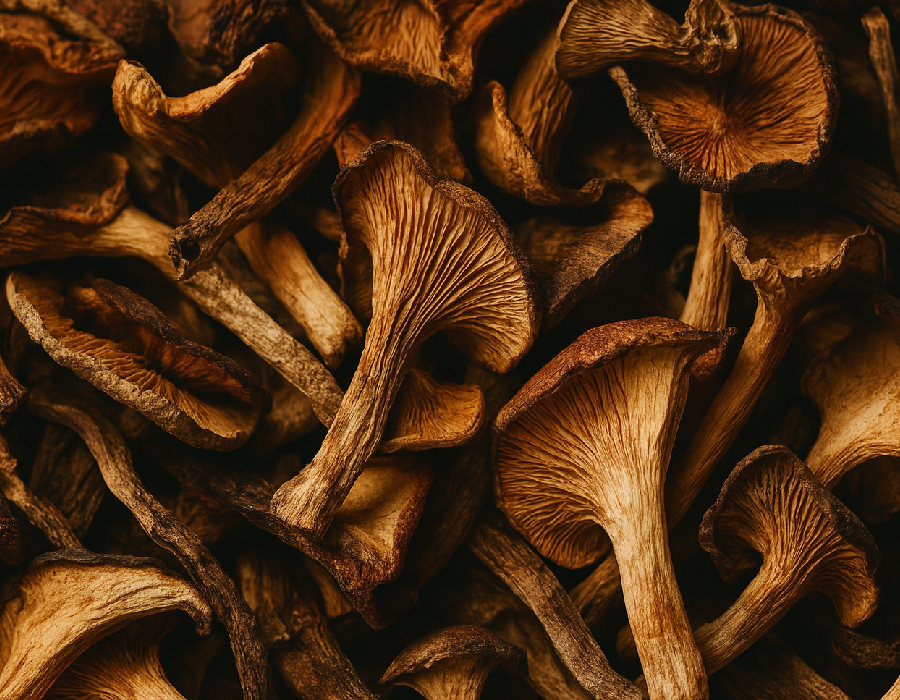
Between Personalized Medicine and Sacred Mystery
As psychedelic science advances, even clinical research is leaning toward personalization. In trials involving MDMA-assisted therapy for PTSD, therapists are trained to adapt their approach based on a participant’s trauma type, cultural context, and emotional readiness. Psilocybin studies now factor in patient histories, therapeutic rapport, even preferred music genres to support safety and depth.
We’re seeing the early signs of what some call “precision psychedelics”—a future where treatments are tailored to the individual like bespoke suits. In theory, this is a good thing. It acknowledges that healing isn’t one-size-fits-all. It respects the diversity of nervous systems, identities, and needs. But in practice, it runs the risk of turning inner work into a service menu: “Pick your dose, select your playlist, and choose your post-trip support level.”
This logic often clashes with Indigenous and ceremonial traditions that emphasize surrender over control, and collective experience over customization. In those contexts, the medicine decides. You listen, you pray, you hold space with others. There’s no spreadsheet for catharsis, no biometric readout for forgiveness. Healing comes not from designing the perfect protocol, but from stepping into the unknown with humility.
And maybe that’s the paradox of the custom trip. It reflects a beautiful truth—that we are all different, and we deserve care that sees us in our wholeness. But it also tempts us into thinking that with enough planning, we can outmaneuver the mystery. That we can avoid discomfort, or predict transcendence. Psychedelics laugh at that idea. They remind us that healing, like consciousness, doesn’t always follow a script.
READ: What to Eat with Magic Mushrooms for a Better Trip: A Guide for Recreational Users
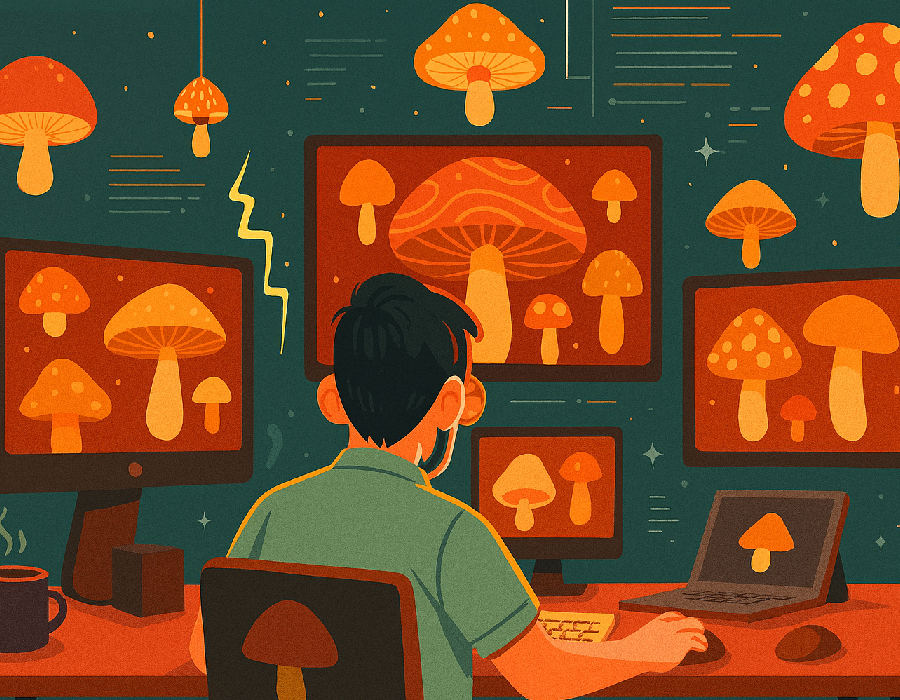
What Would You Include — and What Might You Leave Behind?
So what does your custom trip look like? Is it forest quiet or synth-heavy playlists? A sacred altar with ancestral offerings, or a sleep mask and guided meditation? Do you track your brainwaves or let the wind carry you? There’s no wrong answer—just a deeper question: What are you designing for? Insight, control, catharsis, clarity?
In a world saturated with options, where everything from our therapy to our Tinder bio can be optimized, it’s tempting to believe that the right formula will unlock the perfect experience. But psychedelics don’t always reward perfection. Sometimes, the most profound breakthroughs happen when you forget the itinerary. When the mushroom pulls you sideways into your own unknown.
At Magic Mush, we honor both the structure and the surrender. That’s why we offer products that support a range of journeys—from full-spectrum dried mushroom bundles for immersive trips, to microdose gummies for subtle integration, to chocolate mushrooms that soften the edge of self-discovery. Whether you’re customizing your own ritual or entering a communal one, we offer high-quality, intentional products that meet you where you are.
We invite you to explore what a custom trip might mean for you—not as a quest for control, but as an invitation to deeper listening. Healing isn’t one-size-fits-all, but neither is it a formula. Let your next journey be a co-creation, not a conqu