The term “entheogen” is one that may not immediately ring a bell, but when you break it down, it carries with it a rich and fascinating history, deeply embedded in the realms of spirituality and the use of psychedelics. It’s a word that’s often associated with powerful substances that alter consciousness, bringing the individual into a state of connection with something greater, something divine, or perhaps even the universe itself. The word comes from two Greek roots—”entheos,” meaning “god within,” and “gen,” meaning “to create” or “generate.” So, when you combine them, it literally means “to generate the divine within” or “the god within.” It’s a term that reflects the ancient belief that certain substances could help people transcend their ordinary state of mind and tap into higher spiritual dimensions.
As I immersed myself in this fascinating subject, I couldn’t help but feel a deep connection to the idea that psychedelics, far from being mere recreational tools or “drugs,” have played a profound role in humanity’s quest for deeper meaning and spiritual growth. The concept of entheogens, in a sense, brings us back to an ancient tradition where the use of psychedelic substances wasn’t just about the experience itself, but about facilitating a spiritual journey. Across various cultures, from indigenous tribes in the Americas to ancient Greek mystery schools, the use of these sacred substances was central to religious rituals, spiritual enlightenment, and profound mystical experiences. These substances were seen as bridges to a higher plane of existence—tools for gaining access to divine wisdom and insights that might not be available through ordinary, everyday perception.
READ: 10 Signs You’re Going Through A Spiritual Awakening
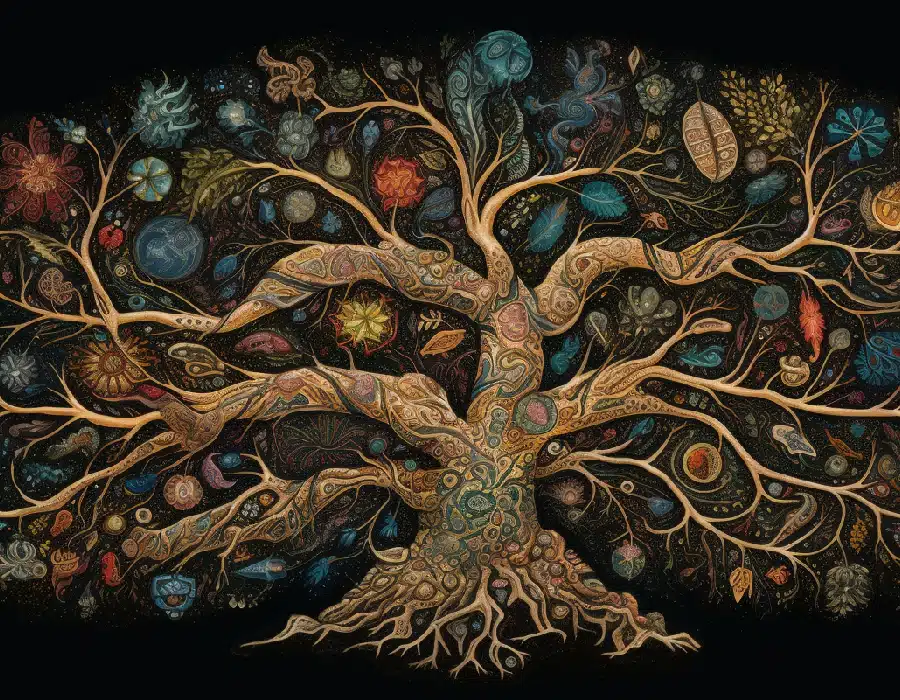
This ancient word is a powerful reminder of the long-standing relationship between humans and psychedelics, one that spans centuries and crosses numerous cultures. It suggests that the use of entheogens has been a spiritual tool, a sacred rite, long before they became the subject of modern research or contemporary debates. I personally find it fascinating to realize that, for millennia, people have been seeking to use these substances for purposes far beyond simple pleasure or escapism. Instead, they’ve been seeking a deeper understanding of themselves, the world around them, and the divine forces that shape their lives. For many, these experiences were transformative, providing profound insights into the nature of reality, existence, and the interconnectedness of all things.
When we talk about entheogens today, we’re not just talking about a trend or a rediscovery of an old practice. We’re engaging with a long, storied history that holds within it the potential for modern spirituality, healing, and transformation. The question then arises: How does the concept of entheogens shape our current understanding of spirituality and the potential for personal growth through psychedelics? Could it be that, by revisiting this ancient wisdom, we’re on the cusp of discovering new ways to heal, connect, and understand ourselves and the universe? In this article, I’ll delve into how the word “entheogen” unlocks a world of possibilities, shedding light on the sacred and spiritual role that psychedelics have played throughout history—and what that might mean for us today as we seek to reconnect with the divine within.
What is an Entheogen?
An entheogen is any psychoactive substance used in spiritual or religious contexts to induce an altered state of consciousness. The word itself has deep roots in ancient languages. It comes from the Greek words en (within), theos (divine), and gen (to generate), which translates roughly to “generating the divine within.” Unlike recreational psychedelics, which are often used for fun or self-exploration, entheogens are associated with intentional, sacred experiences meant to connect individuals to something greater than themselves—whether that be the universe, nature, or a higher power.
While many psychedelics can be used entheogenically, the key distinction lies in the intent behind the experience. Taking mushrooms at a festival for a fun trip is very different from participating in a guided psilocybin ceremony with a shaman. Entheogens aren’t about escaping reality; they’re about deepening one’s understanding of it.
READ: Buddhism and Psychedelics: Spiritual Shortcuts or Disruptions on the Path?

Historical and Cultural Roots
The use of entheogens is as old as human civilization itself. Various cultures across the globe have incorporated psychoactive plants and fungi into religious and healing practices for thousands of years.
In indigenous traditions, substances like peyote, ayahuasca, psilocybin mushrooms, and iboga have long been used in sacred ceremonies. Native American tribes, for example, have used peyote in spiritual rituals for centuries, believing it offers guidance, healing, and direct communication with the divine. Similarly, in the Amazon rainforest, indigenous groups continue to use ayahuasca in shamanic practices to gain insight and heal physical or emotional ailments.
Ancient Greece also had its own psychedelic traditions. The Eleusinian Mysteries, one of the most revered religious rites in the ancient world, involved a drink called kykeon. Some scholars suggest that this brew may have contained psychoactive substances, leading initiates to profound mystical experiences.
In Hinduism, the Rigveda mentions Soma, a mysterious ritual drink believed to bring divine insight. Though its exact composition remains unknown, many researchers suspect it contained psychedelic properties.
Even Christianity and early mysticism may have had entheogenic roots. Some theories suggest that early Christian communities may have used psychedelic sacraments, possibly derived from ergot fungi, to induce visions and mystical states.
Despite their long history, entheogens have often been suppressed. Colonization, religious dogma, and modern drug policies led to the demonization of plant medicines. Many indigenous traditions were outlawed, and sacred substances were rebranded as dangerous drugs. However, in recent years, a psychedelic renaissance has sparked renewed interest in these ancient practices, with researchers and spiritual seekers alike rediscovering their transformative potential.
READ: Cultivating A Spiritual Practice: A Guide For Busy Lives
Modern Science and Entheogenic Experiences
Entheogens don’t just create strange hallucinations; they profoundly alter brain chemistry in ways that modern science is only beginning to understand. Studies show that substances like psilocybin, DMT, and mescaline work by activating serotonin receptors, particularly the 5-HT2A receptor, which plays a role in perception, cognition, and mood regulation. This interaction can lead to altered states of consciousness, ego dissolution, and intense spiritual experiences.
One of the most compelling scientific studies on entheogens comes from Johns Hopkins University, where researchers explored the effects of psilocybin on spirituality. Their findings revealed that participants who took psilocybin in a controlled, guided setting often reported mystical experiences comparable to those described by religious figures throughout history. Many felt a deep connection to the universe, a dissolution of the ego, and an overwhelming sense of love and unity.
But do these experiences reveal something truly divine, or are they just the brain playing tricks? Some argue that psychedelics simply mimic religious experiences, creating artificial spiritual sensations. Others believe that entheogens provide a direct line to something greater—a way to access a realm of consciousness that exists beyond our ordinary perception.
Entheogens vs. Psychedelics—What’s the Difference?
At first glance, the terms “entheogen” and “psychedelic” might seem interchangeable. Both refer to substances that alter perception, expand consciousness, and induce non-ordinary states of awareness. However, the distinction between the two goes beyond mere semantics—it’s about intention, context, and the depth of experience they facilitate. While all entheogens fall under the category of psychedelics, not all psychedelics qualify as entheogens. The difference lies in how and why they are used.
The word “psychedelic” comes from the Greek words psyche (mind) and deloun (to reveal), meaning “mind-manifesting.” Psychedelics are substances that alter perception, cognition, and emotions, often leading to profound shifts in thought patterns and awareness. Many people use psychedelics recreationally for their sensory-enhancing and euphoric effects, while others turn to them for personal insight, emotional well-being, or creativity. They can dissolve the ego, create intense visual and emotional experiences, and shift how individuals perceive themselves and the world around them. However, the experience itself does not necessarily have a spiritual or sacred context—it depends on the user’s intent.
The term “entheogen,” on the other hand, is specifically used to describe substances taken in a spiritual, religious, or shamanic context. Derived from the Greek entheos (“full of the divine”) and genesthai (“to generate”), the word literally means “generating the divine within.” Entheogens are not merely about altering consciousness; they are used as sacred tools for connecting with higher states of awareness, divine forces, or inner wisdom. Whether consumed in traditional indigenous ceremonies, mystical religious rites, or modern-day spiritual practices, entheogens are deeply tied to the idea of transcendence and spiritual awakening. The key difference is that while psychedelics can be used in various ways, entheogens are specifically linked to ritualistic or intentional spiritual exploration.
To understand this distinction, consider the different ways people use psilocybin mushrooms. One person might take mushrooms at a music festival, laughing with friends as colors intensify and time seems to stretch. In this case, the mushrooms are being used as a psychedelic—a substance that enhances sensory perception and shifts consciousness in a recreational setting. Another person might consume psilocybin in a guided ceremony, setting an intention for healing, and experiencing visions that feel deeply sacred or transformative. The same substance is at play, but here, it functions as an entheogen—a tool for spiritual growth and connection to something greater than the self.
READ: Can Magic Mushrooms Help You Work on Your Third Eye?

This contrast can also be observed with other substances. LSD, for example, is often used for recreational or therapeutic purposes, but when taken in a ritualistic setting with spiritual intent, it can act as an entheogen. DMT, the active compound in ayahuasca, is widely considered an entheogen due to its use in shamanic traditions, but when smoked recreationally outside of a ceremonial context, it is simply a psychedelic. Similarly, peyote and San Pedro cacti are regarded as entheogens because of their deep roots in indigenous spiritual traditions, while substances like MDMA, despite their psychedelic effects, are rarely considered entheogens because they lack the traditional spiritual framework associated with their use.
While the line between entheogens and psychedelics is not always rigid, the distinction matters. It highlights the importance of set, setting, and intention when engaging with these powerful substances. Psychedelics can be tools for fun, self-exploration, or therapeutic breakthroughs, but entheogens hold a deeper, more sacred purpose for those who seek connection with the divine, the universe, or their own inner truth. Understanding this difference can help users approach these substances with greater awareness, choosing the right path based on their personal goals and the experiences they hope to cultivate.
Psychedelic Microdosing—Is It an Entheogenic Practice?
Microdosing, the practice of taking small, sub-perceptual doses of psychedelics, is often framed as a tool for productivity and mental health. But can it also be entheogenic?
Some argue that while microdosing doesn’t produce the intense visions of a full psychedelic experience, it can still enhance meditation, intuition, and creativity. If used with the right intention, microdosing could serve as a subtle way to deepen one’s spiritual practice, making everyday life feel more connected and meaningful.
READ: How To Boost Serotonin: Exploring Psilocybin, Sunlight, and Other Strategies

Experience the Magic with Magic Mush – Your Trusted Source for Premium Shrooms
Magic mushrooms have long been revered for their profound effects on consciousness, creativity, and mental well-being. Whether you’re looking to embark on a deep psychedelic journey, enhance your daily life through microdosing, or explore alternative therapies, understanding dosage, effects, and safe usage is key. By learning about the different types of psilocybin experiences and how various factors influence them, you can approach shroom use with confidence and clarity.
At the heart of every magic mushroom experience is the potential for personal growth, healing, and transformation. Responsible use, proper dosing, and a mindful approach can help ensure that your journey is both meaningful and beneficial. As interest in psilocybin continues to rise, access to high-quality products and reliable information becomes increasingly important for both new and seasoned users alike.
That’s where Magic Mush comes in. As Canada’s premier source for premium magic mushrooms, we’re dedicated to providing top-quality products like shroom edibles and mushroom bundles, expert guidance, and a safe, reliable shopping experience. We believe in the therapeutic potential of psilocybin and strive to destigmatize its use by offering education, resources, and unwavering support to our community. Whether you’re a first-time user or an experienced psychonaut, our carefully curated selection ensures you’ll find the right product for your needs.
At Magic Mush, we go beyond just selling shrooms—we cultivate a movement toward greater awareness and acceptance. Our rigorous testing processes ensure that every product meets the highest quality standards, so you can explore the world of psychedelics with confidence. Plus, our seamless online shopping experience, commitment to privacy, and exceptional customer service make us the trusted choice for magic mushrooms in Montreal.
Ready to begin your journey? Visit Magic Mush today and discover a world of possibilities. Whether you’re microdosing for wellness, seeking a transformative trip, or simply curious, we’re here to guide you every step of the way. Shop now and take the first step toward a deeper, more enlightened experience with magic mushrooms.