
In a lot of Western culture, dreams are treated like background noise. Interesting sometimes, strange often, but ultimately disposable. We joke about them over coffee, google a symbol if it lingers, and then move on with the day. The dominant assumption is that dreams are either random firings of the brain or private psychological artifacts meant to be decoded solo, preferably quickly.
Many Andean traditions hold a very different orientation. Dreams are not random, and they’re not just personal entertainment. They’re relationship. They’re information. They’re responsibility. And they don’t belong only to the dreamer. Meaning is often shaped, held, and interpreted within a wider web that includes family, community, ancestors, landscape, and ethical context.
This doesn’t mean dreams are treated as magical guarantees or unquestionable commands. It means they’re taken seriously, carefully, and slowly. And that difference alone invites a deeper question: what changes when dreams are understood as part of a living relationship, rather than as isolated mental content?
🌿 Many people notice shifts in perspective, energy, or emotion during a spiritual awakening. Check out this article for 10 signs that often show up

Why I Wanted to Write About Dream Healing, and Why I’m Trying to Do It Carefully
I started paying closer attention to dream healing stories the same way many people do now: online. Short clips, poetic captions, and aesthetic language about Andean wisdom, nighttime plant work, and ancestral dreaming circulate easily, especially in spaces already interested in psychedelics and spirituality. Something about dreams feels intimate and safe to borrow. They happen at night. They’re internal. They feel personal.
But the more I listened, the more uneasy I became. These stories travel well, but they often travel stripped of context. Practices are hinted at without responsibility. Lineages are flattened into vibe. And living traditions become backdrops for personal transformation narratives that don’t have to answer to anyone.
This piece isn’t an attempt to teach an Andean practice or translate it into something usable. It’s an attempt to listen carefully, to describe orientations rather than methods, and to stay honest about what can and cannot be said responsibly from the outside.
What “Dream Healing” Means Without Turning It Into a Single Definition
Dream healing, in many Andean contexts, isn’t a single practice or technique. It’s a way of relating to dreams as meaningful events that participate in health, balance, and relationship. Dreams may be understood as communication, not just from the self, but potentially from ancestors, landscape, spirit, or community, depending on the specific worldview.
They can function as diagnosis, not in a clinical sense, but in a symbolic and relational one. A dream might reflect imbalance, broken reciprocity, emotional congestion, or moral tension. It can also act as guidance, offering orientation for decisions, relationships, or obligations. In some cases, dreams are understood as healing work themselves, part of an ongoing process of repair, protection, and psychedelic integration.
It’s essential to say this clearly: Andean traditions are diverse. Languages, cosmologies, and practices vary widely across regions and communities. There is no single Andean belief about dreams. Any description here is necessarily partial and contextual, not a universal claim.
🌌 Astral projection is something many people describe as an out-of-body experience you can learn about step by step. Read this article for a beginner’s guide to how it’s often approached

What People Mean by “Nighttime Plant Work,” and Why It’s Not About Instructions
When people use the phrase “nighttime plant work” in Andean contexts, they’re often gesturing toward relationships with plants that extend beyond daytime use or visible ritual. This isn’t about products or protocols. It’s about plants as beings with whom relationships are cultivated over time.
In some traditions, plants are understood as teachers, allies, protectors, or medicines in a broad cultural sense that has little to do with consumption. These relationships are often shaped by lineage, place, language, ritual discipline, and community accountability. Knowledge isn’t abstract; it’s embedded.
What matters here is orientation, not replication. This article does not provide steps, recipes, or anything that could be copied out of context. That restraint isn’t about secrecy; it’s about respect. Without place, permission, and responsibility, imitation becomes extraction.
The Worldview Beneath the Practice Is Where the Meaning Lives
To understand dream healing in Andean traditions, it helps to look beneath individual practices and toward worldview. Reciprocity is central. Relationship is not one-way. Dreams don’t exist to serve the dreamer alone; they exist within a web of mutual obligation, a perspective that also shapes how plan medicines are approached and how plant medicines can deepen intimacy with self, community, and the living world.
Respect for place is another foundational value. Mountains, land, and weather are not scenery. They’re living context. Balance is understood not as perfection, but as something that must be tended continuously. Harmony can be lost and restored, again and again.
Humility shapes how power is handled. Knowledge is not assumed to belong to the individual, and protection matters. Discernment, boundaries, and cleansing are part of ethical life, not dramatic acts but ongoing responsibilities. These values shape how dreams are approached long before any interpretation begins.
How Dreams Are Interpreted Without Rushing to Meaning
Dream interpretation in these traditions tends to resist shortcuts. Meaning is contextual. A symbol only makes sense in relation to the dreamer’s life, relationships, and circumstances. There is no universal dictionary. One person’s snake may signal danger; another’s may signal protection.
The body matters. Sleep quality, stress, grief, and physical health all shape dream tone. Dreams aren’t treated as disembodied messages floating above material life. Community containers often matter more than solo interpretation. Elders, family members, or ritual leaders may help hold and reflect meaning, not by declaring answers, but by situating the dream within a wider story.
Importantly, there’s a distinction between a dream as a story, a dream as a message, and a dream as emotional digestion. Not every dream is instructional. Some are simply the psyche and spirit doing their nightly work.
Check out this magic mushroom!!

A.P.E Psilocybin Chocolate Bar
$60.00Dried Penis Envy Magic Mushrooms
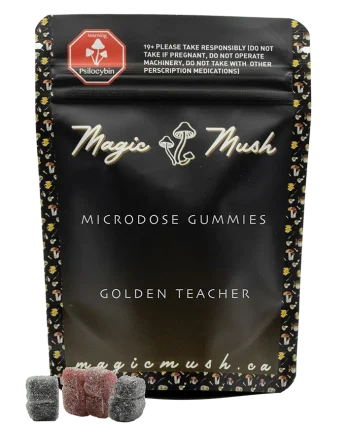
Price range: $60.00 through $240.00Golden Teacher Gummies for Microdosing
$25.00


What Modern Readers Can Learn Without Taking What Isn’t Theirs
For modern readers, especially those drawn to psychedelics or inner work, the value here isn’t in copying practices. It’s in orientation. Dreams can be treated as relationship rather than content. Instead of asking, “What does this mean about me?” the question might become, “What is this dream asking me to tend, repair, or notice?”
Patterns matter more than single-night revelations. Meaning matures over time. Urgency is often a sign of projection rather than insight. Learning from a worldview means allowing it to challenge assumptions, not turning it into a self-help tool.
This distinction matters. Appreciation without extraction requires patience and restraint.
When Dream Healing Goes Viral and Things Start to Break Down
When dream healing enters online wellness culture, problems tend to follow. Indigenous knowledge gets exoticized. Practices are stripped of community and place. Roles and titles collapse into the vague figure of the “shaman,” erasing specificity and accountability.
Power dynamics are often ignored. Economic incentives shape who gets visibility. Dreams get positioned as replacements for grief support or mental health care, which can leave people ungrounded or overwhelmed. Some dream content is genuinely destabilizing, and interpretation without support can do harm.
Naming these risks isn’t about gatekeeping. It’s about honesty.
🌿 Many people wonder how psychedelic experiences fit with Buddhist teachings or spiritual paths. Check out this article for a thoughtful look at both sides
Listening Practices That Keep Curiosity Ethical, Grounded, and Oriented Toward Respect Rather Than Taking
When people feel genuinely moved by Andean dream healing traditions, that pull is often sincere. Curiosity, longing, and a sense of recognition are not problems in themselves. Where things become complicated is when curiosity turns into consumption, or when admiration quietly shifts into entitlement. Ethical listening starts by slowing that moment down and asking harder questions than “How do I do this?” or “How can this help me?”
One of the most important listening practices is noticing what you are hoping this tradition will give you that your own cultural or communal frameworks have not. Many people arrive at Indigenous knowledge carrying grief, disconnection, or spiritual hunger that hasn’t been met elsewhere. That hunger is real, but it doesn’t automatically grant permission to step into someone else’s cosmology. Ethical curiosity asks whether the pull is toward wisdom itself, or toward an identity that feels more meaningful, grounded, or special than the one currently available.
Another key practice is learning to distinguish resonance from ownership. Feeling moved by a worldview does not mean it now belongs to you, or that you are meant to enact it. In many Andean frameworks, relationship comes with responsibility, accountability, and long-term reciprocity. Listening ethically means allowing a tradition to influence how you think and feel without assuming it authorizes you to act, perform, or teach. Sometimes the most respectful response to resonance is simply to let it reshape your questions rather than your behaviour.
Reciprocity also needs to be examined honestly. In modern spiritual culture, reciprocity is often reduced to appreciation or symbolic gestures. In living traditions, it is much heavier than that. It involves ongoing responsibility, consent, and material realities. Ethical listening asks what reciprocity could possibly look like when you are far from the land, language, and community where these practices live. Often, the answer is not direct participation, but support that has been invited, such as amplifying Indigenous voices, reading Indigenous scholars and writers, or contributing to community-led initiatives without expecting access in return.
Honouring place is another subtle but crucial aspect of ethical listening. Andean dream healing is inseparable from the land, mountains, weather, and ancestral presence of specific regions. When engaging from elsewhere, respect may mean resisting the urge to translate everything into something placeless and portable. It may involve turning attention back toward your own environment and asking how dreams, relationships, and responsibilities show up where you are, rather than borrowing meaning from somewhere else.
Holding mystery without demanding clarity is also part of this practice. Western frameworks often reward certainty, explanation, and personal insight. Many Indigenous traditions, including those in the Andes, are comfortable with ambiguity and gradual understanding. Ethical curiosity allows meaning to remain incomplete. It accepts that not everything is meant to be known, named, or shared, especially by those outside the culture.
Finally, ethical listening involves resisting urgency. There is no rush to integrate, embody, or apply what you are learning. When curiosity feels urgent, it is often driven by personal need rather than relational readiness. Slowing down, sitting with discomfort, and letting questions remain unanswered can be a form of respect in itself.
Taken together, these listening practices are not about self-denial or guilt. They are about maturity. They ask for humility, patience, and a willingness to be changed internally without turning that change into a performance or a claim. In the context of dream healing and Andean traditions, ethical curiosity doesn’t seek access. It seeks understanding, and it accepts that understanding may always come with limits.
Dream Healing Is Not a Shortcut, and That’s the Point
Dream healing, as understood in many Andean traditions, isn’t a hack for insight or a faster route to transformation. It’s a relationship with inner life held inside a larger web of responsibility, ethics, and care. Dreams matter not because they’re dramatic, but because they’re relational.
If this exploration sparked curiosity, the invitation is simple: stay humble, stay curious, and read slowly. At MM, we approach topics like dreams, meaning-making, and plant medicine culture with care, cultural literacy, and a commitment to not turning living traditions into trends. There’s more to explore, but none of it needs to be rushed.
🌿 Preparing for an ayahuasca retreat often involves both personal reflection and practical planning. Read this article for thoughtful guidance on how people get ready

Bringing It All Together With Care, Curiosity, and Responsibility—And Why We at Magic Mush Canada Care Deeply About How These Conversations Are Held
This article set out to do something intentionally slow and careful. We explored dream healing within Andean traditions not as a trend, a technique, or something to replicate, but as a living worldview rooted in relationship, responsibility, and context. Along the way, we talked about how dreams are understood as meaningful events rather than random noise, how “nighttime plant work” points to long-standing relationships with plants rather than products or protocols, and how interpretation is shaped by place, community, ethics, and humility. We also spent time naming the risks that arise when these traditions are flattened, aestheticized, or pulled into modern self-help and psychedelic culture without accountability. The core thread running through all of it was simple but demanding: learning from a tradition is not the same thing as taking from it.
That same value system is what guides us at Magic Mush Canada. We believe that psychedelics, dreams, and inner exploration deserve to be approached with curiosity, respect, and education—not shortcuts or hype. Just as Andean dream healing emphasizes relationship over extraction, our approach centres on responsible access, clear information, and thoughtful engagement rather than sensationalism. We don’t see magic mushrooms as a commodity divorced from meaning, nor as a miracle solution, but as part of a broader conversation about consciousness, healing, and personal responsibility.
As a trusted source for premium dried magic mushrooms in Canada, we’re committed to destigmatizing psychedelics while also promoting safe usage and cultural literacy. That means rigorous testing, high quality standards, and education that encourages people to think critically about why they’re exploring—not just what they’re taking. We want our community to feel informed, supported, and grounded, whether someone is interested in dreams, emotional processing, creativity, or simply understanding their inner life a little more clearly.
At Magic Mush Canada, we also recognize that meaningful experiences don’t come from copying rituals or borrowing identities. They come from intention, preparation, reflection, and respect—for yourself, for others, and for the cultures whose knowledge has too often been taken without consent. Through our blog, resources, and community spaces, we aim to keep these conversations ethical, nuanced, and human.
If this exploration of dream healing encouraged you to slow down, listen more carefully, or question the stories you’ve been handed about plants, dreams, and transformation, we invite you to keep learning with us. Read deeply. Stay curious. Hold mystery without rushing to own it. And when you do choose to explore psychedelics, know that we’re here to support that journey with care, discretion, and a genuine commitment to doing this work the right way.

