
A psychedelic compound can move through Phase III trials with the full weight of modern medicine behind it regulators, protocols, intellectual property, capital markets while, in parallel, communities connected to these substances raise a quieter question about reciprocity and stewardship. The science may be accelerating toward mainstream legitimacy, but the social architecture around it is still being built.
At the same time, venture-backed clinic models and biotech pipelines are expanding in ways that look increasingly familiar: standardization, defensibility, scalable delivery systems, growth narratives tied to investment cycles. Industry tracking shows that psychedelics companies raised significant sums in 2025, with year-in-review reporting citing $1.2 billion raised.
So the core conflict isn’t whether psychedelics should become mainstream. It’s this:
Psychedelics are moving toward mainstream legitimacy but ownership models are still being decided.
And ownership, more than headlines about access, will quietly determine who benefits.

🏛️ Take a closer look at what institutionalized psychedelia really means when the government starts paying for your shaman.
My Own Unease With The Ownership Question
I’ve noticed how quickly psychedelic conversations can shift. One minute we’re talking about healing trauma, addiction, meaning, and connection. The next minute we’re talking about valuation, market size, defensible IP, clinic expansion, and the “inevitability” of commercialization as if it were a law of physics.
That shift doesn’t make me cynical. It makes me curious and a little wary.
Because legalization and legitimacy are only the beginning. Governance comes next. And governance always raises the same uncomfortable question: who gets to decide? Not just who gets access to a substance, but who controls the systems around it, who defines standards, and who captures value over time.
This article isn’t an argument for one camp. It’s an attempt to look at the ownership landscape clearly while it’s still forming.
What “Ownership” Means In This Context
When people ask “who should own psychedelics,” it can sound like a simple binary: corporate vs community. But “ownership” in this space isn’t one thing. It operates on multiple layers at once:
Intellectual Property
Patents can cover molecules, formulations, methods of synthesis, delivery mechanisms, and sometimes therapeutic protocols and training processes. Legal analysis has explicitly pointed out that many psychedelics are derived from natural products with long histories of use, raising debates about what should be patentable and whether some claims represent “unwarranted” enclosure.
Corporate Equity
Who holds controlling shares? Who sits on boards? Who has decision-making power when tradeoffs emerge between speed and safety, between pricing and access, between measurable outcomes and relational care?
Clinical Access
Even if nobody “owns” a molecule outright, systems can still be owned: clinic networks, training pipelines, care delivery platforms, distribution channels, reimbursement pathways. Control over delivery can function like ownership in practice.
Cultural Lineage and Stewardship
For many substances and practices, history isn’t incidental. Questions of stewardship, reciprocity, and benefit-sharing arise when traditional knowledge and cultural practice become inputs into modern commercial or clinical systems. There are also global frameworks around access and benefit-sharing for genetic resources that inform how reciprocity is discussed.
So the ownership question isn’t “who gets the credit.” It’s “who gets the levers.”
Check out this magic mushroom!!

A.P.E Psilocybin Chocolate Bar
$60.00Dried Penis Envy Magic Mushrooms
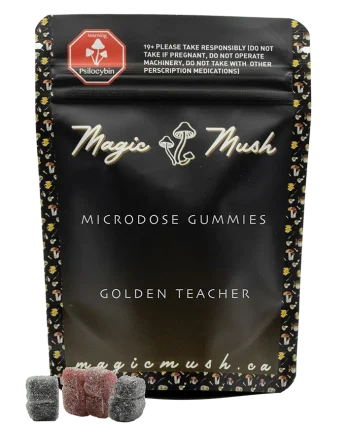
Price range: $60.00 through $240.00Golden Teacher Gummies for Microdosing
$25.00


The Investor Model
This is the dominant default in most emerging biotech and healthcare-adjacent markets: venture capital funds early risk, IP becomes the asset, and successful outcomes aim toward acquisitions, licensing deals, or public markets.
What Drives It
- Venture capital expectations: High-risk, high-return timelines.
- Fiduciary responsibility: Leaders are obligated to prioritize shareholder value within corporate governance structures.
- Public market pressure: When companies go public or behave as if they will, narrative and growth metrics become governance tools.
- Patent strategy as asset protection: IP is used to justify valuation, defend market position, and secure exclusivity. Legal scholarship has highlighted how psychedelics are becoming a “legal battlefront” for drug development IP.
The Advantages
It’s important to name why this model exists because it can genuinely produce value.
- Speed of research: Clinical trials are expensive, and capital can accelerate progress.
- Regulatory navigation: Investors fund the legal, regulatory, and operational expertise required to move through FDA pathways.
- Infrastructure scaling: Clinics, manufacturing, therapist training programs, and data systems require upfront investment that communities often can’t mobilize quickly.
You can see the investment ecosystem building in real time through financing trackers and industry analyses that compile public and private fundraising.
The Risks
The risks aren’t about evil intent. They’re about predictable incentives.
- Profit prioritization: When returns are the organizing principle, care quality and long-term integration support can become cost centers rather than foundations.
- Restricted access pricing: Exclusivity plus clinical delivery plus limited providers can create high costs and narrow access.
- Knowledge enclosure: IP can fence in practices, training, and even aspects of set/setting into proprietary frameworks.
There is also a subtler risk: once defensibility becomes the core design constraint, the field may optimize what is patentable and billable rather than what is culturally coherent or clinically humane.

💊 Explore what happens when Big Pharma meets psilocybin and decide for yourself if we’re really ready for this new era
The Community Model
Community-oriented ownership models are attempts to design governance so that benefit distribution and accountability are built in rather than hoped for. These models include cooperatives, steward-owned companies, nonprofits, foundations, and local licensing frameworks that prioritize community outcomes.
What It Looks Like
- Cooperative ownership: Stakeholders workers, community members, sometimes patients share governance power.
- Steward ownership: Structures that reduce speculative extraction by placing shares in trusts or stewardship entities that prioritize mission continuity.
- Nonprofit/foundation models: Value is reinvested into research, access programs, education, or community health rather than extracted as profit.
- Local licensing frameworks: Rules designed to keep economic benefit local and reduce consolidation pressure.
The Advantages
- Embedded accountability: Decision-making remains closer to affected communities.
- Cultural continuity: Governance can better respect context, lineage, and non-clinical forms of knowledge.
- Long-term orientation: Stewardship models are often designed to protect against short-term market pressure and mission drift.
The deeper advantage is governance realism: it assumes incentives will exist, so it builds constraints that keep incentives from swallowing the mission.
The Risks
- Slower growth: The cost of caution is often speed.
- Funding limitations: Clinical research and regulated delivery are expensive, and non-extractive capital is hard to source at scale.
- Regulatory hurdles: Complex compliance systems can inadvertently exclude smaller actors, even when they are mission-aligned.
In other words: community models often align with ethics, but struggle against structure.

📣 Discover how psychedelic activism is shaping policy, culture, and the future of consciousness one movement at a time.
The Patient-Centered Model
A patient-centered ownership model asks a different question: what would it mean for patients not investors, not institutions to hold meaningful influence in the systems that deliver psychedelic care?
What It Could Include
- Patient representation in governance: Patient seats on boards, advisory councils with real authority, or governance votes tied to outcomes and safety.
- Outcome-driven structures: Incentives tied to real-world outcomes rather than pure expansion metrics.
- Access prioritization: Sliding-scale models, mutual aid funds, or subsidized care built into operating models rather than added later as philanthropy.
- Transparency as infrastructure: Open reporting of outcomes, adverse events, and dropout rates because trust depends on visibility.
The Hard Question
Can healthcare delivery realistically center patients within current regulatory and reimbursement systems?
Clinical systems tend to reward billable sessions, standardized protocols, and easily reportable metrics. Psychedelic care often requires preparation and integration that are time-intensive and context-sensitive. That mismatch doesn’t make patient-centered governance impossible, but it does mean it can’t be a slogan. It has to be designed.
And patient-centered ownership also has to address a real tension: patients are not a monolith. Different communities will define “benefit” differently affordability, cultural fit, safety, autonomy, continuity of care. Patient-centered governance needs mechanisms for representing those differences without collapsing into tokenism.
Indigenous Stewardship & Lineage
This section matters because psychedelics are not emerging from a vacuum. Many of the substances and practices associated with the psychedelic renaissance have histories tied to Indigenous communities, traditional practices, and cultural stewardship.
Handled carelessly, “Indigenous lineage” becomes marketing. Handled responsibly, it becomes governance.
What’s Being Discussed
- Historical use of plant medicines: Many psychedelic substances have long-standing ceremonial or medicinal uses in certain cultures and communities.
- Reciprocity agreements: Calls for benefit-sharing, respectful collaboration, and community-led consent frameworks.
- Intellectual extraction: Concern that knowledge is being mined for legitimacy while governance and profits are centralized elsewhere.
- Benefit-sharing frameworks: Some advocates point to international models like access and benefit-sharing principles and the Nagoya Protocol as reference points for reciprocity discussions (even when national legal applicability varies).
There are also emerging scholarly conversations explicitly about Indigenous knowledge systems and reciprocity in psychedelic science, framing reciprocity as ethical relationship-building and mutual benefit rather than symbolic acknowledgment
The Core Tension
Indigenous stewardship isn’t a brand asset. It’s an ethical relationship. And ethical relationships require obligations: consent, benefit-sharing, co-governance, and long-term accountability.
One concrete proposal in the literature is the ARC framework Access, Reciprocity, and Conduct intended as a culturally informed ethical infrastructure for psychedelic therapies.
Even if a reader doesn’t agree with every proposed framework, the direction is clear: the field is actively debating what reciprocity should look like in practice, not just in sentiment.

📣 Discover how psychedelic student activism is reshaping policy, culture, and the future of drug reform, one campus at a time.
Psychedelics, Microdosing, And The Quiet Irony Of Control
There’s a psychological irony in all of this that’s hard to ignore.
Psychedelics are often described as experiences that soften ego, loosen rigid control, and increase psychological flexibility. Microdosing, in its popular framing, promises subtle shifts more openness, less stuckness, a gentler relationship to thought patterns.
And yet the systems being built around psychedelics often mirror the opposite impulse: control, exclusivity, enclosure.
That irony shows up in a few tensions:
Control vs Stewardship
Control is about ownership as dominance exclusive rights, defensible moats, centralized decision-making. Stewardship is about responsibility holding something with obligations to others and to the future.
Healing vs Assetization
In biotech markets, “value” often means a monetizable asset: a patent, a proprietary protocol, a scalable clinic model. But healing is not an asset in the same way. It’s relational, slow, context-bound, and difficult to standardize. When care is forced to behave like an asset, the care changes.
Decentralization vs Consolidation
In cannabis, legalization often came with consolidation pressures. In psychedelics, we can already see the outlines of similar dynamics through IP strategy, clinic networks, and regulatory pathway dependence patterns tracked in financing and patent update ecosystems.
This doesn’t mean centralization is always wrong. Safety matters. Standards matter. But if consolidation becomes the default outcome, it’s worth asking: who does it protect, and who does it exclude?

🧠 Discover whether psilocybin really “wakes up” the right side of the brain or if the science tells a more surprising story
Where All Of This Lands For Us At Magic Mush Canada, And Why Ownership Quietly Determines Who Benefits
As psychedelics move from margins to mainstream, ownership will quietly determine who benefits and that isn’t abstract. It shows up in what gets prioritized, what gets protected, what gets priced out of reach, and which voices get treated as “core” versus “optional.” If the industry defaults to control-by-capital, the outcome won’t just be a different market. It will be a different culture around care.
That’s why at Magic Mush Canada, we try to be clear about what we stand for and what we won’t pretend. We’re not here to sell miracle stories or rush anyone into decisions. We’re here to support informed, responsible exploration with a focus on product integrity, transparency, and education because governance isn’t only something that happens in policy meetings. It’s also shaped by what people choose to support in the real world.
If you’re exploring this space, we invite you to check out our dried magic mushrooms and browse at your own pace. We focus on quality, consistency, and clear information, so you’re not relying on hype or vague promises. Whether you’re simply learning or already know what you’re looking for, our goal is to make it easier to approach psychedelics with care, realistic expectations, and respect for the bigger questions like who benefits, who leads, and what kind of ecosystem we’re building together.

